


Every road, sidewalk and lawn in Dayton, Ohio, was covered in a firm layer of snow with a slick dose of ice mixed in, but Kyle Getter’s dad, Bill Getter, wasn’t deterred. He had business to handle and a family to provide for before basking in the comfort of his home. The conditions at play weren’t anything that he hadn’t dealt with before, and he was too spirited a worker to let them get in the way.
For 30 years, Bill served as a mailman–and his son, who was named Cal Baptist’s new head coach in April, clarifies that his dad carried the mail the old school way; by hand. Bill delivered the mail six days a week to ensure that his family was taken care of. It’s the type of work that prompts the use of the blue collar label from his now-adult son. It was grueling, physical labor.
When Bill was done with it, he was off to the gym. He felt as if he had still had a duty to perform once he was off the clock, a duty to use his background in basketball to impact others.
Bill is almost unheard of in that he was coached by the same person–former Bowling Green coach Pat Haley–as a high schooler and a Division-I player, and felt that he could impact lives like Haley did his. He was never a full-time head coach, but he helped coach high school varsity, JV, freshman, middle school and fifth-grade basketball over the years. The workload as a mailman was grueling, but there was too much purpose in coaching for him to find an excuse not to do it.
Getter describes his dad as the true definition of a servant leader and has worked to emulate that quality. If Getter is ever tempted to deviate from his self-described blue-collar ways, watching Bill volunteer his time and effort to coach in the midst of a full-time workload will do the trick.
The idea that watching his dad go out of his way to pursue coaching with no hope of it providing a full-time income has given Getter an appreciation for the profession he gets to do this for a living is one that he subscribes to. So is the idea that his father’s coaching values are ones that can translate to a Division-I program.
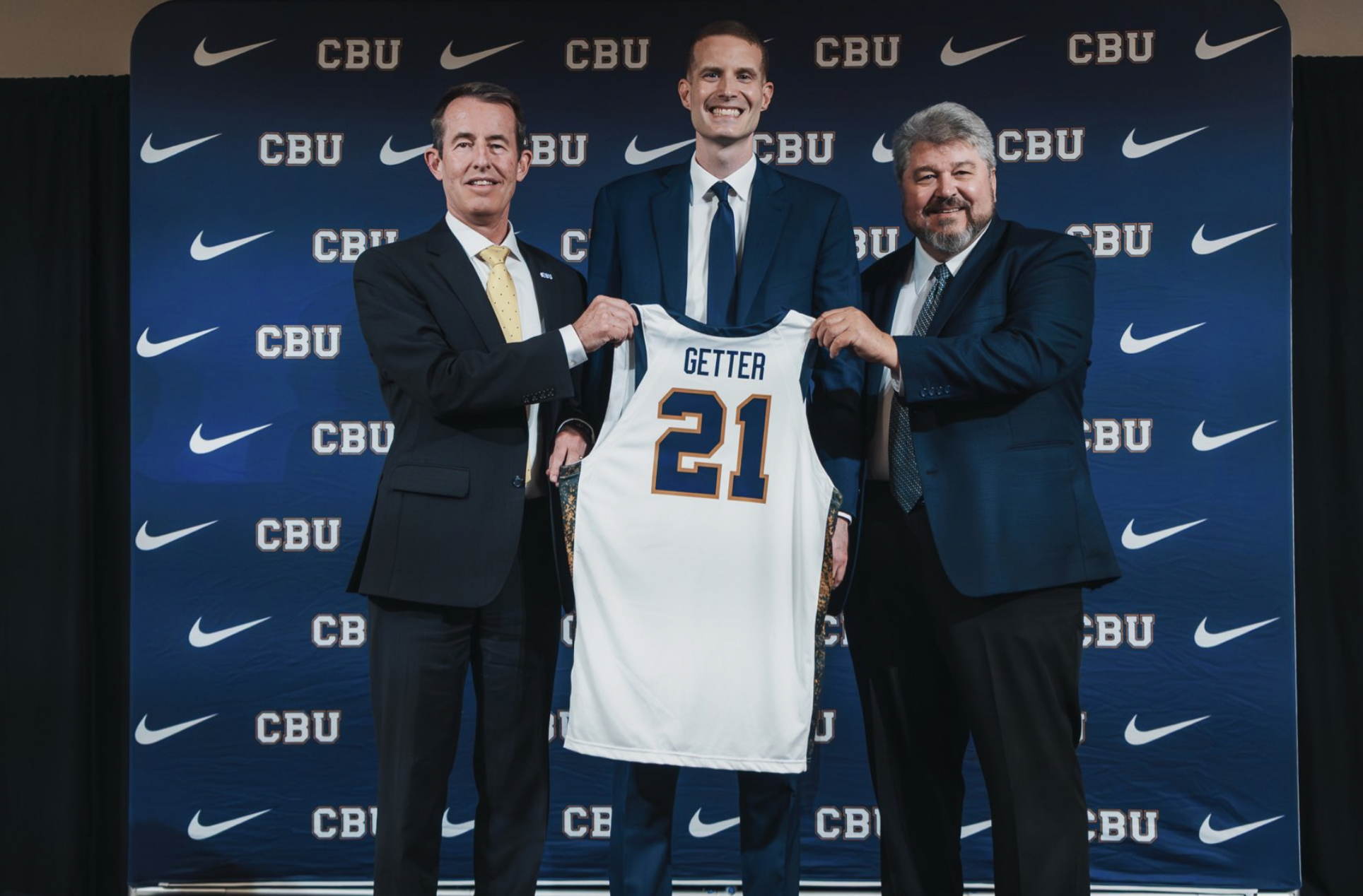
“I gotta pinch myself that I’m the head coach at California Baptist,” Getter told Basket Under Review. “I'm trying to carry that forward with me throughout my coaching journey, I'm very relational and I think if I can get to know people and get to know them well then I can help them transform their games but also help them transform their lives off the court.”
Getter recalls his dad being hard on him while he played for him, but that all of his teammates would describe Bill as a players’ coach that had their best interests at heart. Bill wasn’t afraid to hold players to account, but he was uniquely gifted at instilling confidence within them.
As Getter prepares for his first summer as a Division-I head coach, he says that he’s carrying a similar positivity with him each day and that players are more inclined to fulfill their potential when their coach is positive. Perhaps if he lives up to his self standard, his players will see some Bill Getter in him.
“Kyle Getter cares about the people,” Liberty coach Ritchie McKay told Basket Under Review. “He cares about the whole person. And he’s very intentional about an authentic relationship, not just one that is transactional. I think we share some of that value system but yeah, I just have zero doubt in what he’s going to bring to that program.”
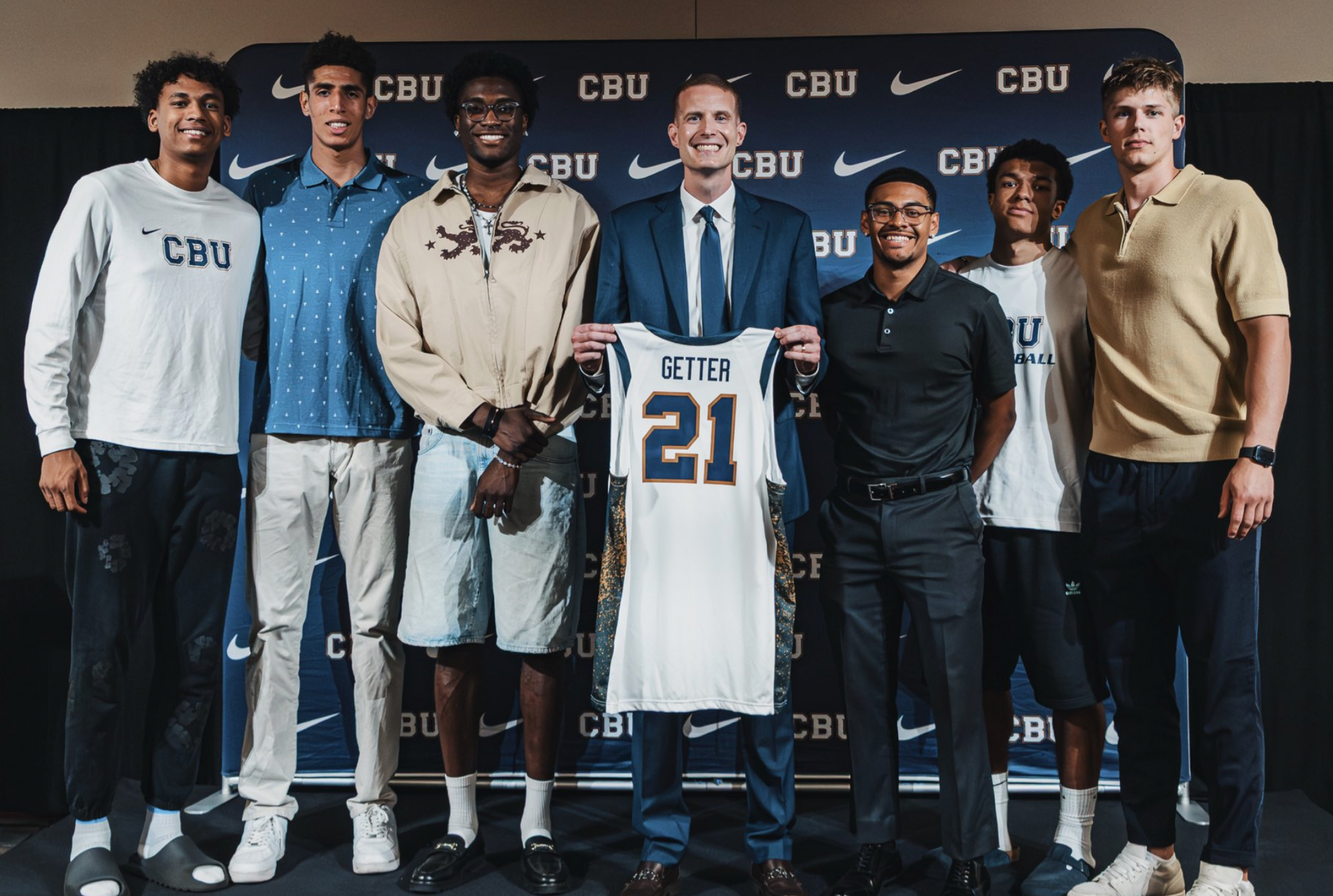
For a second, Kyle Getter does the thing that Division-I basketball coaches rarely do this time of year. He sits there and thinks about the journey, what it’s required of him and where it’s ultimately led him.
Getter was on a national championship staff in 2017, he’s coached in a number of empty midmajor gyms, he’s had 11 different jobs in the last 25 years and has lived in just about every area of the country in hopes of holding a position like this one day. For a second, though, Getter acknowledges the idea that this is a bit sweeter because of what could’ve been and didn’t come to be.
The industry always had a high opinion of Getter–who had a worthwhile body of work, a number of high-profile mentors and former colleagues that vouch for him, a personality that athletic directors gravitate towards and ties to a number of regions across the country–but he’d yet to get a head coaching opportunity that made sense for him. It wasn’t for a lack of trying, either.
Getter doesn’t bring up previous openings by name, but he was a reported finalist for the Pepperdine job this cycle before he ended up at Cal Baptist and was brought up nationally when VCU had a vacancy a year ago. Those two publicized openings were inevitably just a few of the many that Getter was a candidate for or hoped to be involved with. For one reason or another, though, none of them worked out.
As Getter walks around Riverside, California, as the head coach at a faith-based school that matches his personal values and allows him to run a program with his personal mission in mind, he has a better sense for why everything worked out the way that it did. Getter has always believed that everything happens for a reason, but now he knows it for a fact.
Getter spent years contributing to winning teams and hoping that one day he’d find his work would pay off, but his opportunity finally came following a season in which the Notre Dame team that he contributed to putting together finished with a 13-18 record and missed the ACC Tournament. He couldn’t have drawn it up that way, but it’s reality.
“I trust God in my journey,” Getter said. “Some doors were closed because they were supposed to be closed. This door was open because I think I'm supposed to be the head coach here and I think I'm fortunate. Sometimes when we go through some situations like that we're like ‘oh man, like well I thought that was it’, sometimes there's disappointment. Maybe I didn't get a job or, you know, whatever, wasn't considered, but then you look at this and now this opportunity came up and this is such a great fit for me and my family. I believe this was how it was supposed to work out.”
Getter doesn’t have to stop at saying that Cal Baptist is a great fit for him and his family, he goes as far as to describe it as a perfect fit. He says that as soon as he met with the school’s leadership, he could tell that there was alignment in values and the belief that the program he just inherited can be successful year in and year out.
To Cal Baptist assistant Vic Sfera, the similarities between historically-successful programs at faith-based schools and the program that he and Getter are looking to lead to the NCAA Tournament when it officially joins the Big West on July 1 align clearly. Sfera and Getter each spent time at Liberty, where he says athletics was used as a billboard to share the university’s faith. Sfera also compares Cal Baptist’s philosophy on men’s basketball to Grand Canyon’s.
At the very least, the three programs have something in common; all of them have been to the NCAA Tournament in the last two seasons–Liberty and Grand Canyon are there on a nearly yearly basis. The only one that did in 2025-26, though, was Cal Baptist as it made its first dance in program history.
A job like this opening isn’t all that common–as evidenced by former Cal Baptist coach Rick Croy spending 13 years as the program’s leader before heading to Arizona State to take a position as its associate head coach this offseason–but it did and Getter jumped on it. Getter couldn’t have written a life’s story like this, but he’s in a position to write the most meaningful chapter in it yet.
“He’s a winner,” McKay said. “He's going to do it the right way. He’ll be a great representative of CBU. When you come from a Tony Bennett tree or if you’ve been a part of that program, you’ll know—like honoring the process, getting guys you can lose with first and not being outcome-based is really important to the cause. So I don’t know how quickly he’ll win, but I do know he will win.”
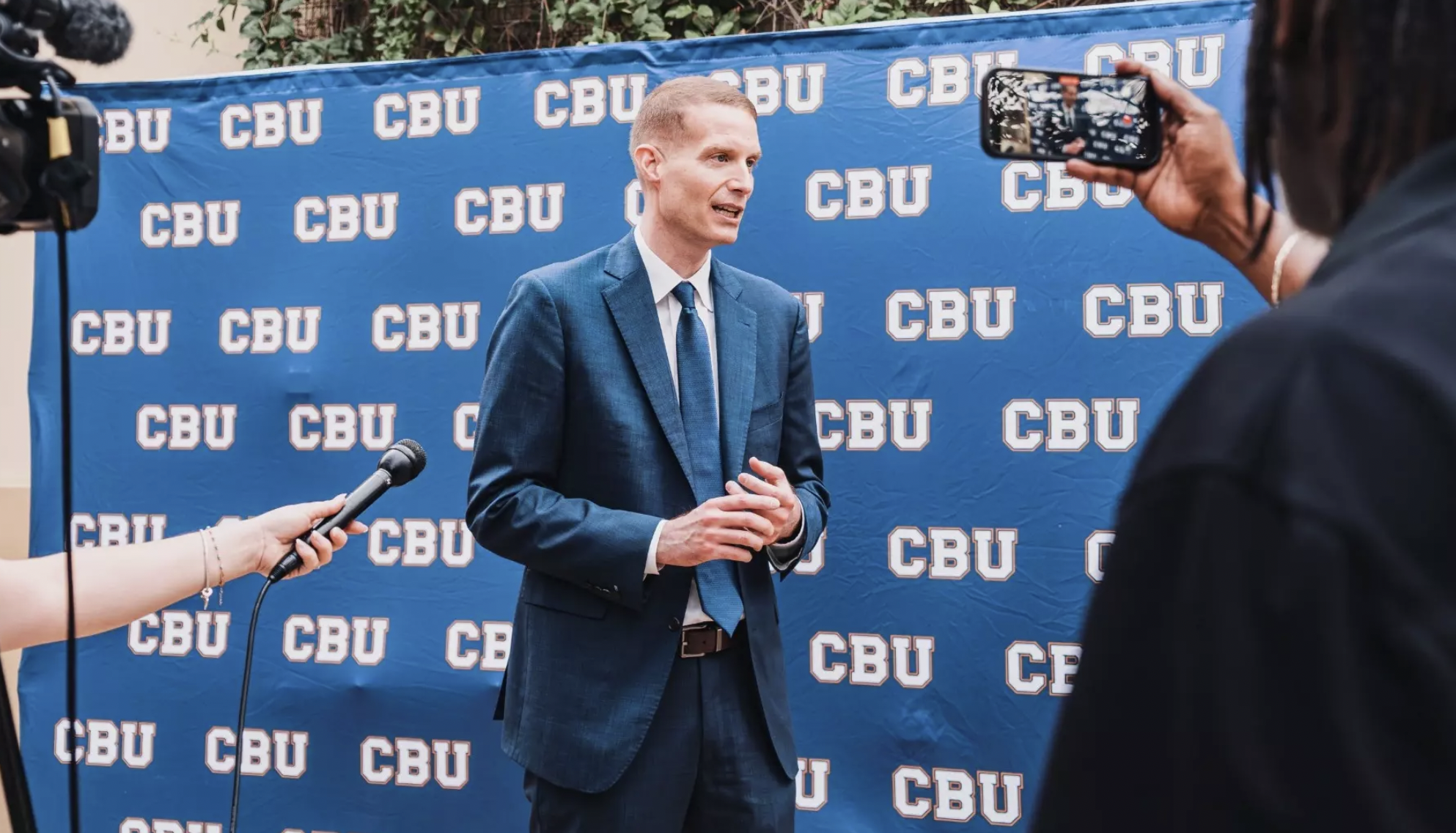
Getter admits that he wasn’t the final decision maker in the room, but the athletic administrators at Centre College clearly saw something within him after his sophomore season. They may not have known exactly how this would play out for Getter, but they knew that he was bright enough to trust.
In the weeks prior, Getter had told the Centre coaching staff that he was leaving the program. The staff eventually came back to him and let him know that there would be a new head coach of the program the next season.
Centre wasn’t done with Getter yet, though. Before he left campus for good, he was asked to be a member of the school’s search committee as it chose a new head coach. The school’s athletic director believed that Getter would be unbiased because he was on his way out of the program and allowed him to evaluate candidates.
The decision Getter made to take the role indicated that he had no bad blood for Centre College, but he knew that it was in his best interest to leave at that point. Getter was averaging around 30 minutes a night as a player at Centre and was set to be a standout as a junior, but it wasn’t right. The decision wasn’t as much about his experience as it was about the path that he had in mind.
“This is no knock on Centre because I love Centre and I love my relationships, my teammates– some of them are my best friends,” Getter said, “But, most people don't go to Centre College to be a college basketball coach.”
And Getter wanted to coach. He had established himself as a player and played against Division-III royalty in Celtics general manager Brad Stevens, Marquette head coach Shaka Smart and Notre Dame head coach Micah Shrewsberry, but he knew that a playing career at Centre could only take him so far. If he wanted to coach, he had to work towards that goal.
Then-Dayton head coach Oliver Purnell offered Getter a walk-on spot with the program, but Getter instead opted for a student coaching role at Hanover College. Getter knew about Hanover coach Dr. Mike Beitzel’s reputation for getting aspiring coaches into the profession.
Beitzel lived up to the reputation.
As Getter looks back on the time at Hanover all these years later, he sums it up as an educational experience. Bietzel had Getter coaching the JV team, assisting him in practice, going on recruiting trips and learning how to effectively interact with the parents and high school coaches of recruits.
Getter says he believes that those years were a turning point in his life and career. The benefits of them have followed him at nearly every stop–including his last one, where he coached under Shrewsberry. Perhaps Getter wouldn’t have known Shrewsberry well if not for their shared time at Hanover, but they were innately familiar with each other because of it.
“I’ve known Kyle for over 20 years and worked closely with him for the past three, and I couldn’t be happier for him,” Shrewsberry said in a release when Getter was hired. “He’s smart, driven, and incredibly detail-oriented. But more importantly, he connects with people in a real way. He’s ready for this opportunity, and I’m excited for the future of CBU Basketball.”
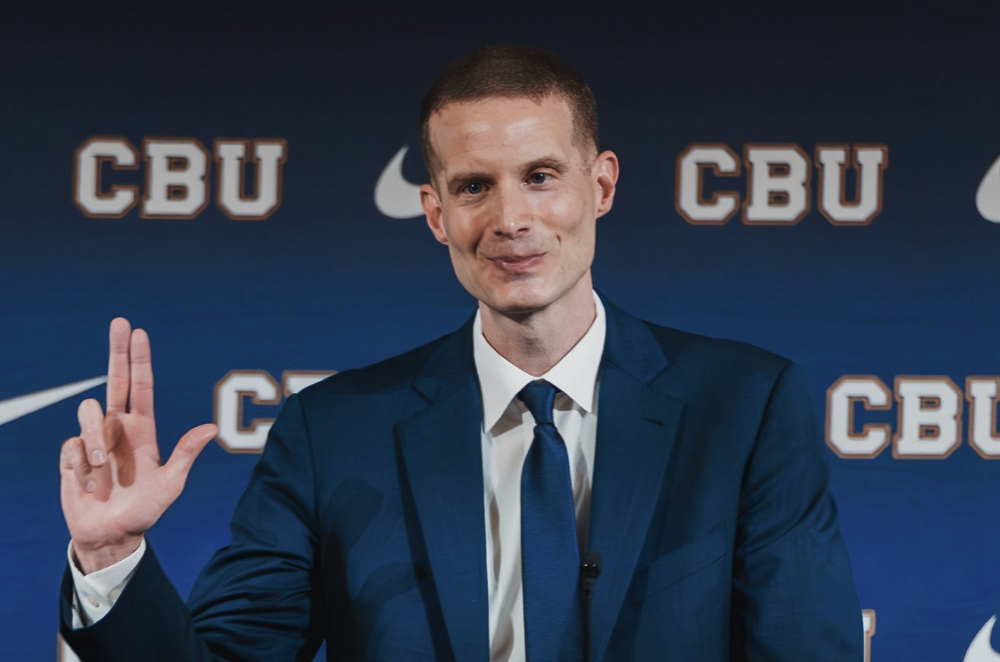
Paul Biancardi had just taken the head coaching job at Wright State and was juggling the overwhelming number of responsibilities that first-year head coaches have to, but he couldn’t help but notice the amount of FedEx packages that kept showing up around his office.
Getter was working eight miles away as a graduate assistant at Dayton at the time and was six weeks away from earning his master’s degree. He was earning $1,500 a year, would often take day trips to other states to pick up video of games and was living in his grandparents’ basement while working the job, but was doing it for the betterment of his future.
The Dayton staff that Getter worked under had taken the Clemson job and offered him the opportunity to fill the same role a second time, but he could only justify that lifestyle for so long.
Getter needed a job at that point, a job that would allow him to support himself full time.
So, he would often take the drive from Dayton to Wright state in hopes of sitting down with Biancardi. Every time he got there, though, Getter would ask Biancardi’s secretary if he was available. The answer was always ‘no,’ but the secretary would always allow him to leave a package for Biancardi.
“My FedEx bill was probably close to what my salary was for the year,” Getter said. “This isn't like I'm putting it on the school's dime. This is my personal FedEx account I'm using. I was like ‘I can't FedEx again, I'm gonna have to drive it over.’”
Inside the envelopes were often old-school informational flyers that Getter had created. Biancardi also recalls letters to in which Getter introduced himself and talked about his interest in working as the program’s director of basketball operations, reflections on projects that he’d done while at Wright State and written theses of various basketball ideas.
Biancardi can admit now that he often did not read a number of the things that Getter sent him and often passed along the packages to his three assistant coaches. Biancardi told his staff that if they felt with Getter, that he would talk to him about potentially joining the staff. Getter already knew one of the three assistants, Brian Donoher, and eventually gained favor with all three of them–as well as Biancardi, who hired him as the director of basketball ops.
Getter finally had his first full-time job in coaching, and nobody can convince Biancardi that it wasn’t earned.
“He was very persistent,” Biancardi told Basket Under Review. “If it wasn't for his persistence—it was polite, but it was very persistent—I wouldn't have hired him. So that's how that story came about and it's a great story. I became a fan of him because that's how I grew in the profession by being ultra-persistent.”
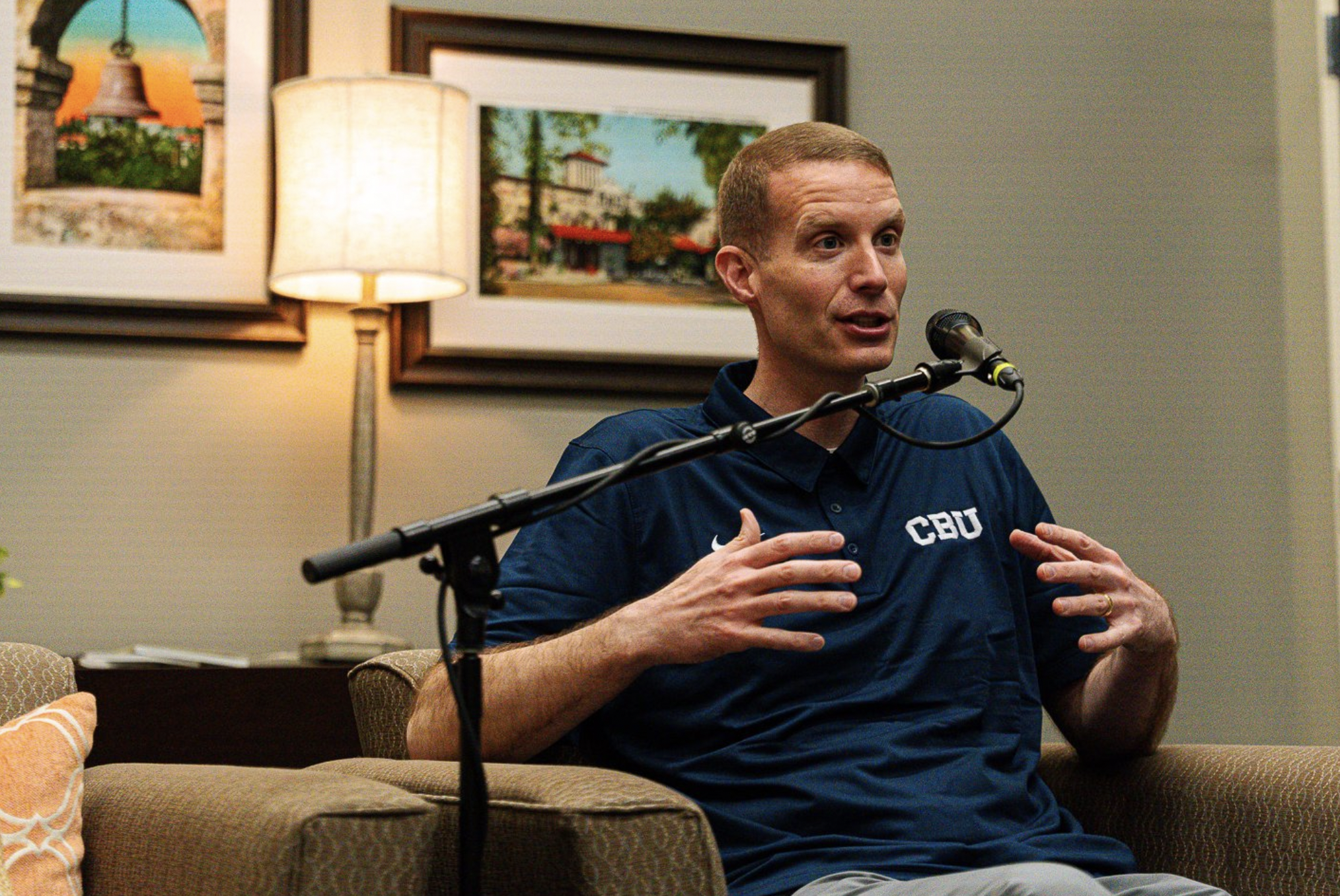
To this day, Getter remembers exactly what Biancardi wanted from him and knows exactly what’s important to him. Biancardi told him that he was okay with him making mistakes, as long as he had his loyalty and Getter proved to be trustworthy.
It’s been 23 years since Biancardi first met Getter, and he can confidently say that he’s done those things. Getter did significant operations work as a member of Biancardi’s staff and was trustworthy enough in Biancardi’s eyes to where he and his now-wife babysat Biancardi’s kids while they worked together.
The days of Getter needing to do those things in order to climb the ladder are over, though. He’s a head coach and Biancardi couldn’t be happier about it.
“It brings a lot of joy,” Biancardi–who is now ESPN’s recruiting director, college basketball and NBA Draft analyst–said. “That's a great lesson for anyone who wants to achieve anything in life, that you have to kind of master the steps along the way and there's no shortcuts and he's a great example of that.”
If Getter’s path is an indicator, shortcuts aren’t a part of his story. Even if he wanted one, the opportunity for a shortcut didn’t often present itself. The best opportunities often led Getter off the beaten path, once to Walsh University–an NAIA program–and a number of other times to midmajor programs.
Even when Getter made it back to Virginia as an assistant under Tony Bennett in 2021-2023 and was a part of a staff that won the ACC regular season title twice, he wasn’t all that hot of a commodity with athletic directors.
Those around him didn’t get it, though.
“I knew early that Kyle Getter was going to be a head coach,” McKay–who hired him as an assistant at Liberty in 2008 and did it again in 2015–said. “One of the things I really admired, and it was a little bit of a cheat code for us, he had this capacity to evaluate a lot of players, vet them through our lens, and scale it down for me so I had a ton of really good options and most of the legwork was done for me. He’s got a big brain and he sees the intangibles, which I think is super important in building a program or leading a program.”
Getter’s list of schools in totality includes Virginia, Notre Dame, Liberty, Wright State, Dayton, Radford, VCU, Walsh, Marshall and Radford. He’s already been in this business for over 25 years, yet Sfera believes that he’s getting in on the ground floor of Getter’s rise.
“I’m not necessarily dying to be a head coach tomorrow, so for me as an assistant, I want to be with somebody that I really believe in,” Sfera said, “And I think it’s exciting to be in from the press conference on. You could kind of be like, ‘alright, I was there when,’ I think that’s always really cool to kind of get in on day one.”
After going through what he calls a defensive masterclass every day, Getter jokes that Bennett wouldn’t talk to him anymore if he dropped a number of the defensive principles that Bennett taught. Sfera says that he and the other assistants from the Bennett tree can’t unlearn what Bennett taught them.
As a result, Getter and company are going to play the pack line and the industry expectation is that they’ll put a heavy emphasis on the defensive end because of Getter’s background. Getter wants to make clear, though, that he’s not a one-trick pony. Getter has also learned a number of his offensive philosophies from working under McKay and Shrewsberry, both of which will show up in his scheme.
Getter’s first team will embody his personality–which he describes as blue collar–and a meshing of the philosophies and schemes that he’s picked up from his mentors over the years. The most notable comes from Bennett.
“I have these five pillars, Dick Bennett's the one who started them and then Tony Bennett used them and now I'm gonna use them here,” Getter said, “They're humility, passion, unity, servanthood, and thankfulness. I want my team and staff to demonstrate those pillars on and off the court. And I want people to look at us and say ‘that team is different’ because we demonstrate those. There's so many different ways that you can use those pillars both on and off the court. I think when you adopt them and kind of live them out, they can really be powerful.”
Sfera recalls that the adage that assistant coaches are often told by older coaches and at conferences is to act like a head coach even before becoming one. He says that Getter has done that for a number of years and has been proactive rather than reactive. Sfera always thought that Getter would be a good head coach, and now he gets to test that theory as his associate head coach.
And as Getter leads this program, he’ll have a number of mentors and experiences in mind. All of them have combined to shape him, and now he’s got a chance to take advantage of them.
“I think I just have an extremely high level of gratitude,” Getter said. “It's a dream come true and, I'm hoping to impact people similar to how some of the people that I worked with and worked for had impacted me. That's my hope.”
