


Whether Tobin Anderson realized it or not, the moment preceded him as he walked into a recruiting event in Kentucky and a number of high school-aged boys flocked to him in excitement. They wanted a picture. They wanted to meet the guy who led 16-seed Fairleigh Dickinson to an NCAA Tournament win over No. 1-seed Purdue.
When Anderson walked into that gym, it had been over three years since the magical day in which he became a national celebrity. He’d gone through two different jobs since and had just taken the head coaching job at Tennessee Tech. Anderson estimates that none of those kids had any idea that he was Tennessee Tech’s head coach. All they know him for is his one shining moment.
That moment in Kentucky is the classic interaction in which Anderson is recognized in public. It happens at restaurants. It happens on the side of the road. Wherever he’s stopped, it’s almost always to discuss that one fleeting evening in March.
“That’s most of what I get,” Anderson told Basket Under Review. “I get it all the time.”
Anderson still remembers that 63-58 win, in which the country’s smallest team slayed a college basketball giant with legitimate national title aspirations, fondly as a lifetime memory. The moments in that March night still represent the mountaintop of Anderson’s college basketball career at this stage of it.
All these years later, it still hasn’t gotten old. Some part of Anderson is still likely unable to believe that it even happened. He certainly can’t believe he was a guest on Good Morning America and that former United States president Bill Clinton came up to him in public to congratulate him on the win. Anderson likely talked about that night more than any other night in his life, but he still lights up when it’s brought up. It’s what he worked at for so long. He’s one of just two coaches in college basketball history who have ever experienced it.
He doesn’t want to be known as a one-game wonder that faded into college basketball obscurity after his David-like win over Goliath, though.
Anderson wants more. He wants to accomplish more. He wants to mean more in the history books of college basketball. It’s not as if he resents the moment that gave him national fame, but he doesn’t want it to be the only thing memorable about his career in the general public’s eyes.
“That’s why we have to do something else special,” Anderson said. “What we did at FDU was awesome, but you want to go do more. There’s no doubt about that. You want to move on, and you want to take Tennessee Tech, and the players at Tennessee Tech, and give them a chance to have incredible accomplishments.”
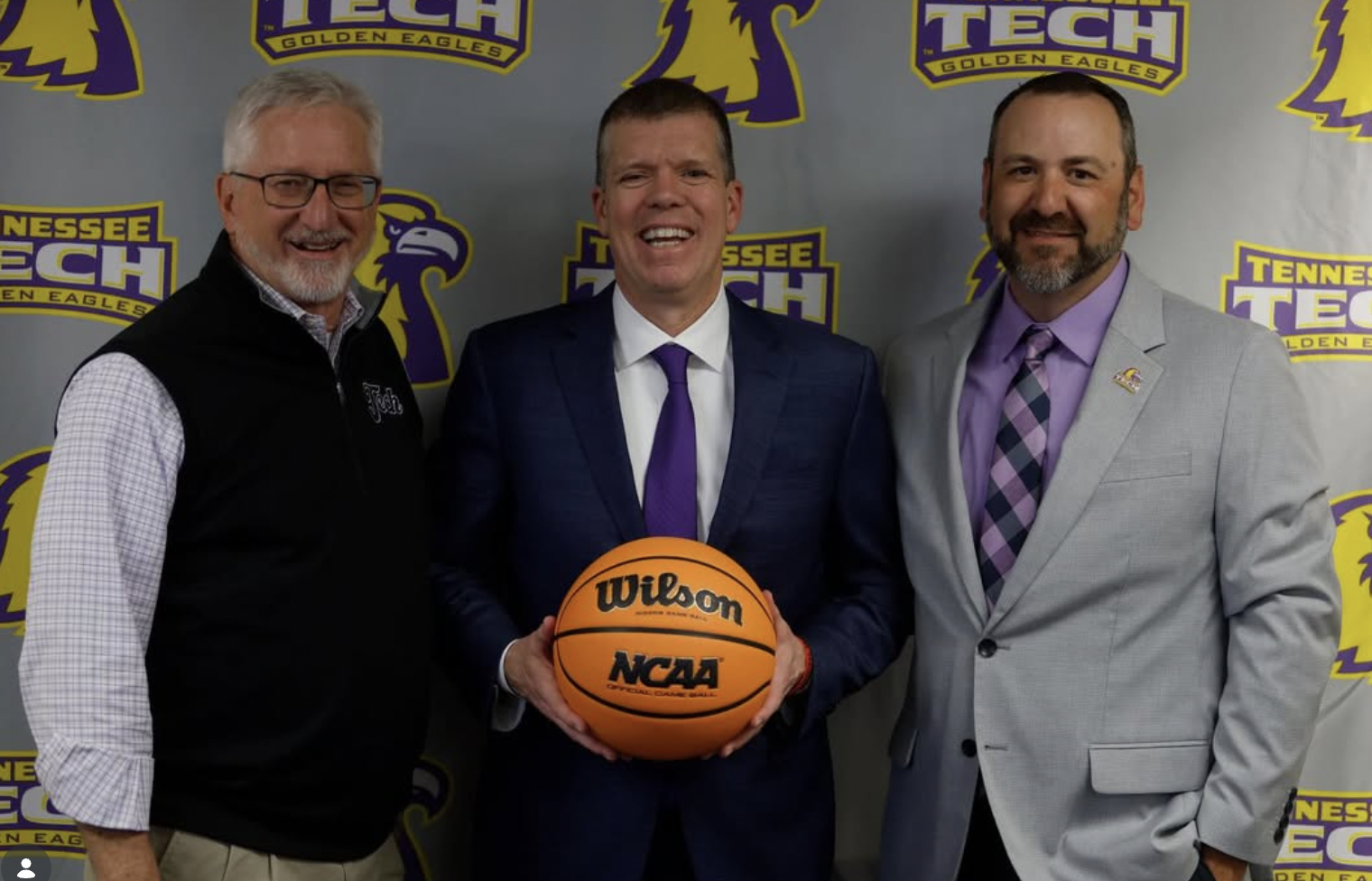
Matt Capell was working at General Motors in 2003 when he drove up to Potsdam, New York, to meet with Anderson and his wife, Jodi, at Eben’s Hearth–a self-described “casual joint” known for its burgers, wings, and sandwiches inspired by local history. Capell–who is now Anderson's lead assistant at Tennessee Tech--didn’t intend to make his career as a college basketball coach, but wanted to use it as an avenue to get his Master’s Degree so that he could pursue roles in engineering design projects.
As a result, Anderson met him where he was and was interviewing him for a job on his staff at Clarkson University. Capell impressed him enough to get the job, and within a week, Anderson’s enthusiasm for the profession was enough for the new assistant to call his parents and declare that coaching was what he wanted to do with his life.
Anderson was in his first head-coaching role, but Capell was mesmerized by how he operated and how he worked to develop everyone in the program. Capell could tell there was no excuse good enough to keep Anderson from giving everything he had to running a successful program.
23 years later, Capell and Anderson share a staff together at Tennessee Tech for a number of those same reasons. Anderson could’ve been jaded by what’s become a 30-year career in the profession, but it’s the same old Tobin as he takes on his third Division-I head coaching job.
“I don’t think his motivation has changed since the day I met him,” Capell said. “He’s the most competitive person that I’ve ever met, and he’s probably the most authentic person that I’ve ever met. I think that’s why he’s had career longevity and success at multiple stops.”
Since Anderson and Capell met all those years ago, Anderson has reached a college basketball mountaintop, become a celebrity, played in countless empty gyms, been fired, and positioned himself uniquely in the college basketball history books. Anderson admits he could never have drawn up his career this way, but he believes every step of his journey has served a unique purpose in getting him to Tennessee Tech.
Anderson’s longtime friend and Lake Oswego head coach Jason Leone says that the way Anderson combines an “incredibly” high level of energy with an appropriate amount of a Brett Favre-esque gunslinger mentality. Nobody believes in what they’re doing more than Anderson does, Leone says, and as long as he’s a college basketball coach, complacency won’t come up in regard to Anderson in any context–especially not this stage of his career, where he’s got a clear goal of getting Tennessee Tech back to the NCAA Tournament in mind.
The mountaintop Anderson sat on top of after one year at the helm of his first Division-I head coaching job–and the subsequent media tour, which he admits was too much in hindsight–could’ve given him the feeling that he’d accomplished enough in this profession to live the rest of the way peacefully. Anderson believed then that he still had plenty left to accomplish, though, and he still carries that belief with him all these years later.
“I do love challenges,” Anderson said. “I’m definitely ready for another challenge. You won’t forget the FDU and Purdue stuff, you won’t forget the FDU fun. That’s still going to be special no matter what. But, I do think we can try to go do other special things at Tech.”
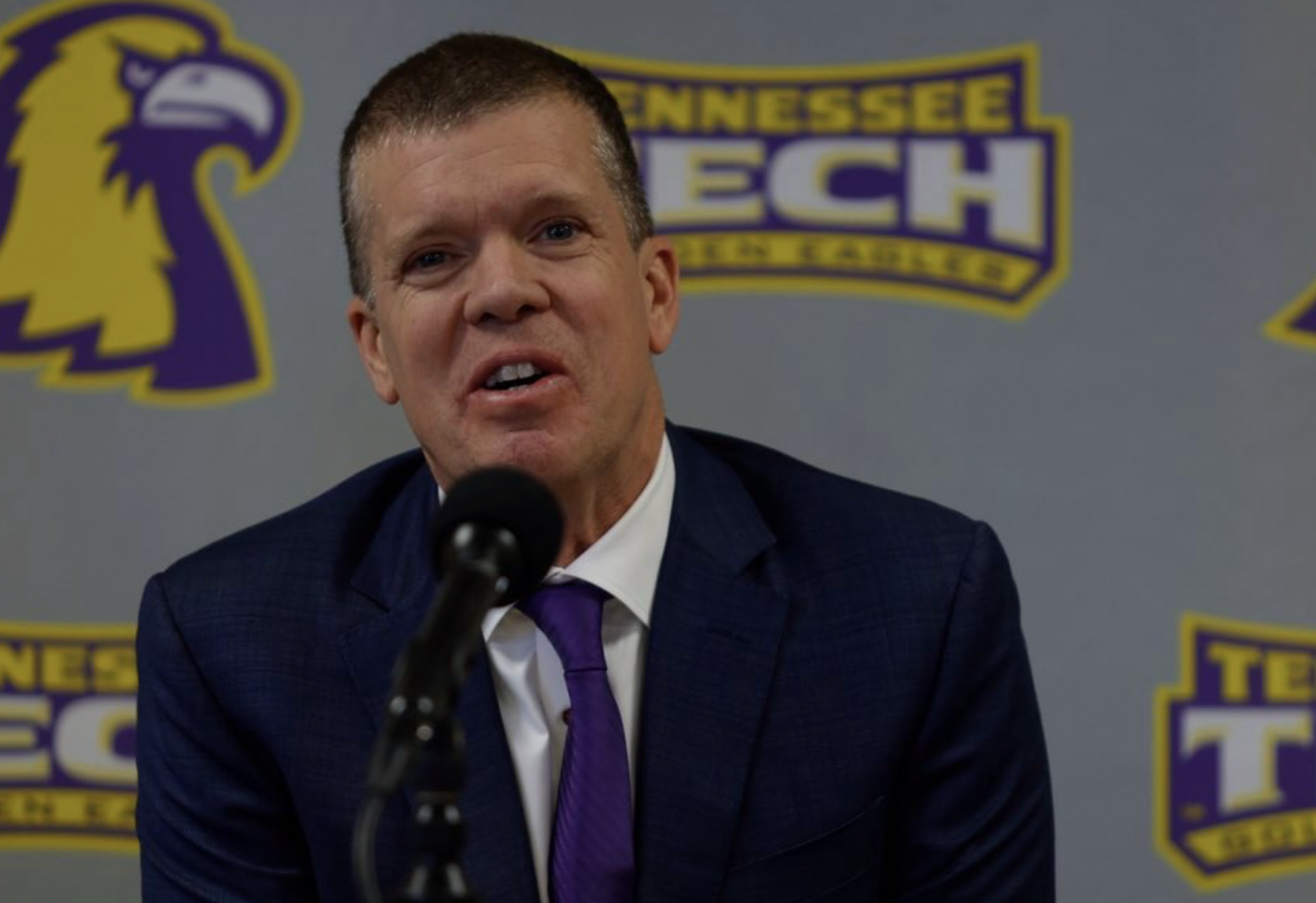
To this day, Anderson insists he and his staff had it turned around at Iona and that Iona would’ve had the best team in the conference if he had been given a third year at the helm. Those in positions of power at Iona didn’t see it the same way that Anderson did, though, and they weren’t willing to see out his vision.
Anderson had just finished his second year as Iona’s head coach and had the Gaels in the MAAC Championship Game after a fourth-place finish in the regular season standings. He wasn’t on hot seat lists anywhere around the country. He just needed a little bit more time that he wasn’t given, his former assistant Jack Castleberry–who is now Fairleigh Dickinson’s head coach–says.
Yet, he was fired.
It’s been over a year since the decision, yet nobody in Anderson’s circle seems to get it. He doesn’t seem to understand it, either.
“The decision-making process and the lack of thought and inappropriate behavior were discouraging,” Leone said. “I think that Tobin’s outspoken, emotional nature of dealing with that disappointment is completely warranted, and I think if you talked to 100 basketball people, at least 99 of them know the inner workings of that whole thing, and there’s no doubt that Tobin’s gonna end up doing well, no matter what job he’s at.”
Anderson wants it made clear that he feels he’s better off for what he went through because of Iona’s decision, but–according to him–an assumption that he’s at peace with the situation would be a reach.
The consensus among Anderson’s camp is that the two-year stint at Iona was the first time in his head coaching career that he didn’t have nearly immediate success, and that sticks with him. He never thought the plan of action to get the program back to the heights that Rick Pinto had taken it with now-NBA guards Walter Clayton and Dannis Jenkins was a two-year rebuild–he believes he should’ve been afforded more time to see if that could be the case.
Anderson says he’s still irritated that he and the team he would’ve had in year three at Iona never got the chance to win at the level they thought they could, but he says he’s more upset for the players than he is for himself. Somewhere in the back of his mind, though, Anderson likely feels as if he’s got something to prove this go around because of how his last run as a head coach came to an abrupt close.
“There’s no doubt about it, I have a chip on my shoulder,” Anderson said. “You’re pissed off still, but you just don’t think about it. As far as being at peace, I think just in general as a coach you’re never really at peace because you want to win and be really successful, and no matter what you do, you want to do more.”
After a year away from a head coaching role, Tennessee Tech has given Anderson a new lease on his head coaching life. Anderson insists that he and his staff will take advantage of the opportunity while carrying a chip on their shoulder.
He also insists that his change of scenery was a net positive for his career, even if he didn’t know he needed it.
“That was not the kind of place I wanted to be, with those kinds of people,” Anderson said in regard to Iona. “I think I kind of had to go. Things kind of work out for a reason. I believe that. It was the right time for me to go, and that situation is only going to help me going forward. I think I’m in a much better spot right now than I would’ve been in the other situation.”
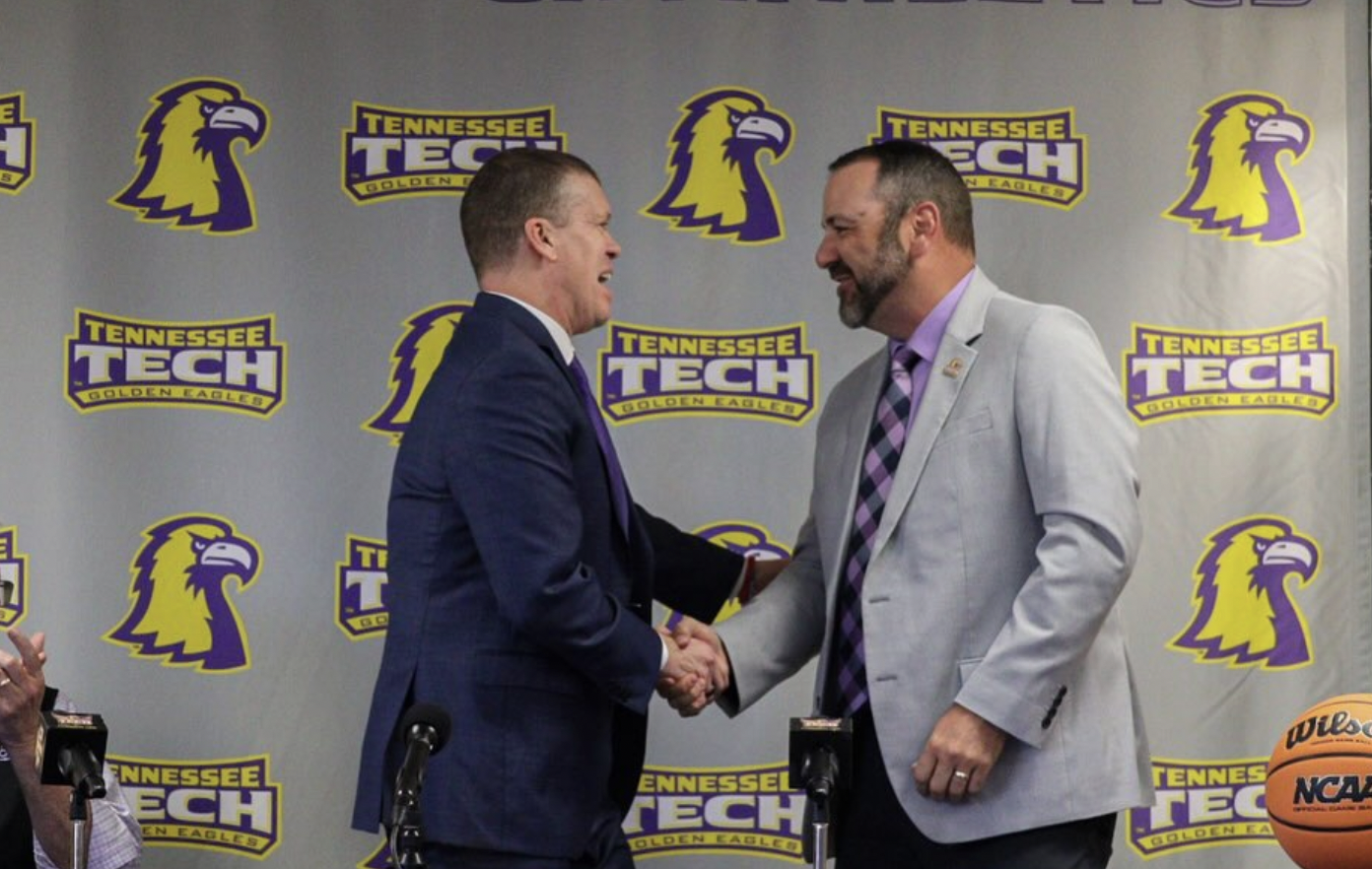
Anderson remembers a years-old conversation involving Michael Lombardi, a three-time Super Bowl champion as an executive with over 30 years of experience in NFL front offices, who now works as North Carolina football’s general manager, and the conviction in which Lombardi spoke of his notebook titled " How I would do things differently.
As Anderson took on the role of special assistant to the head coach at South Florida in the months following his departure from Iona, how Lombardi used the notebook struck him. As a result, Anderson brought his own version into the South Florida facility each day as he observed how now-Providence coach Bryan Hodgson ran his program and reflected on what happened at Iona. Any time something piqued his interest, he jotted it down and looked it over after the fact.
“I wrote notes all the time,” Anderson said. “I kept track of ‘this was good, this was bad, how can I get better?’”
Anderson wrote a number of notes pertaining to how Hodgson managed his staff–by cutting it in half to put one half in charge of the offense and the other in charge of the defense, which is the side Anderson was on–how Hodgson handled recruiting in the revenue-sharing era, and how Hodgson incorporated analytics.
Hodgson allowed Anderson to spend a year in a role that gave him a bird’s-eye view of the program, allowing him to sit and evaluate the systems Hodgson had in place. Anderson likes to think he helped Hodgson with his input, but he believes he learned more from his year in Florida than the program did from having him around. He learned enough that he invited Leone to make the trip south to observe how the program operated–Leone says it was the best professional development outing he’s done in years–and planned to have Capell down before the Tennessee Tech opening became a possibility.
On any visit, the heavy use of analytics quickly stood out as a major difference compared to what Anderson had done previously. He knew going into the new role that he needed to evolve as an offensive teacher, though, and didn’t brush off the idea that leaning more heavily into analytics could help him. Anderson didn’t have access to advanced numbers for a long portion of his career, but his year with Hodgson finally gave him a look at how valuable they could be.
“I was always kind of intrigued by it, but not fully bought in,” Anderson said, “I can say I’m fully bought in now. I love how we did it at USF. I definitely improved as a coach, learned a great deal, and I’ll be much better, much improved from what I was before.”
Castleberry says that, in addition to the schematic things Anderson took from South Florida, he also often reflects on how being in the assistant chair again reminded him to be more positive when things aren’t going well.
The belief among Anderson’s circle is that there will be a whole lot more winning than losing at Tennessee Tech because of his arrival, though, and that his year away is largely to blame for that.
“I think that kind of allows him to reinvent himself,” Castleberry said. “I’m actually really excited to see what he ends up doing at Tennessee Tech, even how he ends up playing. I’m sure he’s gonna press. I’m sure he’s gonna do defensive things the same. But, is he still gonna run motion offense? I think there’s a little bit of a ‘hey, I’ve seen new things, I’ve seen them work.’ How does he make this all mesh into a new version of how he wants to play?”
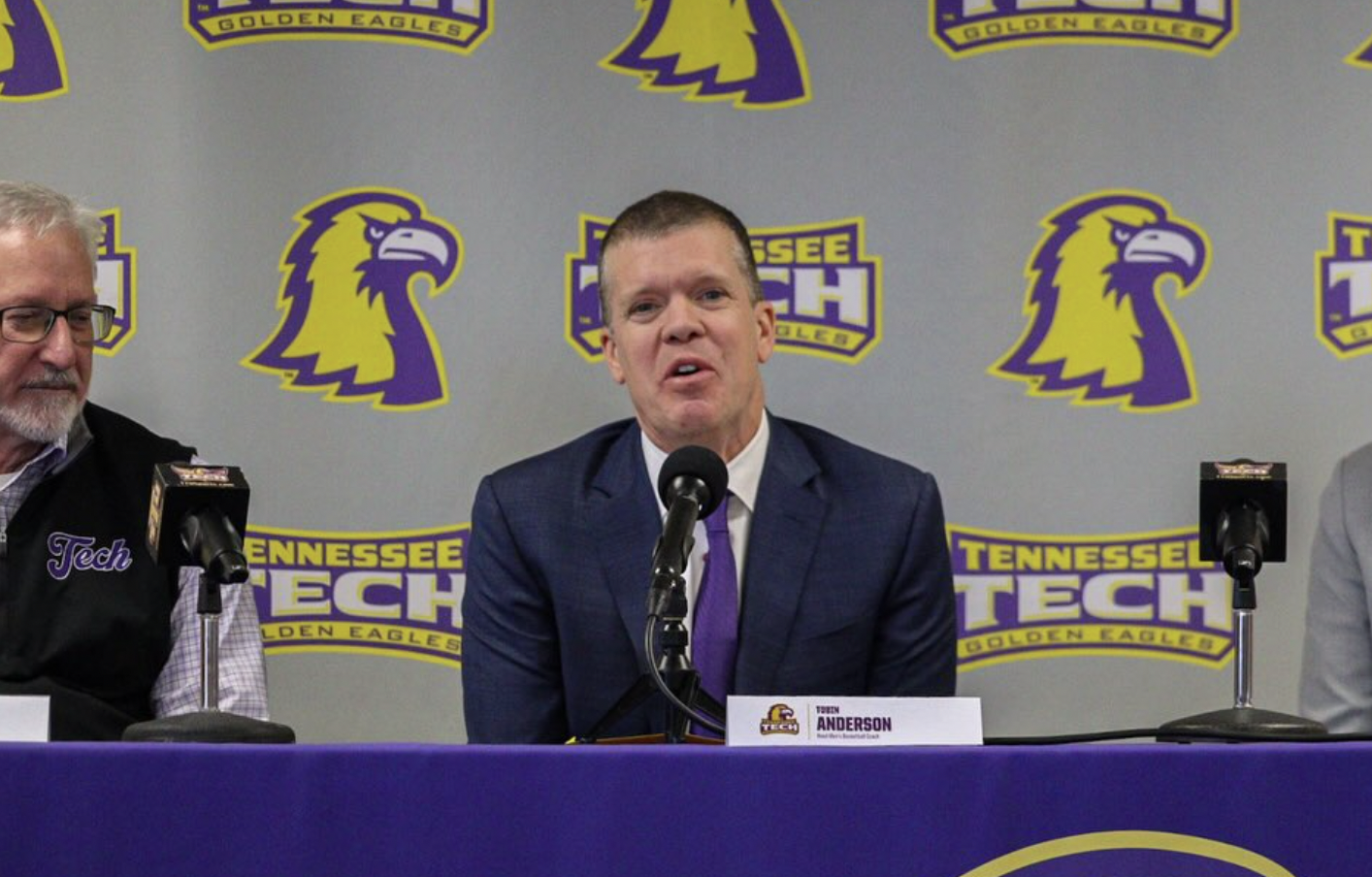
The number, the streak, is ingrained in Anderson’s head by now. It’s been just over two full months since he took the head coaching job at Tennessee Tech, but nobody around Cookeville, Tennessee, will let him forget that the program he’s inheriting hasn’t made the NCAA Tournament in 63 years. It’s the second-longest tournament drought in Division I basketball, behind Dartmouth.
Anderson wasn’t born back in 1963. That doesn’t mean he can’t be the man to rewrite history around this program, though.
His estimate is that, because of the school's pursuit of someone with his background, those around Tennessee Tech can see that the program is serious about winning. If they can’t see it in that, Anderson believes they can see it through the athletic department moving from the OVC to the SoCon, and in the top-of-the-league programs, it’s built in football and women’s basketball.
There’s still one thing missing, though, and Anderson says it would be one of the highlights of his career if he could get this program dancing again.
“63 years is a long time,” Anderson said. “That’s a great goal to do that. Everybody wants to do it, but it’s hard–especially in the SoCon, where there are really good teams and really good coaches and really good programs that are committed to winning. We’re gonna attack that every day, and we’d like to get Tennessee Tech back to the NCAA Tournament.”
Anderson acknowledges that doing that will be a challenge, but challenges are what get him out of bed each morning and trigger his Brett Favre-esque gunslinger mentality. If it weren’t a challenge, then those around Anderson probably wouldn’t think this would be for him.
The belief radiates from Anderson as he talks about the program he inherits these days and its chances of bringing glory back to a town starved of it. He remembers that when he took Fairleigh Dickinson to the tournament, those around the program had already gone dancing before. Now, though, he dreams of what it could feel like to give that thrill to a community that doesn’t know what it’s like. Anderson will continue to chase that.
And while he does, he’ll chase one more shining moment.
