


The island of immortality encapsulated Josh Schertz as he stood alone behind the bar at Humphreys Restaurant and Tavern, a small plastic cup of blue liquid in his hand. Schertz surveys the crowd around him while holding the drink up as if to take it all in. And before he brings the moment to an end, he turns to his left, motions to the crowd, and then gives in to its demands as he taps cups with a group of fans.
A white Nike quarter zip with a Saint Louis logo becomes an identifier for the crowd to pick their man of the hour out, and they’ve taken the cue. As Schertz takes a shot, the cameras follow him, and the group of fans on hand explodes.
Schertz and his team had just completed a public dismantling of Dayton on national television, which would ultimately become one of the program’s best showcases in a 29-win season that ended in the NCAA Tournament. And for a second, Schertz took a second to stray from his process-first mindset to take in the moment.
While the world speculated as to what power-five school he’d turn to in order to build his profile, Schertz was on top of the college basketball world. This is what college basketball coaching stardom looks like.
And Schertz didn’t have to leave to find himself in the midst of it.
“It’s something I’ll remember for the rest of my career,” Schertz told Basket Under Review in regard to that night. “It’s just a great place. They are about the right stuff, and the people are good. People make the place, and the people here are terrific. It's made it a super cool spot for not just myself, but my family and for the players, too.”
Schertz had the idea of going to Humphreys and putting his credit card on file for students to use, but he has a relationship with the bar's owners and was told he would be behind the bar serving rather than merely facilitating. He laughs at the idea that becoming a bartender that night was more than he bargained for, but says celebrating with the university’s students on one of the 19 nights that contributed to Saint Louis’ undefeated home season was special to him.
In the moment, Schertz jokes that he felt like Tom Cruise handing out drinks in the 1988 film "Cocktail," but admits the visual was likely less glamorous from everyone else's perspective. The moment was among the most notorious in recent Saint Louis basketball history, and a memento of a season that stacks up with the best ever in the program’s 110 years.
Perhaps it wasn’t Cruise-esque, but it was Josh Schertz being himself. That night in Saint Louis may have been more valuable than a Cruise appearance.
“Sometimes you get these coaches where people think they’re x’s and o’s f***ing mad scientists and, in truth, when you peel back the layers, he’s kind of a funny, quirky, sarcastic guy,” Saint Louis assistant Zak Boisvert said. “That’s honestly more of who he is than that mad scientist label that sometimes great ball coaches get. I think it was kind of cool to see him stepping out and people seeing that, seeing that’s who he is.”
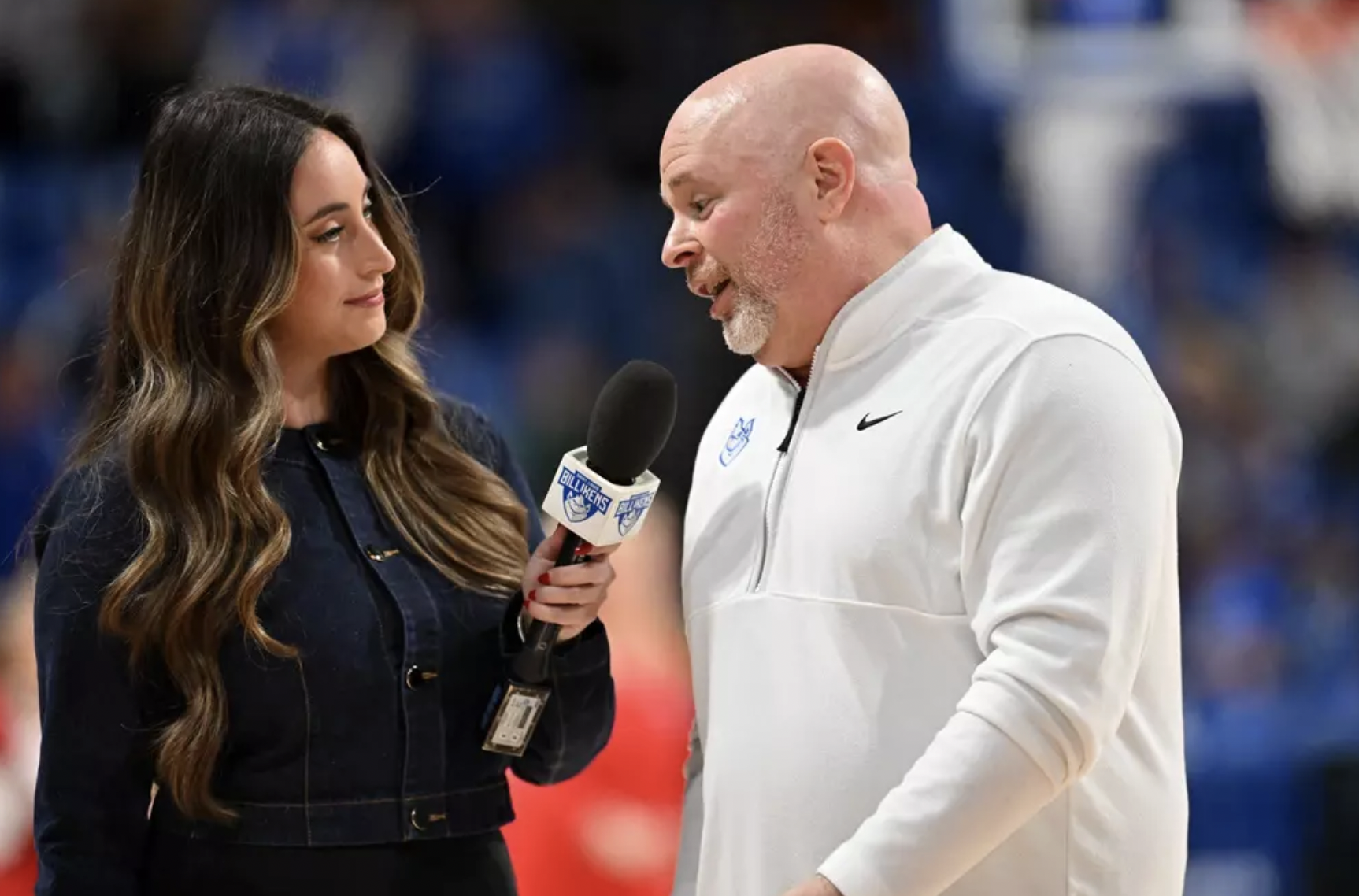
Typing the two words Josh Schertz into a search engine and scrolling will serve as a reminder of every upper-tier job opening on the 2026 coaching carousel. Whether he had any interest in any of the biggest available jobs on the market, Schertz was tied to all of them. That’s because he was the hottest candidate on the market.
NC State appeared to make a push for Schertz before he removed his name from consideration for the job. When Syracuse and Providence were brought up, Schertz was on every reputable list of candidates that could be a fit. He was the long-shot candidate to take the Kansas State and Cincinnati jobs. When North Carolina appeared to be at a standstill in its search, Schertz’s name started to get floated. Rumors that Schertz was being approached by the Portland Trail Blazers also circulated.
Yet here he is, leaving the Saint Louis facility in June after his team’s first practice of the summer, laughing as he says goodbye to a friend while leaving the building.
If Schertz is living with the regret of passing up on any of those positions, he’s not wearing it outwardly. He says he’s excited about what he has in his 10 returning players and the six additions that supplemented them. He appears energized by what he believes he can build at Saint Louis.
“We feel like we have all the things around us to allow us to ultimately build a sustainable, championship-level program,” Schertz said. “I think we have the tools to put teams together here–if we can do our job well in terms of recruiting and development and coaching–that can year in, year out compete, to be a second weekend team. Once you're in the second weekend, at that point anything can happen.”
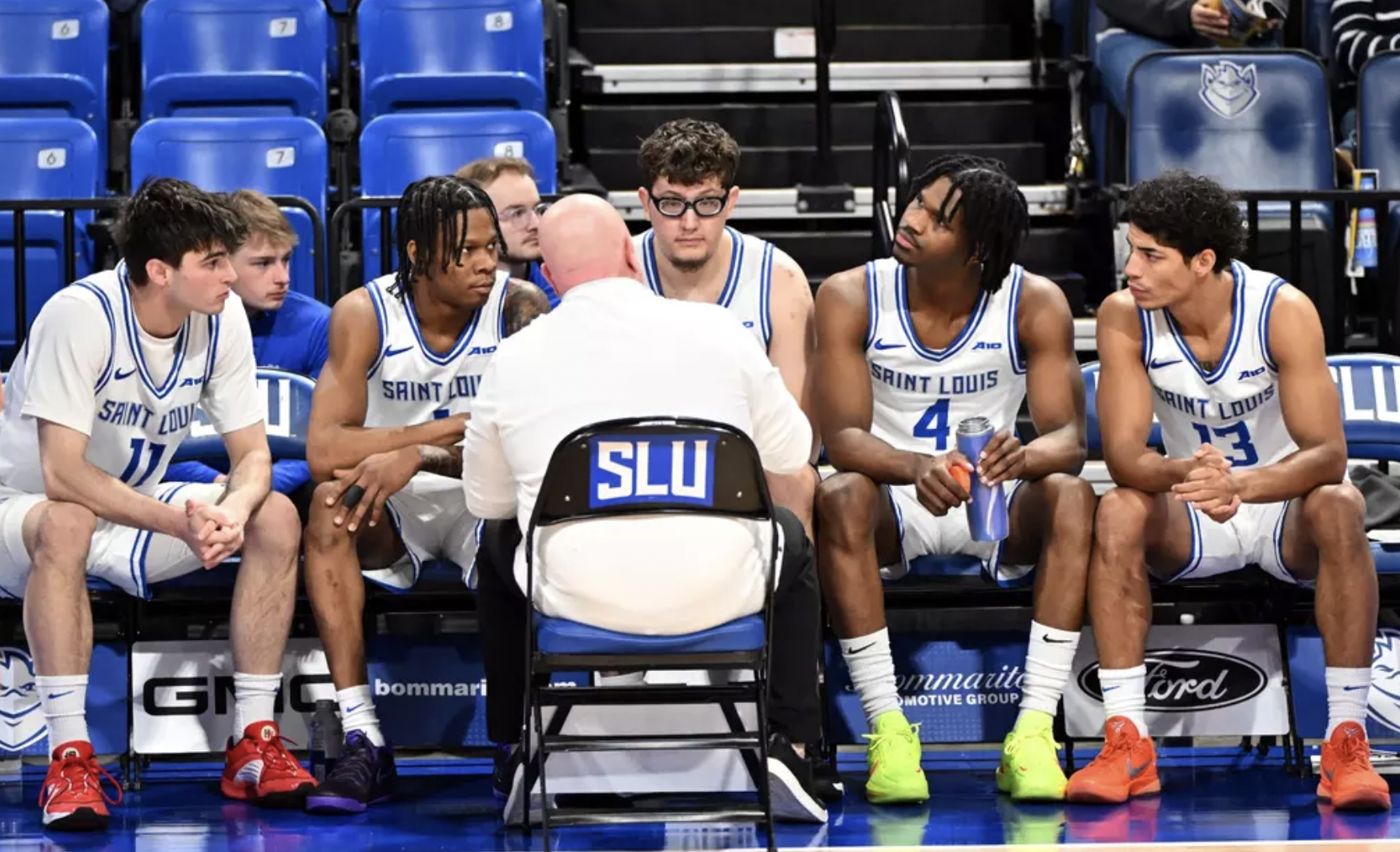
Had Saint Louis not run up on the eventual national champions in the Round of 32, it could’ve had a fighter’s chance to play its way into the Sweet 16 in 2025-26 after playing its best game of the season in a 102-77 win over Georgia in the Round of 64. That Saint Louis team was special, but the way the program is resourced indicates that the season it authored may not be an outlier with Schertz at the helm.
The university has invested in player compensation at a rate that’s relatively unheard of at the mid-major level–and would be competitive with the lower middle of several power-five leagues–a strong staff salary pool, facilities that support the program, and resources that enhance player development.
Schertz says that in the NIL era, schools can choose to be what they want. Saint Louis, he says, is choosing to be a factor in basketball.
And in this era, as Arkansas State head coach Ryan Pannone–who estimates that he talks to Schertz at least five times a week–says, administrations win championships in college basketball. Pannone believes that Saint Louis’ administration is “incredibly serious” about winning and that the pull from Power Five programs isn’t as strong as a result.
“You can bolt to a higher level for more money, to a historical conference or program, and the current administration is not as great or committed to winning championships as the administration he has,” Pannone said. “I think his administrators, supporters, and donors have done an incredible job of showing that to him. And, so, why leave? Why leave for a job that on paper looks better, but when you really get under the hood, is not as good a situation as he has at Saint Louis?”
Pannone says Saint Louis has been loyal to Schertz, and Schertz has been loyal back to it in return. He could’ve bolted after both of his two seasons as Saint Louis’ head coach, and he didn’t, Pannone says. Pannone believes that’s a testament to his friend’s loyalty, as well as to how the administration has made him feel about what they’re building with him. As a result, he estimates that Schertz won’t leave anytime soon unless it’s for a situation that he can’t feasibly say no to.
Schertz doesn’t know what will happen moving forward, but he’s not looking to move.
“When you’re happy, it would take something really, really unique to disrupt that,” Schertz said, “I’m super happy here. I love working at Saint Louis, love the university. I think the commitments across the board give us a chance to have a sustained run of success. We’ll see, but there are certainly all the things you want from alignment, infrastructure, enjoying who you work for and work with, and being in a place where you really enjoy living.”
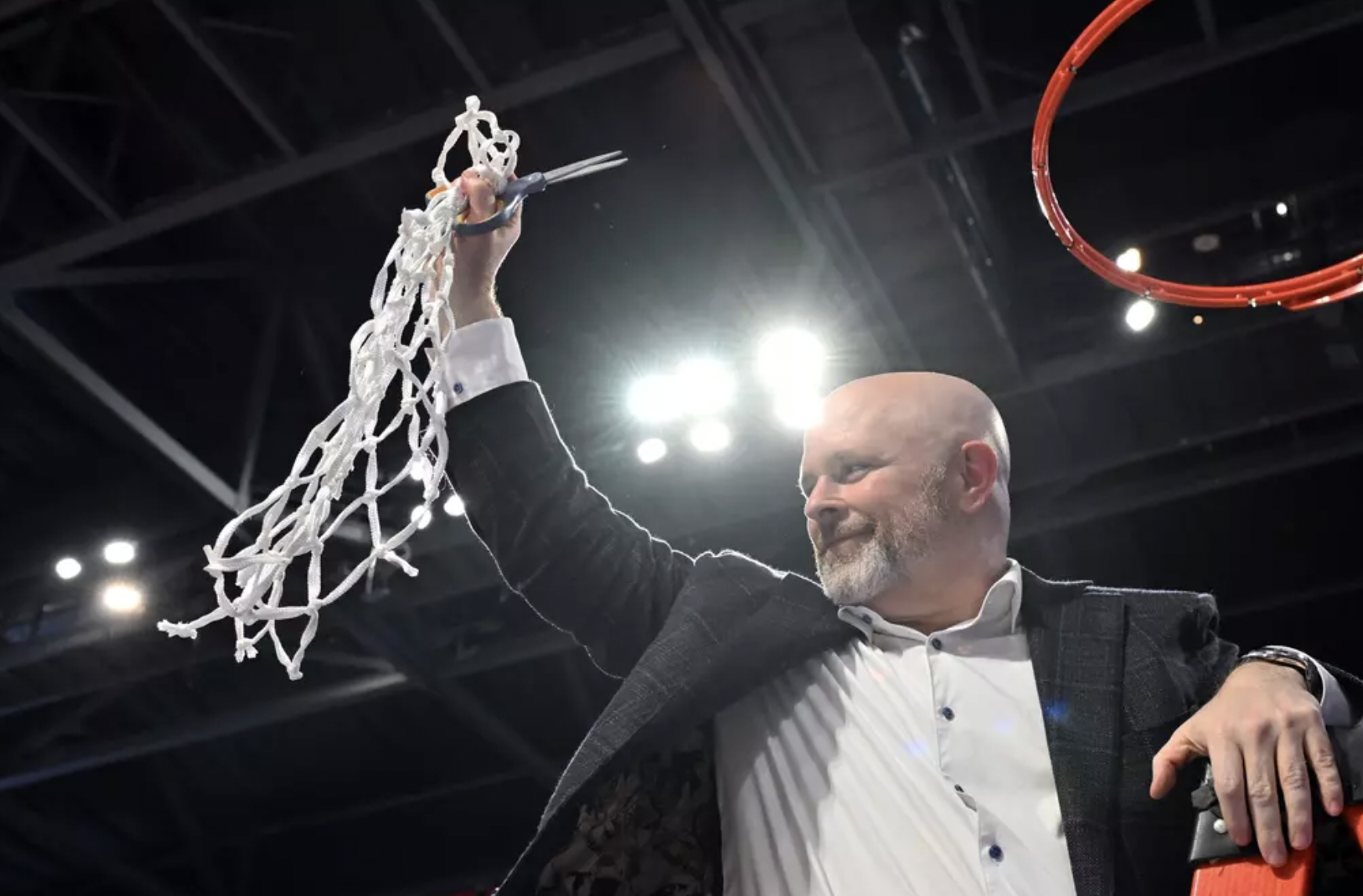
For 13 seasons, Schertz admits he lived in relative anonymity as Lincoln Memorial’s head coach, but those who knew Schertz knew. Industry people raved about Schertz, his controlled chaos approach towards offense, and the winning acumen that led him to a 337-59 record--which results in a winning percentage that looks like a typo, Boisvert says, as Lincoln Memorial’s head coach.
Those around him always appeared to believe that he’d make a name for himself like the one he’s made today–as one of college basketball’s most consistent winners and a potential quick riser. Now, they’re preaching to the choir when they sing his praises.
“He’s the total package of what you want for a guy that’s leading your program,” Jeremiah Samarrippas–a now-Wofford assistant who was an assistant under Schertz at Lincoln Memorial and took over the head coaching job when he left–said. “He’s a savant from a basketball standpoint on both sides of the floor. I think he’s elite on the offensive side, but people are starting to see just how good he is on the defensive side.”
Five years after Schertz’s departure from Lincoln Memorial, a number of the sport’s best minds will one-up Samarrippas when they speak about Schertz. Pannone says that Schertz is “extremely well regarded” in just about every industry circle. A number of coaches who know Schertz consider him to be the brightest star in mid-major basketball and one of college basketball’s best coaches as a whole.
Michigan coach Dusty May calls Schertz one of the best basketball minds in the country. Indiana Pacers general manager Chad Buchanon may have understated it by calling Schertz one of the sport’s rising stars. ESPN analyst Jay Bilas says watching Schertz’s team is like watching classically trained jazz musicians play offense. New York Knicks shooting coach Peter Patton says that wherever Schertz goes, winning soon follows.
Schertz has heard more praise than just about any coach in the sport as his program has ascended; perhaps the way he responds to it is indicative of why he’s in the position he is. Schertz is a college basketball everyman who says that he’s not dumb enough to believe that his success is due to him.
He doesn’t say it, but he also appears to be above the idea of buying into the talk that he’s one of the sport’s best coaches. Even if he gets this Saint Louis program going consistently in the way he wants to, he likely won’t buy into that.
“It’s flattering that people mention you, or think highly of you, but it’s also very, very fluid,” Schertz said. “I obviously have a role in assembling [success], and I have a role in coaching it, but I know the preponderance of what drives success is our players–certainly number one, and then a close second is our staff. Our administration is also there, and I'm in there, but my role is a lot smaller than what probably the outside perception is.”
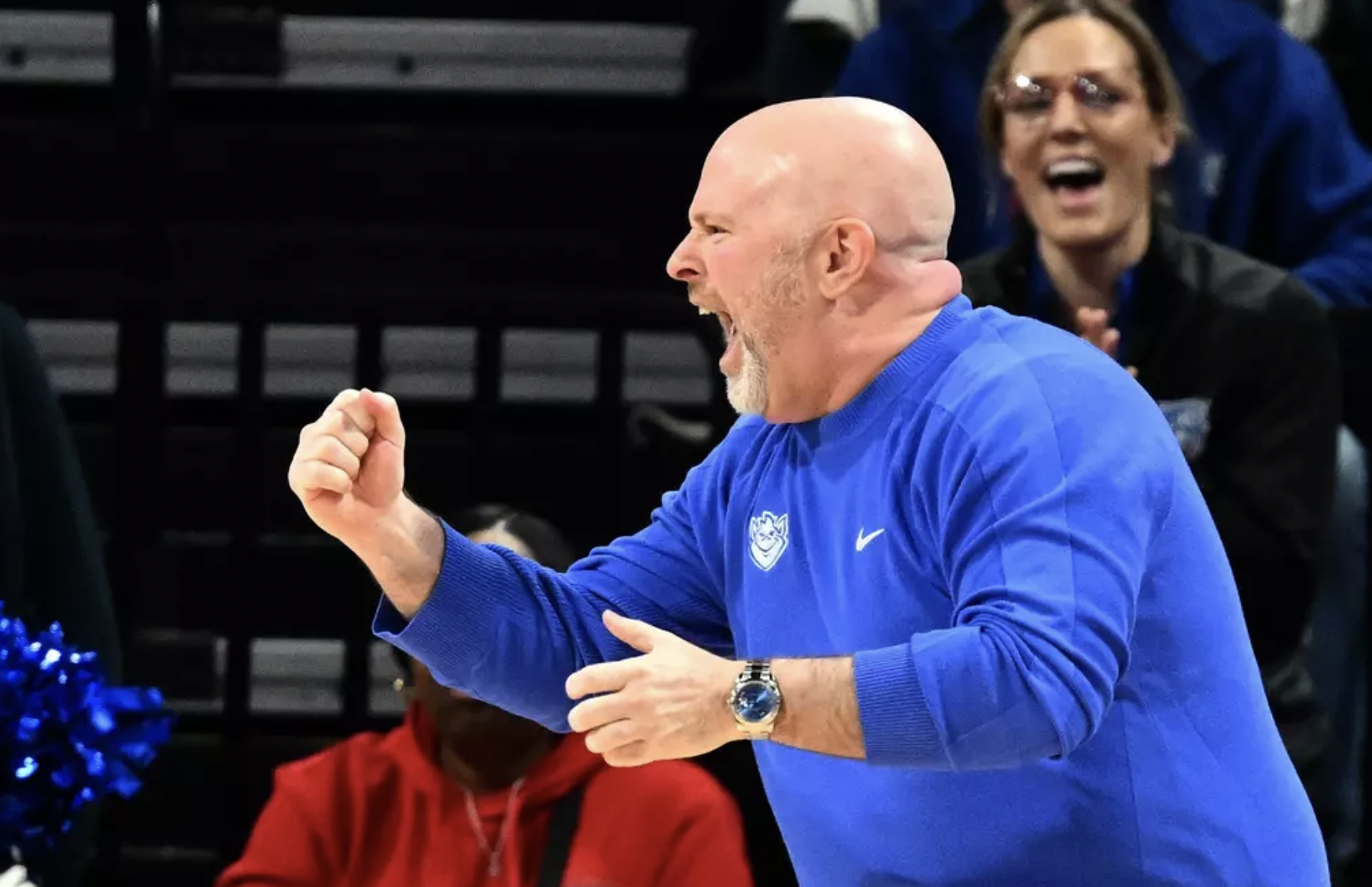
Schertz looked around at the most prominent organizations and coaches in professional sports and noticed something: they all had some sort of catchphrase that boiled down their philosophies into an easy-to-remember string of words.
Bill Belichick had his "Do Your Job" slogan. The Golden State Warriors had strength in numbers. The San Antonio Spurs had pounding the rock. Yet Schertz couldn’t craft a compelling motto for his Lincoln Memorial team. All the mainstream ones were taken.
Schertz knew his philosophies and that they always centered on a growth mindset, but “you’re not going to be like ‘growth process’ or ‘growth mindset’ with your team,” he says. He had to find something better. He had to find something that would resonate with his players.
Then, it hit him.
Schertz was reading the Harvard Business Review about Toyota and what led to its success as one of the world’s most prominent car brands when he first heard about kaizen–a Japanese concept rooted in the thought of continuous improvement. The idea resonated with Schertz, and his process-oriented brain immediately.
“I was like, this is awesome because that fits what I want, and it’s easy to say,” Schertz said. “Everything is about how we dial in, keep improving, and keep growing to keep doing what we're doing in a better way. We look at every facet of our program, from how we recruit to how we develop players, to systems, to leadership, relationships, teaching, and film, every area. How can we do what we do and how can we do it better?"
Schertz estimates he found the saying in his fourth or fifth year as Lincoln Memorial’s head coach and has used it as a north star in his program’s messaging over the last eight seasons.
The phrase has been on t-shirts, on walls in the practice facility, and has been a consistent vocabulary word for everyone involved in the program at all three of Schertz’s head coaching stops. Schertz estimates that the program’s intention to be anchored in its process has insulated it from distractions of national attention amid winning seasons and kept it afloat in difficult stretches.
When Pannone speaks broadly about what makes his friend successful, he immediately mentions his friend's tendency to grow. He says Schertz’s hunger to acquire knowledge is “elite” and that it manifests in a number of trips every offseason in which he meets with other college coaches and NBA coaches from whom he can take things.
He says that Schertz is one of the great “stealers” in the game and that his eagerness to improve is a longtime catalyst in his rise. Pannone remembers Schertz having an entirely different operation in some ways when he had it rolling at Lincoln Memorial, and he likely wouldn’t be surprised if Schertz evolved into new ways of thinking over the next few years.
“I think that’s always been the backbone of how we’ve tried to operate,” Schertz said in regard to continuous improvement. “That's the process-driven approach, the obsession with improvement, the learning from every experience, trying not to let outcomes cloud the growth.”
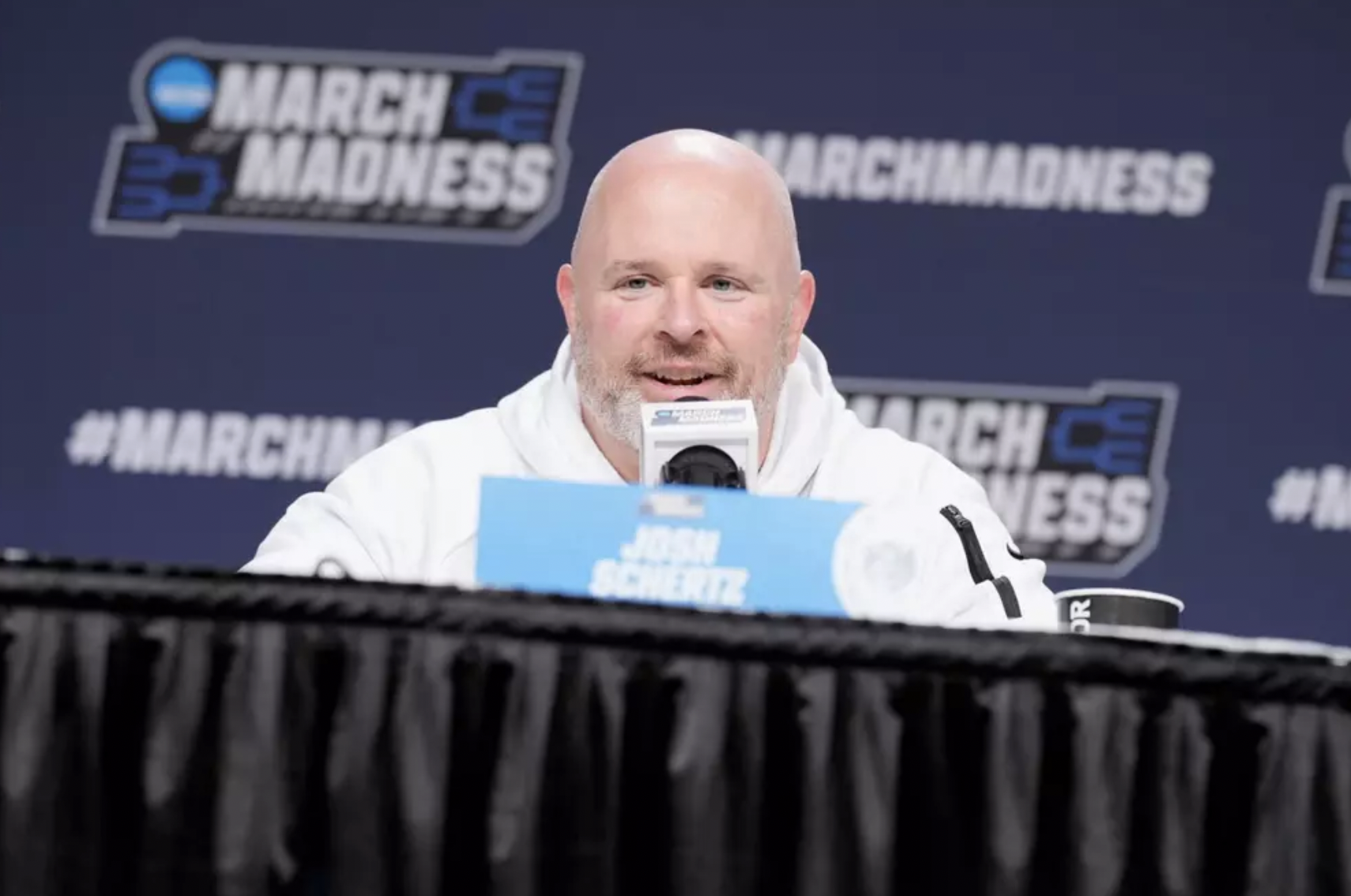
It’s mid-February inside the Saint Louis practice facility, and Schertz’s team is gunning for some history. It just ran Loyola Chicago off the floor to extend its winning streak to 17 games and was returning to the practice floor.
If all went according to plan, that practice wouldn’t have all that much celebrating.
“The ultimate idea is this,” Boisvert said at the time, “We won 17 in a row, and I think if you came to practice today, we hope you have no idea if this group won 17 in a row or lost the last game, whatever it is, cause the whole idea is all that matters is that day right in front of you.”
As Saint Louis began its first day of summer practice on Monday, Schertz hopes for the same thing. Perhaps the influx of media on the sideline was more noticeable because of what Schertz’s program accomplished a year ago, but it’s time for everyone else involved to flush that ride.
Everything that Schertz’s program did in 2025-26 was special. It made Saint Louis nationally relevant. It got him in conversations for just about every job in the country. It gave this program a platform to build off of. It’s time for a new ride, though.
“It's a new journey, new team,” Schertz said. “Nothing carries over. I think when you look at things as benchmarks or endpoints, and I think if you're in this for the long haul, you're not defending anything like that. Banner's up. That ring is won. You're not guarding anything, you're not defending anything. We’re onto the next challenge. One of the things we want to be uncommon is our competitiveness, our competitive stamina, and the ability to be process-driven. We’re not trying to repeat an outcome. We're trying to repeat a process and better a process.”
Pannone says most coaches at this level lost their love for learning and their desire to find better ways of operating, but Schertz never has. The more success that Schertz has had, Pannone says, the more he’s gone out of his way to try to evolve and improve. He says that, and Schertz’s ability to connect is what makes Schertz elite.
But Schertz isn’t walking around as if he’s elite. He still believes he’s got plenty to learn. He’s got plenty left to achieve, too. So does this program. Time for it to start all over. Time for it to make a run at the A10 Championship again.
Time to internalize the kaizen signage around the practice gym. Schertz will. Those around him say he wants to be great, and this is the only way he knows how.
“He's constantly trying to figure out how to be a better coach,” Pannone said. “Josh is leaving no stone unturned.”
