


NASHVILLE—Back on the couch in Burlington, Illinois, Drew Scharnowski and his brothers Max and Sam sat and took in the show.
Moving on the screen in front of them were Duke stars Marvin Bagley, Grayson Allen, Wendell Carter Jr. and the rest of Duke’s star-studded 2017-18 roster. Their dad was a North Carolina fan, but after Sam–the oldest brother–fell in love with Duke during its 2009-2010 national championship run, the other two brothers also chose to be Duke fans.
Scharnowski was in seventh grade when Duke’s big three ran the show in 2018, but he already had a sense for the magnitude of what he was watching. He loved watching Bagley, in particular, and has perhaps an even greater affinity for Duke’s 2018-19 team–which rostered Zion Williamson, RJ Barrett and Cam Reddish. He describes his younger self as a “Cam Reddish glazer.” Scharnowski also has vivid memories of watching Duke star Cooper Flagg in 2024-25. His favorite “sleeper” Duke player to watch was versatile forward Maliq Brown.
Duke was always Scharnowski’s dream school and in a few weeks, he’ll leave Belmont to make his dream come true by joining the Blue Devils. After a breakout season at Belmont, Scharnowski entered the transfer portal and became Duke head coach Jon Scheyer’s first commit of the cycle.
What would Scharnowski’s eighth-grade self think of that?
“S***, he’d be tweaking out. He wouldn’t know what had hit him,” Scharnowski told Basket Under Review. “I never thought I was good enough. I never really, really believed in myself until this past year. In the recruiting process, coming into the portal it was like ‘Drew, these schools really want you because you’re really flippin’ good at basketball.’ Having that is a really good reminder. Not saying that to be prideful, but just thinking ‘you’re a really good basketball player, you can go kill.’”
Whether Scharnowski has internalized it or not yet, he’ll be a part of the same team that the five-star recruits he watched as a kid starred for. He’ll be wearing the same uniform. He’ll be playing on the same floor as them, too.
Scharnowski was careful to avoid committing to this program solely based off of its allure. It had to make sense for him. It had to make sense for his career. If Duke’s staff didn’t have plans of doing anything more than making Scharnowski’s dream come true with a roster spot, he wouldn’t have opted in to this.
Scheyer and company don’t build their rosters primarily through the transfer portal, but they liked Scharnowski enough to let him know that his decision was important to them. Duke’s staff sees more in Scharnowski than merely his 10.7 points and 6.8 rebounds per game. They see a piece that can fit on a team that competes for a national championship.
As a result, Scharnowski’s dad has abandoned his die-hard North Carolina fandom.
“On the record,” Sam Scharnowski said, “Dad is all in.”
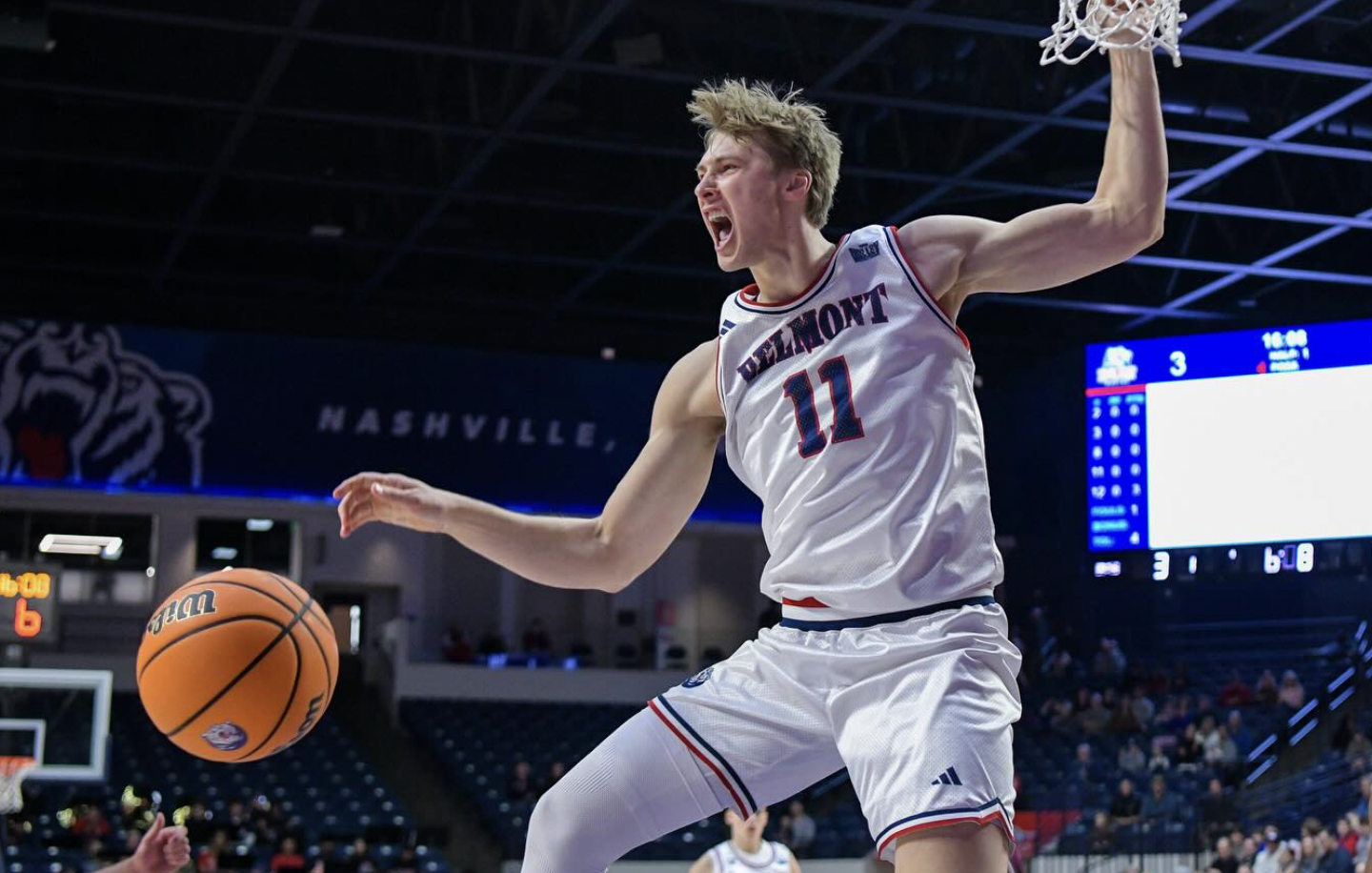
Scharnowski knew the call was coming, but his expectations didn’t prepare him for what went through his head as his phone lit up and Scheyer’s name popped up. The call came while Scharnowski was in the airport and he tried to play it cool as a result. He could only do so much, though.
“I was like ‘holy crap,’” Scharnowski said, “Legit, like ‘deep breath in, breathe out.’”
Stopping to smell the roses is something that Scharnowski admits he doesn’t do enough, but this was the type of moment that was too important for him to brush off. If Scharnowski didn’t understand the type of commodity that he was, this was one of a few moments that inevitably led him to figure out the nature of his market.
When Scharnowski first entered the portal, he took a four-minute phone call with his agent and by the time it was over, his agent had to let four calls from coaches go to voicemail. Among the programs that contacted Scharnowski were Kentucky and UConn–which he notes that he had serious interest in because of his affinity for Dan Hurley, but ultimately not the chance to end up there.
After Scharnowski and his agent gauged the initial interest, he narrowed his list to Vanderbilt and Iowa–both of which he visited in the first weekend after the dead period. Scharnowski was treated like a commodity. Then, all of a sudden, he wasn’t anymore. Scharnowski says that things didn’t turn out how he expected with either school, which caused him to all but reset his recruitment.
Scharnowski zooming out on his recruitment opened the door for Josh Schertz and Saint Louis to get involved. Schertz and company made a strong impression quickly and got Scharnowski on a visit. In a recruitment filled with high-end power-five programs, Schertz and company were a real contender. Scharnowski and his family still rave about that program and how it’s operated.
When Duke comes calling, though, everything else fades. Scheyer called Scharnowski shortly after his Saint Louis visit and was honest with him about the intentions behind the call. Scharnowski left the conversation believing that Duke’s staff has the type of character that he values.
Scharnowski and his camp prepared a significant amount of prep work before the portal’s opening in an effort to be ready for recruitments from a number of programs, but they didn’t do any work on Duke. They never expected the final destination to be Duke.
Had the transfer portal not been so cruel, Scharnowski likely would have checked off that box and committed to Vanderbilt or Iowa nearly a week earlier. At the time, disappointment defined a once-promising portal entry. All is well that ends well, though. Had none of that happened, Scharnowski never would’ve known Duke was interested. He certainly wouldn’t be gearing up to spend his summer in Durham.
Instead, though, Scharnowski and his brother Max went on a walk around the neighborhood minutes before he came to a final, life-changing decision. By the time Scharnowski called his older brother Sam–who was on a plane during the walk–he had a four-word declaration for him.
“I’m gonna go Duke,” Scharnowski told him.
“The process wasn’t concluded as quickly as everybody maybe wanted it to be and it wasn’t as smooth as everybody wanted it to be,” Sam Scharnowski said, “But it kind of shows; if you trust the process, God’s got a plan and it all works out.”
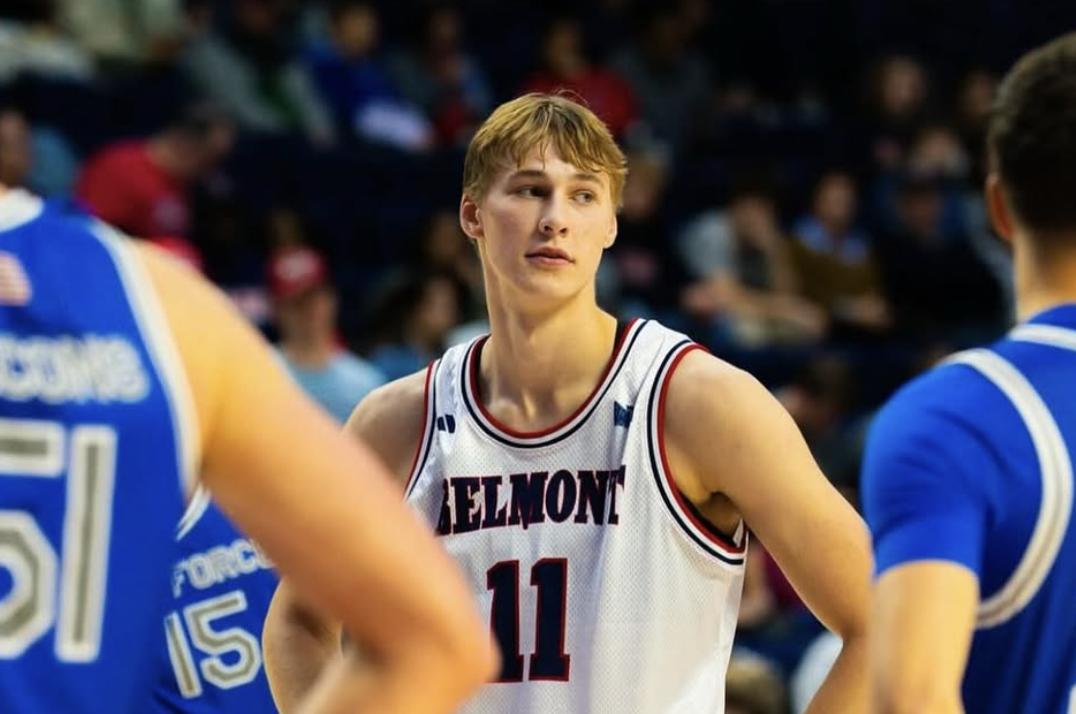
In retrospect, the visual draws a laugh from Scharnowski and a number of those close to him. For the entirety of his freshman season at Belmont, though, it was his reality. Whenever Belmont’s loaded 2023-24 team–which included eventual Tennessee guard Ja’Kobi Gillespie, Ole Miss forward Malik Dia as well as North Carolina and Minnesota wing Cade Tyson–took the floor, Scharnowski sat towards the end of the bench with khaki pants and a Belmont polo on.
Scharnowski admits that when he first considered the possibility of taking a redshirt year he was “stubborn and stupid” and wanted to prove himself by not taking it. He had come in that summer with a torn meniscus, though, and didn’t start practicing until the fall. At a place like Belmont—particularly that season—that makes the climb to playing time decidedly uphill.
He wouldn’t have guessed it then, but Scharnowski says that the decision to take a redshirt was the best decision he could’ve made at the time.
By the end of it, Scharnowski had drank more mass gainer shakes than he could remember, had put on 30 pounds and had gone though significant development within Belmont’s system. It was almost unfathomable that Scharnowski would be on track to fill a rotational role at Duke at that point.
Since then, Scharnowski has authored a redshirt freshman season in which he often flashed but only scored 5.5 points per game in less than 13 minutes played a night, a significant leap and an All-MVC season.
As a result, he’s here. Scharnowski has come a long way since those redshirt days, so much so that he looked physically different to those close to him when he would make trips back up north.
“He just turned into a monster,” Reed Hunnicut, who has coached and developed Scharnowski for a number of years, told Basket Under Review. “His path is not conventional. You don't see a lot of kids that are going to a mid major that redshirt a mid major and then end up at a school like Duke. With the way that he's worked and just the surrounding pieces of his life that he's had really become family, with a faith aspect. I think this is very fulfilling for him.”
As Scharnowski reflects on how this all played out, all he does is thank the support system he had for keeping him level-headed through the peaks and valleys of his career at Belmont. He says he wouldn’t have been able to accomplish this without that group–which includes a number of former Belmont coaches.
Perhaps this isn’t how he would’ve drawn up his path to a blue blood—particularly since those around him thought he could’ve been a power-five player out of high school—but perhaps this rise is more meaningful because of what it’s required of Scharnowski.
“I think his humility and how team first he is genuinely the reason that he's been able to get this opportunity,” Sam Scharnowski said. “It’s a superpower.”
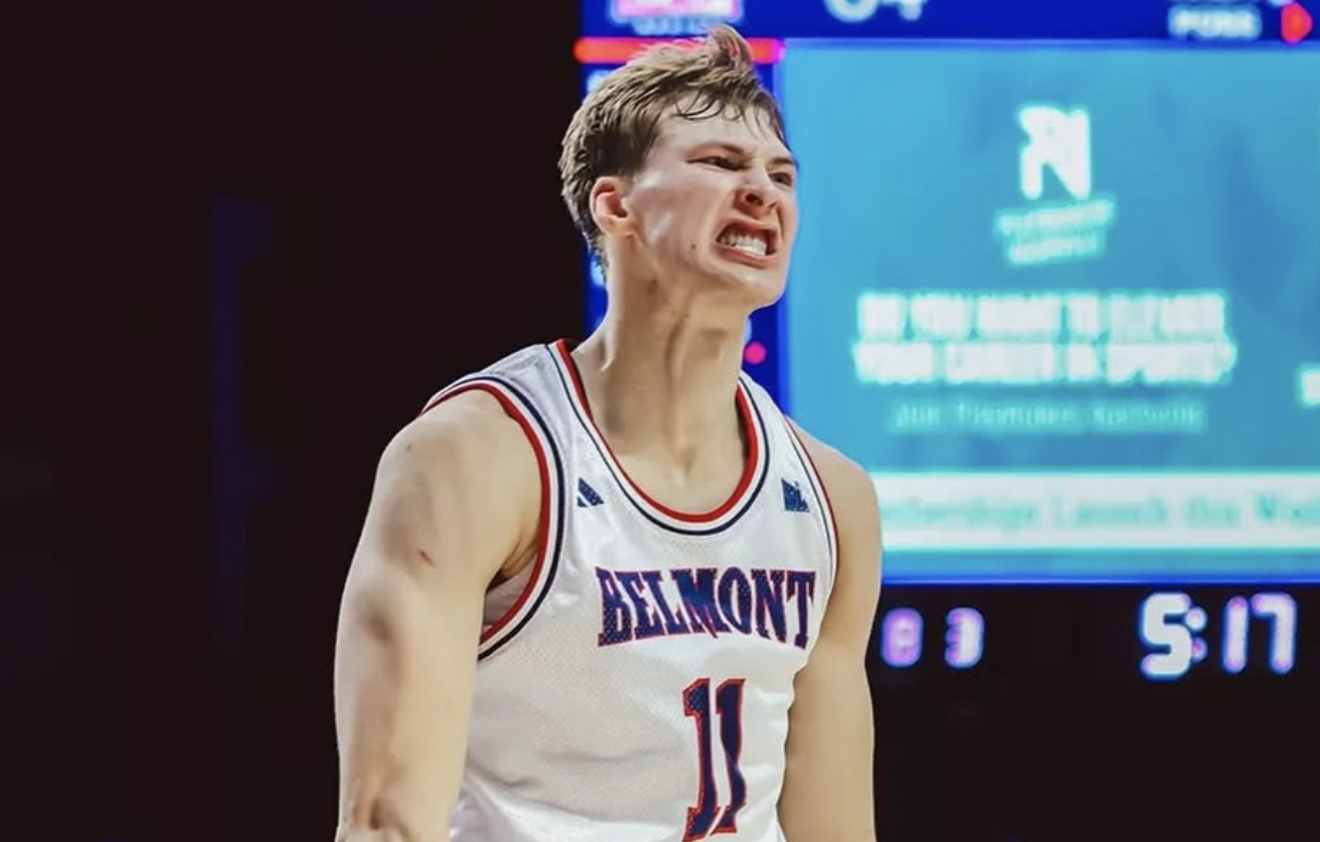
The shot clock was ticking down when Scharnowski found himself with the ball in hand at the top of the key. By the time he had to make a decision, he had no choice. Scharnowski had to take a 3.
The data indicated that Scharnowski’s attempt was bound to be ill fated, but Scharnowski had been vindicated in regard to his belief that he was a threat beyond the 3-point line by the time it landed.
The shot changed the dynamic of that game and gave Belmont a 58-56 lead—which it would never lose—in a top of the MVC showdown against Bradley. Scharnowski had never made a 3 in his college career and never made one after that, but he clearly believed that it wasn’t a fluke.
Scharnowski joked postgame that he and then-Belmont coach Casey Alexander disagreed how often he should be taking shots from 3-point range. Even Alexander believed that there was something within his big man, though.
“He shoots tons of 3s in practice,” Alexander said that day. “There’s no reason for him to shoot them early in the shot clock, but I wasn’t surprised at all he made that shot.’’
It hasn’t shown in the numbers yet, but Scharnowski has always worked out with the intention of becoming a threat on the perimeter. He did it as a middle school point guard, a high schooler and kept at it in his first three years of college.
Perhaps—as Scharnowski heads to Duke as a five man, who will also play the four—this could be the time in which he finds a more consistent stroke. Those in his camp believe that will be the case because of his approach.
“I know I can shoot it. I think it's definitely a confidence thing working in and adding that to my game and also just being more comfortable in different scenarios,” Scharnowski said. “I want to play in the NBA and I think I can really maximize my potential down there in Durham.”
Scharnowski believes that in order to reach his eventual goal, he’ll have to improve his pace and playmaking. He believes he has a unique versatility and can unlock it if he’s consistently making the right reads as a roller.
Even if Scharnowski doesn’t take those steps forward, his defensive ability, athleticism and the fit of his skillset in a modern offense will make Duke’s frontcourt better. Having Scharnowski raises Duke’s floor because of what he can give it in that way. He doesn’t want the joy he possesses and what this opportunity means to him to get lost, either.
“I hope that shows when I take the court,” Scharnowski said. “I think the most important thing is continuing that and doing whatever the coaches need me to do.”
