
In our Champions Rewind series, we'll be looking at the seasons of and systems used by National Champions in the 2010s.
This week, we break down the start of the decade as the Duke Blue Devils cut down the nets in Indianapolis. We'll recap their season-long run before diving into the offensive and defensive systems the Coach K-led team utilized on their way to the championship.
If you missed installment one of the series, breaking down the incredible 2011 UConn run, you can find that here.
Season Recap
The most famous moment from this Duke Blue Devil run probably had nothing really to do with Duke themselves.
Gordon Hayward - Half court heave
Gordon Hayward nearly banking in the game-winner to cap off an incredible run is what people will first remember from the 2009-2010 season, but that doesn't mean this Duke team should be completely overshadowed.
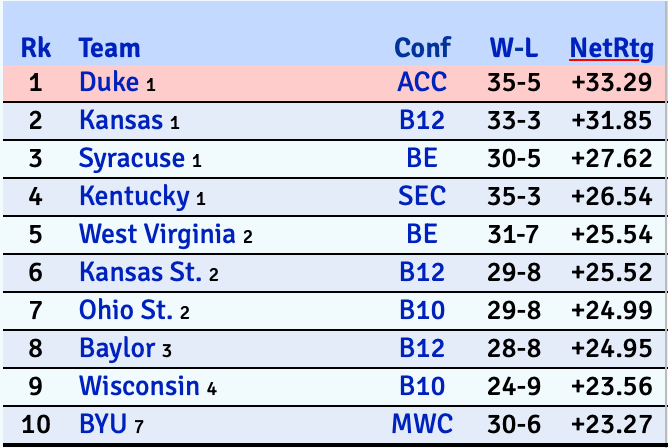
Looking at the end-of-season KenPom top 10 shows how good this Duke team was, nearly 6 points better than the 3rd-best team in the country. It was a clear top two of Duke and Kansas, and after Kansas lost to Northern Iowa in the 2nd round, Duke quickly became the heavy favorites.
When looking at pre-tourney data, Kansas was #1 at a NetRtg of 32.51, Duke was #2 at 31.55, and Syracuse was #3 at 27.59. There was still a pretty clear top 2-3.
Coming off a 30-7 season the year prior, which featured an ACC Tournament Championship and a trip to the Sweet Sixteen, Duke was ranked 9th in the pre-season AP Poll.
Duke returned a lot of their production from the previous season. Gerald Henderson entered the NBA draft after his junior season, and the only senior from the 2009 season in the rotation was Greg Paulus, who averaged 16 minutes per game.
So aside from Henderson, who was the leading scorer on the 2009 squad, Duke returned most of their production. This included returning 60% of their minutes and 64% of their points from the previous season.
This included 4 very consistent starters throughout the season:
- Nolan Smith - Junior - Guard
- Jon Scheyer - Senior - Guard
- Kyle Singler - Junior - Forward
- Lance Thomas - Senior - Forward
The starting center spot was switched after 24 games, with Brian Zoubek being the starting center for the end of the season and post-season run.
- Brian Zoubek - Senior - Center
- Miles Plumlee - Sophomore - Center
Duke didn't run a super deep rotation, being 315th in the country in bench minutes that season. The bench included:
- Mason Plumlee - Freshman - Center
- Andre Dawkins - Freshman - Guard
- Ryan Kelly - Freshman - Forward
Similar to how the last few Duke teams have been, the 2010 Duke team was the 2nd tallest in the country, based on average height, at 6'7". Duke was also 17th in the country in D-1 experience, which makes sense since all the starters for the end of the season were upperclassmen.
Duke started out 13-1 overall, with their lone loss being in a true road game at Wisconsin. In that one, Duke was down 2 with just two minutes left, but weren't able to pull it off.
During that 14-game start, Duke knocked off the likes of Arizona State, UConn, St. John's, Gonzaga, Clemson, and Iowa State.
The ACC ended up being a pretty deep conference that season, with all 12 teams being in the top 80 of KenPom at the end of the season. What this meant was there were no real nights off during conference play.
After beating Clemson to open ACC play, Duke dropped one on the road at Georgia Tech. Just 3 games later, Duke also dropped a road game to NC State, a team that finished with just 5 ACC wins. 3 games after that, Duke dropped a non-conference, true road game at Georgetown. They sat at 17-4 overall and 5-2 in Big Ten play heading into February. Duke was ranked 11th in the country, the only week they weren't in the top 10 all season.
After that, though, they rattled off 8 straight wins, including victories over Georgia Tech, UNC, Maryland, and Tulsa!! (Imagine a top 10 team in the country scheduling a good mid-major for late February!)
Duke split their last two regular-season games, losing at Maryland before beating UNC at home to clinch an ACC Championship.
Both Jon Scheyer and Kyle Singler were named to the All-ACC First Team, and Nolan Smith made the All-ACC Second Team. Lance Thomas made ACC All-Defense.
After winning the regular season title, Duke entered the ACC Tournament as the one seed. They got by Virginia in a game they trailed for one minute the entire game. After that, they got a 3-point win over Miami in a game Duke controlled for the majority of the 2nd half. Duke played 7-seed Georgia Tech in the championship game. The Blue Devils cut down the nets with a 3-point victory, although the final score was much closer than the way Duke played for much of the game. Kyle Singler was named the ACC Tournament MVP.
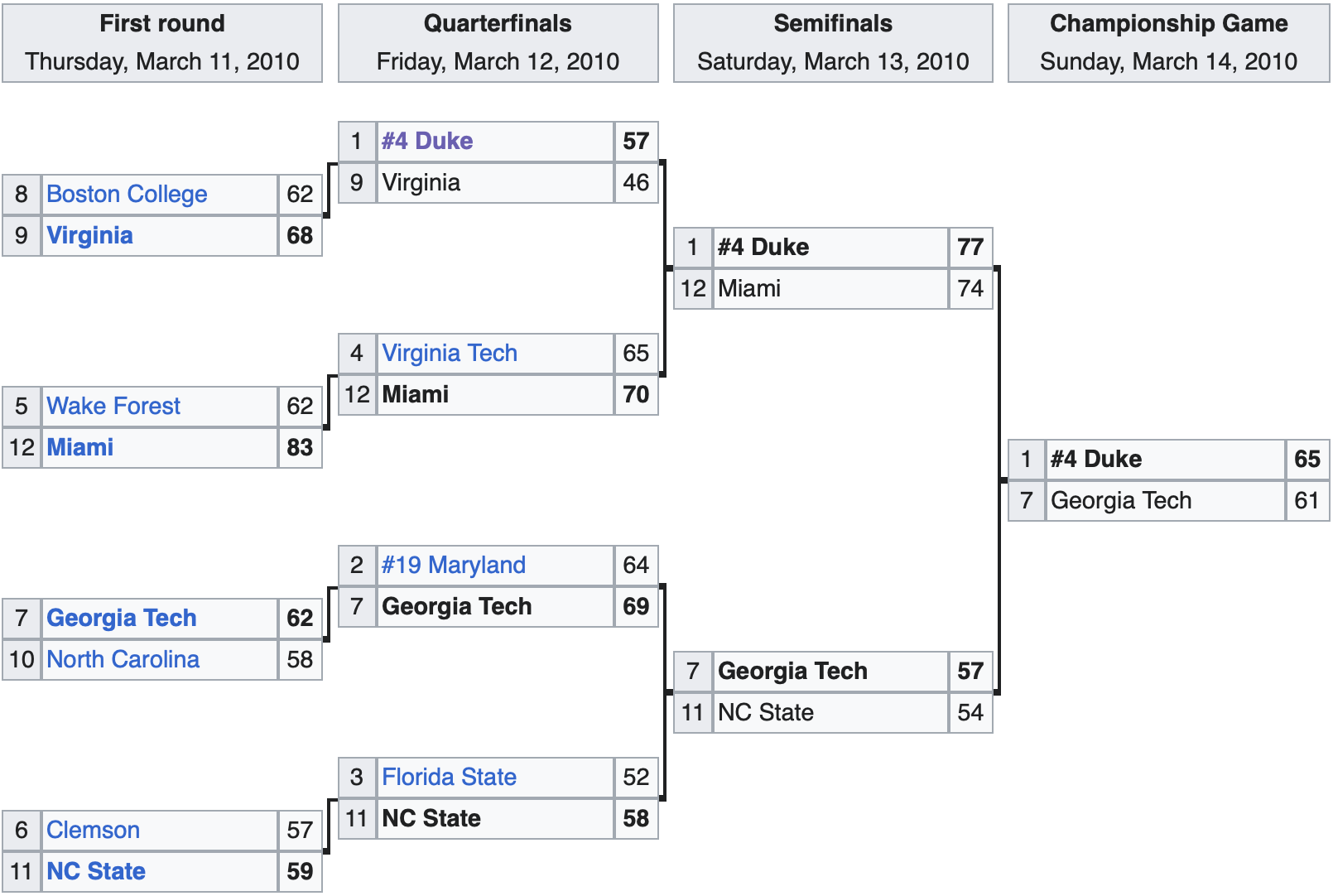
Later that day, Duke found out they'd be the one seed in the South region.
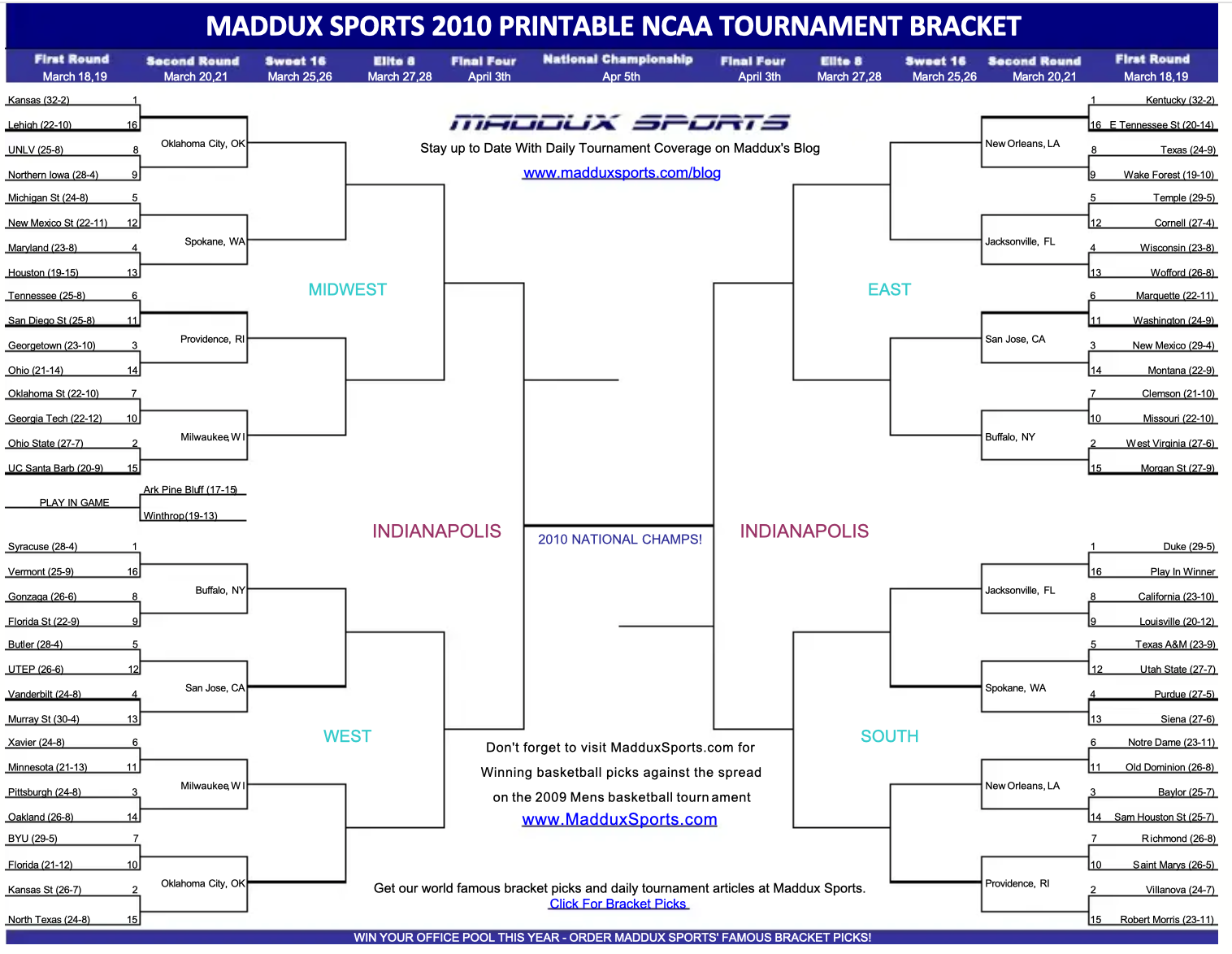
They ended up playing Arkansas Pine Bluff in round one, a game that was over just as quickly as it started. They ended up winning 73-44 behind 22 points and 10 rebounds from Kyle Singler.
Duke faced off with California in the 2nd round of the tournament. The Golden Bears kept it close for about 15 minutes, but Duke ended up with a double-digit lead at half and never looked back, winning 68-53. Nolan Smith led the way with 20 points, and Brian Zoubek had a 14-point, 13-rebound double-double.
In the Sweet Sixteen, Duke took on a Purdue team that had just lost Robbie Hummel to an ACL tear the month prior. Purdue was still talented, though, and Duke had a run, trailing only by one at halftime. However, Duke ultimately flexed its muscles in the final 10 minutes and secured a 70-57 win. Kyle Singler had 24 points, Jon Scheyer had 18 points, and Nolan Smith added 15. The trio of scorers showed in this one what they had been able to do all season long.
Duke took on 3-seed Baylor in the Elite Eight. This was the closest game Duke had during their run so far, as they trailed by 3 heading into half, and they trailed 61-60 with 4 minutes left. Nolan Smith got fouled and split a pair at the line, but a Lance Thomas offensive rebound eventually led to a Nolan Smith 3 to give the Blue Devils a lead. They went on a 12-1 run over the next 2 minutes to secure their spot in the Final Four. They won 78-71 behind 29 points from Nolan Smith and 20 points from Jon Scheyer.
Duke faced off against West Virginia in the Final Four, in a game that wasn't too stressful in the end. Duke gradually extended their lead in the first half to take an 8-point lead into the break. From there, they extended their lead to double digits and ultimately won 78-57. Kyle Singler had 21 points, 9 rebounds, and 5 assists, Jon Scheyer had 23 points and 6 assists, and Nolan Smith had 19 points and 6 assists.
Then came the championship against 5-seed Butler, in Indianapolis. Led by Gordon Hayward, Shelvin Mack, and Matt Howard, Butler found their way to the championship by being a physical defense that slowed the game down. That style was evident in the championship as neither offense was really able to get going.
It was a close game with a lot of back-and-forth. In fact, the largest lead for either team was only 6 points, which Duke led by with 5 minutes left in the first half. With 5 minutes left, Duke led 58-55. After 2 minutes of neither team scoring, Nolan Smith got to the free-throw line and knocked down a pair of free throws. Matt Howard responded a few possessions later with a layup off a cut to the rim, making the score 60-57. A Matt Howard layup out of a Shelvin Mack pick and roll cut the lead to just 1 with a minute left. Both teams missed, and eventually Butler fouled Brian Zoubek, a 55% free throw shooter. He ended up splitting the pair, and well, you know the rest.
Offensive System
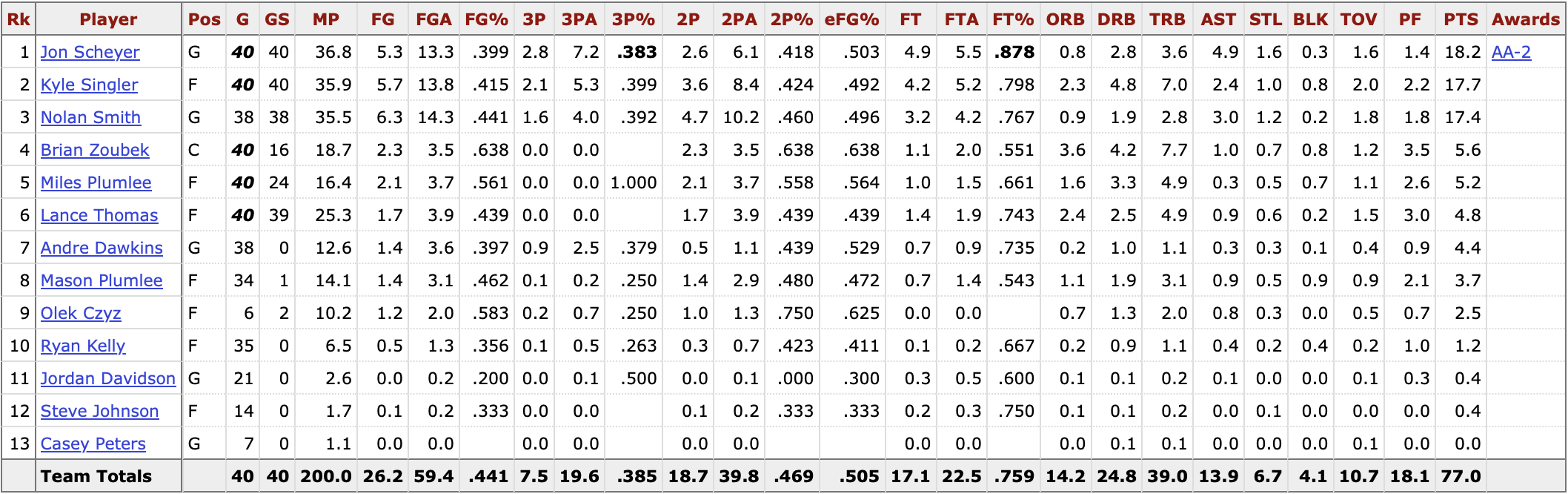
Duke had the #1 offense in the country in 2010 behind the three-headed monster of Jon Scheyer, Kyle Singler, and Nolan Smith. Those three averaged 18.2, 17.7, and 17.4 points per game, respectively, while also averaging a combined 10.3 assists per game. Everything ran through those three.
For reference, Brian Zoubek was 4th on the team in scoring and assists, averaging 5.6 points and 1.0 assists per game.
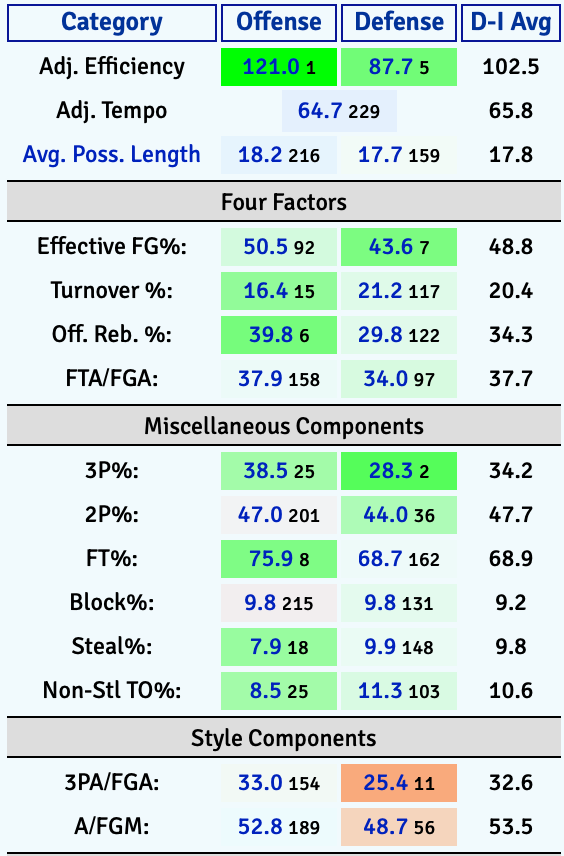
Despite being a slightly below-average two-point shooting team, Duke did basically everything else correctly. They were top 25 in three-point percentage at 38.5%, as all three of Singler, Scheyer, and Smith shot over 38% from three on at least 4 attempts per game.
Duke also consistently won the possession battle by avoiding turnovers and dominating the offensive glass.
Add that all together, and you get an elite offense.
Off-Ball Screening
As was the case for many teams in that era, Duke ran a lot of off-ball action. They averaged about 6.5 shots per game out of off-ball screening action, and about 6.5 shots per game out of cuts.
If you watch any game from the early 2010s, you're bound to see Floppy action. Floppy action is an off-ball screening action designed to get a shooter open. The shooter starts under the basket and has the option to run off a pindown going either direction. Duke primarily ran this type of action to get Jon Scheyer and Kyle Singler the ball in space.
Floppy Action
The clip above shows Kyle Singler in floppy action. He chose to go off to the side with the single pindown. Part of what made this action so effective was the space it created. As Singler catches, he has a lot of room in the paint to be able to operate and score. This really was one of the most common actions teams used.
"Half" Floppy
In the clip above, Singler sets up under the rim, as if he's going to go into the Floppy action. Instead, though, Scheyer ends up cutting through the paint and off a single pindown to once again have room to operate.
In addition to having a trio of elite scorers, Duke's ability to use them as decoys to set up other players made the offense even more difficult to defend. Duke had counters for when teams tried to overplay.
Fake Floppy into Veer
In this clip, Singler once again sets up underneath the rim as Floppy action seemed imminent. Instead, though, Duke ends up going to Veer action, in which someone sets an on-ball screen before setting a pindown. So this action has a very similar effect to Floppy, but with the initial pick-and-roll, the defense ends up a bit out of position. This action also helps set up Singler more on the perimeter instead of catching at 10-12 feet.
Floppy into lob
And this clip shows what happens when you put two on the ball coming out of Floppy action. As soon as Wake Forest committed to Scheyer, it immediately turned into an easy lob at the rim.
Self Creation
There are generally three ways to have some sort of self-creation, and Duke mixed them all in. The three are running isolations, pick-and-rolls, or handoffs. Duke ran about 10 pick-and-rolls per game, 9.5 isolations, and 3.5 handoffs, accounting for roughly 23 of their possessions.
This didn't always mean the shot came from those actions, as a drive and kick was a very viable option for Duke.
Pick and Roll Spacing
Duke seemed a bit ahead of their time in terms of willingness to space the floor. As Duke gets into their high ball screen, notice that they have no one in the paint, and the weakside wing is spaced multiple feet behind the line. This just makes it that much more difficult for any help defense to show.
Pick and Roll with Pindown
Duke generally tried to utilize their off-ball action while even running pick and rolls. This is a high ball screen that is accompanied by a pindown on the weakside. It ultimately didn't matter for this clip, but it shows that Duke tried to have multiple layers to their actions.
Duke didn't rely a ton on handoffs, but they still used them more than most teams in the country, as it wasn't a common action during this era of college basketball.
Horns Handoff
When getting to their handoffs, Duke generally wanted to enter the ball into the elbow, and in the clip above, it was out of a Horns alignment. The handoff comes on the second side of the action, creating space to be able to go to work.
Elbow Zoom
Another way they'd get to their handoffs was an action that has become much more popular in recent college basketball, Zoom action. Zoom action is an off-ball screen immediately into a handoff. Here, Duke keeps on the initial handoff before flowing into that zoom action.
Miscellaneous
The rest of their possessions were primarily made up of transition opportunities (Duke wasn't a particularly fast team, though) and some post-ups. With the offense being such a perimeter-oriented system, there simply weren't a ton of possessions for the bigs to do anything.
Defensive System
The offense was the star of the show, but the defense was far from being a slouch for the Blue Devils.
They had a top 5 defense in the country, anchored by having one of the best three-point defenses in the country. Teams shot just 28.3% from 3 against Duke, the 2nd best defensive rate in the country.
What stood out more with this team is that, similarly to the offense, the defense seemed to be a bit ahead of its time. They focused on taking away threes, and they really tried to force mid-range jumpers. In fact, they forced more pull-up jumpers than almost any other defense in the country that season.
With them being one of the tallest teams in the country, Duke was comfortable switching nearly everything defensively if they had to.
Defense - Switching everything
That switching ability is shown in the clip above as Duke just wanted to keep the ball in front, living with having to win the 1-on-1 matchup.
Switching with help only in the paint
This is another example of Duke being able to switch everything. What I want to bring up, though, is that Duke didn't provide much help in the gaps. What this means is that they weren't going to give up kickout threes, hence why they allowed so few three-point attempts. The only help they were willing to give was a big helping near the rim on a drive. Coach K trusted his guys to go win defensive matchups, and in turn, they took away a lot of easier looks. Below is another example of selling out to not give up a three-point attempt as Duke rotates to take away the next pass, leaving Purdue the opportunity to take a pull-up 2.
Selling out to contest the three
High hedge
When the bigs were involved in the defensive action, like a pick and roll, they'd either switch or high hedge depending on the matchup. In this one above, Duke hedged the ball screen with their big before sustaining good defense the rest of the possession.
Going back through this team, it impressed me how this Duke system was both running actions you'd expect to see from the early 2010's, but also had an analytical mindset with the three-point line and some of their spacing principles. It helps that they had three incredible scorers and a great supporting cast, but it didn't take much film to see why this team ended up being champs.
