


NASHVILLE—The windowsill is just high enough that Evan Bradds has to sit up in his chair to peek through his office window onto the practice floor at Belmont’s Crockett Center for Athletic Excellence, but he takes a moment and does it. As he turns to his right and peers over the windowsill, he locks his eyes on the far court for a second.
When he looks, he sees Cam Boozer working through the first day of his first NBA training camp in a blue No. 27 Memphis Grizzlies penny draped over him. The visual all but moves Bradds, who has envisioned this day since Boozer was drafted. Bradds reached out shortly thereafter to say he’d heard rumors the Grizzlies were coming to Nashville for training camp and that he looked forward to seeing him if that was the case.
The first time Bradds stepped into the gym and watched Boozer play, he knew a day like this was plausible and likely to come to fruition, whether he coached Boozer or not. He knew that barring a nearly unfathomable string of events, he had an NBA player on his hands in his first season as a Duke assistant coach and that he wasn’t likely to have more than a year with him.
Bradds likely couldn’t have drawn up his eventual reunion this beautifully, though.
It’s been nearly a year to the day since Boozer and Bradds’ first official practice together at Duke, and Boozer and Bradds share an embrace in the hallway of Belmont’s facility that could serve as a microcosm of how far they’ve come in the last 12 months. Bradds wears Belmont shorts alongside his team-issued shorts, while Boozer leaves a press conference that made it clear he’s the player on the Grizzlies’ roster with the most media attention.
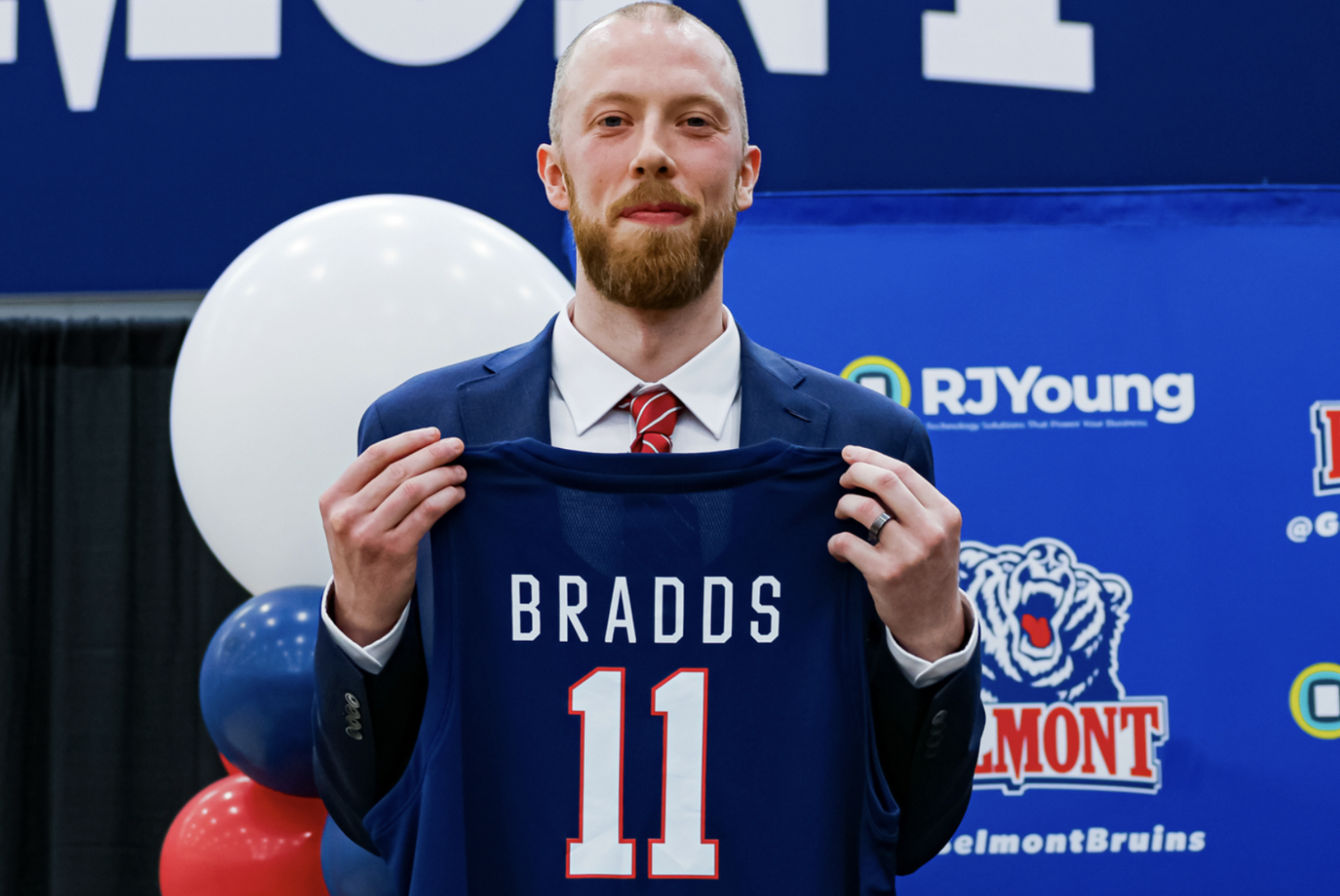
Since coaching Boozer, Bradds capitalized on his opportunity on Duke’s staff to earn what he refers to as his dream job at Belmont–where he cemented himself as one of the best players in the program’s Division-I history. Boozer leveraged his Duke opportunity to become one of the NBA’s most highly touted rookies.
“I’m just really happy for him as a human being that he gets this opportunity to fulfill his dream,” Bradds told Basket Under Review. “I know he’s going to be great and I can’t wait to watch him.”
In the final moments of the Grizzlies’ Tuesday practice, Bradds emerges from the hallway and leans on the doorframe marking the barrier between the hallway and the practice floor. While Bradds stands there in the facility where he made his name, watching Boozer do what he’s set out to do since before he and Bradds arrived at Duke, it still seems impactful to him.
Whether Bradds internalized it in that moment or not, he and Boozer were receiving the fruits of their labor. Everything they’ve put into this together over the last year has paid off. As if it were fate, their paths crossed again on this September day, forcing that jarring reality to hit home.
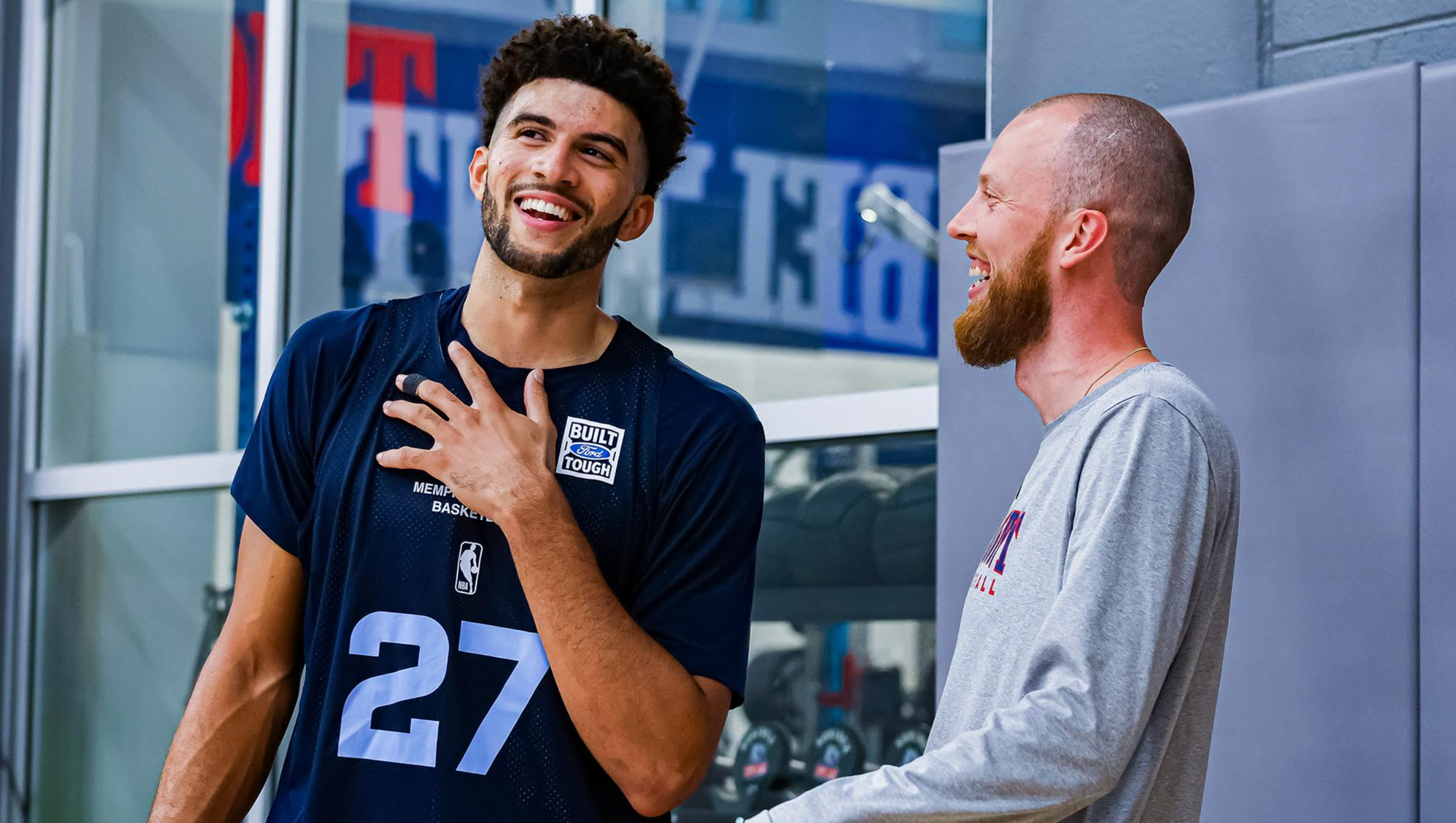
BRADDS REMEMBERS the moment vividly, as one that re-affirmed everything he already knew about Boozer. Boozer had just put together a performance well below his standard and Bradds had spent the hours prior to meeting Boozer running through film and dialing up coaching points.
Before Bradds ran through his notes, he asked Boozer what he made of the performance. If Bradds wanted to come off as the groundbreaking thinker in the room, he shouldn’t have asked that. Boozer didn’t know what Bradds had in mind, but he ran through everything that Bradds was about to convey before Bradds said a word.
The moment impressed Bradds, but he had worked with Boozer for long enough to know that it was on brand.
While Bradds was at Duke, he acted as Boozer, Duke big man Pat Ngongba and then-freshman forward Nik Khamenia’s position coach and the indication is that he was Boozer’s most consistent one-on-one teacher. Bradds had high expectations for what Boozer could be after watching limited tape of him as a high schooler and overlapping with his dad, Carlos Boozer–who Bradds worked with while with the Utah Jazz–but working with him daily elevated his opinion of him. As Boozer stands in front of a group of reporters in the hallway of Belmont’s facility, he can say the same about Bradds.
“A huge role,” Boozer said Tuesday regarding Bradds’s contributions to his development. “He has a great mind. He’s coached at the college and NBA level and he’s really seen it all. He was a great guy to pick his mind. We could talk basketball for hours.”
Get what you need time–or GWYN, as now-Belmont assistant and former Duke grad assistant Ja’Darius Harris recalls–is a constant fixture in a Jon Scheyer program and will be a fixture of Bradds’ operation. Boozer consistently spent his GWYN time with Bradds working through as many game-like situations as possible so he knew what was coming whenever he took the floor next. It was the one time each day when Bradds and Boozer could focus solely on the little details.
Bradds remembers having to strike a balance so he didn't overuse Boozer, who played 33.8 minutes per game and was Duke’s engine in 2025-26, but he could get across what he needed quickly because of Boozer’s IQ. Sometimes Bradds would land on an hour. Sometimes he’d go just short of an hour. Often, he needed only 15 or 20 minutes to get Boozer to grasp what he was teaching.
Boozer declared during the NBA pre-draft process that he believed his greatest tool was his mind rather than anything he could do athletically and Bradds nods along to that assertion all these months later. Bradds appears to believe he and Boozer connected particularly well because of the seriousness and intentionality Boozer brought to the game. He praises Boozer for his humility, which Bradds believes manifested itself in the way Boozer treated managers.
Had Bradds not been Boozer’s position coach and talked him up to whichever NBA executives would listen, he isn’t naive enough to believe that Boozer–who was the consensus No. 3 player in his high school class–wouldn’t be an NBA player. Boozer also knows Bradds likely didn’t need to list his development on his résumé to get the head coaching job at Belmont. They know that they elevated each other and are better off for crossing paths, though.
“I feel extremely lucky,” Bradds said. “Coaches try to teach players certain things, but I know there's a lot that he taught me in my day-to-day and I just really grew to respect him. So I hope he knows I'm always here for him, no matter what. The good, the bad, the ugly, I'm here for him as a friend, as a coach, whatever he needs. So, he can call me anytime.”
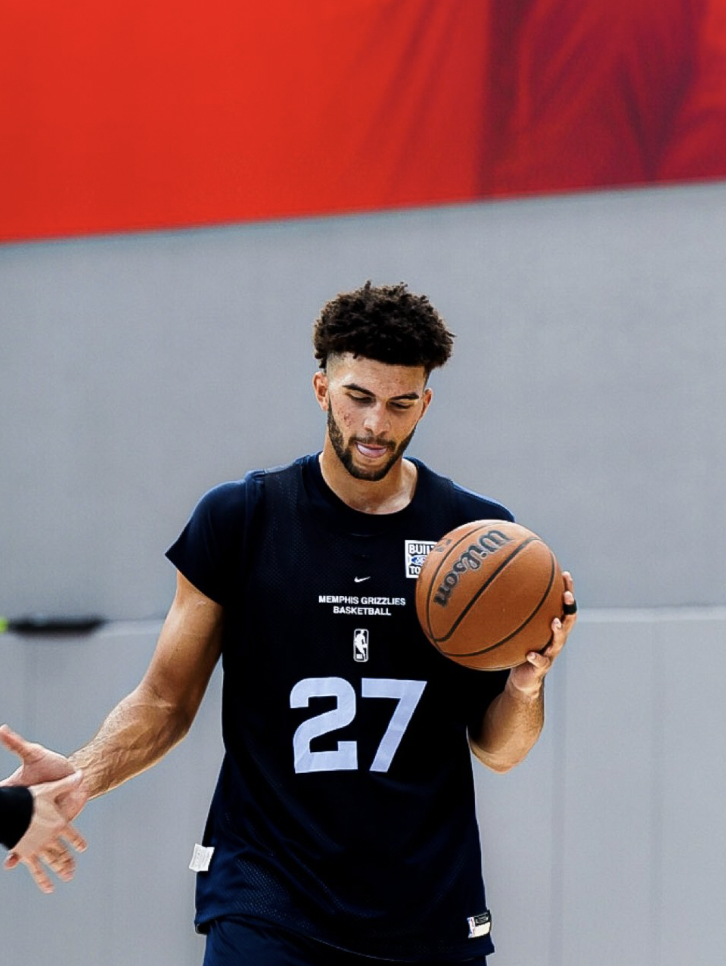
BOOZER KNOWS how difficult Division I head coaching jobs are to come by and how the odds appeared to indicate that Bradds would likely have to pay his dues at Duke for a few seasons. It was only the logical order of things.
Then, like Boozer, Bradds proved to be a one-and-done. What did Boozer make of that?
“I was a little surprised 'cause he went from the NBA, he came to Duke, and it was one year,” Boozer admits. “I was a little surprised at how quick it happened, but him getting a head job was no surprise at all, 'cause his mind is elite.”
In some ways, Boozer and Bradds’ relationship is a microcosm of how Bradds defied conventional basketball wisdom to get here. Bradds had never been a head coach before walking through the doors at Belmont for his introductory presser, but he built a resume as impressive as any first-year head coach in the country that hadn’t led a program before.
Bradds’ list of players developed includes Boozer, Ngongba, Khamenia, Utah Jazz standouts Keyonte George, Walker Kessler, Cody Williams and Collin Sexton, as well as Gordon Hayward and Grant Williams–as Belmont declares in public-relations content. Bradds isn’t buying the misconception that coaching those career NBA
Belmont’s staff appears to be using Bradds’ experience practically, as well.
 Joey Dwyer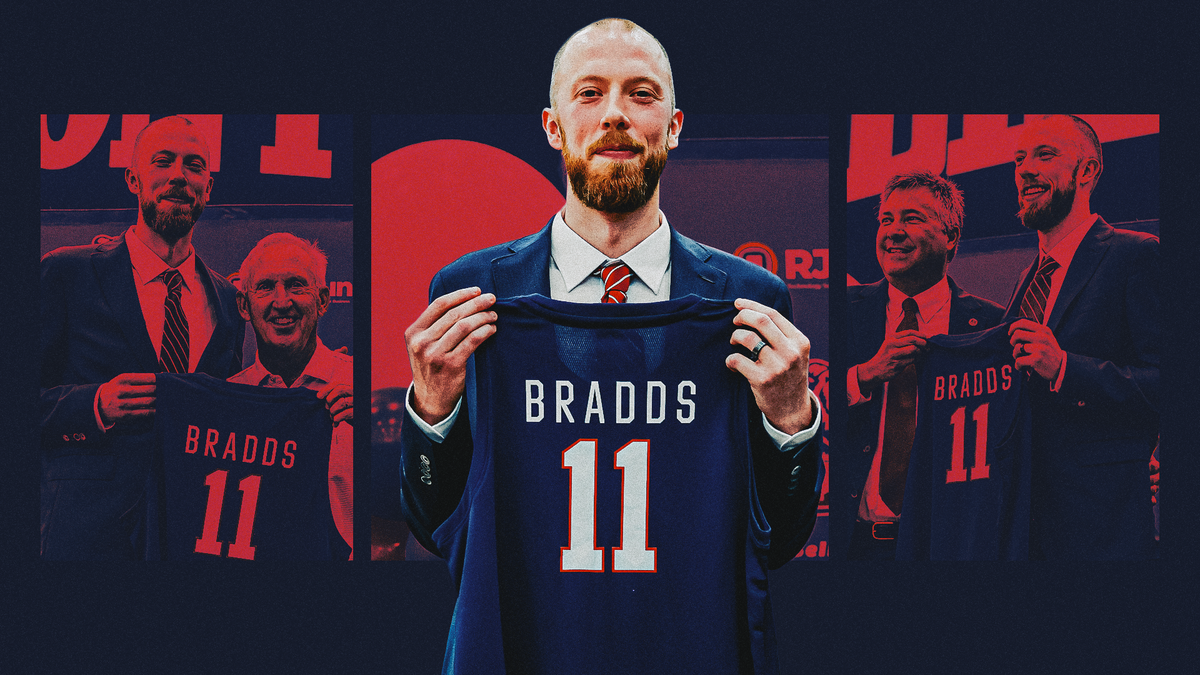
When Belmont guard Jack Smiley weighed whether to stay or pursue a Power Five opportunity in the days after Bradds’ hiring, he had to choose his development path. He could’ve chosen to be next in Bradds’s development line, or bet on his ability to produce right away at the sport’s highest level. Had Belmont made a different hire, Smiley might have chosen another outcome, but Bradds’ pull was too significant for Smiley—who says he believes he can be an NBA player.
“Being able to go out and tell a kid ‘hey, I had a hand in Keyonte George and Cam Boozer–I can go on and on–but that’s a big recruiting tool,” Harris said. “Somebody who coached the best players in the world and at the pinnacle–which I think is Duke definitely is a recruiting pitch for us. Development and offense is what Bradds is really big on.”
Bradds is just 32 years old and the second-youngest head coach in college basketball—behind Nicholls coach Darion Brown—and hasn’t coached a game yet, but he appears to have built an industry-wide reputation for his developmental ability and offensive philosophies. In Bradds, Belmont has a head coach that understands it and appears to understand what it takes to win at the sport’s highest level.
At least, he probably should.
Bradds’ rèsumè includes stints working for Scheyer, Boston Celtics President of Basketball Operations Brad Stevens, Celtics coach Joe Mazzulla and Utah Jazz coach Will Hardy. He’s been on the NBA bench. He’s grinded through the G League. He’s been a high-level assistant on a team that was a shot away from the Final Four. Who knows how this pans out for Bradds, but anything he leaves out there won’t be because the best minds in the sport—including Boozer —lack belief in him.
“Evan has been incredibly helpful for me,” Scheyer said during the NCAA Tournament. “He’s got a great mind. He’s been around a lot of great players [and coaches]. I think that experience has been helpful. He’s creative. We can throw some different stuff at the wall and see what sticks. I think it’s led to great confidence in our guys in understanding what we’re looking for, what adjustments we can make, then trusting and executing that plan.”
PINNED ON the top of each Belmont social media page is an advertisement of Bradds’ ability as good as any—a graphic of every NBA player that he’s developed. In the image, five players—in particular—are spotlighted with images that tower over the rest of the graphic. Above all of them sits Boozer.
Boozer never played for Belmont, but the program doesn’t appear to be holding that against him. He’s as marketable a player as the program has because of Bradds’ influence on his development. As a result of Bradds, Belmont also has a number of ties to Duke—which will result in the programs playing in an October 8 exhibition game.
As long as Bradds is Belmont’s head coach, Boozer will be synonymous with the program. He’ll also be welcomed like any former Belmont player.
“He can come to any Belmont game he wants,” Bradds said. “I'm sure we can find him some tickets with a good view.”
The demands of an NBA schedule likely won’t make it easy for Boozer to make the trip from Memphis to Nashville, but it appears he’ll keep an eye on Bradds as he looks to keep the good times rolling at his Alma mater.
Best believe Belmont’s staff will be watching him, too.
“He’s definitely an honorary Bruin,” Harris said.
