


JR Blount admits that it sounds unrealistic these days, but he was living off of around $1,000 a month, doing everything he could to get his foot in the door as a college basketball coach and working to be as fiscally responsible as possible.
Blount considers himself lucky that he walked into a favorable situation at Division III Wisconsin-Stevens Point, in which he was given a real role to impact the program’s on-floor product and walked into a situation that already included a player-led team ready to make a run at a title–but the circumstances still required him to make sacrifices.
It feels like another world now, but Blount remembers his responsibilities, including making sandwiches, doing laundry, and mopping the floor. He also remembers dodging deer on the back roads of Wisconsin while riding with the school’s men’s and women’s teams to road games, stopping at Subway–where every player paid for their own sandwich–and getting back in the middle of the night.
The position was a far cry from the role Blount recently stepped into as San Diego’s head coach, but it was something. It allowed him to learn how to recruit and be a part of a well-oiled machine. It had him on track to make a living in the business he aspired to.
“It was a fun time,” Blount told Basket Under Review. “I was doing some managerial stuff where I was responsible for making sure the floors are good, making sure guys got their laundry loops in, and things like that, but also had as much basketball responsibility as possible.”
Anything glamorous other than Wisconsin-Stevens Point’s 2010 national championship win wasn’t sown within the context of Blount’s role, but it’s easy to wonder how this all would have played out for him without that role. In the end, it was everything he was looking for.
Blount won. He was taken seriously. He put himself on other coaches’ radars. He learned. He also set himself up for life as he currently knows it–as a first-time Division I head coach and a married man. He says he couldn’t have predicted his ascension as a graduate student, but here he is laughing off his time performing manager-like duties with the context of what they platformed him to do throughout his career.
“There are two good things about that journey, one was that we won a national championship and the other was that I met my wife,” Blount said. “I think it kind of generated my work ethic and taught me what it meant to be successful–hard work at all times. It’s kind of the mantra I took from being a player to transition into a coach, and it kind of taught me some humility.”
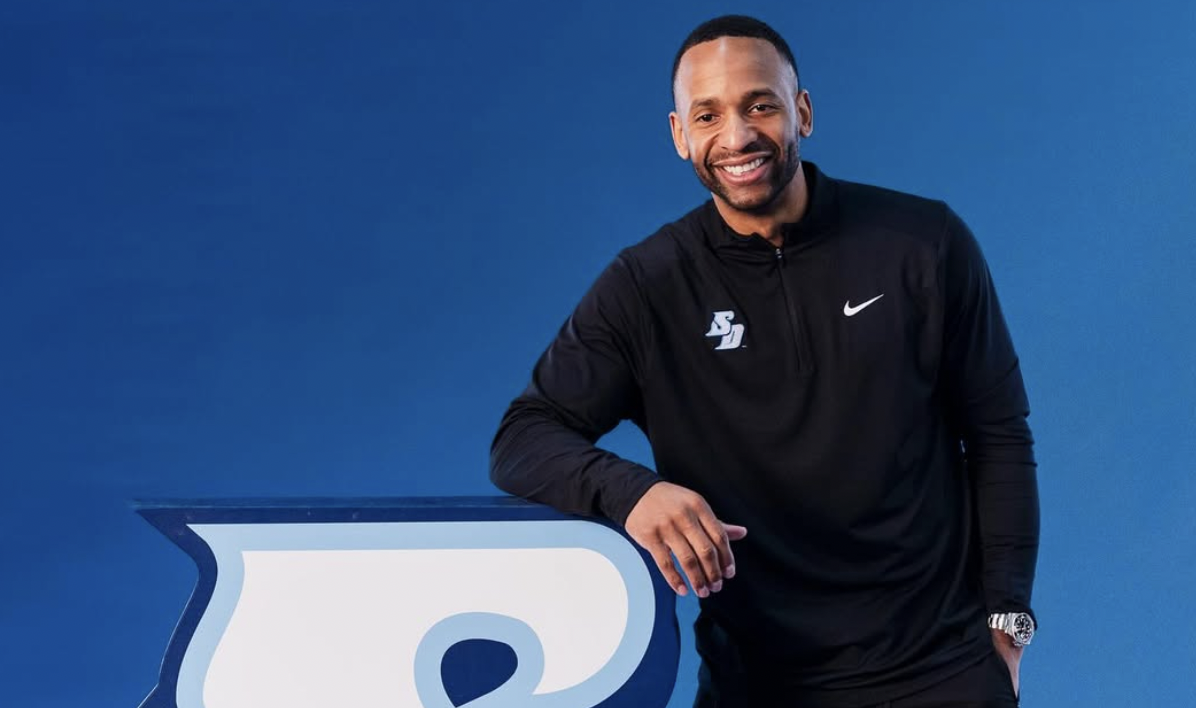
Few college basketball voices carry more weight in Blount’s coaching journey than that of Shaka Smart, who felt as if he had the platform to be blunt with Blount last summer. Smart felt as if Blount was on the trajectory to become a head coach in the near future and wanted to make sure he was direct with Blount about what he needed to do to get there.
Smart told Blount that to make the jump from assistant to head coach, it’s almost necessary to be one of the 10 best assistant coaches in the sport. He also harped on the idea that Blount would have to start approaching each day like he had the responsibility level of a head coach.
Blount started journaling. He made a vision board of the things that were important to him. He asked himself daily whether he was operating like a top-10 assistant.
“That’s something that stuck with me,” Blount said. “I’m very appreciative for Coach Smart.”
Even without Smart, though, Blount appeared to have a blueprint in mind for what becoming a head coach would require of him. He knew he had to have extra hours built in. He knew he had to be intentional and disciplined. If he was going to get anywhere, he had to remember that the results didn’t always come overnight.
Blount’s role at Iowa State came with as much success as just about anyone’s, though. Iowa State coach TJ Otzelberger has always operated with an NIL budget that isn’t among the biggest in the sport, but he and his staff have consistently found a way to field rosters that match up with the best teams. In the last few years of Blount’s run at Iowa State, the program was almost always in the AP Top 25 and was almost always in the mix to be in the second weekend of the NCAA Tournament. In Blount’s time there, the program went for a 124-53 record.
Otzelberger is the architect of the program and its consistently successful ways, but he and Smart know that Blount deserves his due for his role in the Cyclones’ rise.
"JR Blount possesses the whole package. He's a tireless worker who's won everywhere he's been. He builds deep relationships with players that drive performance,” Smart said in a release, “And his top-notch character is what any set of parents would want their son around. This is a home run hire for San Diego.”
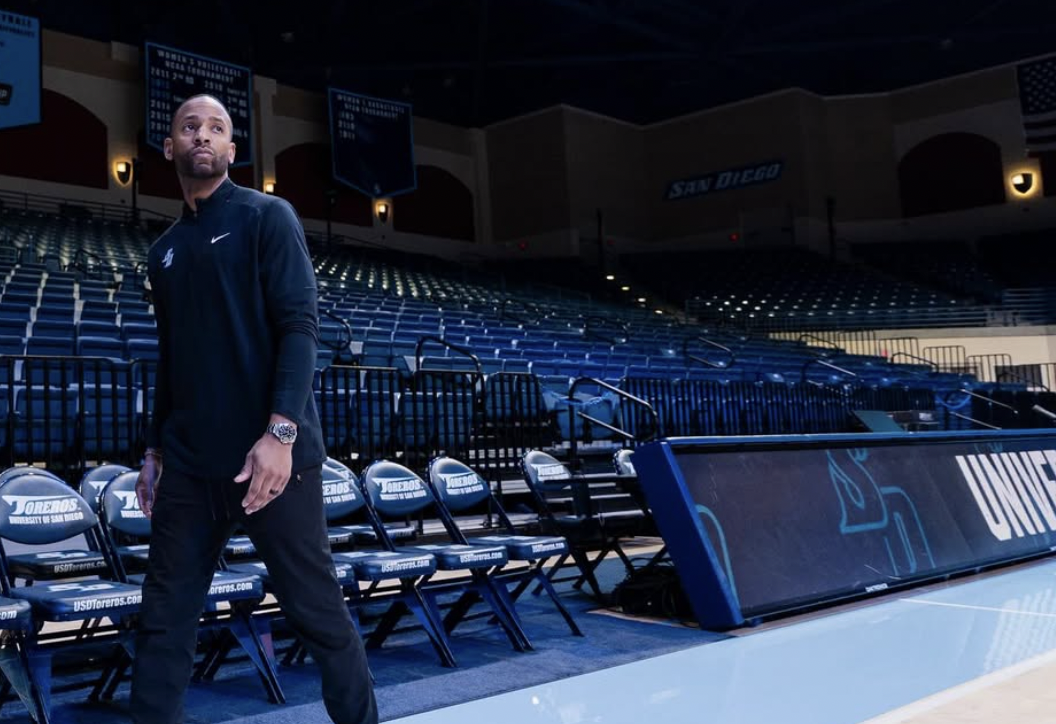
What They're Saying … About Head Coach JR Blount.
It’s a preamble at the bottom of Blount’s bio on his online profile as a Division I head coach to a set of quotes as compelling as any traditional paper resume that Blount could possibly come up with. It’s full of a number of college basketball’s most widely respected coaches and athletic directors who took a minute to sing Blount’s praises, and his list is as impressive as just about anyone’s in the country.
There’s Otzelberger ripping off quotes in regard to just about every aspect of Blount’s coaching acumen. Smart is a few lines below him. Towards the bottom, there’s Missouri head coach Dennis Gates singing his praises. How could anyone miss Minnesota head coach Niko Medved, whom Blount worked for at Colorado State, calling him the entire package.
“He is a terrific teacher, great connector, tireless worker, and knows how to evaluate and recruit,” Medved said. “He is also a tremendous person and family man. I am so thrilled to see him get this opportunity. San Diego got a great one.”
Also included in the list are Colorado State coach Ali Farokhmanesh, North Texas head coach Daniyal Robinson, Iowa State athletic director Jamie Pollard, and Missouri State head coach Cuonzo Martin. Some are mentors. Some are friends. All have had some impact in getting Blount to this point and have positive things to say about him.
As much as that says about each mentor of Blount’s who has taken an interest in him, it also says something about himself. Blount has generally aligned himself with winners. He’s generally helped them ascend beyond what they’d accomplished previously.
"Coach Blount's vast impact on our program has propelled us to three straight 25-plus-win seasons,” Otzelberger said. “His innate ability to teach, develop, and maximize his players' talents separates him in the basketball coaching world. JR is a skilled teacher, gifted recruiter, and an amazing tactical, in-game coach.”
Blount says that becoming a head coach requires a few great mentors. He says he had that in Otzelberger. Blount says he often learned from Otzelberger just through osmosis. He watched as Otzelberger got teams to buy into the idea that they could win big despite often being less talented.
Otzelberger and Blount’s other primary mentors have consistently advised him to know what he plans to emphasize, have a plan, and stick to the foundational elements of the program through adversity. Blount has watched each of them do that up close and personal.
As a result, Blount believes that he’s equipped to lead San Diego through its ups and downs.
“Super, super privileged and lucky to have those guys in my corner because I know that they’ll be there to help me,” Blount said, “And they'll also be there to steer me in the right direction when adversity does hit.”
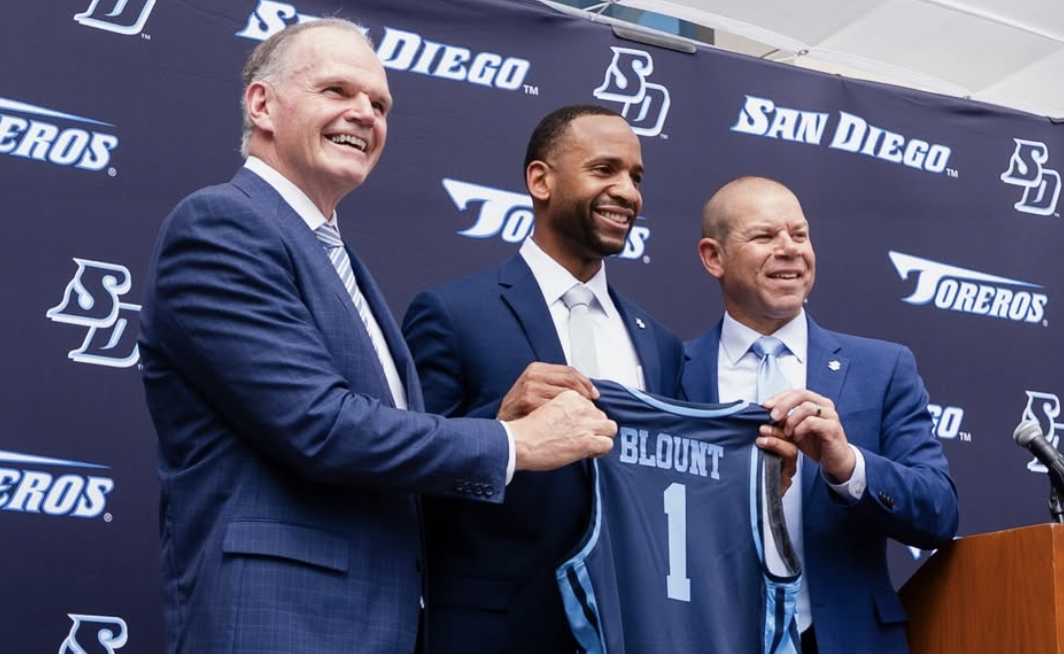
Blount was 14 years old when Pat Baldwin recognized that he had the attributes of a competitor, winner, and all-around player that would make him a desirable college basketball player. Baldwin was an assistant at Green Bay at the time and had put an emphasis on winning in-state recruiting battles, so he knew he had to start early with Blount if he was going to land him.
Baldwin went on old-school in-home visits at Blount’s home and was struck by the respect Blount showed for his parents and the way he carried himself. Baldwin left Green Bay for a role at Loyola Chicago shortly after the beginning of Blount’s recruitment, but liked Blount enough to continue recruiting him at that level. He loved Blount’s traits and likely wouldn’t have been surprised back then to hear that he’s carried them to a head coaching position.
“He has charisma,” Baldwin said. “He's a really good guy and somebody that, throughout this industry, everybody has gotten to know him. He's gained a great reputation for winning. And when I recruited him, he was a winner. He won a state championship, and then when he was at Loyola, he helped us win at Loyola, and then once he graduated, he won a national championship. So that just continued to follow him.”
24 years after his initial first contact with Blount, Baldwin still believes in who Blount is enough to hitch his wagon to him. Once Blount got the San Diego job, Baldwin reached out to tell him he wanted to help and join his staff if he would have him. Baldwin is a former Division I head coach and an industry veteran, but he had no problem swallowing his pride to join an operation like Blount’s.
Baldwin has prided himself on being a relationship builder at every stage of his career, and he sees many of his principles reflected in Blount’s vision. He thought Blount was a strong leader in his college days and believes the same thing now.
“I want to be around someone that that, number one, I know that I respect, and he certainly somebody that that I respect,” Baldwin said, “And then to bring it around full circle, just our ties from having coached him, having been around him, knowing how he is from a personality standpoint–I think that's that is something that you can't take for granted. Just our level of friendship and kind of family-like feel that we have, that's something that certainly I wanted to be around.”
Blount wanted Baldwin around, too. He knew that he needed someone with his type of experience if he was going to get this program back to WCC prominence in his first stint as a Division I head coach.
San Diego has just two winning seasons under its belt since the beginning of the 2018-19 season and hasn’t played in the postseason since it won 21 games that season. The indication around San Diego’s campus is that there’s growing optimism that Blount can get the program back to being a consistent winner. Blount, though, would likely consider his tenure a failure if that’s all he did.
“Do we want to win championships? Absolutely,” Blount said, “But ultimately, the goal for me is ‘hey, I want to have guys that come in here and come to USD and I want to have a positive impact along with my staff on making them better people and turning them into people that are successful young men in society so that when they look back on whatever their career path may be, whether that's basketball or outside of basketball, they can say ‘when we were there, when I was at USD in 2026, man, Coach Blount and his staff had a tremendous impact on what I'm doing right now and how I'm an impacting society and a positive way.’”
