


Scott Cross has to identify himself for a second. He’s the type of southerner who stops and waves to everyone. He’s never been one to ignore or keep it pushing, and he certainly wasn’t in the mood to big time anyone as he jogged through the concourse at the College Park Center at UT Arlington the day before a conference game.
So, as Cross passed the elevator, he turned towards the small group of students that occupied it and said a quick hello while he ran.
Then, it hit him.
Cross turned around to make sure he was seeing things correctly, and sure enough, there was a handful of his players exiting the elevator. They were riding it up one floor from the basement, where the court was, up to the concourse level–where they left the arena to get to their apartments across the street. It would’ve taken the players a maximum of 30 steps to walk up from the court to the concourse, and they likely would’ve saved time by doing so, but there they were riding the elevator up to the walkway.
The players didn’t know it, but Cross was fired up. This wasn’t even about the elevator; this was about habits. It was about being willing to skip steps.
Cross called then-associate head coach Greg Young, who agreed that the players taking the elevator wasn’t an optimal look. When Cross got home, he brought it up to his wife--who he says normally gets him to process things in a way that makes him less agitated--who described it as “terrible” and said that her college volleyball coach would’ve been livid if she caught the players doing that. That was enough for Cross to feel vindicated in his feelings.
“I’m like ‘man, our guys are lazy,’” Cross told Basket Under Review. “No lie, I didn’t sleep at all. I was just kind of up all night long, tossing and turning like ‘how do I need to handle this the best way?’”
UT Arlington had a game the next day, and Cross landed on the pregame shootaround as a sufficient time to confront the issue. Cross brought the whole team to midcourt and asked them which players he had waved at as they came out of the elevator.
He estimates that six of them raised their hands. When they did, he told them that managers and their teammates would hold them by their ankles and that they would walk on their hands from midcourt to the baseline and all the way up the stairs to the service elevator. Cross told them that when they were done with that, they would do the same thing on the way back.
In hindsight, Cross says the exercise was harder for the players than he had imagined. By the time they were done with it, Cross had been watching for what he estimates was 10 or 15 minutes. He wasn’t backing down, though.
When the players returned to midcourt, Cross asked them why they thought he had made them do it. They said that they didn’t know–and he estimates that they probably thought he was crazy–but he had a point to make.
“The reason we do it is because we’re not taking shortcuts,” Cross told them. “You guys are elite-level athletes. If you’re so mentally beat that you feel like your body’s done and you’ve got to take an elevator just to go up 30 stairs when it’s way, way quicker to go up the stairs, then we have no chance of winning this game or any other game.’”
From then on, that elevator was merely a service elevator for trainers to use when carrying equipment and for people with disabilities. It wasn’t for players, and Cross didn’t think it should have been in the first place. The team got the message.
From then on, Take The Stairs became Cross’s go-to philosophy. The players who had to walk on their hands couldn’t get into a rhythm during the shootaround because of fatigue, but it was worth it to Cross. There was one thing that nobody in his program–or household–was going to do, and it was take the elevator.
“I have not [seen anything like that shoot around],” former UT Arlington assistant and current Georgia Tech assistant Kenneth Mangrum said. “That team kind of embodied that afterward…if they saw someone getting near an elevator, they were gonna pull them away from it and say ‘nah bro, we’re taking these stairs.’”
The family vacation has just begun, Cross has just checked his family of five into the hotel, and he’s got to form a game plan. It’s a time for rest and relaxation, but that doesn’t permit Cross or his sons to participate in any elevator-related activities. They’ve got to act accordingly.
Cross and his three sons pass off their bags to “the beautiful lady,” otherwise known as his wife, Jen, who takes all the extra bags up to their rooms via the elevator. It’s a rare excuse or situation in which someone in the family takes an elevator. Jen is also bought in on the philosophy and has a range of up to eight floors. In this situation, though, she plays her role. While she brings the bags up, Cross and the boys find the stairwell and begin their trek up to the room.
For the rest of the trip, seeing the family getting from their floor to the lobby by using anything other than the staircase would be as likely as seeing a polar bear on the beach in Florida. Any road trip that Cross’s team is on includes a similar feel. Cross has a standard, and he’s not deviating from it.
Everyone has a story with Cross and his gravitation towards the stairs. His sons remember family vacations. His former assistant and current Weber State head coach, Kaleb Canales, remembers carrying bags up what he remembers as over 20 floors. Mangrum can recall several similar experiences with Cross.
Jackson Fields–a former Troy forward, who is committed to Georgia Tech and is awaiting a waiver from the NCAA–remembers taking the elevator up 22 floors on a California trip alongside a few of his teammates. When Cross walked by and saw it, he replied, “y'all not getting tougher. Y’all soft”
Fields said he always takes the stairs and has adopted the mindset that avoiding the elevator actually makes for a faster trip, but he’s seen teammates who didn’t realize the serious nature of the philosophy and took the elevator from the fourth floor of a hotel. Those players caused Cross to sit outside the elevator, waiting for someone to come out ahead of Troy’s next film session. When the film session started, Cross called them out by saying, “he’s soft, he’s soft, he doesn’t want to get tougher, he’s not ready to play today.”
“I never took the elevator because I knew it wasn’t something to play with,” Fields said. “If you have that one slip up where coach Cross sees you on the elevator or escalator, you will definitely take the stairs next time because he’s gonna keep nagging you about it and you’re gonna keep hearing it for at least the rest of the year.”

Cross used to take the stairs alongside then-UT Arlington assistant Derrick Daniels because Daniels was deathly scared of elevators and warmed up to the idea of telling his players that it was a more time-effective way of getting up and down, but he wasn’t serious about it.
Now, it’s no longer a joke.
If someone within Cross’s family or on his team takes the elevator to go just two or three floors, he says something to them and isn’t happy about it. He better not see that happen, he says. Four floors get a yellow light, he says. If someone takes the elevator to bypass five or more flights, he won’t say much aloud, but he will label them as soft in his head.
“The general rule of thumb, it hasn’t really been said, is really like around five floors you’ve got to take the stairs, even with your luggage,” Cross’s son Austin–who played for his dad at Troy last season and has since transferred to UMBC–said, “But, after that, you can take the elevator. He might give you a dirty look, but he’s not going to do anything about it. If you take the elevator underneath five floors, you’re finna get in trouble.”
Cross estimates that between his seeing his players take the elevator up one floor at UT Arlington over a decade ago and his time taking the Georgia Tech job, he had only been in an elevator about 10 times. He says he had no choice but to do so a few times when he took the Georgia Tech job and had to stay in a hotel without a stair option. He’s ashamed to admit it, but he says he doesn't like lying.
The saving grace, though, is that Cross still has a way to make an elevator ride feel like taking the stairs. Former Troy forward Thomas Dowd–who is now at Auburn–is to credit with the idea. Cross and his Troy team were on a trip to California in the midst of a non-conference swing and were stuck in a hotel that didn’t have stairs, which Cross said was ruining the team’s reputation. Dowd came up with the idea to do air squats and push-ups while riding the elevator to make up for lost time. Canales says that even when Cross wasn’t around, he saw Troy’s veterans upholding the standard by working out on the elevator. Cross calls that the greatest thing ever.
Cross will go to just about any extent to make sure that doesn’t happen, though. He values efficiency, but admits that he’s walked around hotels for over 10 minutes with six players trailing him while he looks for a stairwell. If he can’t find one or turns the door handle only to learn that it’s locked, he asks the front desk if they can open it for him.
To the clerk, that may be an odd question. It’s just Scott Cross being Scott Cross, though.
“The thing about my dad is that he's one of the most intense, obsessed people that I've ever met,” Austin Cross said. “When he says and does stuff like that, he really takes it to the full extent.”

The terminal was filling up, and Cross was waiting to board his flight when he got a call from Phil Beckner, a famous NBA trainer he considers a friend, who told him he had to buy a book. He joked that the author Rory Vaden stole Cross’s stuff.
Beckner was referencing the book “Take The Stairs,” in which Vaden describes a philosophy almost entirely aligned with the one that Cross has built his program on. Cross went to the bookstore and read it for himself before saying that Vaden didn’t get the philosophy from him, but said the book was phenomenal. It hits everything Cross means when he explains the stairs.
Cross doesn’t want his philosophy to get misconstrued as merely a basketball philosophy. As Vaden describes, it’s a life philosophy. Cross believes that it’s a mindset to live by, not a gimmick.
“Every time you choose to take the stairs, it's like strengthening a mental muscle,” Cross said. “Every time you give in to temptation or weakness, it becomes a little bit easier to give in the next time. Every time you fight it and don't do it, you discipline your mind and your body. It’s a reminder to them that they're getting tougher, that they're getting stronger every time that they do it, and that there aren't any shortcuts.”
Cross estimates that for those involved in a college basketball program, the choice between the stairs and the elevator comes up five or six times a day. Every time he says it, it's a catalyst for becoming mentally tougher. More than anything, the philosophy is centered on avoiding shortcuts and the easy way out.
At the beginning of every summer, Cross sits the team down and explains the philosophy. If he’s got the type of leaders in his program that he wants, though, then it’s already explained to every player on recruiting visits when their player hosts choose to bypass the elevator buttons. The consensus in Cross’s circle is that all of his best teams embrace the philosophy and become his toughest teams.
As for the ones that don’t?
“We’ll catch them in the elevator going up,” Cross said, “And the next thing you know, we get our a** kicked.”
If a player or coach is fully bought in, they’ve likely got a closet full of Take The Stairs t-shirts and have ownership of Cross’ philosophy in their own lives. Cross’ 2025-26 team at Troy–which was one of his two teams there to make the NCAA Tournament–was one of the teams that bought into the philosophy the most, despite being made up of a number of newcomers. That team’s radio crew even bought into it.
The philosophy has spread to Georgia Tech president Dr. Angel Cabrera, who was on an overseas trip with his wife and sent Cross a picture of him taking the stairs in the weeks following Cross’s hiring. If Cabrera’s experience is anything like the players’ and coaches’ who have been around Cross in the last few years, that won’t be the last time he opts for the hard way.
“When you’ve been doing it for so long, you get near the elevator, and you’re like ‘nah, I’m not doing that,’” Mangrum said. “You’re just programmed.”
“It’s a lifestyle,” Fields said.

It’s March 6, 2006, and Cross is one of the assistants sitting around the table as UT Arlington’s athletic administrators give the state of the union. UT Arlington head coach Eddie McCarter had just resigned after a 14-16 finish to the season, and Cross’s future was uncertain as a result.
McCarter had hired Cross as an assistant in 1998 after now-Maryland head coach Buzz Williams left the program and had allowed him to start his career, but Cross was finally learning the harsh nature of it. The administrators in the room said that they’d recommend that the new coach keep McCarter’s staff members, but that it was up to the coach. If he decided against retaining Cross, he had 30 days to move on.
Cross says it was depressing to move forward without knowing where his next paycheck would come from, but McCarter's departure turned into Cross’s big break. Cross was hired as the program’s head coach, and the rest was history, he says.
That discredits what it’s taken for him to get here, though.
Cross may have the oddest claim in college basketball, and he’s certainly got a career path that embodies his philosophy. Cross brought his alma mater to the NCAA Tournament for the first time in 2008 and led the program to 21 wins in 2017-18, but was fired after that season. And instead of falling into the college basketball ether, Cross has since become a Power Five head coach.
“Getting fired at UTA was really a breaking point for him,” Austin Cross said. “He’s got this intense, addictive personality, but also a word for it that you can use is loyal. If he hadn’t gotten fired at UTA, he probably would’ve stayed there this whole time.”
As crazy as it sounds these days, Cross had aspirations of taking his alma mater to a national championship. When he realized that his goal wouldn’t come to fruition and he had to move on with his career, he was forced to broaden his horizons and change his vision of what he wanted his career to look like.
Cross doubled down on the people he trusted and made it a point to work for people who he knew had good intentions. He knew that a head coaching job likely wouldn’t open for him right away, though, and took an assistant role at TCU under Jamie Dixon. After two seasons at TCU, Cross took the Troy head coaching job–a gig that is regarded by industry sources outside the Cross camp as one of the Sun Belt’s hardest jobs.
It wouldn’t be for Cross if it were easy, though. That’s the story of his career.
“You can take the stairs, but I feel like in his career he didn’t skip a step,” Canales said. “He never skipped a step while taking the stairs, and I feel like that’s why he’s had so much success.”
Cross says he feels his philosophy aligns with how his career has played out, except for one exception. He says he feels as if he was in the right place at the right time when he first got an assistant job at UT Arlington. Otherwise, though, he feels as if he’s climbed the college basketball steps throughout the whole journey.
Those steps have led him to the most high-profile job of his career and one that caters to his childhood Georgia Tech fandom. He believes they’ve all happened for a reason and that the stairs have led him here.
“I would think that would embody his career; he’s taken the stairs,” Mangrum said. “It was not an easy way to get there. He took the hard route.”
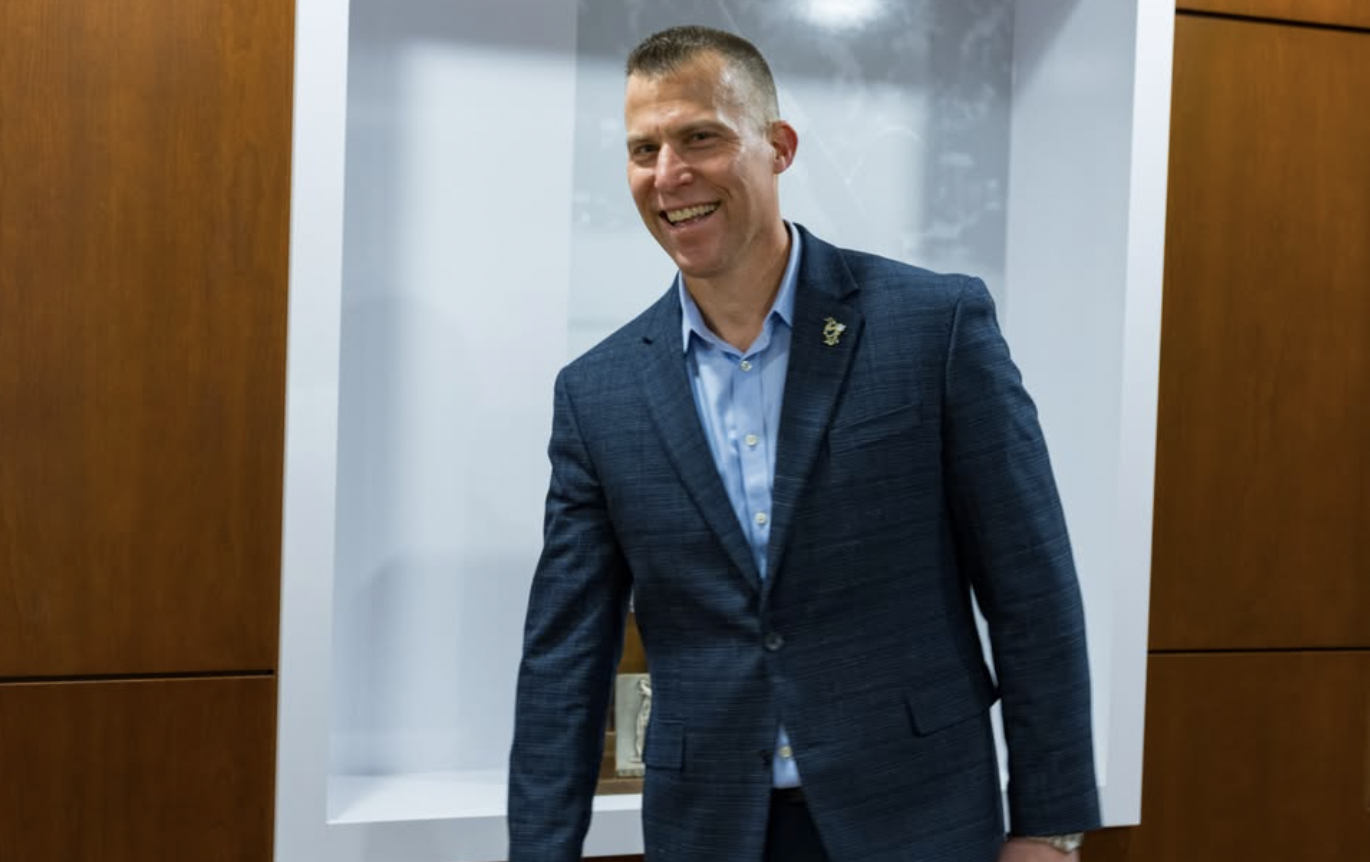
In the hours following Cross and his Troy team cutting the nets after a Sun Belt Championship win in Pensacola, he was told by his agent that Georgia Tech wanted to interview him the next day in person. Cross knew he wanted to take the school’s athletic administrators up on their offer, but he had to soak everything in first.
Cross says he went to bed around 3:00 AM local time once the celebration of Troy clinching an NCAA Tournament berth subsided and woke up in time to meet his middle son, Cody, for breakfast and for Cody to drive to Atlanta. The circumstances didn’t give Cross much time to prepare for his interview, but he already had ample background on Georgia Tech and had won over its athletic administrators.
Cross’ vision includes bringing Georgia Tech back to the prominence he witnessed as a kid. The program has been through a relatively shaky past 20 years, but Cross is aggressive in his vision. Perhaps he’s the one who can get this thing back to where he believes it can be.
“Without a doubt in my mind, he’s one of the best coaches in the country,” Canales said. “He deserves this, he’s earned this, and he’s going to do great things in the ACC.”
If Cross is going to do this and get Georgia Tech back to the NCAA Tournament for the first time since the 2020-21 season, which was over 15 years after its last Sweet 16 run in 2004, he’s going to do it the way that he’s always known. Guess how…
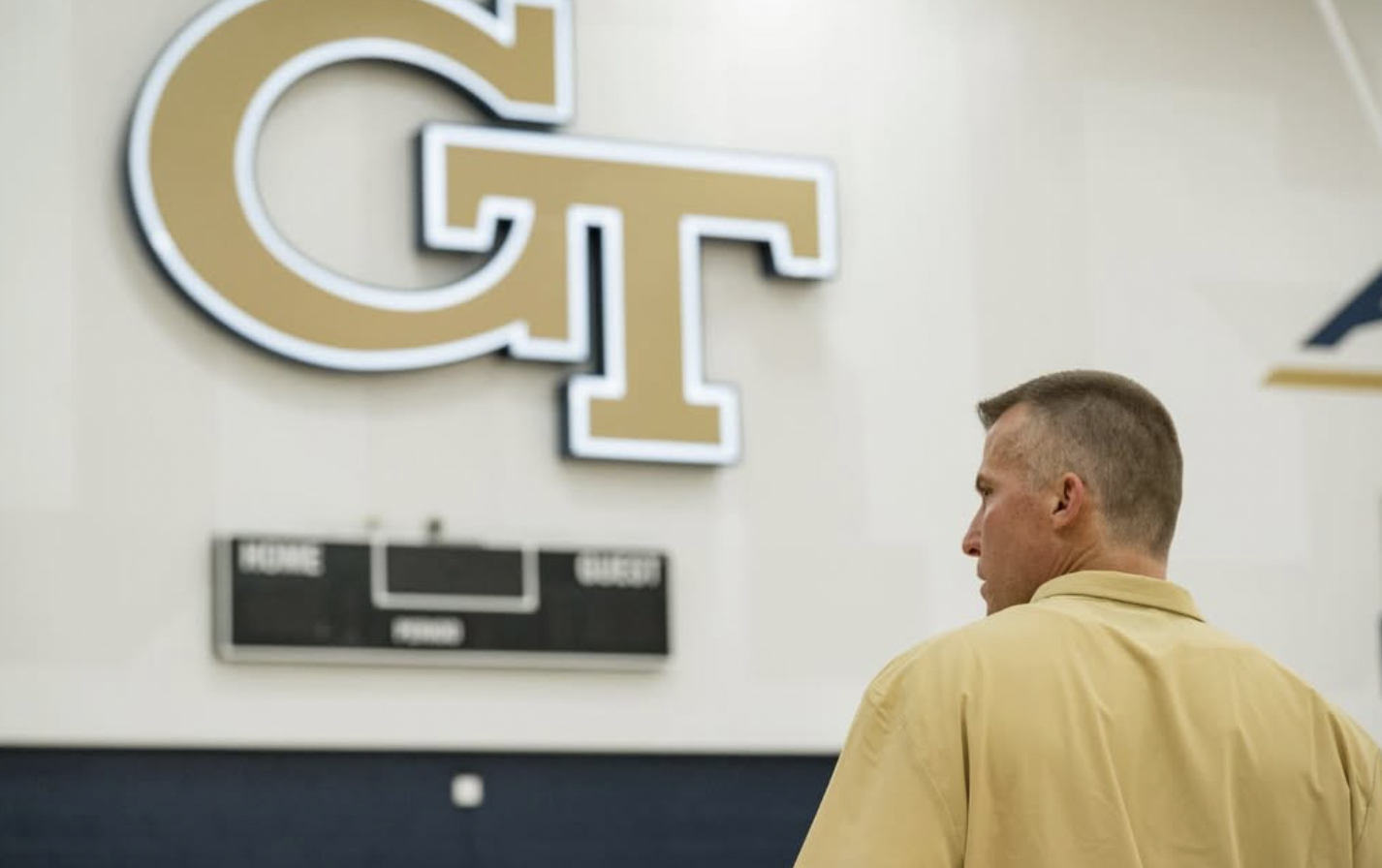
Need a hint? Look at the LED sign in Georgia Tech’s basketball facility. What does it say? Take the Stairs
In this context, that looks like getting his type of guys, retaining them, and building a team that can compete with the ACC’s best with them. The national crowd has questioned whether Cross’s program has enough in its player-compensation pool to compete at the level he wants to. They also question whether the school’s academic requirements are overly prohibitive in the transfer-portal era. Cross doesn’t seem to mind, though. He may even use that as ammo.
“Cross always tries to get the guys who are underdogs,” Fields said. “He goes for the guys that are hungry and not entitled. That’s why he says OKG’s–our kind of guys–tough, grimy, dawgs, gritty and just ready to work with a chip on their shoulder.”
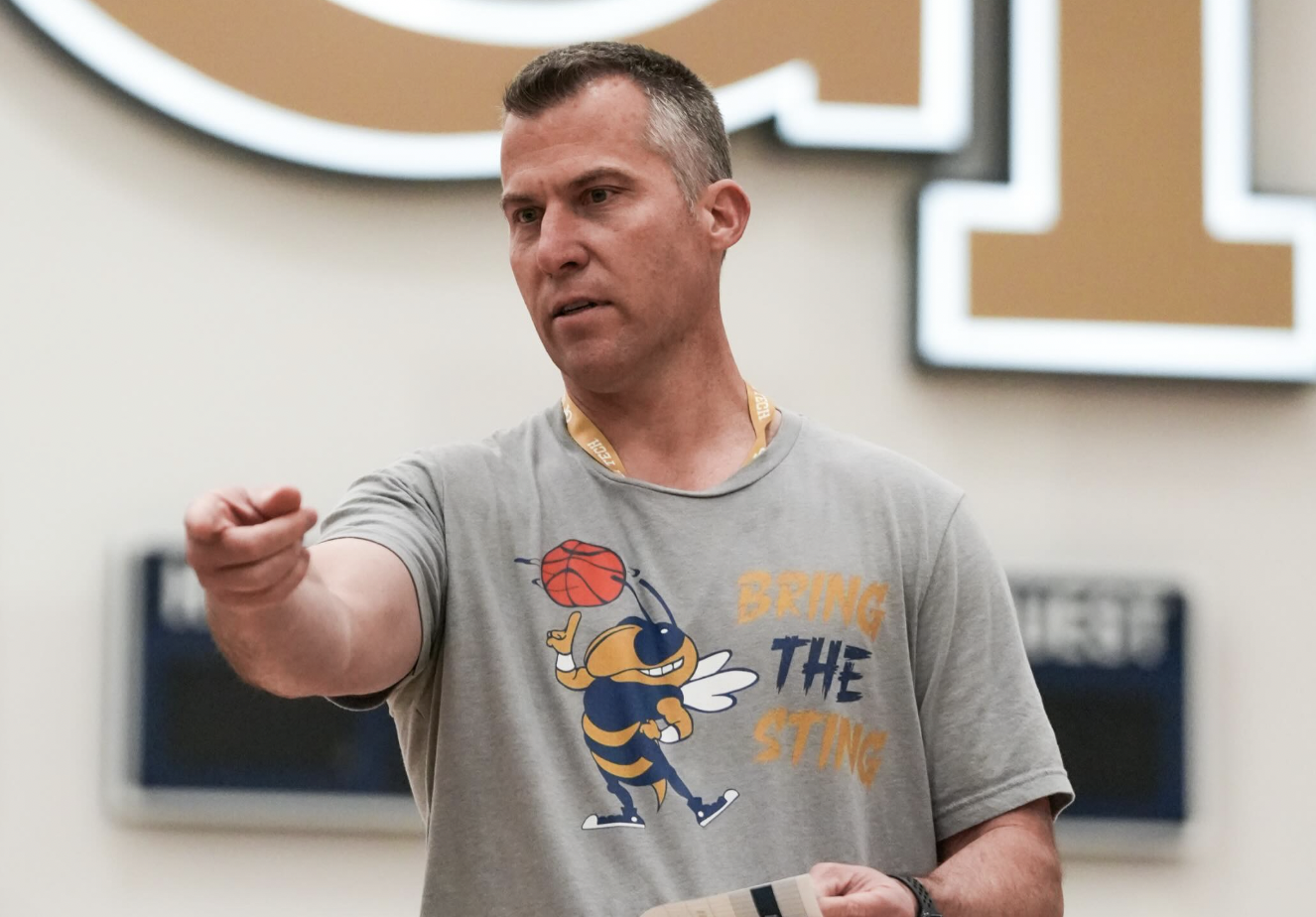
The chip on Cross’s shoulder, he says, is pushing him towards his goal of winning championships and bringing them back to Atlanta. He wants to win an ACC title, sure, but he’s not stopping there. Cross has clearly outlined a national championship as the goal. He’s always strived for that, but even he acknowledges that he may have maxed out with back-to-back league titles at Troy.
Now is as good a chance as Cross has had to capitalize on that goal. Perhaps he’s up against the odds as he aims to find Georgia Tech a place in Duke and North Carolina’s wheelhouse, but he’s never been one to back down from taking the long, hard way.
Now’s not the time to think about taking the elevator or avoiding a potential trip to the top entirely. Telling Cross that is the college basketball equivalent of preaching to the choir.
“I think you can do it here,” Cross said in regard to winning a national championship. “They’ve been the national runner-up, so why can't we take it one more step and win a national championship? I know, we've got a long way to go, it's not gonna be easy, but this is a great place.”
