

Oneohtrix Point Never, "Lifeworld"
Sometime in summer 2010, we were in a parking lot in suburban Orlando. We took these family trips every year from rural Middle Tennessee whether I wanted to go or not, ten hours in a car one way in the middle of summer. They were hot and miserable and by day four we all wanted to go home despite having two days left. We loved these trips, of course.
My brother was about to turn seven and was most interested in video games and the weather. His favorite movie then and maybe now was 2008’s WALL-E because it was funny and had robots. I was going on 17, a year away from college. I never thought much about anything beyond the next few days or months, so thinking about going away seemed so far off in the distance as to be hard to fathom. I knew what I wanted to do - go to the University of Tennessee, figure some things about myself out - and I was going to do it. I didn’t think about it too much because I wasn’t forced to think about it much.
It remains somewhat odd to me that his favorite movie at age 7 seven presents this dystopian, sad view of the future where everyone is functionally on computerized autopilot while the robots, of all people, attempt to save them. Maybe he just liked the animatronic WALL-E he got for Christmas when he was 6. When we wanted simpler, happier times ourselves we’d go outside and play soccer or basketball or whatever I could force him to play. Occasionally we’d ride bikes. But a lot of the time we’ve spent together is indoors, just like these blobs on the screen did, blobbing about.
Once I got an iPod Touch for Christmas, these boring car rides became less boring. But as my brother came of age, and as I came of...older age, we never really agreed much on our respective musical lanes. He has never once shown an interest in rock or rock-like music; I am continually mystified by the extremely online stuff he is into. But we both liked this song, which I remember playing over and over and over that summer. It sounded like nothing else.
The future we expected is not the one we got. Every generation says some version of this but I'm struck by how well the concept applies to virtually everything. In 2010 there was great relief after initial fears the NCAA was going full-bore on a 96-team Tournament. Our pal Eamonn Brennan wrote 18 minutes before the news broke of a 68-team Tournament that “all your worst fears about the NCAA Tournament are true.” Eamonn shoulda waited 16 years, I guess?
But this is about more than a Tournament. 16 summers ago was also the Summer of Great Realignment. I remember horror stories about the possibility of 16-team Super Conferences, about four or five conferences ruling everyone else and making the decisions for everyone involved. I can even remember the jokes about how, if players finally got paid for their labor and putting their bodies on the line, Vanderbilt (!) might even be good at football. Again, if only they’d waited.
What I thought would be the future then is not what it became. This year, the median college basketball team will return about 26% of its minutes from the previous season. Given that minutes are not typically 1:1 year-over-year, this will likely be the fifth straight season that sets a record for the lowest year-over-year minutes continuity in college basketball. That spring and summer of 2010, the thought of replacing 80% of your team every single year seemed totally incomprehensible and/or would mean you got mega-fired.
None of this is inherently bad in a vacuum. Some of our sport’s smartest people have made strong, rational cases for tournament expansion and even for massive conference realignment. It certainly makes your average Wednesday in January a lot more built out and exciting. But I’ve never been convinced the people who make these decisions particularly care one way or another about the quality of the product. As long as Texas playing Auburn makes 9% more money than Texas playing TCU, that’s the bottom line. Frankly, as long as Texas plays TCU at 9 PM ET on a Tuesday in Dayton and earns ad dollars for two leagues instead of one, I suppose that’s the bottom line too.
The problem with working in this field is figuring out where you’re able to point out the problems. Be too hard against new changes and you’re a crank yelling at clouds who can’t adjust to the way things are now. Be too lenient or accepting of them and you’re Working For The Man or trying to protect your access. Sometimes I do understand why ESPN Milton Babbitt is the way he is: people like stupid. Look around us.
Yet I think that’s not entirely the case. There has to be a middle path here: accepting that this isn’t the future any of us really expected to see, understanding that there is good and bad to it, and moving forward with the goal of desiring the sports you want to see. The future is not what I thought it would be at all. I can either doom and gloom about it and sound like a miserable crank, or I can accept it, understand it, and move forward.
And if you’re like me and you liked 64 and you liked when things made sense and were regional and you liked when Pitchfork was fun to go to and you also have smatterings of gray hair: your day is March 18. Until about 12:15 PM ET on that day, you will have the field, and the divisions, you want. And it will be worth waiting for. That’s a future you can count on, no matter what happens from now to then.
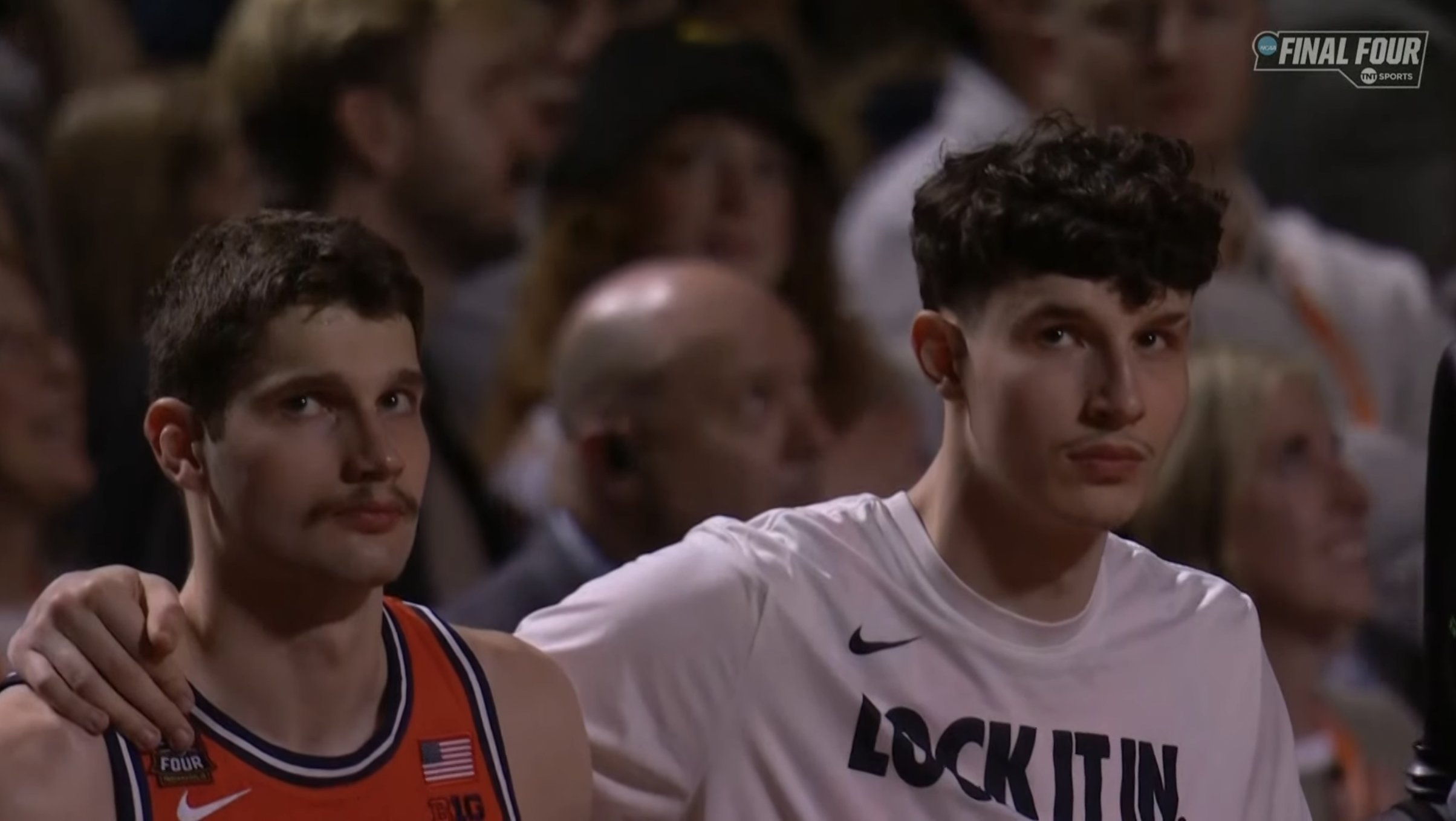
We grew up, grew apart, and grew back together. This is the natural arc of brotherhood. He annoyed me, then I annoyed him, then we stopped annoying each other. We got older, the way you do. We went to the same university ten years apart, with extremely different career paths. Two lines, neither parallel nor intersecting, that waver and warble but tighten over time. At a certain point you stop thinking about what could've been and start accepting what is. You go to work, and every day, you keep going.
For the first time in our lives, we now live in different states. His big boy job is in St. Louis and I get to go there every so often. We're going to a Saint Louis game at some point this season, we've determined. We talk more than ever, which is an odd benefit of the future of constant conversation being real. We play a weekly chess game. I used to read The Dog of the South and think about escape velocity and he achieved it. I admire him.
He knows very little of college basketball. I know very little of rockets. It is not the future I envisioned for either of us 16 years ago, and that's fine. It's better.
This has been the longest and worst offseason of college basketball of my lifetime. These are objectively incorrect - COVID was worse on both fronts - but in terms of pure annoyances I can’t think of anything that beats it. As a writer, you are supposed to like the offseason for the brief respite it provides from basketball cacophony. This offseason never, ever stopped.
Eligibility concerns and tournament expansion have made the offseason a pretty hard place to be if you’re someone who’s not into being a reactionary and does not care for palace intrigue. At this stage of my career and life I’m about done with palace intrigue. All American life is palace intrigue. As Don DeLillo said in White Noise, we can't get outside the aura, because we are part of the aura.
The thing that kept me going and being okay with waiting for November 2, or 3, or 4-30 all offseason is pretty simple: the actual basketball. Enough speculation and off-court hooting and hollering; I want to see ball go through hoop. Fellow writer and person ready to drop-kick significant aspects of college sports into the next country Brian Cook said it quite well:
“I increasingly take comfort in sports because it's a no bullshit zone. You win or you lose. You perform or you don't. No one can tell me that the Accenture consultants said that there was a 13% expected increase in revenue if Alex Orji was more of a dropback passer. And now at least some of the money I pay is going to the guys in the no-bullshit zone instead of the parasitic grandees. . . . I just want to watch something that no one can lie about because I chart it. Something no one can screw up too much, even if they try to mine it for every dollar they can. There's a purity still in there. The young guys do amazing stuff and say funny things and screw up and get better and all of it adds up to something that is increasingly elusive in American society: truth.”
That’s why I find myself wanting this season to begin desperately. There is no speculation about results. They're results. In a world that is armed with endless So What Do You Think of This Thing and Someone Said This, Please Look and Guy With Opinion, I want to go see the real thing. Sports is indeed a no-bullshit zone. What you see is largely what you get, even if sports outcomes are not perfectly objective measures of quality every single time.
The ball does lie, and that’s fine. I can accept some white lies by a round orange ball a little more these days.
I find myself wanting to attend games more than ever this year, at home or elsewhere. There are a lot of things that watching games on television can give you; for one, the game itself. But there is so much more to the game than the game. The television broadcast cannot simulate the seating experience. It cannot give you the conversations going on around you, whether your seatmates do or do not Know Ball. It cannot control for being able to truly see everything. The only superior thing the television experience has is that I am not demanded to stand up and dance for a T-shirt by the in-arena DJ.
Enough! I want to watch college basketball
— No Context College Basketball (@ContextFreeCBB) August 28, 2022
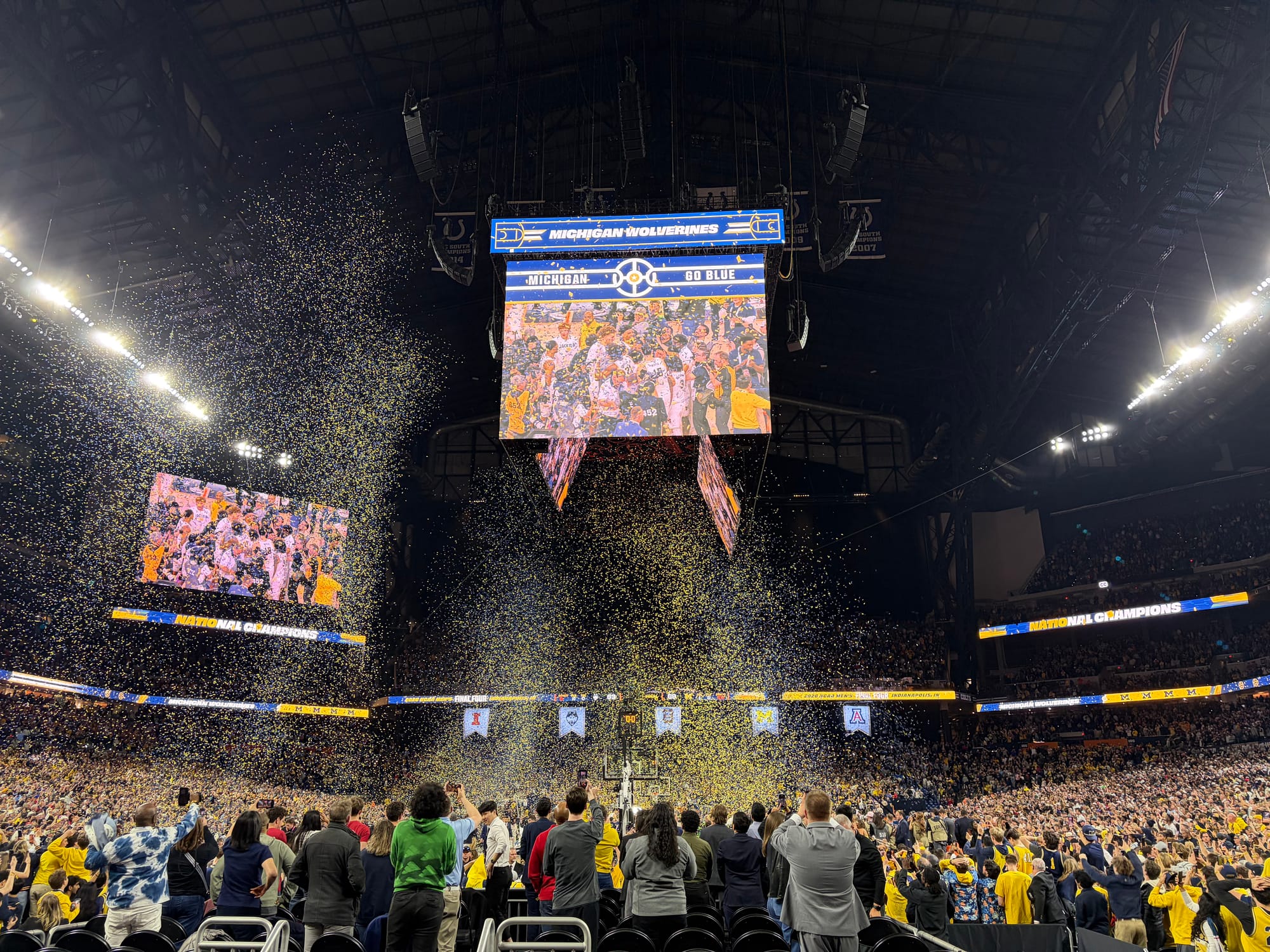
The single best thing about the in-person experience is the lack of ads. I mean this with my soul. In the arena, I am not asked to bare my soul and bow to Reverend Liberty Biberty. At the Final Four this past year, the timeouts were just timeouts. They would show trivia or fans dancing to bands playing. It was a charming reminder of what it was like to attend games 16 years ago. It's about the last true link left to The Good Old Days.
But beyond that, your eyes do not lie to you. The teams win or they lose. The shot goes in, or it does not. You secure the rebound or you do not. No one in the stands is running the internal team NIL numbers for future seasons if this midrange jumper rattles in. We are all there for the same thing: ball. I don't want ads, I don't want to hear about the whims of the American court system, I don't want budgets, I don't want ROI, I don't want to hear from Hubspot or Accenture or Kalshi or Jeep or Farmers Insurance or the Depend Adult Undergarment.
I want ball. In person, it's there. It's always there.
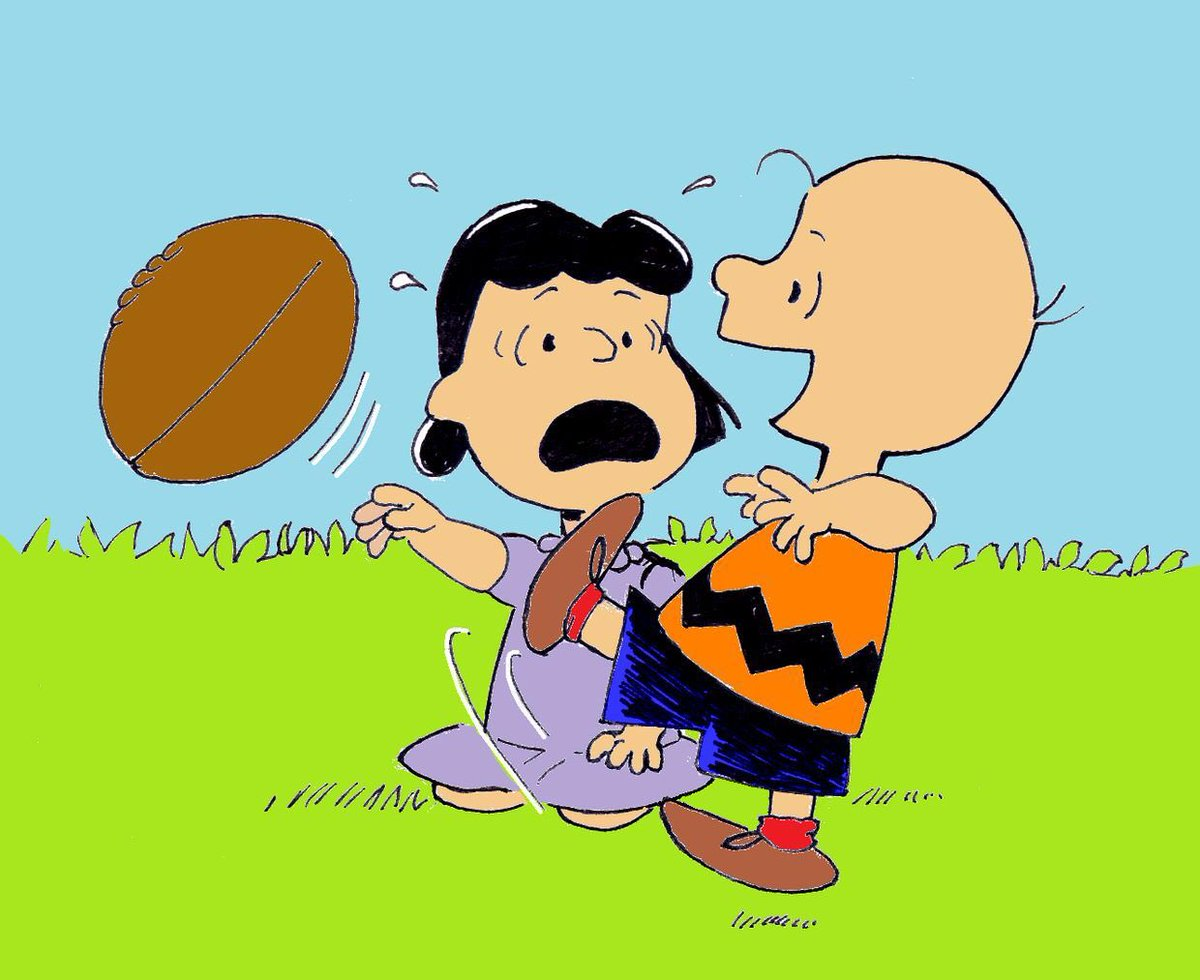
I would wager that, in 2026, it is the easiest it has ever been to be nostalgic for something else. We tend to imagine the past—whatever past it happens to be—as a coherent, superior being destroyed by the present. This is not the truth, obviously. Everything is flawed and horrible and beautiful: the people we love, the things we love, the sports we love.
I understand completely a person being nostalgic for what college basketball was 15+ years ago, when Butler could make back-to-back national championship game appearances and we regularly had such things as "at-large mid-majors." (Ask your older brother about that one.) I don't know if we can ever get back there, even if there are days I would like to.
But I would submit the following: the present, and the future, is more than worthwhile. It is not what any of us imagined 15+ years ago. That does not mean it is bad. I can accept that things are different without accepting every consequence of that difference. I may not like the 76-team Tournament, I may not like rosters still being unsettled three days out from the season, I may not like Players Era. But I accept that I cannot control these things, and I accept that I will continue to watch and love the sport I have watched and loved for 25 years.
What I can control is how I react to these changes. I choose to attend games. I choose to care about the basketball instead of the discourse. I choose to appreciate the good changes that have happened in the last 15 years, almost all of which have made offensive basketball better.
I don't know which way this season goes or how many predictions of mine will or will not come true. But I do know one thing: they will play the games, and many of us will choose to go to them, no matter the cost or distance.
Squint, and you will see it. A barely lit path, from your house to mine.
Let's basketball.
