

My general theory surrounding a crowd's reaction to a New Thing: generally speaking, there will always be haters. I will stand steadfast in my hate of a 76-team Tournament no matter how intelligently John Gasaway may make a case for it. New hot band the hollowed husk of 2026 Pitchfork likes? Not for me. Actor whose name I'm legally required to know for reasons I don't understand? 10% chance I will go on to enjoy their work.
But this approach simply can't work forever. There are a lot of changes that are objectively good. The Philips OneBlade is perhaps the greatest modern twist on the razor we have ever seen. GPS built into your phone has the ability to eradicate getting lost, which I guess is bad if you like wasting time but great if you are a very rigid, routine-oriented person like the author. Also, the NCAA Tournament Selection Committee is doing probably the best job it's ever done.
How do I know? Over the last month, I've reseeded all fields heavily based on Wins Above Bubble, which you'll know as our new selection overlord for who gets in and who doesn't. Even with some minor moves here or there for metrics outliers (for 2026: Miami (Ohio), sure, but also Iowa State and Illinois getting a seed line higher than their resume indicated), the yearly NCAA Tournament field is now as WAB-pilled as it gets. This past year, no single team was more than two seed lines off of what WAB indicated would be their appropriate seed.
All of this comes at a time when WAB, and seemingly all metrics the committee uses, are under varying amounts of fire. No one seemed terribly happy with where Miami (Ohio) was seeded; they were either too high based on their KenPom ranking or too low based on their WAB. There were calls this year for the RPI to come back, which is serious proof that everything old can be made new again if you wait long enough. I still think that WAB is a heavy improvement on what came before it, but it's imperfect, and frankly, I do wonder sometimes if it is as negatively impactful on the Other 26 as its naysayers claim.
With that in mind, I wanted to make good on a project I've had in mind for a while. Going back to 2011, the first 68-team field, through 2024, the year before the NCAA Selection Committee officially added WAB to its metrics pile, how much different would previous Tournaments have changed based on the data we use now? Throughout my research, two things became obvious: 1) the Committee is doing a much better job these days, and 2) WAB would have helped mid-majors immensely, not hurt them.
Quick note: I didn't have enough time to finish out graphics for every year with fancy Tournaments and such. If you want to see my brackets, seeds, etc., you have access here.
2011
List of impactful changes:
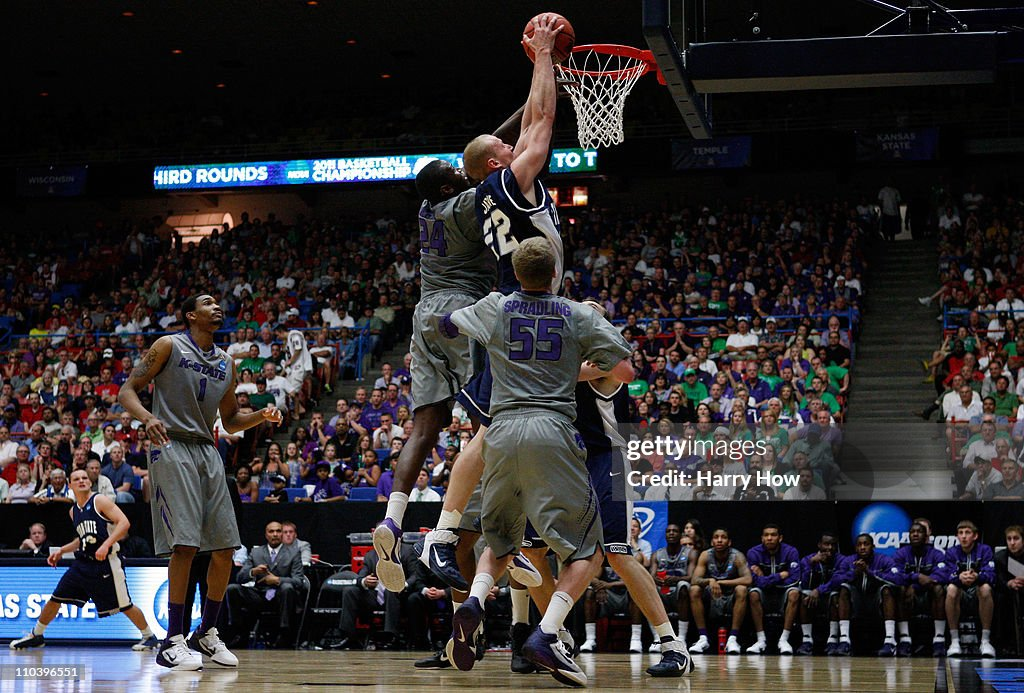
- Utah State jumps from a 12 seed to a 6. This is pretty enormous and entirely defensible. Utah State, more than possibly any other mid-major in this entire exercise, got absolutely screwed. The Aggies were 19th in Wins Above Bubble, entered the Tournament 18th at KenPom, and their two most similar resumes - 2018-19 Buffalo and 2020-21 San Diego State - both got 6 seeds. I could have pushed USU up an additional seed line, but when I went deeper into fairly similar resumes on the 5/6 lines they ended up a 6. Still, this was an awful decision at the time and only looks worse in hindsight.
- Butler falls from an 8 seed to a 12. Here, you could argue the committee was too kind to a mid-major. What I would actually argue is that Utah State and Butler easily could've been swapped. The Horizon League was not meaningfully superior to the WAC, and a 30-3 Utah State with a superior KenPom ranking to 23-9 Butler being four seed lines lower was almost entirely based on Butler's success from the previous season.
- VCU falls out. The WAB-based profiles would've had them in First Four out, and it would obviously have been a shame to miss out on their Final Four run. But: who's to say that any of the following teams who did get in wouldn't have had similar luck?
- Saint Mary's and Harvard both get in. While one mid-major fell out, the Gaels (45th) and Harvard (48th) were both more deserving than teams like Tennessee, USC, and (yes) VCU. Tennessee's seeding and inclusion in the field was perhaps the most absurd of all: a 19-14 SEC team in the low 40s/high 50s of various metrics that ranked 69th in WAB and went .500 in the 7th-best conference not only got in but safely got in by multiple seed lines. In our revisionist history, the Vols are about an NIT 2 or 3 seed. (I'll note that Virginia Tech also gets in, but at least the Hokies were a top-35 KenPom team with a fine WAB and an above-.500 record in a better conference than Tennessee.)
- Other mid-majors are rewarded appropriately. Utah State's one, but note Richmond jumping to an 8 seed and Belmont to an 11, two teams that got a 12 seed and a 13 in real life, respectively.
Other minor changes: BYU jumped from a 3 to the final 2, 2 seed Florida should've been a 4, Vandy should've been an 8. In general, the SEC - the 7th-best league in the sport in 2010-11 - was massively overloved by the Committee.
How much would WAB have changed 2011's history? I think a 6/10 seems like a safe bet. All the 1 seeds are the same, the 2s are more or less the same, and the new inclusions/exclusions probably make the field quality better, but Butler falling to a 12 and VCU falling out entirely would be a fascinating case study.
Would this have helped or hurt mid-majors in 2011? Inarguably helped. While VCU is out, the field adds Saint Mary's and Harvard to get to a net +1 in mid-majors. Utah State goes from baffling 12 seed to respected 6. Richmond jumps from a 12 to an 8. Overall, teams outside of the top six leagues - sorry, the top five and the SEC - would have risen a combined +9 seed lines, and only Butler could've been singled out as receiving a Committee screwjob. Yet their actual seed was so recklessly based on the previous year's Tournament performance that I'm not sure I'd be swayed by the argument here.
Would the Tournament have been better or worse? Any revision of the 2011 Tournament makes it worse, because the odds of a 3/4/8/11 Final Four are so unbelievably low you could re-simulate that Tournament 10,000 more times and be unlikely to achieve that same combination again. Still, in a normal year with relatively normal outcomes, I think this would be better.
2012
List of impactful changes:
- Missouri is a 1 seed. In the real world, they lost to Norfolk State as a 2, but on Selection Sunday, the Tigers were 3rd in WAB and, against top-100 competition, had a superior resume to actual 1 seed North Carolina. The Committee maybe did them a favor by keeping them from potentially being the first 1 seed to lose to a 16, but a potential R32 loss to Notre Dame or Purdue is less embarrassing.
- Creighton and Belmont jump 3 seed lines each. Creighton was 15th in WAB, went 28-5 against a top-80 schedule, and won Arch Madness. Their reward, for whatever reason, was an 8 seed. On WAB Earth, they're a 5 once being adjusted down a line for meh metrics (35th). Belmont, meanwhile, should've been an 11 seed with a 27-7 record and a top-50 non-con SOS.
- UConn dropped from a 9 to an 11. The Huskies were 20-13 with a worse WAB than Belmont, one (1) win over a Tournament team in the final two months of the season, and a KenPom ranking in the low 30s. Yet they got a 9-seed (and a Round of 64 whooping) almost entirely by name. Here, they're correctly on the 11 line and just out of First Four territory.
- Correct respect is given to dominant mid-majors. Creighton and Belmont were covered, but Murray State's 30-1 record gets them to a 5. Memphis goes from an 8 to a 6. Harvard goes from a 12 to a 9, VCU a 12 to a 10, and completely forgotten Conference Championship Week losers - 27-6 Drexel, 27-6 Oral Roberts, and 24-6 MTSU - all make the First Four thanks to being 47th or higher in WAB. In particular, Drexel's exclusion really sticks in the craw; they were a top-50 metrics team that would've ranked 41st in WAB. Colorado State, a team in the 80s who was 77th in WAB, not only made the field ahead of them, but bypassed the First Four entirely.
- In total, there are four changes in the Tournament field. Gone are Iona (sorry), South Florida, West Virginia, and Colorado State. In? Drexel, MTSU, Oral Roberts...and, yes, Oregon, who quietly sat 44th in WAB. Technically, you could make the case for any of Arizona, Washington, or Iona over them, but Oregon offered almost no truly bad losses and some decent wins. This was probably the worst bubble year I could find, even worse than 2025-26.
How much would WAB have changed 2012's history? No less than an 8/10. The top seed lines are all mostly fine, and Florida State falling to a 4 or Michigan jumping to a 3 is not worthy of great breakdown. However! It's pretty nuts that we just...kept killing off Creighton before they could get started. And that we could've had a First Four involving any of Drexel, MTSU, or Oral Roberts. And that we would've had 14 conferences get multiple bids, which I think would have been the highest ever.
Would this have helped or hurt mid-majors in 2012? Read the above sections: Drexel, MTSU, Oral Roberts. It obviously helps.
Would the Tournament have been better or worse? Better. None of the field removals make a serious impact good or bad, and getting in multiple strong MMs with great records would've made for a much better and more interesting start to the Tournament. However: Duke/Lehigh instead becomes Michigan/Lehigh. Maybe a loss there. On the other hand: a one-in-three shot of Kentucky/Ohio State in the Elite Eight, a title game matchup we missed out on thanks to OSU's horrific late-game choke.
2013
List of impactful changes:
- Overall 1 seed Indiana could've been a 2. They stayed a 1, but just barely; I had them as the last 1 seed in. For one, Louisville and Gonzaga both out-ranked IU in WAB and deserved their 1s with ease. (My memory is that people were really mad at Gonzaga being a 1, but their resume was unequivocally better than anyone but Louisville's.) A case could be made for two of Indiana, Duke, or Kansas to finish out the 1 line. I went with IU and Kansas based on conference strength, with KU jumping ahead thanks to winning their conference tournament, but the Hoosiers falling to a 2 would've been very realistic. For whatever reason, this IU team was anointed as the overall 1 seed in about mid-January and never variated from that despite ending up with more losses than every other 1 and a lower WAB than two fellow 1s.
- The Mountain West suffers, lest you think this is exclusively about mid-major goods. New Mexico, even with their real life result of losing to a 14, should've been a 2 seed. That ends the good news. UNLV falls to an 8, San Diego State from a 7 to the First Four (!), and Colorado State from an 8 to a 9. That last one isn't impactful, but hey. Also, Boise State remains barely in the field. I originally had them out entirely before remembering UConn was ineligible.
- Oregon flies from the 12 line to a 7. In real life, Oregon won the Pac-12 and seemingly scraped in despite sitting 26th in pre-Tournament WAB and being ahead of teams like 5-seed UNLV, 7-seed Illinois, 8-seed North Carolina, etc. This was perhaps the most bizarre Committee screw-up out there, because they didn't get any of UCLA, Arizona, Colorado, or California wrong. Oregon did play a rancid NCSOS, but they had no bad losses and went onto the Sweet Sixteen. This was a strange one by the Committee I couldn't make any sense of, and Oklahoma State and Saint Louis were victimized because of it.
- Ole Miss jumps from a 12 to a 9. I would argue this is another example of Committee laziness. Ole Miss used the SEC Tournament to zoom up in WAB, winning the whole thing and toppling 3-seed Florida...and got the same 12-seed they would've gotten either way. With WAB, they're appropriately rewarded for their great weekend and get to the 9-line.
- For the Committee's missteps, they got the 68 right. The only somewhat arguable 'snub' was Iowa, who went 20-12 and posted an equivalent WAB to Boise State in a better conference, but Boise's non-conference SOS was significantly stronger. I liked 21-10 against an equivalent KenPom SOS (49th versus 42nd) more than 20-12, ultimately.
How much would WAB have changed 2013's history? Despite some obvious issues listed above I can't go above a 4/10. They got the 68 teams right - even at the time, most generally seemed happy with it - and the teams that were most victimized by seeding won anyway. I'm still baffled by Oregon, though. Did they simply forget about the Ducks?
Would this have helped or hurt mid-majors in 2013? This is the rare year where I think it would've had no change or would've actively hurt them. The Mountain West's seeding suffers, Belmont falls from an 11 to a 13, VCU should've been on the 7 line, etc. The actual field was one of the kindest to mid-majors in my lifetime.
Would the Tournament have been better or worse? No change. I'm not sure anything here fundamentally changes at all. I guess Michigan and Florida don't play each other at all, and maybe Kansas loses to Wichita State instead of the Wolverines, but that's about it.
2014
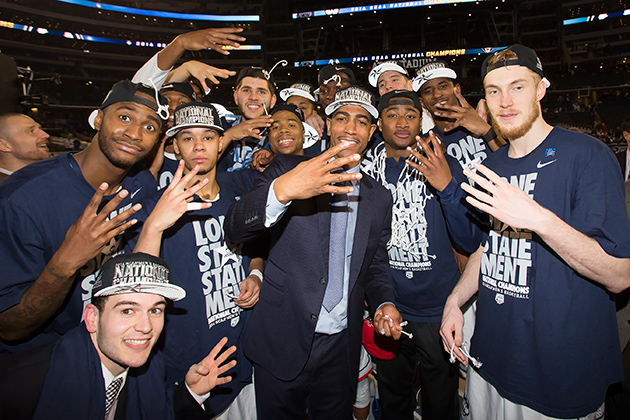
List of impactful changes:
- Future champion UConn was pretty underseeded. As in they should've been a 5. Some of this is possibly altered by conference strength jumping or diving in the postseason, but even without that factored in, UConn was 17th in WAB and went 26-8 against a top-20 SOS. Them being a 7 seed was a bizarre thing. So was...
- Kentucky being a 6 instead of an 8. Something seemed to get in the heads of Committee members this year, which probably made Wichita State and Villanova suffer because of it. Kentucky went 24-10 against a top-5 schedule, enough to put them 25th in WAB, but their 17th KenPom ranking was enough to bump them ahead of other candidates to a 6.
- Otherwise, the Committee...got it right? Compared to other years, there's not much I would pick at. Harvard should've been a 10 seed, Saint Louis down from a 5 to a 7, Oregon a 7 to 9...but that's it for major shifts. This was a surprisingly decent job by the Committee. Except for!
- There were three teams that should've gotten in and did not. Southern Miss, at 25-6 against D1 competition and 38th in WAB, was left out. So were SMU (23-9, 40th) and Florida State (19-13, 41st). They enter our WABbed field, and with them in, we say goodbye to NC State (21-13, 50th), BYU (22-11, 51st), and most confusingly, Kansas State (20-12, 52nd), who was a 9 SEED. One could ask why Tennessee (20-12, 55th) is in the field; I would argue that this is a very rare case of ceding to KenPom, which would've had the Vols 12th (!) entering the Tournament. I left them in the First Four.
How much would WAB have changed 2014's history? I'll go with a 4/10. The field changing three members out matters, and the two future title game contestants being underseeded by two full lines would've changed things up...but 2014 was so topsy-turvy that I'm not sure much of anything really alters the equation here.
Would this have helped or hurt mid-majors in 2014? This would've helped a little more than it hurt. For one, Southern Miss getting in gives Conference USA a second bid, which would be the only time since 2012 it's received two. That's meaningful! You also get Harvard up into a coin-flip 7/10 game and Stephen F. Austin jumps to the 11 line, where I had them playing a Gonzaga team that got lit aflame in the Round of 32.
Would the Tournament have been better or worse? Nothing could've made 2014 any weirder, but the inclusion of Southern Miss would have made things different. Donnie Tyndall was hired and fired by Tennessee within a year due to various misgivings and hasn't seen D1 since. If Southern Miss gets in and wins a Tournament game, especially over Tennessee, does Tyndall go above the UT level to a superior school? Sliding doors and such.
2015
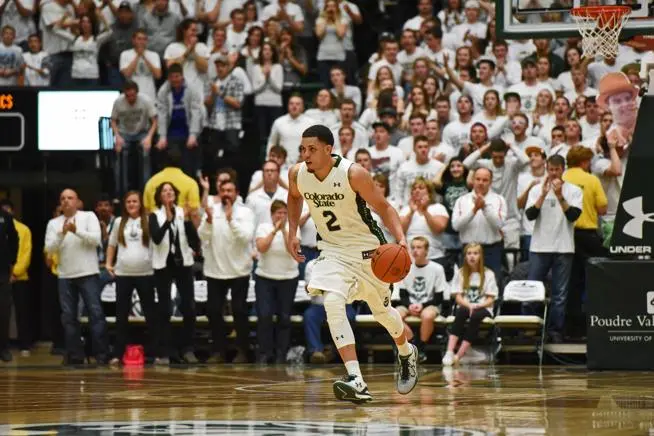
List of impactful changes:
- The seed lines get more mid-major friendly. Northern Iowa is a 4, not a 5. Wichita State jumps all the way to a 4, giving the MVC a pair of 1-4 seeds for the first and only time in its history. Davidson goes from a 10 to an 8, Dayton is bumped from an 11 to a 10, and in my single favorite move, Stephen F. Austin goes from a 12 to a 9. Also!
- Three high-majors are swapped out for a pair of mid-majors and a better-than-you-remember ACC school. In the real world, 26-6 Colorado State (34th in WAB) and 25-5 Murray State (46th and went undefeated in the OVC) were both left out of the field by some distance, with only CSU getting amongst the real world's First Four Out. Here, CSU is safely in the field and Murray State makes the First Four, with Miami FL (42nd) jumping in as well. Out are 10-seed Indiana (52nd in WAB), Ole Miss (55th), and bizarrely, 8-seed Cincinnati, who was 65TH! in WAB entering this Tournament. My guess is that the Committee didn't correctly register the dropoff the AAC had from the year prior? I'm not sure.
- A couple of high-loss high-majors are more appropriately seeded with WAB. Oklahoma State, who went 17-13, got a 9 seed while playing a top-10 KenPom SOS. This was good enough for 48th in WAB. LSU went 22-10 against a top-20 SOS and got...a 9 seed. How these two were the same, I don't know, but Oklahoma State is now a 12 seed and must battle their way into the field through a First Four date with UCLA. Similarly, Xavier, a real-life 6 seed with a 21-13 record that sat 36th in WAB, is now a 9. We're not rewarding mediocrity here if we can help it.
- One high-loss mid-major is more appropriately seeded with WAB. No team would suffer more this year under WAB than UAB, who goes from a 14 seed that got to pick off 3-seed Iowa State to a 16-seed in a First Four game. And yes, it makes total sense. Of the teams that made the field of 68, UAB sat 65th in WAB and was more in line with teams like Lafayette and Manhattan - both on the actual 16 line - without anything obvious going in its favor to make it a 14. My theory here is very simple: the Selection Committee budgeted the 14 line for whoever won the CUSA. It would've been a bad call either way, because Louisiana Tech would've been a 12/13 and UAB a 16 based on WAB, but whatever.
How much would WAB have changed 2015's history? This is pretty high up for me, and I'd go with a 7/10. The 1 seeds are all the same, but correct respect is given to the MVC's strongest offerings, and 11 different conference champions are represented on the 1-9 seed lines. Plus, an 8 seed fell out of the field entirely for teams with far better resumes. Seems important!
Would this have helped or hurt mid-majors in 2015? I'd argue this is one of the most helpful years on record. The OVC becomes a two-bid league, the MVC has multiple 1-4 seeds, the Mountain West gets a fourth bid, and possibly most important, a 29-4 basketball team with a top-35 resume is not a 12-seed.
Would the Tournament have been better or worse? I'll stand up for 2015 as a Good Tournament with good games, but it wasn't really as great as I'd like it to be in hindsight. There weren't many great upsets or signature moments, and the new odds below give some pretty good odds of upsets and deep runs from teams who wouldn't have had the chance otherwise. Also, it rectifies a pretty absurd miss by the Committee, the second-worst I found on record, in allowing Colorado State to make the Tournament. Larry Eustachy's career: possibly different if they get in?
2016
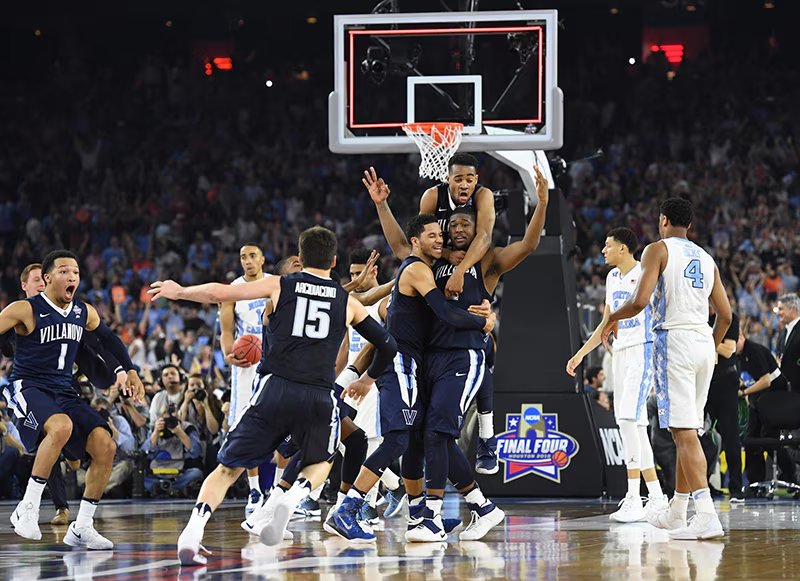
List of impactful changes:
- The Pac-12 is aggressively downgraded. Oregon stays a 1 and Utah a 3, but almost every other team suffers to some extent. California was a baffling 4 seed despite a worse record against an equivalent schedule and worse metrics than Arizona, who ended up a 6. Cal would be a 7 seed here. Colorado falls to a 10, Oregon State from a 7 to an 11, and boy, USC from an 8 seed to the First Four. I can't really figure out why the league was so overrated by the committee...except for remembering that, in 2016, they loved how Oregon State's schedule strength ranked 17th in RPI. The team itself? 46th, but hey, they had a top-20 schedule. (By KenPom, it wasn't even top-50.)
- Villanova gets their deserved 1 seed. This isn't even a hindsight thing. Villanova had fewer losses against a better schedule than Oregon and an equivalent schedule compared to North Carolina...yet was a 2 seed. They were 2nd in WAB and would've been on the 1 line by some distance in a better world. They probably win the title either way, but they don't have to beat Kansas in the Elite Eight to get there.
- The Big East is aggressively upgraded. Villanova is one example, but Seton Hall was 12th in WAB and got a 6 seed. Providence: 24th, got a 9 seed. Butler was correctly seeded, at least, but...I don't know, what did the Big East do wrong to the Committee? Oh, that's right: RPI, which people claim to like now, had Seton Hall 22nd and Providence 36th.
- Several mid-majors benefit immensely from WAB. For one, Saint Joseph's zooms up to the 6 line. Little Rock (!) goes from a 12 to an 8. Hawaii is no longer a 13 seed, but an 11. Wichita State still gets in as an 11 despite their just-okay resume. Also! SAINT MARY'S, who didn't make the field despite a top-35 resume, is in an 8/9 game. If a mid-major with a 26-5 record and top-25 metrics didn't make the field now, we would appropriately riot. (Gonzaga also jumps from an 11 to an 8. The WCC did rate as the 14th-best league by RPI, but the MVC, which was 13th, was a two-bid league and got both teams on the 11 line with worse resumes.)
- Oh, and Valparaiso got in as an at-large. Three teams changed here: SMC as mentioned, South Carolina (35th in WAB but left out for SOS reasons), and Valpo, who sat 42nd in WAB and was ahead of numerous teams that received horrendous RPI-influenced seedings: Wisconsin (7 seed), Cincinnati (9), Oregon State (7), USC (8), and the worst Committee decision in history, Tulsa, who was 75th in WAB...or a spot behind Stephen F. Austin, who got a 14 seed. (The teams who dropped out: Temple, Vandy, and Tulsa.)
How much would WAB have changed 2016's history? This is an 8/10 and possibly a 9. The Committee did a very bad job this year, as there's no objective defense for Villanova as a 2 seed, Seton Hall as a 6, Providence as a 9, Saint Mary's out of the field entirely, or Tulsa anywhere near the field in any form. I don't know if it changes the Final Four, but it changes the first two rounds heavily, and those are 75% of the Tournament games.
Would this have helped or hurt mid-majors in 2016? A very obvious help year for the mids. The Horizon League would be a two-bid league, as would the WCC. Several teams who got awful seeding jobs - seriously, Little Rock as a 12 is way worse than you remember - would be given correct seedings by WAB.
Would the Tournament have been better or worse? It's hard to top the greatest title game ever, but a forgotten aspect of 2016 is that the rest of the Tournament was just okay. The Round of 64 rocked...the title game rocked...everything in between was either bad (the Final Four) or forgettable (the Round of 32). The new inclusions and re-seedings would have made it better.
2017
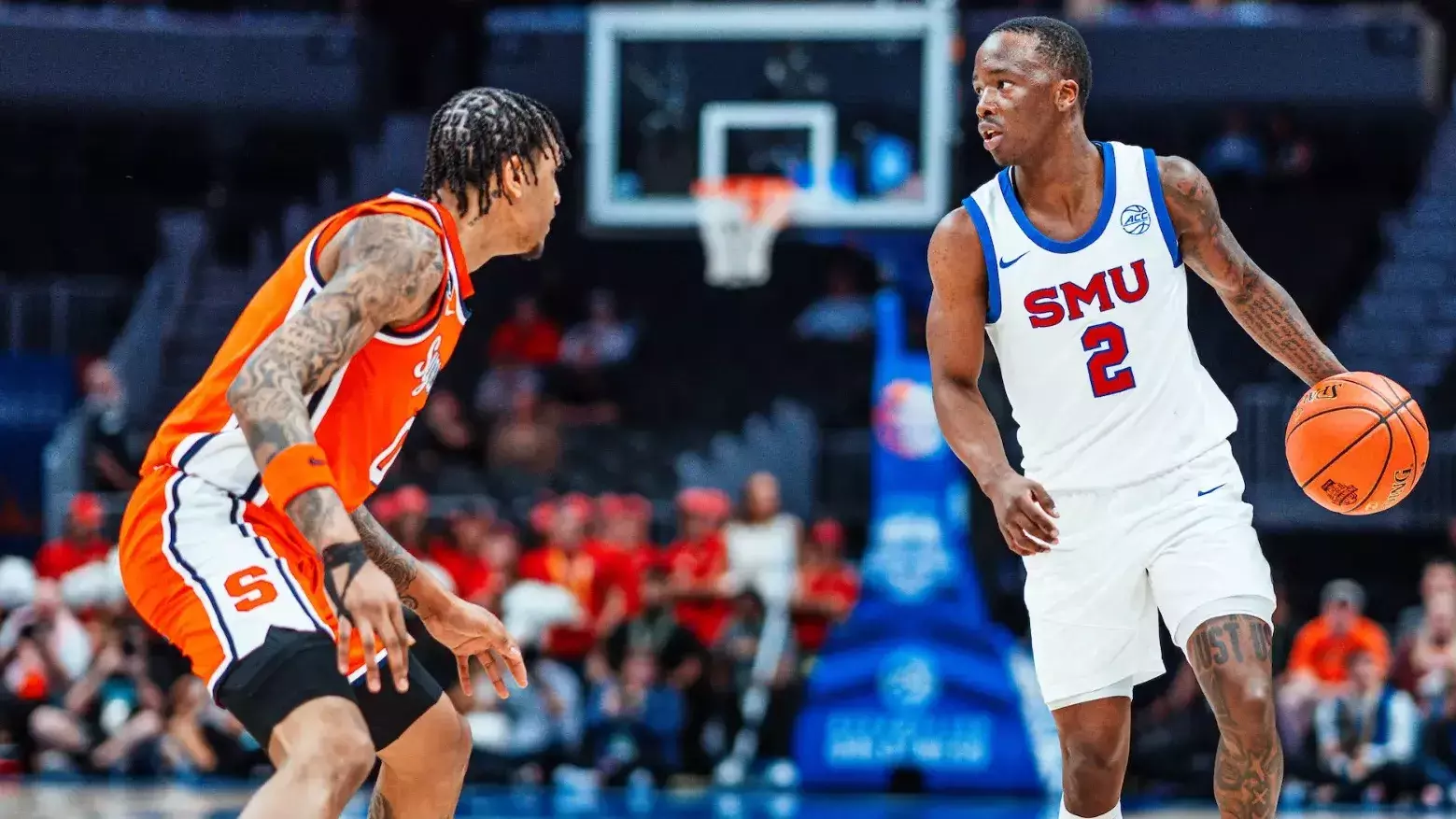
List of impactful changes:
- The Committee only had a few real whiffs, but Minnesota as a 5 and Michigan a 7 was obvious then and now. Minnesota would be a 7, while Michigan would rise to a 6. Yet this wasn't the biggest miss!
- SMU jumps from a 6 to a 4. I wanted to single this out even though it's only two seed lines. SMU went 30-4, was top-15 in all metrics, ranked 11th in WAB, and...was a 6 seed. Our old pal RPI had them 17th...but even then, it had Saint Mary's with 16th against a tougher schedule and put the Gaels on the 7 line. SMC stays a 7, but SMU is pushed up to a more accurate seeding.
- Yet again, the mid-majors benefit. SMU was part of a mid-major league at this time, as the AAC was in a bad spot. Wichita goes from a 10 to an 8. MTSU - MTSU! - would be a 10 seed. So would Illinois State, who was left out entirely of the field and sat 36th in WAB.
- A lot of the Committee's decisions regarding the 8-12 seed lines get changed up. This is a secret story of most of the first half of this list. The First Four functionally became 11 vs. 11 only over the last decade, but even through 2017 these games should've been 12 vs. 12. Everyone on the 11 line you see above had superior WAB scores. Beyond that, though, many decisions by the committee on this tier of the seeding curve were bizarre. Michigan State - 51st in WAB - was a 9 seed. Wichita, 24th, was a 10. Oklahoma State, 31st, was a 10. South Carolina, 39th, was a 7...one spot ahead of 40th-placed Kansas State, who was in the First Four. Again, if WAB had existed then, it makes the Committee better at its job.
How much would WAB have changed 2017's history? I go 6/10. The Committee basically got the 1-3 seed lines right, minus some small changes, and outside of SMU the 4-7 seed lines are mostly unchanged. But a lot of decisions from 8-12 are weird ones, and there was no defensible logic to leave Illinois State out of the field, even if you did use 2017-era metrics.
Would this have helped or hurt mid-majors in 2017? This is more minor help, but Illinois State getting in would've been an objectively good thing for the sport. Plus, Wichita, SMU, and MTSU all would've benefitted from the work of WAB, even though Wichita and MTSU didn't really end up needing it.
Would the Tournament have been better or worse? Unfortunately, worse, though it might make what was an okay Round of 64 better. It's so hard to improve on a Tournament that was this good from the Round of 32 on. But! Illinois State would be in comfortably, not even in First Four territory. That has to count for something.
2018

List of impactful changes:
- This is the single worst Selection Committee job of the last 20 years. I don't take saying this lightly. So instead of a list of impactful changes, here is a list of everything the Committee did objectively wrong in 2018.
- Had four wrong teams in the field. All of Arizona State, Alabama, Syracuse, and UCLA would have missed in a WAB-friendly universe. Instead, you get at-large Nebraska (who I cannot understand for the life of me why they got left out), Saint Mary's, Marquette, and yet again, MTSU.
- Left out Nebraska. Let's drill down on this. A team that sat 32nd in WAB, went 22-10/13-5 in a top-5 league, and had zero Q3 or Q4 losses was left out of the field entirely. This was not a great edition of the Big Ten, but in 2026, a team in the fifth-best league went 24-8/15-5, sat 28th in WAB, and did have a Q3 loss. They got an 8 seed. What the hell?
- Had Michigan State as a 3 seed. MSU was 29-4, 16-2 B10, 5th in WAB, and...got a 3 seed. This is one I cannot make sense of. Purdue was 28-6, 15-3 B10, 6th in WAB, and played more or less an equivalent SOS. Yet Purdue got a 2 seed and Michigan State - the actual Big Ten regular season champion - was a 3.
- Had Kansas State on the 9 line. This was a Kansas State team that sat 23rd in WAB and had a superior conference and overall record than TCU, who was 27th. KSU played the 33rd-best schedule, per KenPom; TCU, 29th. Yet TCU was a 6 seed, while Kansas State was a 9. Ideally, they're both on the 6 or 7 line, but having the two separated that severely is hilarious, even without noting that Kansas State won two of the three games they played.
- Had Loyola Chicago as an 11 seed. Loyola, by WAB, should've been an 8.
- Had Butler as a 10 seed. Butler should've been an 8.
- Had Missouri, 48th in WAB and 19-12 overall, as an 8 seed. Mizzou escaped the First Four by a hair using WAB, and even then I didn't love the call. Providence, who went 21-13 in a better conference against a better schedule, got a 10 seed. This was almost entirely because of Michael Porter Jr. returning and magically making Mizzou better, which did not happen either in theory or execution.
- Had Florida, 36th in WAB, on the 6 line. This is one of those that gets more bizarre the more you investigate. Florida was 20-12 in the nation's fourth-best league, had the 36th-best resume, and was given a 6 seed. Florida State - 20-11 in the second-best league and with a near-equal WAB - got a 9. Who knows.
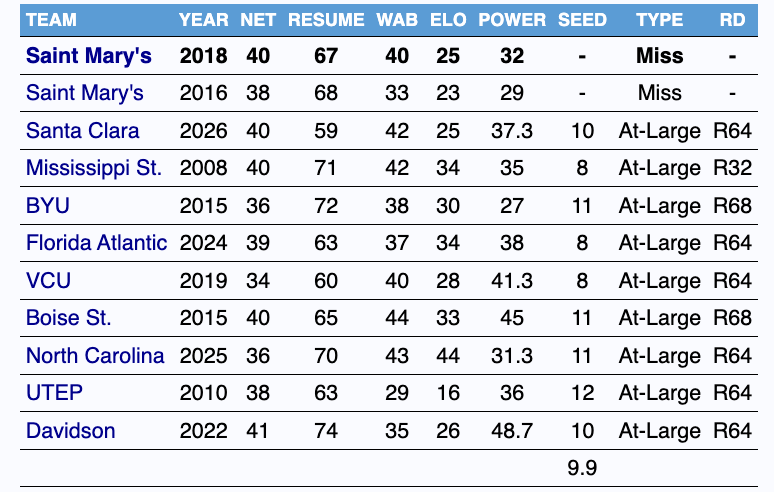
- Didn't have Saint Mary's in the field. This gets glossed over because of how bad the Nebraska miss was, but Saint Mary's also not making it is awful. 28-5, 40th in WAB, top-30 at KenPom, and a resume comparison tool that looks like this. Their reward: NIT.
- Had Arizona State and Alabama anywhere near the field. Arizona State was 66th in WAB and under .500 in league play, but they did start 12-0, so I guess you can blame that. But at least they got sent to the First Four, where they were promptly disposed of. Alabama as a 9 seed is insane. They were 64th, went 19-15 and under .500 in league play, ranked 57th at KenPom, and had multiple Q3 losses. Not only were they not on the bubble, they almost wore home uniforms in the Round of 64. They wouldn't come close to making the field with WAB and Avery Johnson probably gets canned a year early.
- Also, Penn was a 16 seed. This one really isn't important, but Penn had the resume and the KenPom numbers of a 14 seed. It wasn't as if Penn was an upset winner in the Ivy, either, as they were the league's best team. The Ivy wasn't even a bottom-six league; it was 21st of 32. How in the world does that end up a 16 seed? You tell me. As an illustration, 2025-26 North Dakota State - a near-identical resume facing tougher circumstances for 12-16 seeds - got a 14.
How much would WAB have changed 2018's history? On one hand, yeah, they got the 1s right. You could even say they generally got the 2 line right. But there are so many openly awful decisions throughout the field here that this is the lone full 10/10 to me. So many teams that ended up making deep runs were dramatically underseeded, and when you could change out the entire First Four (more or less) for alternate options, you did a terrible job as a Committee. The good news is that almost no one on the Committee is still working in college athletics, but Jim Phillips (then at Northwestern) now runs the ACC. Just don't let him near Selection Sunday.
Would this have helped or hurt mid-majors in 2018? Clearly. You get two additional MMs in the field, and teams like Loyola, Saint Mary's, and even Penn are only helped by the new rules.
Would the Tournament have been better or worse? Hard to say. The opening two rounds of the 2018 Tournament were up there for two of my all-time favorites, and the second weekend was also pretty good. Unfortunately, the Final Four sucked from start to finish. Maybe this fixes that, maybe it doesn't, but at least some more deserving options have their say in it.
2019
List of important changes:
- Uhhh...I mean... After 2018, the Committee almost completely fixed itself in one season. On the new top-5 seed lines, the only multiple seed-line change is Cincinnati going from a 7 to a 5. Beyond that, it's a lot of nitpicks. Should New Mexico State have been an 11 instead of a 12? Yeah, but it wouldn't have kept me up at night. Ohio State, Florida, and Syracuse all in the First Four? Yes, but none of them were above a 10 seed in real life. Not a bad job.
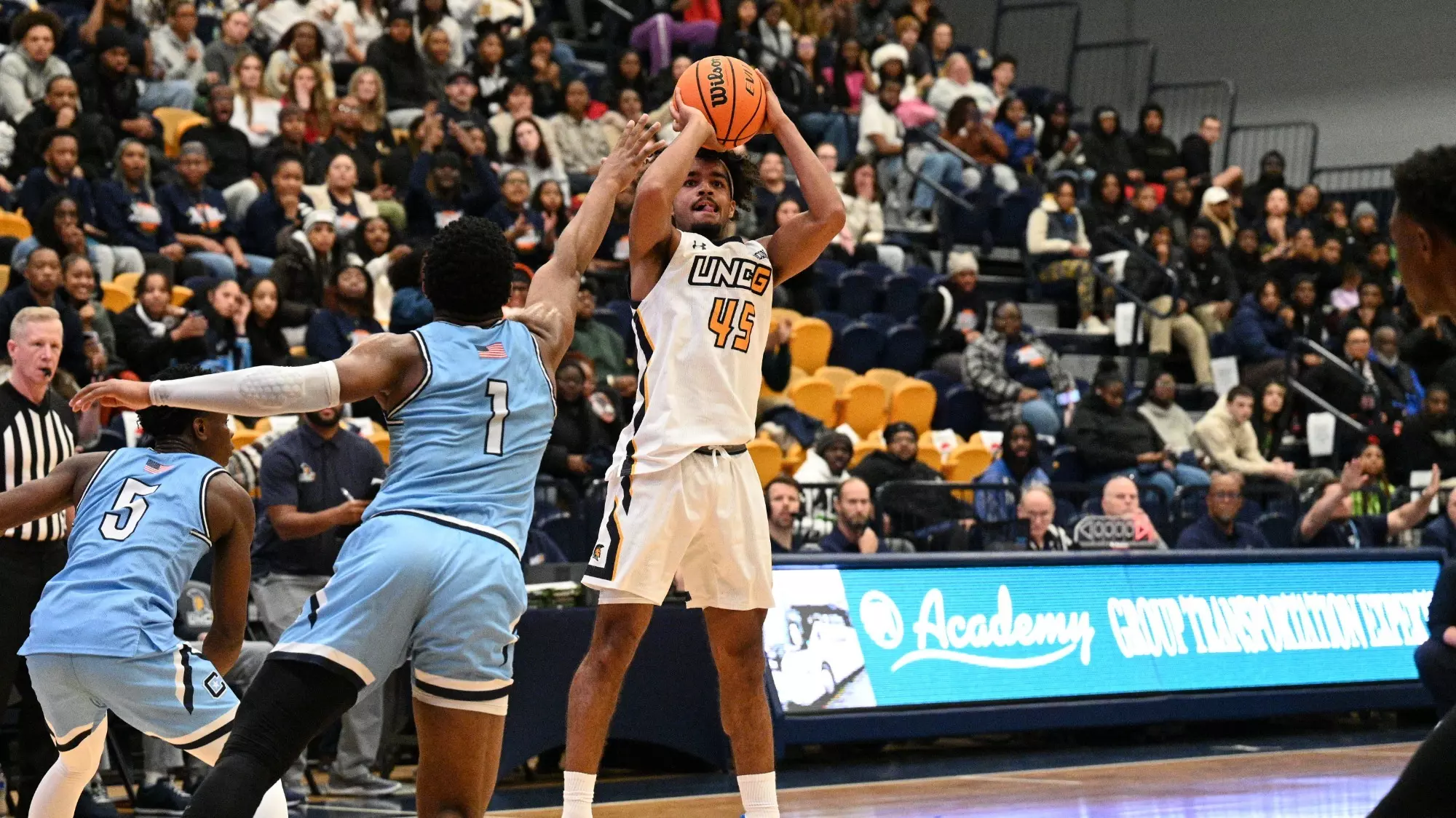
- But WAB really would've helped UNC Greensboro. In one of the more forgotten Great Mid-Major Luckfart Seasons, UNCG went 26-6, had a top-35 resume by WAB, and did it all by going a hilarious 15-1 in games decided by eight points or less. They were a less flashy version of 2025-26 Miami (Ohio), but arguably with a better resume. Whether or not they were actually good is a question worth asking, but similar to Miami of 2026, they should've been allowed the chance to prove it in the First Four.
- Also, it would've helped NC State and TCU a whole lot. NCSU, 37th in WAB, was left out entirely due to a bad non-conference SOS. (It did help prove NET being meaningless, as NCSU was 33rd.) TCU was also left out due to going 3-9 against Quad 1 opposition, but at 42nd in WAB they had a superior resume to several at-large teams that did get in.
- As mentioned, it would've hurt Ohio State, Florida, and Syracuse. Syracuse played in the First Four, so no change there. But Florida, a 10, was never seriously thought of as a First Four candidate despite going 19-15 and sitting 47th in WAB.
How much would WAB have changed 2019's history? Honestly, very little. Would it have been great to have UNCG in? Yes. Would it have meaningfully changed much? Doubtful. I go a 3 or 4/10 here. A two-bid SoCon would've been a really big deal, and per the Committee the Spartans were in the field until Oregon won the Pac-12. I don't think that should've mattered, and instead, it should've kicked out a St. John's team with a worse WAB than 23-12 Oregon.
Would this have helped or hurt mid-majors in 2019? Helped, just for UNCG, but otherwise there's basically no effect.
Would the Tournament have been better or worse? No effect to me. This one had very few changes. Also, the Elite Eight -> Final Four -> NCG run of 2019 is the GREATEST OF ALL TIME. I cannot think of what year would be second. 2014, maybe?
2021
List of important changes:
- None worth fighting over. I think this is the single best Selection Committee job of the pre-WAB era, coming just three years after the worst one ever. Save for Louisville, whose exclusion is hard to make great sense of, there's very little about this bracket I would change. In fact, this is the year on record with the fewest multiple seed-line alterations: San Diego State from a 6 to a 4, USC from a 6 to a 4, Kansas from a 3 to a 5, Tennessee from a 5 to a 7, Florida from a 7 to a 9, Georgia Tech from a 9 to a 7, and that's it. But!
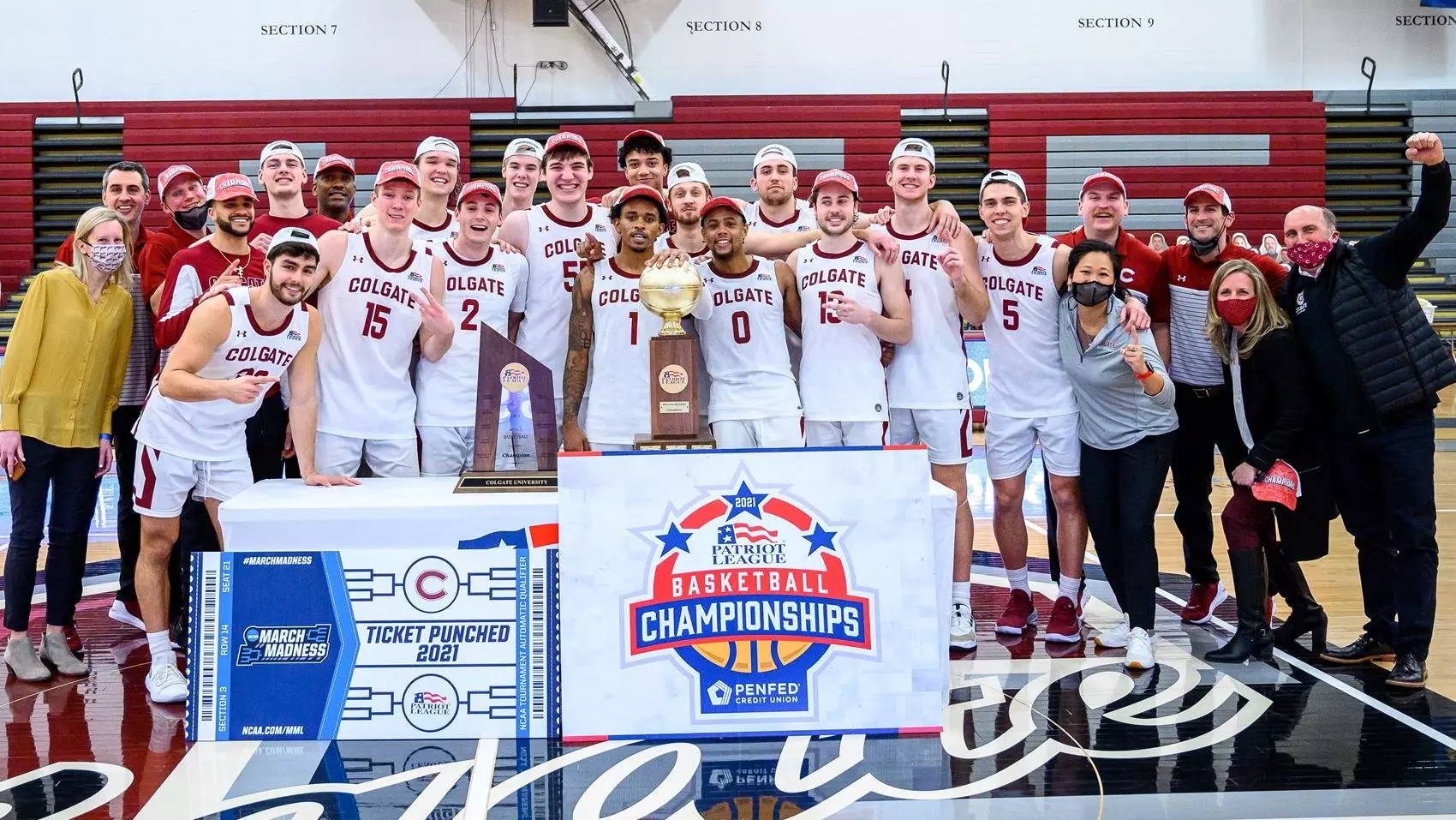
- Even in this weird year, they probably should've had Colgate on the 12 line. Probably. But I don't fault them for what they did, it's fine. Not only would I not change a single team on the 1 or 2 lines (only putting Oklahoma State on the 3), I barely changed the matchups themselves. Baylor/Ohio State/Arkansas all remained paired up, Gonzaga/Iowa remained paired up, Illinois/Houston/West Virginia stayed the same, Michigan/Alabama/Texas all stayed the same. Even USC and Kansas would've played, just as a 4 vs. 5.
How much would WAB have changed 2021's history? USC having to beat a 1 seed in the Sweet Sixteen instead of the Elite Eight matters, but that feels like it. This is either a 1 or 2/10.
Would this have helped or hurt mid-majors in 2021? No change. I'd argue it hurt in the sense Drake missed the field, but it helps that Colgate gets a fairer seed and that the Bonnies would be a 7.
Would the Tournament have been better or worse? Time for more debate. 2021 had the greatest opening weekend OF ALL TIME. Of all time! I don't want your 2023 (also awesome, but possibly too chaotic?), your 2010 (my second-favorite and my favorite Tournament overall), your 2018, your 1985, even your 2001, which should be studied more by youths. This was the peak, and we may forever chase the high it brought after a season off.
Revised Tournament odds:
2022
List of important changes:
- Conference Championship Week matters. Tennessee would correctly be a 2 seed, not the 3 they ended up receiving due to Committee laziness. (Lest you think this is bias, the Vols were ahead of every single 2 seed in Wins Above Bubble by some distance.) Duke now falls to a 3 after losing in the ACC Tournament. Boise State is a 7 instead of an 8 after winning the Mountain West.
- Mid-majors benefit. Colorado State is now a 5, Boise a 7, Davidson a 9, South Dakota State a 12, Chattanooga a 12, and so on.
- High-majors with lots of losses do not. Alabama and Ohio State - teams with combined real-life records of 38-24 - were 34th and 46th (!) by WAB, respectively. They received 6 and 7 seeds because of their schedule strength, not because of actually winning games. In WAB World, they're 8 and 9 seeds, respectively.
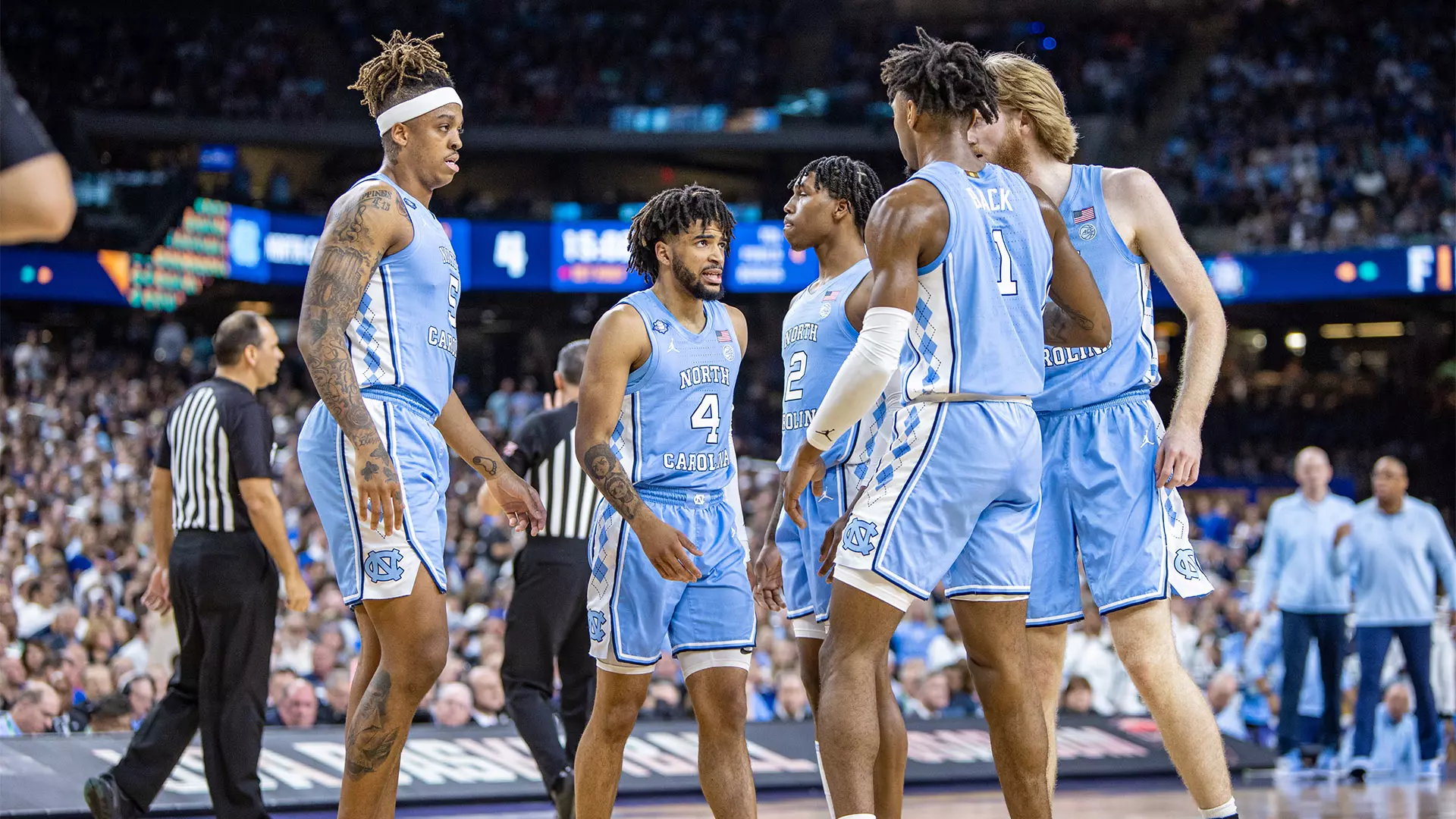
- Otherwise, only one team was dramatically underseeded, and they made the title game. North Carolina sat 19th (!) in WAB and SOR, though the abominable KPI had them 34th. At minimum, they should've been a 6 seed instead of an 8, but obviously, it worked out.
How much would WAB have changed 2022's history? Something about post-pandemic life seemed to course-correct the Committee. They got the 68 teams right, and no one required a three-seed-line move. I give this a 3/10, mostly because Tennessee being a 2 and Duke a 3 does change the matchups and the course of history a little bit.
Would this have helped or hurt mid-majors in 2022? Helped by some distance. No one falls out, and most of the mid-majors now play at more accurate seed lines. Also, Colorado State wouldn't have to play Michigan now.
Would the Tournament have been better or worse? In real time, I hated this Tournament because no one could make shots and the Elite Eight was the worst in the sport's history. Upon further review, the first two rounds were really strong and the title game was great. This would've had no real change either way, but I did want to put it out there.
2023
List of impactful changes:
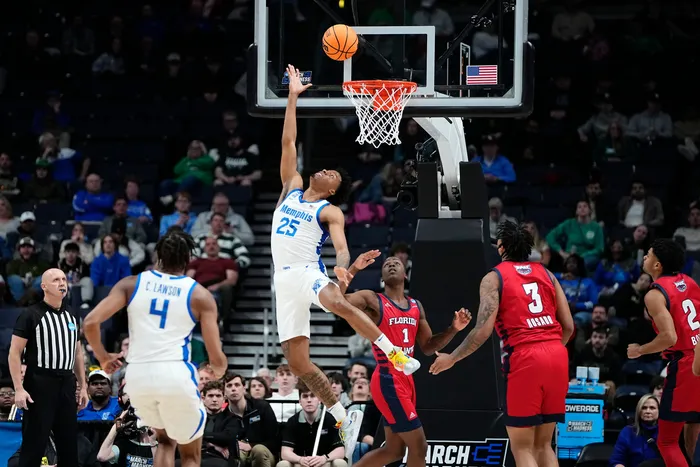
- The single most important game of the NCAA Tournament never happens because its contestants were horrifically underseeded. With WAB, the Memphis Tigers had the 15th-best resume in the sport. Florida Atlantic, meanwhile, was 14th. SOR was less kind - 18th Memphis, 22nd FAU - but the point was pretty obvious. These two teams never, ever should've been in an 8/9 game. Memphis is now a 5 and FAU a 6.
- The second-most disappointing team of the season no longer gets the benefit of the doubt. For reasons I cannot figure out, Kentucky got a 6 seed without much controversy despite sitting 33rd in WAB, 27th in SOR, and 28th at KenPom. Not to mention three Q3/Q4 losses, fellas! They are an 8 seed now, and we can get this deeply disappointing, annoying Kentucky team out early with any luck.
- Also, Iowa is correctly assessed. No one other than me and maybe two Iowa fans remember this, but in 2023, one Big Ten team went 19-13, 11-9 in conference play, against the 25th-best schedule. In the same season, another Big Ten team went 22-13, 10-10, against the 24th-best schedule and beat the 19-13 team earlier in the season. The first team - Iowa - received an 8 seed. The second, Penn State, got a 10. You tell me how that makes any sense, especially knowing in hindsight PSU was 38th WAB/29th SOR and Iowa 50th/45th. The Hawkeyes would be an 11, not an 8.
- The First Four seed lines change. As mentioned earlier, in the late 2010s, the First Four more or less became exclusively an 11 vs. 11 game. That should not have happened in 2023, as Charleston and Oral Roberts both had better resumes than any First Four contestant. They're now 11 seeds. Also!
- North Texas is IN. I mean, Oklahoma State is too, but North Texas really should've been in here. 40th in WAB, top-50 at KenPom, though 59th in SOR...I'm more than happy to have the Mean Green in and get Pittsburgh out of my field, who comes in as the strangest inclusion. A team sitting 77th at Torvik on Selection Sunday, 54th in WAB, 52nd in SOR...I'm happy they made the Round of 32, but that's not a profile that should've made it. (Nevada would have fallen out for Oklahoma State.)
How much would WAB have changed 2023's history? I think by some margin, Memphis/FAU not happening until potentially the Elite Eight is quite meaningful, but this barely changed the top 4 seed lines at all. It would've helped to fix the seed lines and it certainly would've been nice for North Texas to get a deserved at-large bid. 5/10.
Would this have helped or hurt mid-majors in 2023? Clearly helped. Most recall FAU getting gifted a 16 seed in the Round of 32, but outside of that, they played the toughest possible opponent by seed line the entire way to the Final Four. (I'm counting Kansas State here, because if not KSU it would've been 7-seed Michigan State.) FAU gets to wear home uniforms in the Round of 64, probably whoops NC State, and sets up a banger R32 game with Gonzaga.
Would the Tournament have been better or worse? I have a hard time filling this section out. Would it even be possible to have a better R64/R32/S16 run than 2023 already had? I'm not sure, though as a guy who likes some balance of order and chaos I guess I could ask for more. I would've liked a better title game.
2024
List of impactful changes:
- The NCAA reveals why WAB was so sorely needed. Back in summer 2025, I ran the numbers at my old newsletter to see what had the strongest correlation by year to the field at-large. 2024, over the previous decade, came back as the single biggest mess, an attempt by the NCAA to split the proverbial baby between resume and KenPom. What it resulted in were several bizarre seeding errors and Committee decisions that could've easily been fixed. For one!
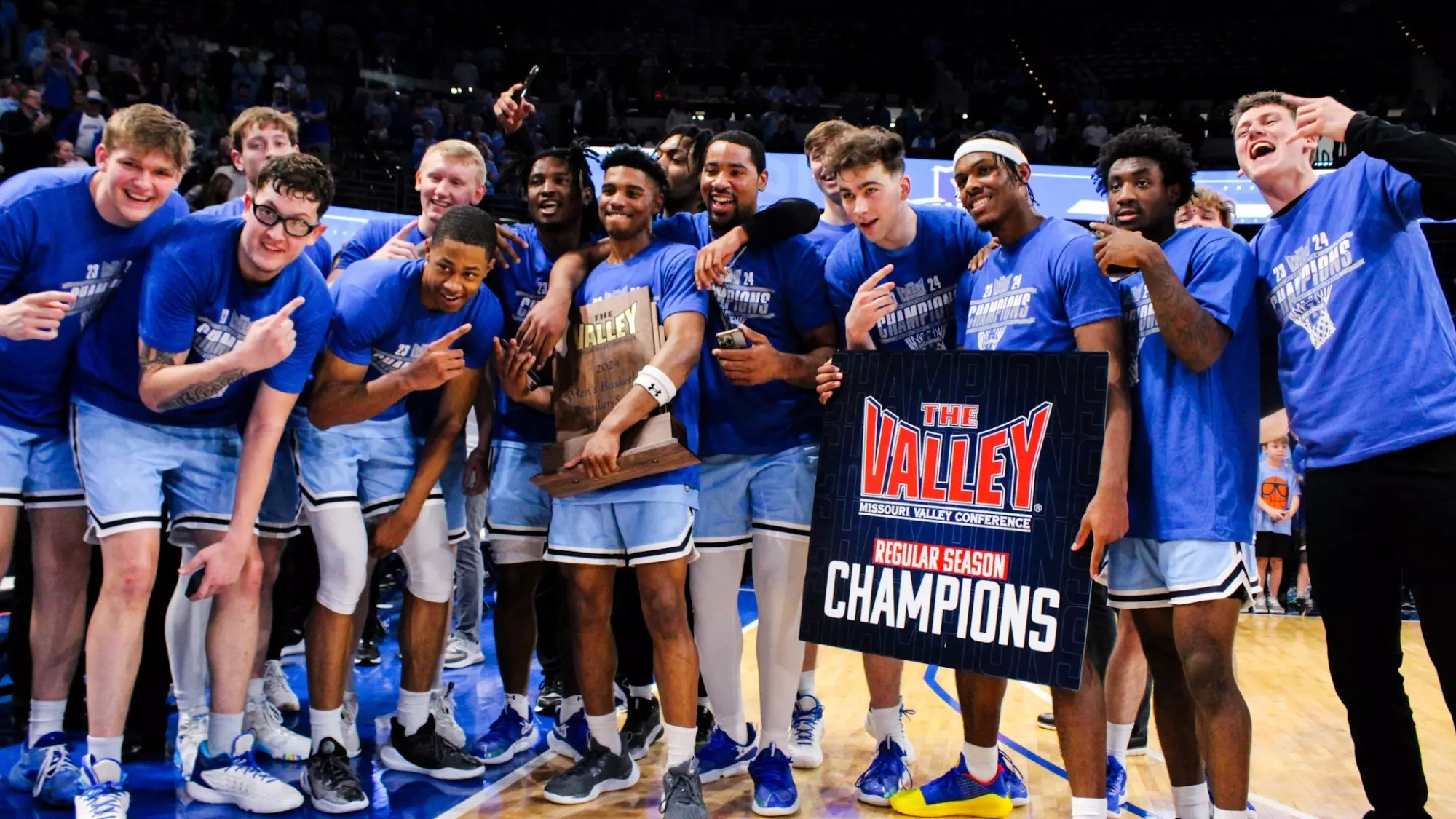
- Indiana State should have been in. Obviously. Statistically speaking, this is the worst selection call of the last 15 years and possibly further. ISU sat 28th in WAB, top-40 in every resume metric, top-30 in NET, and had just one truly bad loss. Here is a short list of teams they were ahead of in WAB: 5-seed Saint Mary's, 6-seed Clemson, 7-seed Washington State, 7-seed Texas, 8-seed FAU, 8-seed Mississippi State, 9-seed Northwestern, 9-seed TCU. Actually, in all, the Sycamores had a superior WAB to 14 different at-large teams. A shameful, embarrassing Committee call that will live in infamy for ages to come.
- Princeton also should have been in. Obviously. No one outside of me and two Ivy Leaguers may recall this example. A team went 22-4, was 42nd in WAB, 41st in SOR, and top-65 in every quality metric. They had no Q4 losses, which is the usual killer. Princeton's reward was not even being mentioned once in at-large talks despite having a higher WAB and SOR than TCU, Texas, Boise State, Mississippi State, Texas A&M, and Michigan State. The Tigers would be in a WAB-pilled field.
- The Mountain West Screwjob is fixed. Out of nowhere in 2024, ESPN's BPI became hugely controversial. It seemed to give 20-30 spot deficits for teams playing at elevation, despite this not having serious statistical significance in team quality. What this led to was the entire Mountain West getting brutalized on Selection Sunday. With WAB, San Diego State and Utah State (who had near-equal resumes) are on the 6 line. Nevada goes from a 10 to an 8. New Mexico is a 10, not an 11. Colorado State no longer plays in the First Four. The field does lose Boise State, but it was to make room for Princeton, so I deem that a fine outcome.
- Also, Texas A&M and Michigan State are out. Sorry! But these were awful decisions by the Committee once more. TAMU sat behind Syracuse, a team I don't recall being mentioned even casually on Selection Sunday, in WAB. So did Michigan State, but at least MSU had KenPom strength to point to. Should MSU be in the field? Maybe, but I would've won more games if it were me. Try a little harder, Tommy.
How much would WAB have changed 2024's history? The field composition did not dramatically change outside of Indiana State, but on Earth-2 you have a two-bid Ivy, a corrected Mountain West, Auburn on the 3 line instead of the 4 (correctly giving them SEC Tournament credit), Kentucky as a 5 instead of a 3 (seriously, go check that resume), Indiana State in the field...it's at least a 7/10. Also, this Tournament wasn't very good, so it couldn't have hurt.
Would this have helped or hurt mid-majors in 2024? Go read the above, let me know what you think.
Would the Tournament have been better or worse? I have no hard time filling this one out. It would've been better. 2024 had a great Sweet Sixteen...and that was about it.
So: after 8,500+ words, what are my overall takeaways?
I mean, WAB clearly helps mid-majors. Obviously. In 10 of the 13 years on record, more mid-majors made the field through Wins Above Bubble than they did otherwise. The stat aims to help teams who simply win games, not impress computers. While I appreciate being impressed as a sentient computer, I can also appreciate simply outscoring your opponent night after night by whatever margin is possible.
Where it needs to help more, and where neither I nor the Committee can step in, is to create less scheduling cowardice by high-major head coaches. In 2025-26, there were just 19 road games played by high-major schools at mid-major opponents. Just five of them were NCAA Tournament high-majors going on the road, sacking up, and playing a mid-major, regardless of opponent quality. Overall, a total of 81 high-major versus mid-major games on a neutral or road court were played.
15 years ago, when this exercise would've began, high-major teams played 85 true road games at mid-majors. 85. Eighty five. More than four times the current amount of true road games at the Other 26. On December 8, 2010, Oklahoma State played at Tulsa, Villanova at Penn, Minnesota at Saint Joe's, and North Carolina at Evansville. All on the same day! This doesn't count neutral-site affairs, either, which adds 86 more games to the pile.
Thanks to the Quadrant system, which coaches, DOBOs, and high-major programs across the land interpreted as only playing Q1 or Q4 opponents where possible, the era of the Middle Budget game - North Carolina at Evansville, or hell, Arizona at Rice, or VANDERBILT AT MIDDLE TENNESSEE - is currently over. But I have faith.
A better world is possible, even as most things seem to be getting worse. I don't like the 76-team Tournament, but perhaps with more wiggle room, coaches will dare to finally be somewhat more adventurous with their scheduling. Plus, it's already working for one guy that got clowned upon. You see who High Point's got on the books next year?
Flynn Clayman went viral during the NCAAT for barking back at scheduling discrimination.
— Matt Norlander (@MattNorlander) May 14, 2026
It worked.
High Point will play LSU, Saint Louis, George Mason, Miami U and more next season. A coup for mid-major hoops. Clayman gives @CBSSports an exclusive look: https://t.co/lpYLzBFbAE
That, frankly, is not possible without Wins Above Bubble. Instead of being afraid of it, the Committee should continue to lean heavily upon it. History suggests it's far more likely than not to reward the teams that need rewards most.
