


Miami assistant coach Khristian Smith has gotten used to it over the years, walking around the convention center in whichever city the Final Four is in with a red Miami polo on and being stopped. When he held up for a second, he often had to make a polite correction.
“Oh, Maryland,” they would say in regard to the logo embroidered above his left bicep as he walked past.
“No,” Smith would reply, “Sorry to tell you, Miami.”
“Oh, Florida,” they’d say.
“No,” Smith replies. “In Ohio.”
The song and dance stopped becoming insulting to Smith at a point. It was merely routine. If he thought about it, though, he’d be reminded of the lengths that the program he was working to build had to go in order to become nationally relevant. Smith and Miami head coach Travis Steele had a big vision for what they could build, but their program’s brand was still clouded by misconception.
At the 2025-26 Final Four in Indianapolis, though, Smith walked around the convention center and the streets while being congratulated. Miami had just wrapped a 32-2 season, finishing the regular season 31-0, becoming just the seventh college basketball team since 1979 to go undefeated, and winning a First Four game in the NCAA Tournament against SMU. For nearly all of January and February, Miami was at the center of the college basketball universe. Their highlights played on Scott Van Pelt’s show. SportsCenter dedicated significant time to covering them, too.
When it was all over, industry friends came up to Smith to tell him how impressed they were with what Miami had done, and fans from Illinois approached him to say they rooted for Miami every time it played. Smith estimates that those previously neutral observers weren’t alone and that they had adversaries. Whether they rooted for Miami every game or rooted against them is irrelevant to him, though. They watched. They cared. That’s enough for him.
“People don’t think it’s Maryland anymore; they think it’s Miami,” Smith told Basket Under Review in regard to his quarter-zip. “We’ve kinda gotten that out of the way a little bit. We’re gonna enjoy this M for now, until it goes by the wayside, which hopefully it doesn’t.”
If life for the members of that historical Miami team since their NCAA Tournament loss to Tennessee has indicated anything, it’s that the weight of the school’s logo isn’t going away anytime soon.
Miami point guard Evan Ipsaro remembers that nobody on campus paid attention to the program during his freshman season, and a small group did during his sophomore year. Now, those days seem like an alternate reality.
When a group of Miami players went out in Oxford, Ohio, students often came up to thank them for what they had done for the program. When they went to Fort Lauderdale on spring break, multiple groups of people came up to ask for pictures and tell them they had followed the run. Ipsaro and company never envisioned notoriety like this, but it’s their reality these days.
“The entire nation knew who we were,” Ipsaro said. “It was like ‘wow, more people are paying attention to us than we really thought.’”
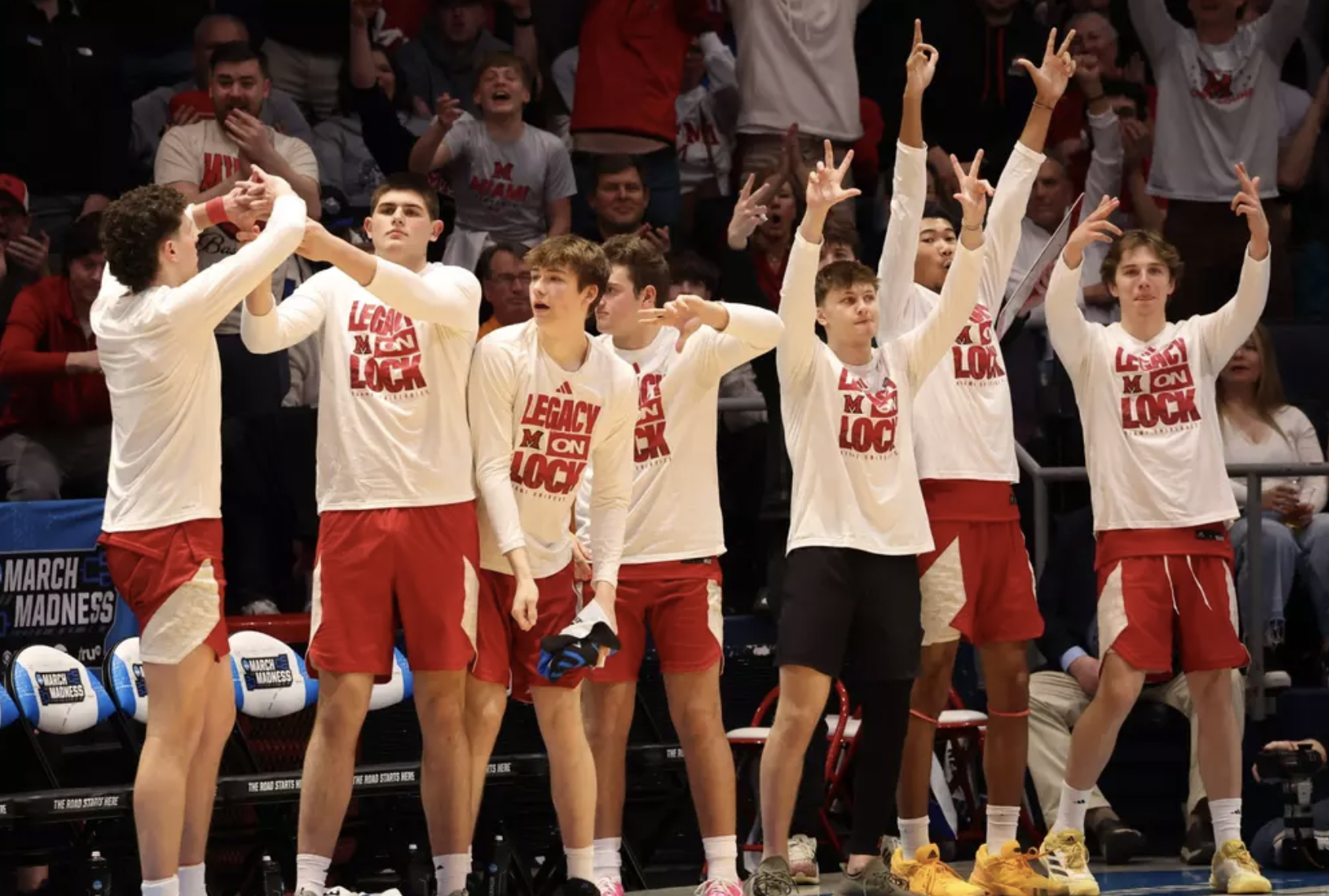
Smith would love to give the classic coach-speak answer regarding whether Miami’s coaching staff still discusses the run they went on a year ago. He’d love to say that everyone involved has moved on and put the memories away for now, focusing solely on Miami’s 2026-27 team.
He can’t, though.
“That’s just not real,” Smith said. “It’s not our focus, but I think it’s hard to not talk about it. It was a great accomplishment. In the history books, it will be there forever.”
As a result, Smith and the rest of Miami’s program who chose to come back for another season still take a moment to remember what they did and what it took to get there. They still remember the larger-than-life moments on the floor following its overtime win over Ohio that clinched an undefeated regular season. They still rave about junior guard Luke Skaljac’s heroic performance against SMU in the First Four and about the way their group of seniors bought into the vision to make it all happen.
Because they did, things have changed for Miami as a program. The consensus is that the run has expanded the pool of recruits who are willing to listen to what Steele and company have to say–although Steele warns that the program shouldn’t change the type of people they recruit just because higher-caliber players want to listen.
Steele isn’t changing the way he recruits, and the 2025-26 season gives him the conviction to think that way. He believes that part of how his undefeated team should be remembered is how his group stayed together while other schools, agents, and critics tried to tear them apart. Despite never losing in the regular season, Steele argues that his team weathered a fair amount of adversity and was connected enough to get through it. As a result, he says, it put together what he calls a “remarkable season, incredible ride.”
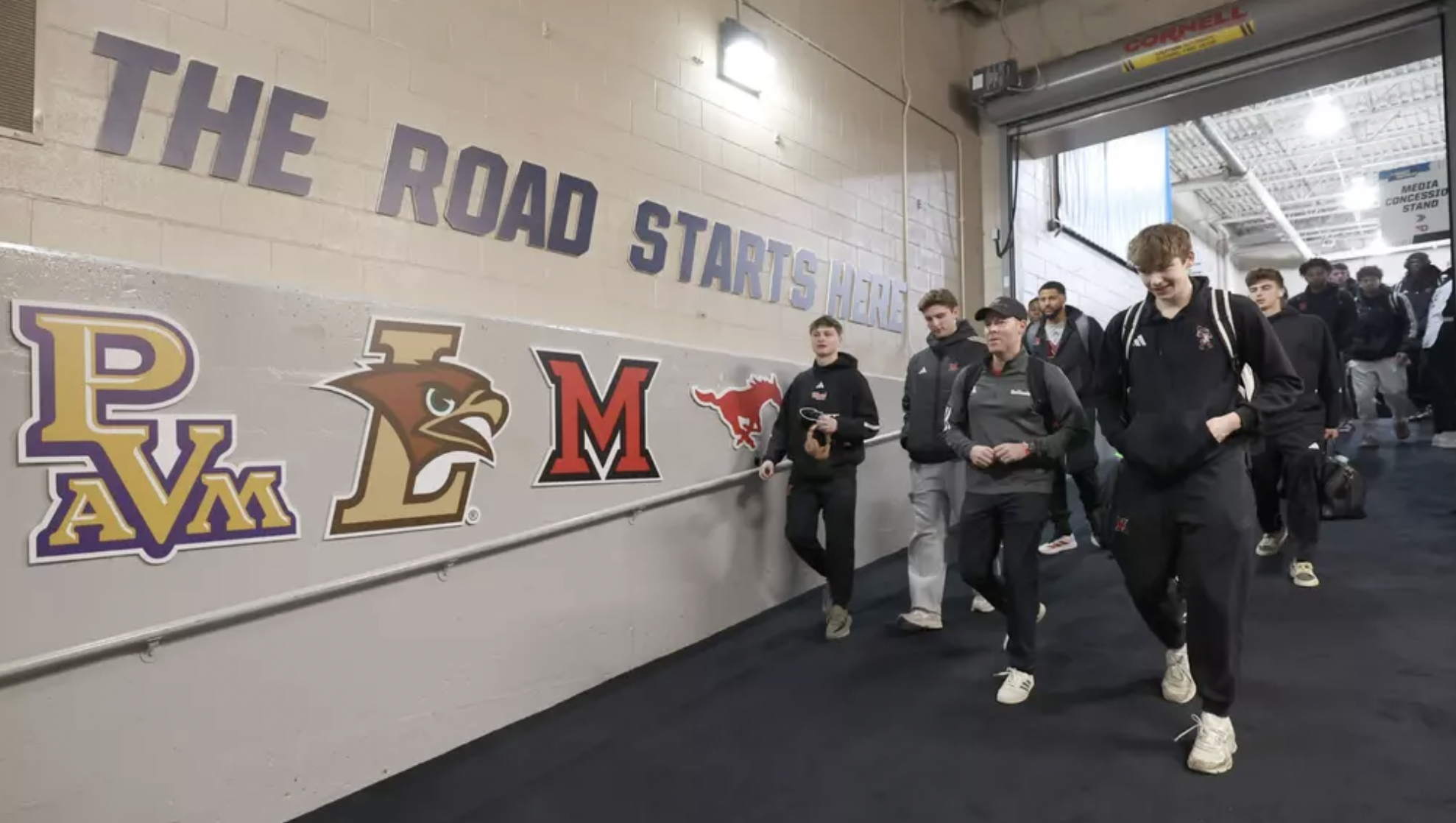
Miami won eight one-possession games in 2024-25–including its last three regular season contests–as a result of a unique composure that Ipsaro says manifested itself in Miami remaining unmoved while other teams were intimidated by the moment at times. Ipsaro admits that his team was almost too cocky at times, but that it was always of the belief that it was better than the teams it played against. That’s how it was able to pull off what it did.
That Miami team had plenty of opportunity to be overcome by the moment, but it never did. Even when it was the subject of criticism for never playing a Power Five opponent–its answer to that: you can only play who’s on the schedule and who will play you–and was the center of a polarizing debate as to whether it should be in the NCAA Tournament if it didn’t win the MAC Championship.
“Towards the end of the season, we were kind of the story of college basketball,” Ipsaro said. “I think we should be remembered as a team that didn’t care what anybody else would say, that just put their head down and went to work.”
“I think people will remember that group for how close we were," Suder added in a text message to Basket Under Review. "Everybody bought in, played for each other, and that helped move the program in the right direction”
Those within Miami’s program also feel as if part of that group’s legacy should relate to it getting everyone’s best shot–particularly in the eight weeks it was ranked in the AP Top 25–even if it wasn’t facing power-five programs. Smith also believes that the way it responded to losing Ipsaro–its starting point guard on opening night–for the season should add to its legacy.
In any case, it can say something that only 24 teams in college basketball history can.
“Wherever they want to rank us among the undefeated teams, it's up to them, but they can't deny what we did,” Smith said. “We'll forever be in history, whether people agree with it or not, so we're proud of it.”
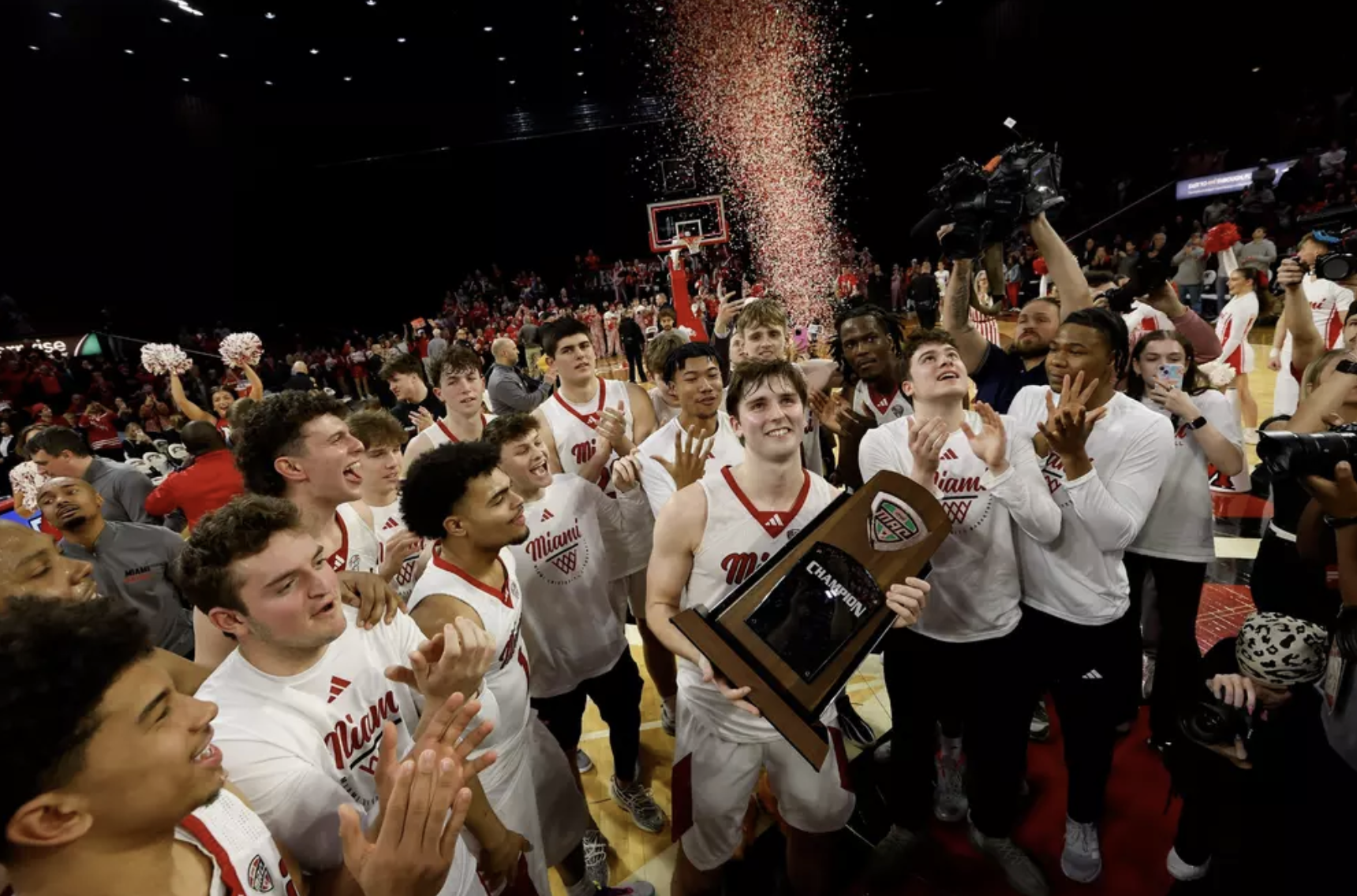
In the moments following Miami’s 78-56 loss to Tennessee in the Round of 64, Steele couldn’t help but think about the big picture of what his team accomplished. He also couldn’t help but think about what it left out there, though.
Steele never set out to just make the NCAA Tournament. He wants to be in it every year, but he has aspirations of making it to the second weekend—where he says anything can happen. He likely knows that some will think he’s crazy for that, but he believes he can take this program there by sticking to what he’s doing and evolving along the way.
“We showed our guys a picture of an iceberg, and it's like, you just see the tip of the iceberg usually,” Steele said, “And I think that's what the nation saw last year. For us, there’s a lot under the water that we haven't done yet. A lot.”
Had Steele not believed that, he likely would’ve moved on to a new gig following Miami’s magical season. At the very least, he likely wouldn’t have signed a contract extension through the 2033-34 season—which added two seasons to his existing deal.
Steele attributes signing the extension to not wanting to leave a place he’s happy with and feels he has the resources to win consistently. He says he’s appreciative of the belief that Miami athletic director David Sayler had in him in the immediate aftermath of his firing at Xavier and has taken that to heart.
The grass isn’t always greener, Steele says, and he says he’s intent on watering it where he is.
“He wants to be like Gonzaga, like a mid-major team that built a powerhouse,” Ipsaro said. “Miami has all the tools to do it. They got the money. They’re building a new facility. They have all the tools to do it, and Steele is more than capable of leading a team to a sustainable run that can last a long time.”
The Gonzaga comparison is one that many successful mid-major coaches have aspired to match over the years, only to fall short for one reason or another. Building it that way in a one-bid league will be difficult for Steele–particularly in an era that’s relatively unfriendly to schools like Miami. What he does have going for him, though, is that his program and Gonzaga are the only two non-Power Five schools to go undefeated since 2004.
Steele believes that as he continues to build this thing, more similarities will continue to arise. No matter how crazy anyone thinks he is.
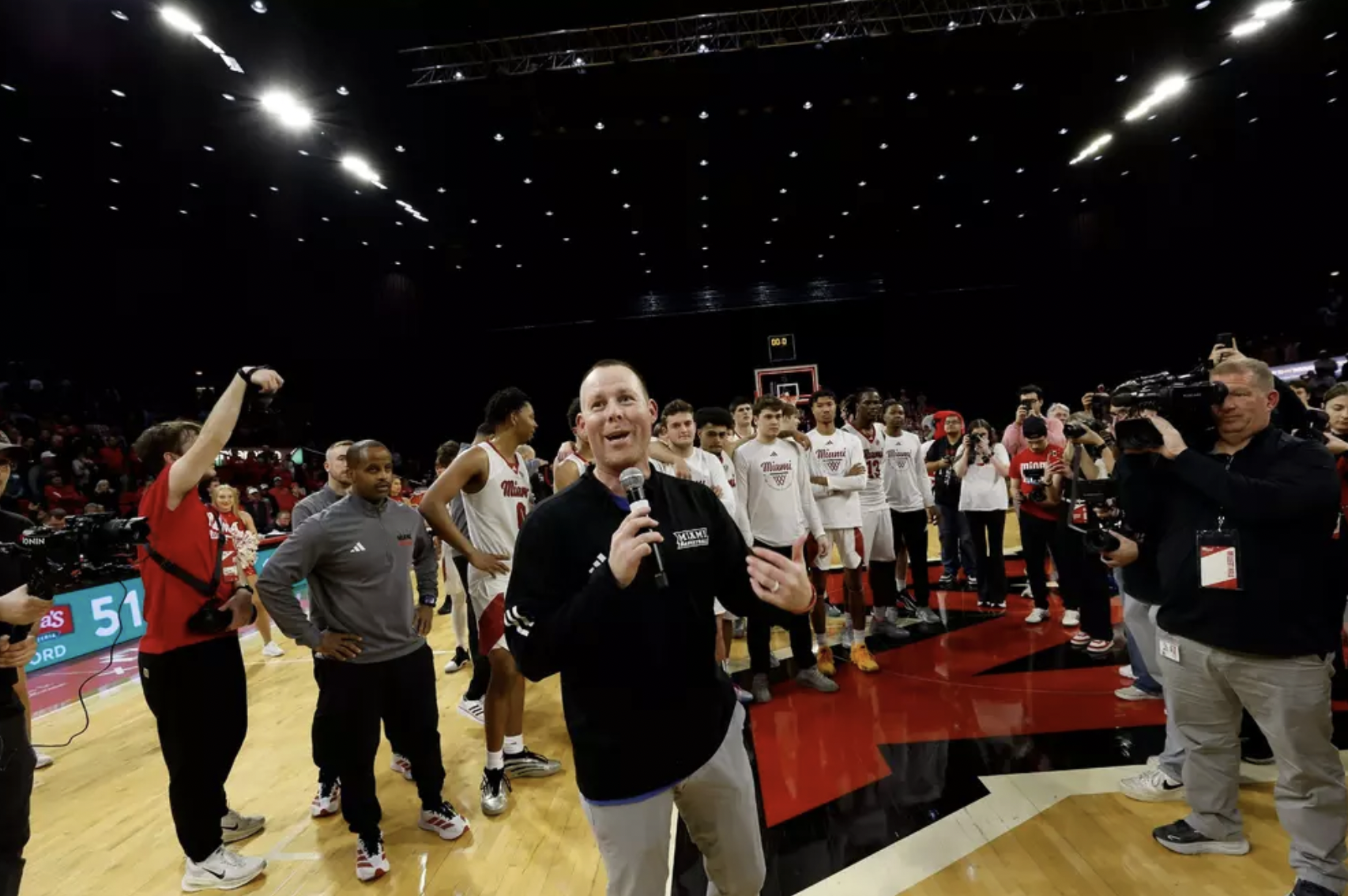
As he opened Miami’s summer program, Steele had a message to get across. It’s the same one that was a staple of his locker room throughout Miami’s 2025-26 run, but he felt it was as prevalent as ever.
A car’s windshield is much bigger than its rear-view mirror.
Steele’s in-season analogy was slightly different in that it related more to distracted driving–and in his team’s case, keeping the main thing the main thing–while this one relates more to focusing on moving forward, but they came from a similar place. Steele wants this program to focus on where it’s going rather than where it’s already been.
“I think it’s a good point that there’s so much more ahead of us,” Ipsaro said. “We’re talking, and we’re like ‘we need to prove that this wasn’t a fluke.’ Obviously, winning every regular season game isn’t a fluke, but we’re trying to prove that it wasn’t just a one-time thing or because we had the player of the year. We need to prove that we can do it again.”
Ipsaro says that everyone in Miami’s locker room is like-minded regarding the belief that Miami can accomplish everything it sets out to do in 2026-27. That’s more about its group of returning guards, Ball State transfer Preston Copeland, Milwaukee transfer Stevie Elam, Youngstown State transfer Rich Rolf and the leaps that its young players will make than what they did a season ago.
That, they say, won’t stick with them once Miami opens its season in early November.
“Being 31-0 in the regular season, 32-0 overall, isn’t going to help us win a game next year,” Smith said. “We know that now we're gonna be the hunted, even though we always want to remain the hunter, but we're gonna get everybody's best shot because of what we did. And so we got to have that mentality of ‘how can we do it again?’”
Steele, by nature, is a chip-on-the-shoulder guy and says he still has a bad taste in his mouth because of the way Miami left the NCAA Tournament a year ago and fell short of the MAC Tournament Championship. He says those things motivate him to move the program beyond where it’s already been.
He says that for his program to do that, it can’t skip any steps—even if it did complete an undefeated regular season.
“We can't think just because we were good last year that we're gonna be good this year,” Steele said, "You have to earn that right.”
