


For a few hours, Adam Olsen sheds the labels that the general public knows him by as he sits down on a padded seat with two sticks in hand. Olsen has plenty to look forward to when he thinks about his next basketball move, but for now he’s focused on playing the hits.
When the crowd is out, Olsen and a few of his family members are commanding the room by playing Zac Brown Band songs and “the classic” crowd pleasers, as Olsen calls them. Olsen’s uncle is the most consistent member of the band, but his mom will often join in to play the piano. When Olsen joins in on a gig, he’s the backbone of the band and is drumming.
“My family’s a big music family,” Olsen told Basket Under Review. “I was a band kid in high school, that’s just me. I play a lot of instruments. That’s what my family does.”
In some ways, the story of the band is incomplete without mentioning the family’s Polish heritage— which Olsen goes out of his way to bring up multiple times in a few minutes of referencing the band. He says he’s played the accordion because of his family heritage, although he says he’s not as sharp as he used to be. The consensus is that Olsen is a better musician than anyone at South Alabama thought he’d be, but that his basketball skillset is better than his musical talent.
To get to the level it’s taken Olsen to become a power-five college basketball player and a potential focal point on Steven Pearl’s second Auburn team, he’s had to reallocate his energy away from the band while moving from Canada to the United States. Every time he goes home, though, he’s reminded of his musical background if he’s forgotten about it by the time he gets there.
Olsen doesn’t plan to make a living as a drummer–and has made sure the videos of him performing haven’t gotten out–but music is part of who he is. He’s fled from any sense of identity that pins him solely as a basketball player.
Boxing Olsen in like that would be doing him a disservice and would eliminate the opportunity for his family to show off its unique skillset. And believe them, it’s a skillset that they value—as South Alabama head coach Richie Riley found out while Olsen's parents showed him videos of their gigs while Olsen was on his official visit—even if Olsen is on the shelf for a while.
“He’s actually really good,” Riley said. “I think he made a good career decision. Maybe he can go back to that once he decides to hang up the hoopin’ shoes. Maybe he can turn into a drummer.”
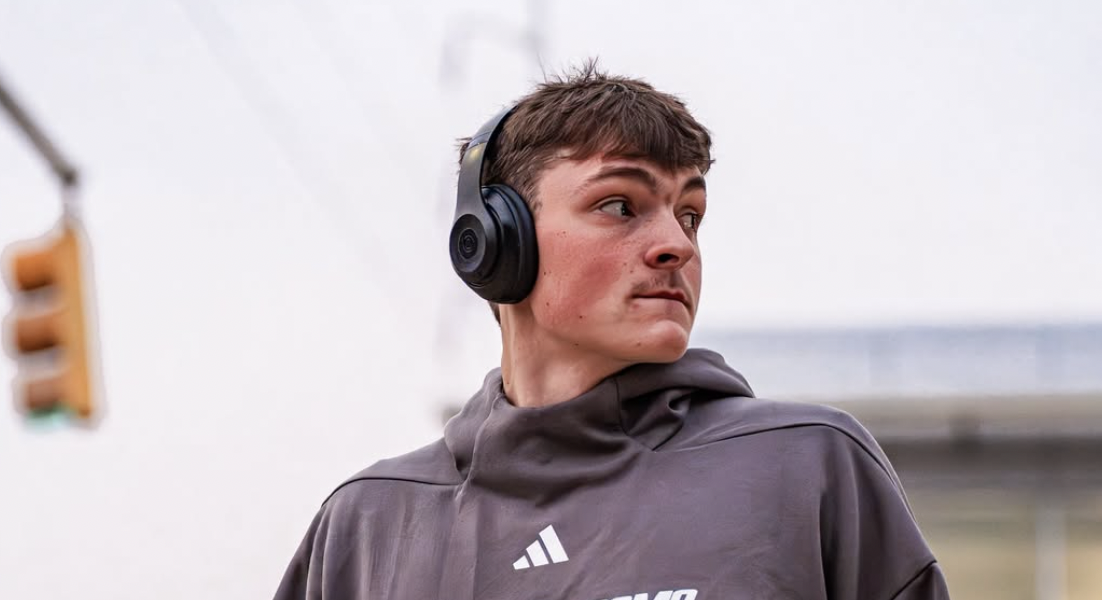
The visual still lives in Olsen’s head. He was sitting in front of a computer in the library at Elgin Park Secondary School in Surrey, British Columbia, with an email open in front of him and his hands hovering over the keyboard while his eyes were locked on the screen.
Olsen had made a routine of sitting there and firing off emails with a subject line of “6-foot-7 Sniper,” a collection of his stats, the places he played at and highlights included inside of them. In every individual sitting, Olsen copy and pasted the email into the inbox of a coach within what felt just about every Division-I program in the country. By the end of his recruiting process, he estimates that he sent nearly 1,000 total emails.
Not a single one of those emails got a response.
Olsen had just proven to be one of, if not the best shooter on the Under Armour circuit and had a number of highlight clips from games against EYBL teams, but nobody would take a chance on him. Nobody would even let him know that they knew he reached out to them.
“It was definitely discouraging,” Olsen said. “To be honest, I was like ‘you know what, I’m just gonna go play in Canada, try to play overseas. Forget about the NBA. Forget about Division-I.’”
As Olsen sits on Auburn’s campus as one of its projected go-to pieces, hindsight and a few years of wisdom allows him to admit that being willing to settle for an outcome short of his dream wasn’t healthy. Olsen wouldn’t have gotten here without a persistence that transcended circumstance, but for a while it appeared as if his situation was insurmountable.
Olsen did what he could, but he was nearly dumbfounded at the idea that seemingly nothing he did resulted in a Division-I program considering him as a valuable option. He scored 30 points in an AAU event in Las Vegas with Wisconsin and UNLV staffers in attendance. He had the size and the shotmaking profile that could quickly translate to a Division-I program.
Nobody wanted him, though. Or, at least, nobody noticed him.
Former South Alabama assistant Riley Conroy–who is generally credited for discovering Olsen–says there was a little bit of a feeling of ‘how did this guy get under everyone’s nose,’ but he says Olsen’s story is a testament to the idea that there’s enough worthy prospects out there that it’s impossible to see them all.
Conroy estimates that towards the end of a season, his work email is flooded with 30-to-40 messages a day in regard to potential prospects and that more recommendations come to him via text message and other word of mouth avenues. Hearing that Olsen never got a response despite the volume of his emails wasn’t all that much of a surprise to Conroy, or Olsen’s manager Dave Sewell—who says emailing coaches is a difficult way to get on the map—but it was his reality.
“Quite frankly, kids do slip through the cracks,” Conroy said, “Adam’s an example of that.”
As long as Olsen is a high-level basketball player, that will mean something to him. He’ll remember opening his email without seeing anything of note in there no matter who he contacted. He’ll remember feeling like he’d finally done enough to receive his recruiting moment in the sun and waking up to no Division-I offers the next morning. He’ll remember everyone around him wondering why he hadn’t yet received an opportunity.
Now that he’s found a way to the level that once appeared to be far off, Olsen still isn’t fully at peace with the way his high school recruiting process played out. He was written off back then, and now he’s out to show that he should never be again.
“Even though I’m at Auburn now, I’ve got something to prove to these guys,” Olsen said. “I’ve still got that chip on my shoulder, for sure.”
In the fallout of a first-round exit in the 2023-24 SunBelt Tournament and a 16-16 season, Riley had a message in mind as he addressed his staff; we’ve gotta keep going deeper.
Riley had already established himself as a consistently-successful recruiter of Division-II transfers and one of the first Division-I head coaches to consistently recruit there, but the philosophy had become more popularized around the country and Riley had more competition. South Alabama’s staff needed another creative player pool if it was going to get back to being a real SunBelt threat in spite of its lack of player compensation resources–which aren’t competitive with the top of the league.
As a result, Conroy was glued to his computer while searching for undiscovered players and leagues to recruit out of. The staff made a decision to hone in on building through adding NAIA players.
Then, he stumbled upon U Sports.
“It was just kind of fascinating to the point where I just became a fan,” Conroy said. “I just kind of started following my favorite teams in U Sports, not recruiting any of their guys, I just kind of started following them and watching them all year.”
The league had only produced a few Division-I players–and none that played at power-five programs–but Conroy was drawn to the competitiveness of it. Conroy loved the positional size the league had. He loved that coaches ran good actions that put their players in favorable positions to maximize their skillsets. After diving into the league, Conroy realized that the top of it was notable and included a number of players that Division-I coaches never got eyes on. One of those was Olsen.
In the years leading up to Olsen making the jump to the Division-I level, Conroy had been recruiting Canadian guard Marko Maletic–who was transferring from another Division-I and ended up at Western Illinois–when Maletic put him in touch with Sewell. Sewell said that he thought Conroy was on to something in regard to his vision of recruiting out of Canadian college leagues. They eventually formed a relationship that lended itself to Sewell telling Conroy about players that he was training, including Oregon State guard Malcom Christie–who Sewell recommended to Conroy at the time.
South Alabama struck out on Maletic and Christie, but Conroy stayed in touch with Sewell. When Sewell and Conroy would talk, Sewell would tell Conroy that Olsen was “unreal.” Olsen’s Canadian numbers and film drew him some Division-I interest, but Conroy and Riley were among the only ones that offered him an opportunity to prove himself and play significant minutes.
Conroy–who introduced Riley to U Sports–believed in the league, but also in Olsen individually. Olsen averaged 14.7 points per game on 41.5% shooting from the field and 34.4% from 3-point range, but there was belief within the South Alabama staff that he could take a statistical leap despite moving up a level.
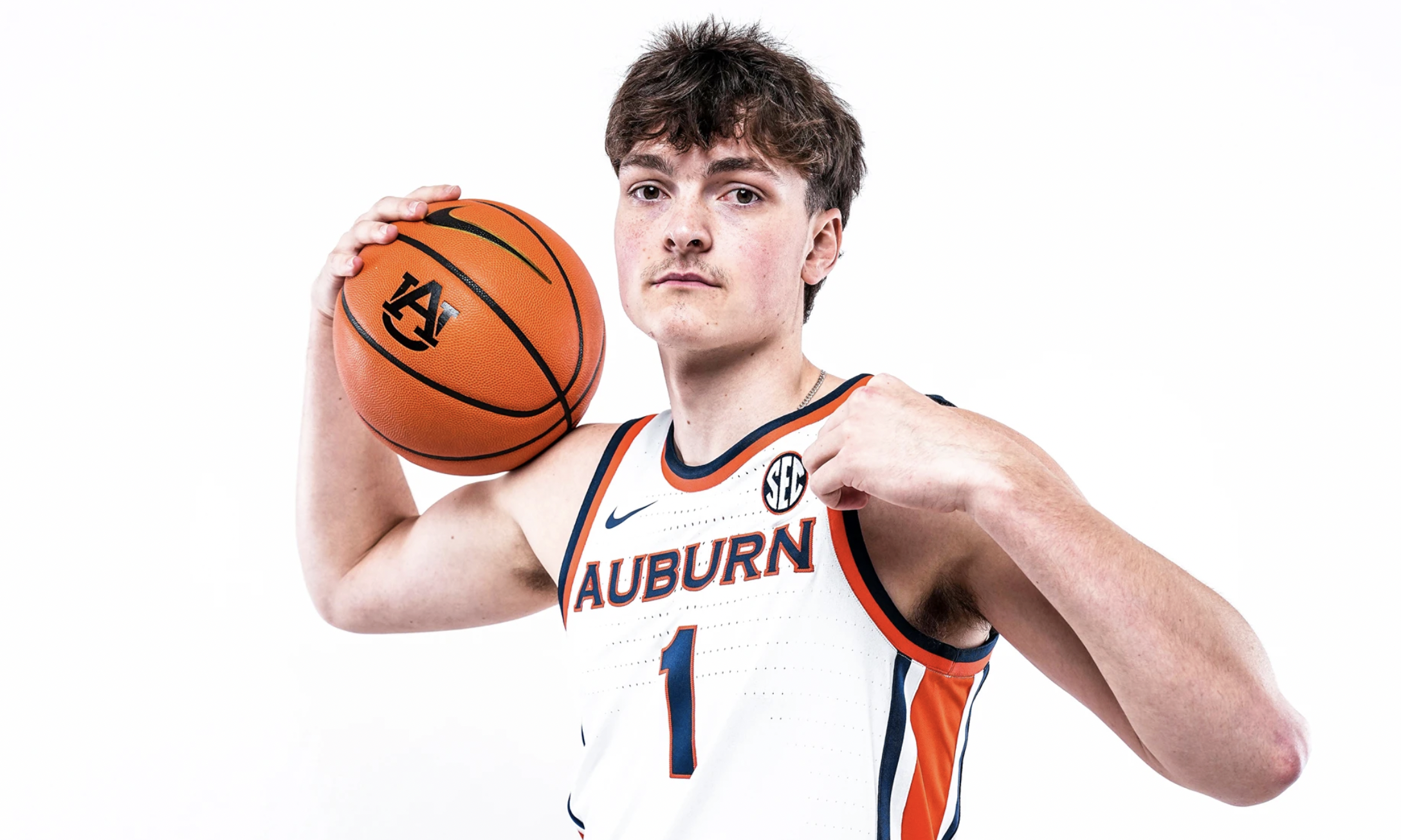
Olsen broke out when he arrived in Mobile and averaged 16.7 points per game while shooting 39.5% from 3-point range and ranking nationally in eight of KenPom’s efficiency categories. The season and Olsen’s subsequent transfer commitment to Auburn cemented him as the poster child of U Sports players in college basketball as well as the best one.
Riley, Sewell and Conroy believe that because there’s been an Adam Olsen, a number of players like him will follow. Olsen says he didn't see many successful Division-I players from his area while he was growing up, but now a number of Canadian players–particularly Owen Kenney, who committed to South Alabama after playing in U Sports–can watch him represent U Sports in the SEC.
“Knowing that I’ve been able to help pave this path, obviously I’m not the only one, and get more eyes on Canadian hoops [is fulfilling],” Olsen said. “There’s a lot of Canadian hoops that isn’t great, but there’s a lot of Canadian hoops that are really, really solid and there are guys in Canada that I know that definitely deserve opportunities that will get them now.”
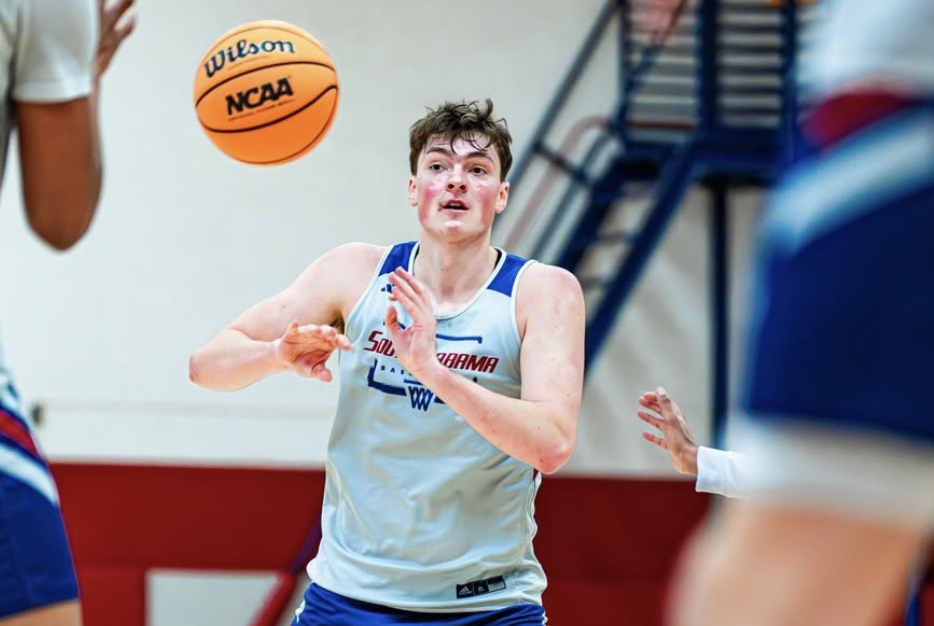
Within the confines of the University of British Columbia athletic facilities, Olsen would walk up to the protein fridge and find himself discouraged at the sign taped onto it. “You can only take one per month,” the piece of paper said.
When Olsen got to South Alabama, he couldn’t bring himself to grab multiple protein drinks at once before asking someone on staff if it was okay. Turns out, it was.
It was clear to Riley and company early on in Olsen’s visit that he was blissfully unaware of a number of the perks of being a Division-I athlete. He learned that he could get extra food in the players’ lounge. He was blown away that South Alabama had a full-time strength coach only employed to handle men’s basketball.
Olsen’s visit was entirely dissimilar to most modern-day visits in that he and his parents asked significantly more questions in regard to the housing and overall experience at the school than the compensation he’d receive. It was highlighted by his parents asking the staff if tuition was covered.
“I was like ‘okay, your parents aren’t allowed to ask anymore questions after that,’” Sewell joked. “It was funny.”
Riley wasn’t offput, though.
Those who know Olsen say he decidedly doesn’t fit the stereotypes surrounding college basketball players in the NIL era. They say he’s never chased the biggest payday—and he says he didn’t when he chose Auburn over a few more lucrative offers from ACC schools and other SEC schools—and that he never took the resources at South Alabama for granted.
“It was refreshing, to be honest,” Riley said. “It was refreshing to have a family in here that cared about things the way that they used to be. He’s always been very appreciative since I’ve known him.”
Olsen has backed up his verbal appreciation with a commitment to donating part of the salary he’s receiving from Auburn back to South Alabama’s NIL efforts.
It’s a gesture that Indiana guard Lamar Wilkerson went viral for a year ago as he made a six-figure donation back to San Houston State, but Olsen is still one of just a handful of college players to make a donation.
“I think that’s the proper thing guys should be doing these days, Olsen said. “When a program puts you on and helps you get to a certain level, you’ve got to give back to the people who helped you out.”
Riley says that South Alabama’s staff never brought up the idea of an NIL donation, but that it makes a significant difference because of the way it allows the program to operate financially. Olsen took the initiative of letting Riley know he planned to give back in his exit meeting, which Riley says speaks volumes about Olsen.
Olsen only played one season at South Alabama, but both parties got what they expected out of the deal Riley proposed to him on the front end. Riley said that if Olsen was good enough and could transfer to a power five after a season, he would support him with no hard feelings. Olsen was confident that it would happen, and it did.
Perhaps Riley didn’t imagine that Olsen playing for his program for one season would result in him leaving a legacy within it, but Olsen has done that. As a result, Riley says Olsen is part of his program’s family for life.
“The impact he had on our community, and how many fans just love and adore him and will continue rooting for him is really cool, it speaks to the personality that he has,” Riley said. “They don’t make them like that. He’s a throwback guy. Very appreciative and just a good dude. He knows that we’re very shorthanded in terms of rev share and NIL, and for him to see the impact and importance it can make for our program, it means everything.”
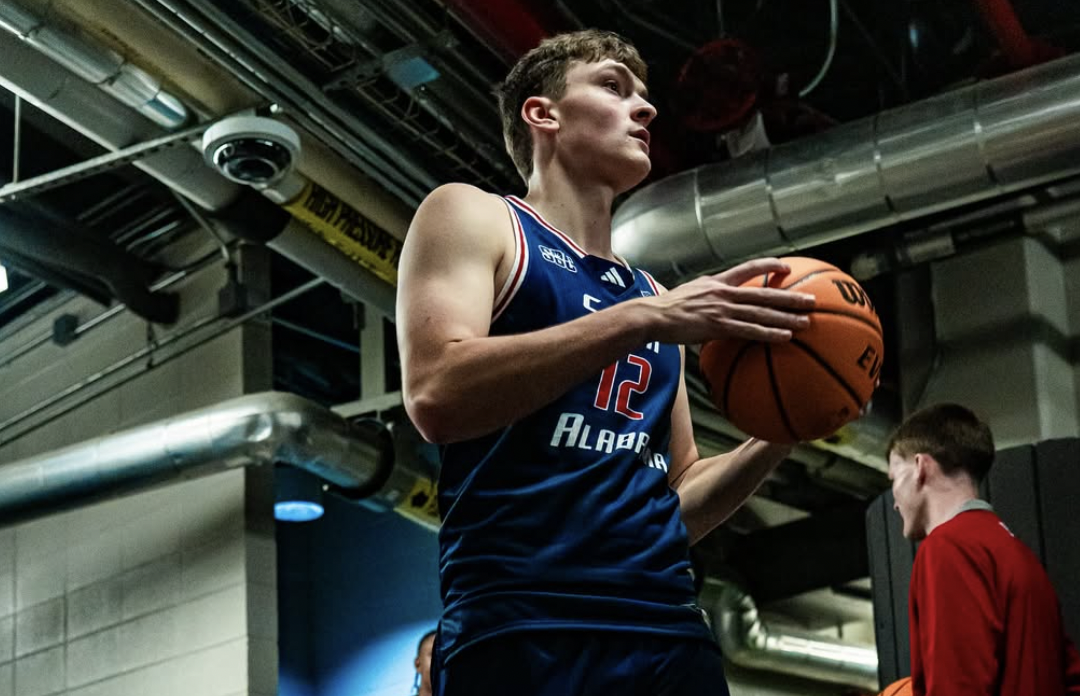
Sewell wasn’t intent on mincing words as he picked up the phone and delivered Olsen a message after Olsen’s freshman season at the University of British Columbia, but he appeared to have a feeling that he was preaching to the choir. He had just done some digging on Olsen and his skillset, and he had a question.
“Why are you playing in Canada,” Sewell asked Olsen, “This makes no sense.”
“Thank you,” Olsen said back, “That’s what I’m trying to say.”
The consensus is that playing two years in U Sports was good for Olsen, but Sewell says he’s thought Olsen was a high-major player ever since the first time he saw him play during the 2021-22 season and offered to help.
Sewell’s plan was verbalized on his first ever call with Olsen; Olsen was going to have a big second year for the University of British Columbia, go to a midmajor and prove himself there before making seven figures to play for a power-five program.
“The plan has worked,” Olsen said, “Exactly how we said it would.”
Riley says Olsen’s story is a “legendary” one because of the nature of his rise and what it’s required of him. How legendary the story ends up being will largely be determined by how Olsen’s Auburn tenure goes, though. Riley says that Olsen will be a star at Auburn despite making a jump from the SunBelt to what he says may be the best basketball league in the country because of confidence and the work ethic he possesses.
Pearl says that Olsen is a true three-level scorer and is one of the best 3-point shooters in college basketball. Olsen feels as if he’ll be able to make a quick transition to Auburn as a result of what he calls a “pro-style” skillset that will allow him to play off of Auburn guards Tahaad Pettiford and Kevin Overton. He says he feels as if he’ll benefit from playing alongside more talented players and the open shots that their ability will generate for him.
Perhaps a significant scoring leap may be an unrealistic ask, but Olsen believes he can be more efficient in 2026-27 than he’s ever been as a college basketball player. He’s finally a power-five player, but he isn’t taking all that much time to smell the roses.
“It’s definitely super fulfilling and I’m super grateful for all these opportunities, but also I’m not just sitting here like ‘this is awesome, this is awesome,’” Olsen said. “I really want to prove something here and I want to be the first Canadian college player to make the NBA, that would be the first ever. So, there’s a lot of the story that still needs to be completed, written.”
