

High Point is coming off consecutive seasons of winning the Big South regular-season tournament and the conference tournament. They have made back-to-back NCAA Tournament appearances for the first time in school history and are coming off a Division I program-record 27-win season. With that success comes high expectations. Chelsea Banbury was set to look to make the NCAA Tournament for the third consecutive year. They had excellent talent ready to come back, and then March 31st happened.
Banbury decided to accept the job at VCU, and with that, the reigning Big South Player of the Year, Macy Spencer, left. Lexi Fleming, who scored 13.5 points a game last year, also left to follow Banbury to VCU. The Panthers saw four others leave the program via transfer, but High Point avoided being fully gutted by the portal. They returned seven players from last season’s roster, including three of their underclassmen.
High Point didn't need saving when Wyatt Foust took the job; it just needed a retool. And the way he reshaped the roster through the portal might lead High Point back to the NCAA Tournament.
Most of the seven returning players did not see much playing time on the floor. Cheyenne Brand played in nine games as a true freshman and didn't score her first collegiate point until mid-January. Sanai Cole didn't play at all last year - she redshirted the season. Dakota Phillips appeared in a handful of games in extremely limited minutes, and Sky Donaie played in just seven games. Even though these four didn’t contribute a ton on the court last season, having them all come back is huge for the continuity of a program, especially when the new coach doesn’t have players of his own to bring in.
One returner who played a big role was Peyton Gerdes. The senior forward actually carved out a real role as a redshirt sophomore last season. She played in 32 games and averaged 6.3 points and 2.7 rebounds in nearly 18 minutes a night. She scored 20 points at UNC Asheville and put up 12 points and seven rebounds in the Big South tournament semifinal.
Brecken Snotherly, a senior guard, has also seen success at High Point. She transferred from East Tennessee State last season and is already a proven piece of this roster. She scored 5.2 points, grabbed 4.7 rebounds, and dished off 2.2 assists a game on 52.6 percent shooting in almost 23 minutes a night last season.
Chana Paxixe, a graduate student, played at the junior college level at Cochise College before landing at High Point for the 2024-25 season. In her first season, she started 22 games and played 15 minutes per game before becoming a bench weapon last year. She played in 33 games, averaging 19.9 minutes per game and 6.5 points per contest. She scored 17 points against Wofford last year, showing she can be, and will be, another integral piece with experience returning for the Panthers.
That gives Foust three players who produced last season and can be building blocks, along with the other four returners.
So given that Foust had a few returners on board, what did he do? Armed with support, he dove into the transfer portal and grabbed players that fit his intended style of play and was able to bring in one of the most heralded mid-major portal hauls of the offseason, which included three players from the Power Four ranks.
Every team needs someone to run it from the point guard position, and Foust found his in Taylor Feldman, a graduate transfer point guard. Her college career makes the case for her on its own, at least most of it. In 2024-25 at Northern Arizona, Feldman was one of the most efficient high-usage guards in the country. Her true shooting mark sat at 56.4 percent, which is in the 89th percentile, on a usage rate in the 81st percentile. That combination of volume and efficiency is rare at any level. She scored 20.5 points per 40 minutes, which was in the 96th percentile, and got to the free-throw line at an elite rate. Once she got to the line, she made 85.3 percent of her freebies. She wasn't just scoring. Her assist rate and her assist-to-turnover ratio both landed near the 90th percentile, which points to a guard who ran an offense just as much as her ability to attack. Northern Arizona went 27-8 and won the Big Sky that season, with Feldman starting all 34 games at nearly 32 minutes a night.
Her lone season at Purdue was cut short. She appeared in just seven of Purdue's 30 games in a reduced role as she battled a back injury all season. You can’t trust small sample sizes in a vacuum, especially when a player can’t ramp up and adjust in a jump in program. She shot the ball at only a 27.3 percent clip inside the arc, and her shot profile shifted away from the basket almost entirely. This is where you can point to the data, however. She was elite scoring out of attack-and-kick actions, as a spot-up shooter, and off the dribble as a pull-up shooter, all in the 89th percentile or higher. The one surprising soft spot was transition, where she scored in the bottom one percent nationally despite it being one of her most frequent actions. You can likely chalk that up to being a player who just never got settled in. What never disappeared was the playmaking. Her assist numbers at Purdue matched her Northern Arizona season almost exactly.
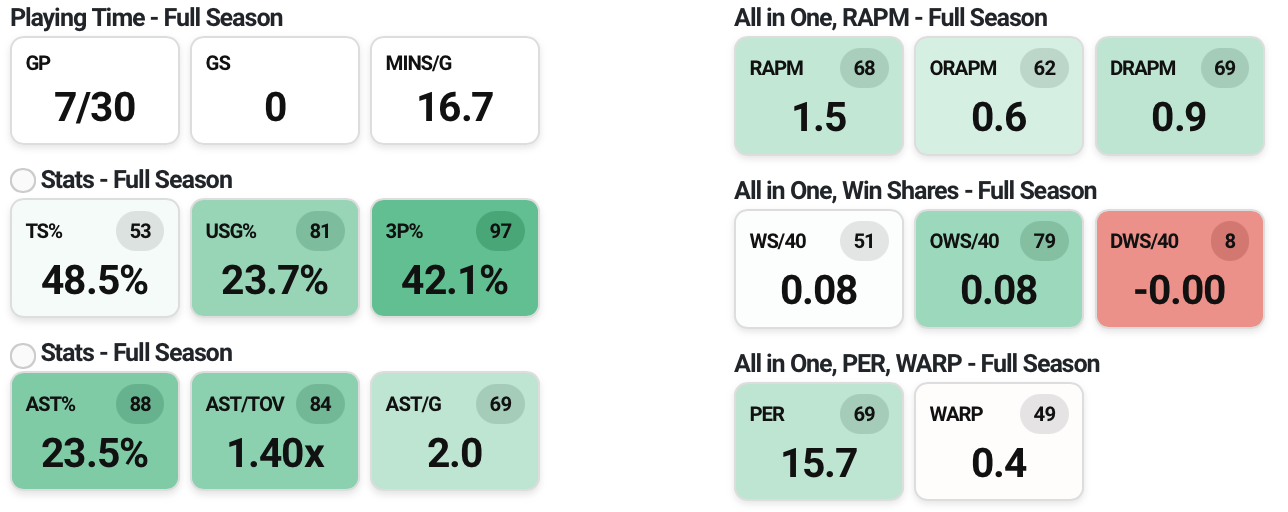
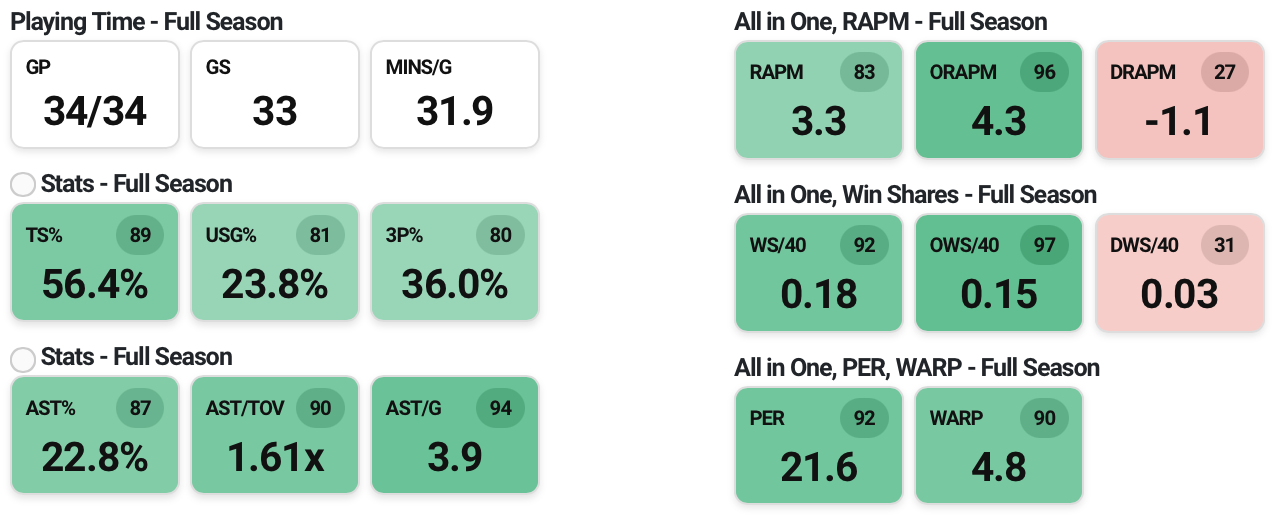
High Point will be at its best if it gets the Northern Arizona version of Feldman. As long as health isn’t a concern, Feldman has a chance to be one of the top mid-major guards in the country. Feldman was nearly the last piece of the puzzle, but on paper, it completed a roster-strengthening process and gave Foust a point guard that he can trust.
The first piece Foust added once he got to High Point was Juliann Woodard, a junior forward who played limited minutes behind a deep roster at Michigan State. The numbers suggest she likely should have played a bigger role with the Spartans. Woodard played 26 games last season and saw an average of nine minutes per game. However, she was extremely efficient with her time on the floor, posting a 56.7 percent true shooting mark per CBB Analytics that placed her in the 83rd percentile, built almost entirely on the three-point line. Nearly 75 percent of her shot attempts came from deep, and she made 37.5 percent of them while shooting 90 percent from the free-throw line. She rarely got into the paint.
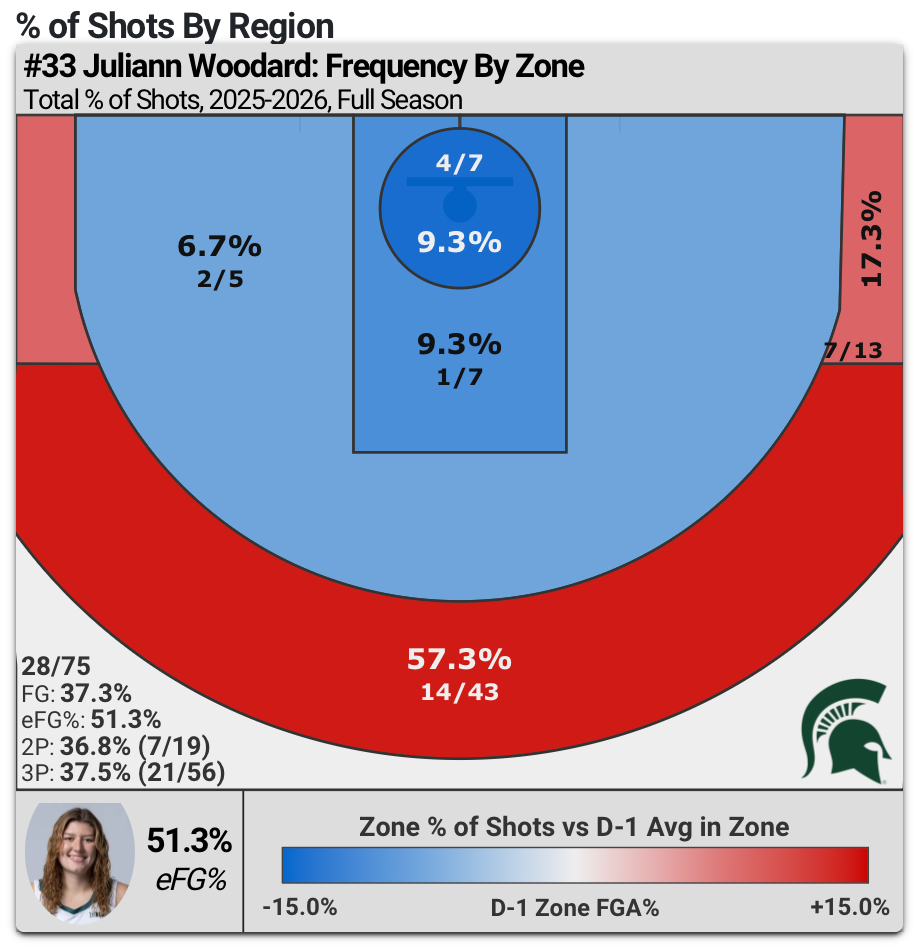
Play-type data explains why she rarely ventured inside. Her most frequent action by a wide margin was popping off ball screens for jumpers at nearly a 30 percent rate, and she averaged 1.12 points per possession on those actions. She also scored efficiently out of the post, at 0.88 points per possession, which ranks in the 93rd percentile across all of college basketball.
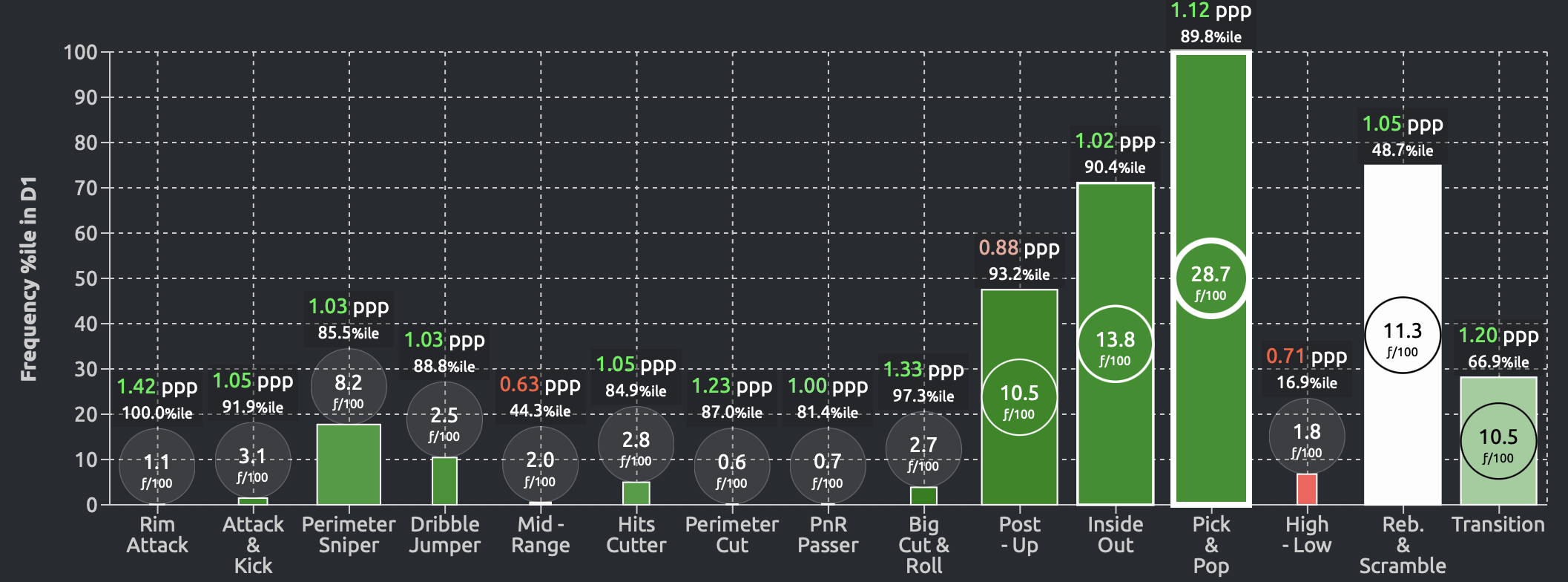
Woodard is a floor-spacing forward who is extremely efficient with her limited touches. In a pick-and-roll offense like High Point, and with a point guard like Feldman, Woodard is going to get a ton of open looks this year.
Meredith Tippner was the next to commit to High Point. She was a reserve last season for Miami (FL) and saw action in 32 games at about eight minutes per game. Like Woodard, she saw limited time last year, but unlike Woodard, her offensive output was rough. She posted a 40.8 percent true shooting mark, which was in just the 16th percentile among guards, and was only able to hit about 30 percent of her field goal attempts last season.
Where she stood out last season was on the defensive side of the floor. Tippner's steal rate ranked in the 94th percentile nationally, at 4.2 percent, and her defensive RAPM sat in the 96th percentile. That is an elite signal on the defensive end of the floor for a freshman when they aren't getting much court time. To put her defensive ability in context, Miami (FL) held a 75.5 defensive efficiency when Tippner was on the floor and 98.0 when she was off the floor. That’s a difference of 22.6 between her on/off splits, which is in the 99th percentile among all college basketball players.
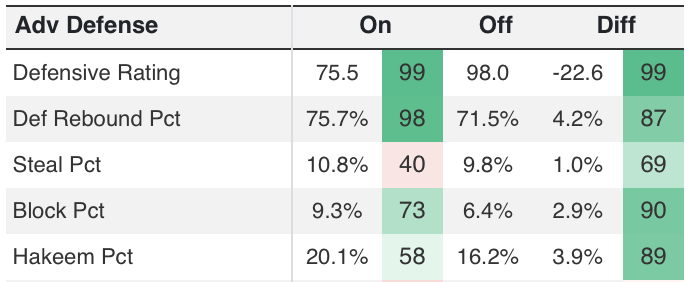
She rebounded well relative to her role too, but she also fouled at a high clip. She was just a freshman in the ACC last year, so keep that in mind as she transfers to a school that will use her in a bigger role. She is a connective player who can do a bit of everything for her team, and with the pieces that High Point has around her, she should flourish with what is asked of her and will expand her offensive production.
Rylee Bess came next from Purdue Fort Wayne, and she isn’t just an average freshman transfer, as she earned a spot on the Horizon League All-Freshman team. She started in 17 of PFW’s 34 games and played 25 minutes per game as a true freshman. Like a few other transfers, she was simply efficient in what she tried to do. She posted a 56.4 percent true shooting mark, in the 91st percentile, built on a shot profile that relied on the three-point line, which she knocked down at 38.9 percent. Play-type data backs up that she's a real shooting threat, not a product of a friendly system.
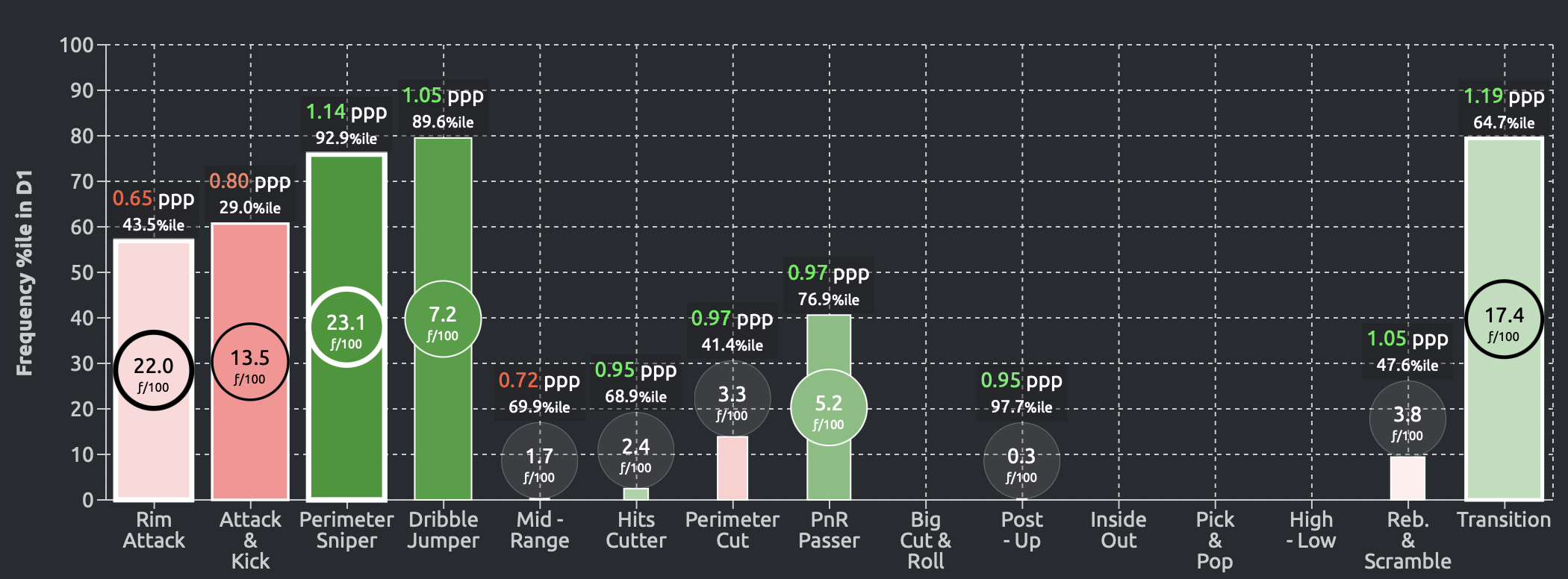
She scored in the 93rd percentile as a spot-up shooter on good volume, as nearly 25 percent of her play attempts came on catch-and-shoot opportunities. She scored 1.14 points per possession on these types of plays and wasn’t too far off when she pulled up off the dribble. She was in the 89th percentile in pull-up shooting and added 1.05 points per play in those opportunities. Her evolution as a player will come from becoming a bit more of a table setter for her teammates. Her assist rate sat in just the 22nd percentile, and she wasn't much of a threat to create for others on the drive. She more than made up for it with the ball security a team wants from a shooting specialist. Now, in a pick-and-roll offense, she will need to be able to hit her teammates with an open pass, but she will also get ample catch-and-shoot opportunities. As she grows into the offense over the next few years, she’s going to be able to fine-tune her game to hurt you in many different ways.
Khloe Lemon was the last addition and another fantastic fit for this program. To be upfront, Lemon is close as close to an elite shooter from behind the arc as you can get, but had the worst shooting year of her career last year at Cal Baptist. However, she played a different role and came off the bench for the majority of the games for the first time in her career. What stuck out to me right away was her ability to finish at the rim at an incredibly high rate. She hit 59 percent of her shots inside the perimeter, which was in the 98th percentile across the country. She also was a high-usage player who, despite the usage, still had a 53 percent true shooting number. She shot a high volume of shots from behind the arc at 4.6 per game but only shot 30.3 percent from deep. That is no doubt respectable, but I want to plant the seed of her sophomore year when she shot 7.1 three-pointers per game and knocked them down at a 43.9 percent clip. As you can see below, she can finish at an elite rate around the basket and has proven she can knock down shots on the perimeter.
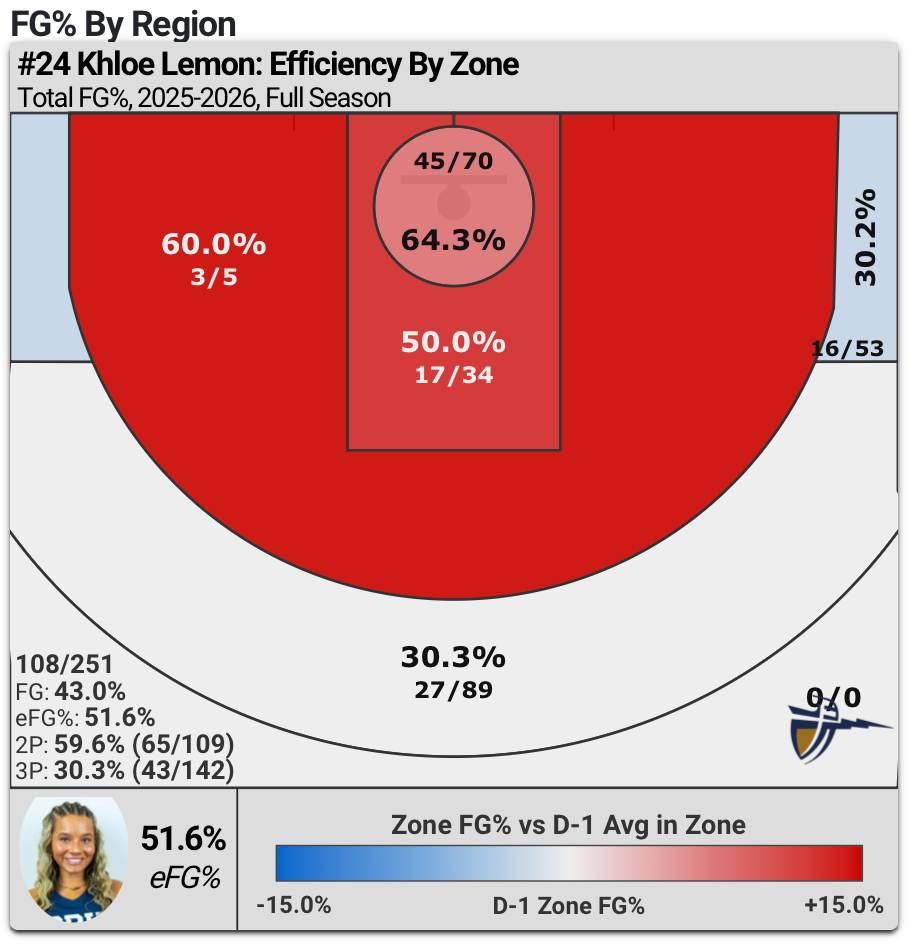
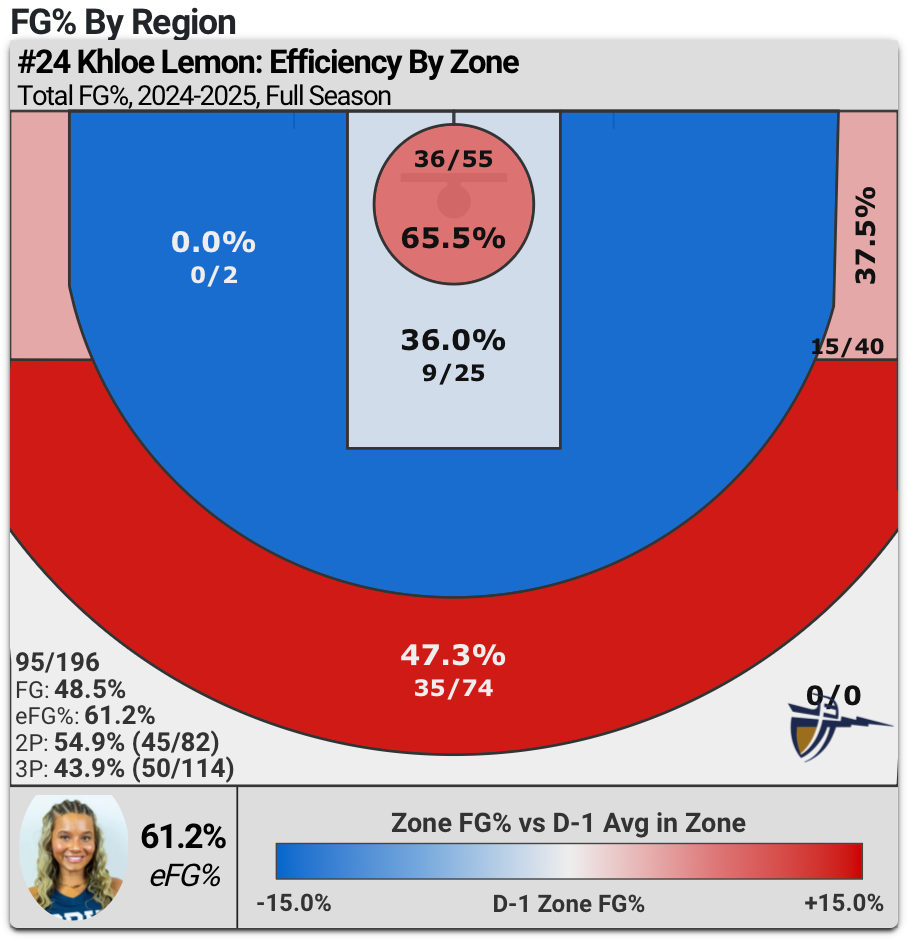
She was genuinely elite in transition last year. Nearly 40 percent of her offensive possessions came on the break, by far the single most frequent action in her profile, and she scored well doing it, as her 1.20 points per possession was in the 65th percentile. She put up 6.6 fast-break points per 40 minutes, which was in the 99th percentile nationally.
She hasn’t shown a lot of playmaking ability with the ball in her hands, as her assist percentage was just 3.7 percent last year, which was in the 2nd percentile. But she takes care of the ball and can score efficiently at high volume. She can be a weapon in both the half-court and in transition. If High Point can unlock a bit of playmaking in Lemon’s game and continue to keep her aggressive in transition, they are going to be tough to stop.
Between Feldman, Woodard, Tippner, Bess, and Lemon, this year's transfer class is pulled from five different programs, at every level from high-major to mid-major. Gabby Morash, a guard from Nova Scotia, is the only true freshman on the roster. She's walking into a crowded backcourt and looking to carve out a role for herself. If Morash ends up deserving some playing time this year as the season goes deeper, that’s only going to mean good things for High Point.
Foust came into the job knowing what he and his staff had to do, and the pieces fit together for a team that can score a ton of points in an uptempo style of play. He got his point guard. He got a floor-spacing forward. He got a defensive athlete with offensive upside. And he got two shooters who can be elite from the outside. Transfers from Purdue, Michigan State, and Miami (FL) give this program a level of pedigree it hasn't typically had.
None of that guarantees chemistry. A roster built from five transfers plus a seven-player holdover group doesn't automatically play like a team in November. If this team can gel early on, all the pieces are here for another special season in High Point, North Carolina. Even if things look a little different.
