


NASHVILLE—The Barista places the white, oval plate on the marble countertop and pauses for a second. Then, he raises his voice above the murmur of Vanderbilt's on-campus Starbucks location.
“Chris,” he says.
Upon the callout, Chris Holtmann pauses his conversation to get up and walk across the room. Holtmann has led three programs to the NCAA Tournament and has been on national television more times than he can count, but in this moment he’s just Chris.
Holtmann is making no real effort to conceal his identity, but he’s at no real risk of being labeled solely for his work. He’s 475 miles from DePaul and has no team to coach today. He’s in a white T-shirt, blue sweatpants, and is hiding in plain sight within this Nashville Starbucks.
For this two-day stretch, Holtmann is taking on a new role. He’s not here to coach, recruit, or fundraise. He’s here to observe. He’s here to listen. He’s here to study.
Holtmann plopped down at the corner table of this Nashville Starbucks location minutes after leaving its indoor football practice facility. Holtmann had no prior connection to the program, but he spent the morning taking in a practice alongside Vanderbilt general manager Barton Simmons and ended the session talking shop with head coach Clark Lea.
His inclusion on the Monday morning guest list wasn’t easily explainable to those around and inside Vanderbilt’s football program, but Holtmann put himself in this building with intention. He put himself here to make his DePaul basketball program better. That’s why he reached out to a mutual friend to connect with Lea. That’s why he used his trip to Nashville to do more than merely visit his close friend, who is a Nashville-based songwriter.
“I was really thinking about programs in college football that have had a similar history—at least recent history—to ours,” Holtmann told Basket Under Review, “And programs that have been able to really turn the corner despite some challenges. This Vanderbilt football program and Clark Lea [have].”
Before Lea’s arrival, Vanderbilt had significantly more winless SEC seasons than bowl appearances, a 26-game losing streak against SEC teams, possessed by far the worst all-time winning percentage of any team in its conference, and was considered a laughingstock that may never put a winner on the field again.
In some ways, DePaul’s recent, pre-Holtmann history is similar. It hasn’t made the NCAA Tournament since the 2003-04 season, has just two winning seasons under its belt since joining the Big East in 2005-06, and punctuated the pre-Holtmann era with a point-shaving scandal.
Holtmann believes he can turn his program around, though. DePaul is in the same place that Lea's program was in 2023–when it was coming off of a 5-7 season, which was considered a step forward. Lea and company took a step back with a 2-10 campaign in 2023, but broke through with a 7-6 season in 2024 and a program-best 10-win season in 2025.
In his two days with Vanderbilt’s coaching staff, Holtmann found the offseason following Vanderbilt's 2-10 campaign to be the most interesting piece of his study. Lea's back was against the wall, but he evolved and found a way to do what nobody thought he could. That was enough for Holtmann to leave Nashville encouraged.
“It was really fascinating to hear,” Holtmann said. “You go through something after a step forward in year two that they had, and in year three, they had, by their words, a disappointing season. Then, they made some really strategic decisions in terms of roster construction, not just with Diego [Pavia]. Hearing kind of what went into some of those decisions I thought was really interesting.”
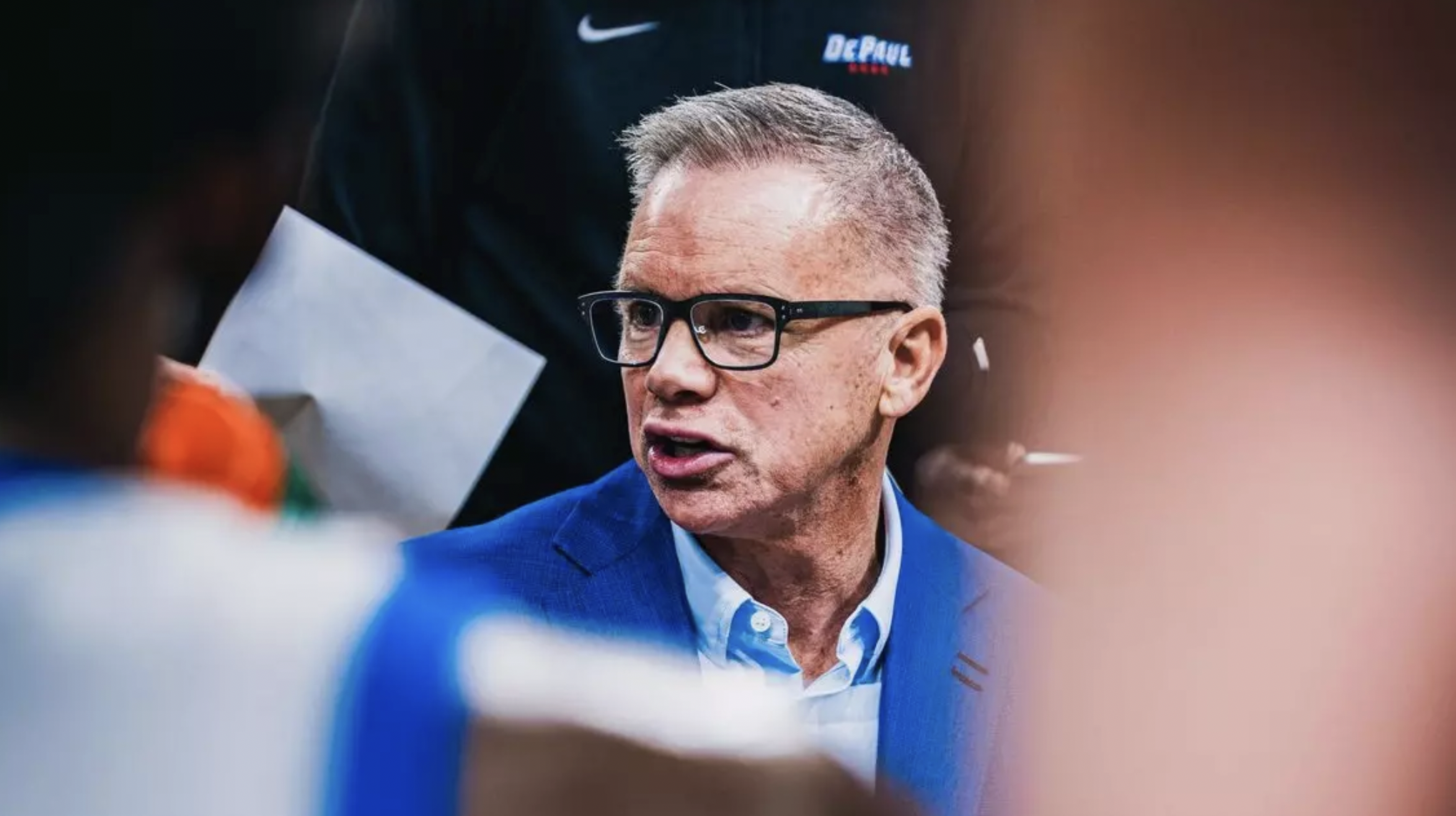
Holtmann has something to admit. He says he doesn’t have many hobbies that get his mind or time away from the task at hand. He admits that he has an obsession, and he isn’t ashamed of it.
The obsession, he says, is with DePaul basketball.
“There are very few things that occupy or obsess my thinking more than how do we get this program to a place that our fans and the people who care about DePaul basketball are really, really proud of,” Holtmann said. “I think about it first thing in the morning when I wake up. I think about it at night. It’s something that’s on my mind more than almost anything.”
DePaul is Holtmann’s third Power Five head coaching job; he’s been to seven NCAA Tournaments, he’s won 20 games in a season nine times, and has put nine teams from three programs into the AP Top 25. He’s at a stage of his career where he could jog the ground ball out and live off of his past successes, but a 27-minute conversation with Holtmann indicates that the thought hasn’t ever appealed to him.
Holtmann could’ve gone quietly after being fired midseason by Ohio State with four years left on his contract in February of 2024. But, he’s still working to get back to the places–the Round of 32 three times–that he took the program in his heyday, and beyond. Looking back to the end at Ohio State was “difficult,” Holtmann says, but he doesn’t like talking about it publicly.
Holtmann doesn’t believe that the difficult ending at his previous stop has to define his past. He doesn’t believe his two NCAA Tournament-less seasons at DePaul have to, either.
“I think he’s as motivated as he’s been,” DePaul assistant coach Jack Owens said. “He’s excited about this opportunity to get this program up and going to where all the alums and former players are happy about the product that’s on the court. Coach is driven to get this thing forward, and we’re taking this challenge head on.”
As Holtmann sits there on this Nashville August day, he describes himself as energized by the opportunity DePaul athletic director DeWayne Peevy gave him in the months following his firing and the direction that he and Peevy have the program going.
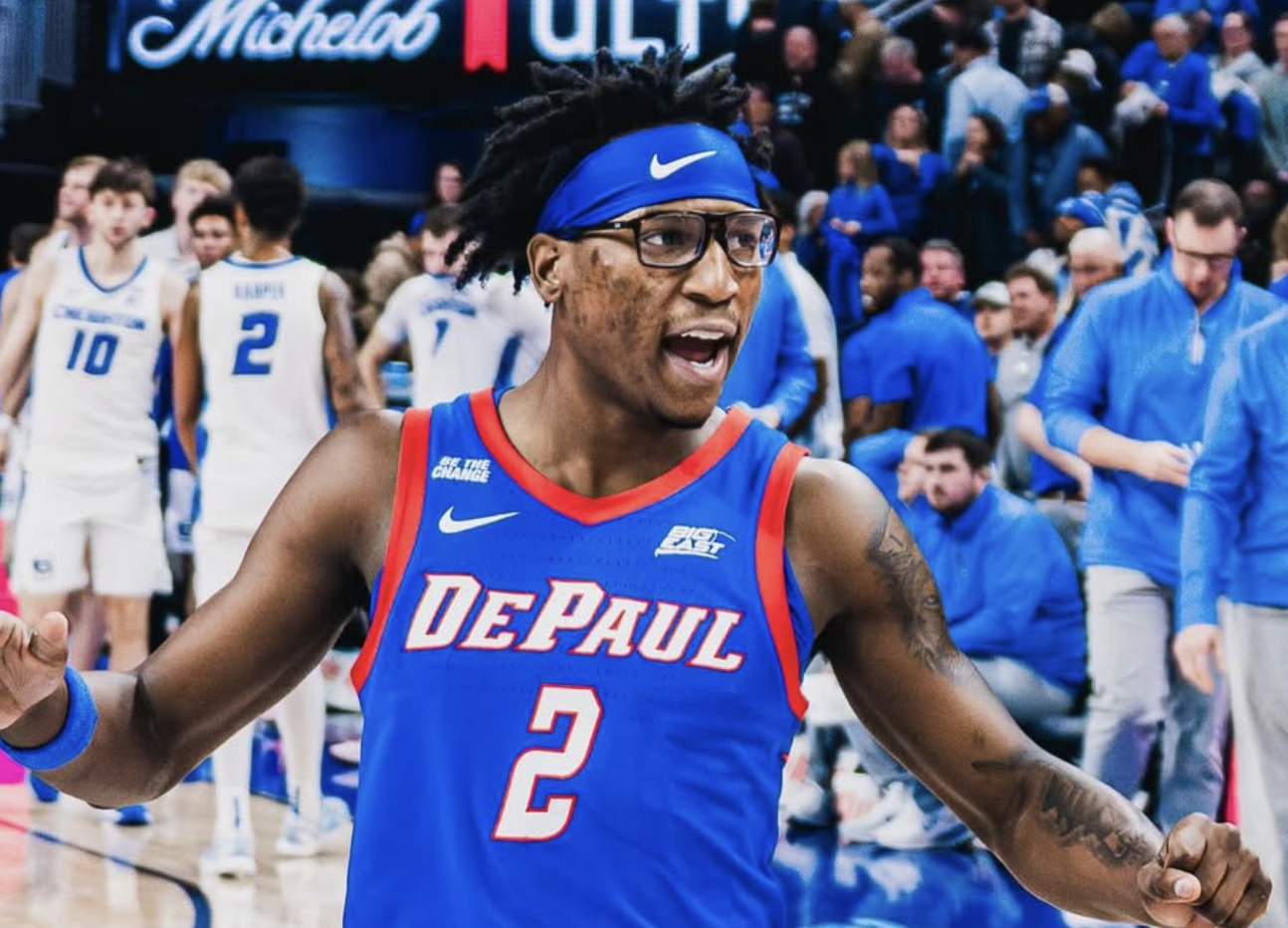
DePaul finished 14-20 in Holtmann’s first season at the helm before going 16-16 in 2025-26 and finishing sixth in the Big East. Holtmann’s second team was No. 99 in KenPom and No. 101 in the NET rankings. Its season-ending KenPom ranking was the program's best since 2019-20. Holtmann and company have bigger plans, though.
Some scoffed at Holtmann’s choice to take over at DePaul two seasons ago, but he thought he could make the program a winner. After two years at the helm--the second of which he swept Marquette and Creighton-he’s not discouraged.
“It is an absolute obsession of mine,” Holtmann said. “I really believe this program has possibilities as we move forward.”
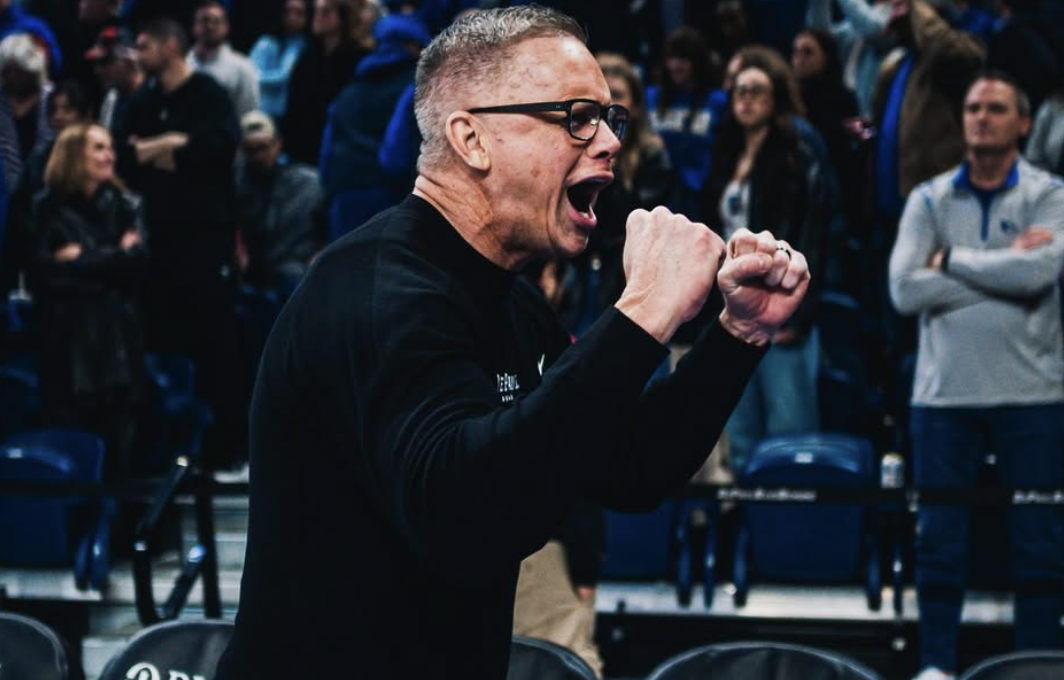
For a second, Holtmann sounds like Lea did before his breakthrough 2024 season.
He fully acknowledges DePaul’s jaded recent basketball past. He owns that when others talk about the Big East, they won’t talk about DePaul. When they do talk about DePaul, Holtmann knows that it won’t be flattering.
In the same way unflattering external narratives motivated Lea to run his program with a chip-on-the-shoulder mindset, Holtmann has used public perception as a motivator. When DePaul recruits, it looks for players that are familiar with being counted out. It looks for players that are entirely unfazed by history and want to change it. And, for the most part, he’s found them more and more as the program has evolved.
“I think we’ll always be picked last, or right there until we consistently change people’s opinions,” Holtmann said. “I don’t blame people for their perception. Listen, DePaul basketball has been a punching bag for a long time, and it’s on us to change that, to continue to change that perception. That’s on all of us.”
Holtmann isn’t naive enough to believe that the narrative has changed around his program just because DePaul finished sixth--in what he admits was a weaker Big East than usual in 2025-26. He knows it needs better seasons than that, and it has to do it consistently to truly change the narrative.
That’s what decades of losing does.
The last four DePaul coaches have been fired or mutually parted ways with in the fallout of poor performance. The last DePaul coaching tenure that didn’t end in a firing was Dave Leitao’s 2002-2005 run. Leitao was fired in his second stint as DePaul’s head coach in 2021, though.
The year before Holtmann’s arrival, DePaul went 0-20 in conference play. It hasn’t had a winning record in Big East play since 2006-07. It lost 15 or more league games 12 times since joining the Big East. DePaul’s 226-400 record over the past 20 seasons is the worst of any Power Five program, and it isn’t particularly close. Holtmann knows he has to address that elephant in the room if things are going to change.
The indication is that Holtmann does. He brings it up in DePaul’s locker room before big games. He brings it up in October picked towards the bottom of the Big East preseason poll. He brings it up early, when his new players are still feeling out the program in the summer.
“He’s done a good job from day one of not ignoring what it was and what the history has been,” DePaul assistant Paris Parham–who was on the last DePaul staff, but stayed on with Holtmann–said. “He takes it head-on and talks about it with each team and each coach. Even throughout the summer, he’s talked about it with the team we currently have in place and some of the things that have never happened and how long it’s been since we’ve been to the NCAA Tournament.”
Ever since Holtmann took on a rebuilding job as Gardner Webb’s head coach in 2010-11, though, he’s said that he wasn’t going to talk about the challenges of his job. He’s encouraged his staff not to, either. Holtmann believes acknowledging the past is necessary, but feels that using it as a crutch is unproductive.
Instead, he focuses on what his job has that can help him build a winner. He’s never abandoned the philosophy.
“We feel like we’ve got some strengths,” Holtmann said. “We’re gonna talk about those more than we’re gonna talk about the challenges of the job, and I think that’s the way our staff has been operating these two years.”
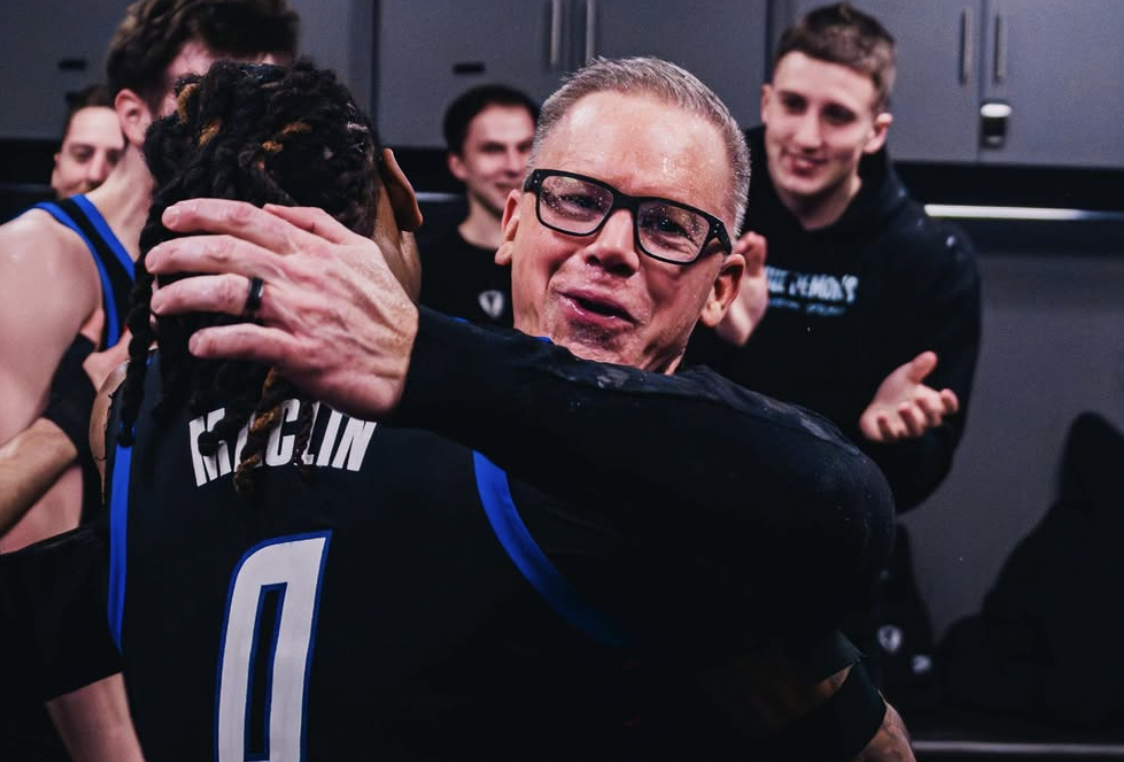
Holtmann pauses, pulls his phone out of his pocket, and taps the screen a few times before breaking his silence and reading off a stat that he clearly takes pride in. On his screen is a graph of the high-major college basketball teams that have increased their attendance the most in the past two years.
No. 1 on the list is Louisville–which has gone from a laughingstock under Kenny Payne to one of college basketball’s most talented rosters under Pat Kelsey–No. 2 is Vanderbilt–which went from nine wins in 2023-24 to inches away from the second weekend in the NCAA Tournament in 2025-26. No. 3 is DePaul.
Holtmann is excited about the stat and what it indicates, but prefaces multiple times after reciting it that DePaul still has significant room to grow. DePaul’s average attendance is 4,589 fans per game, but the capacity of its Wintrust Arena is 10,387. Holtmann’s declaration that there’s room to grow doesn’t appear to be confined merely to attendance, though.
“Our biggest challenge is this next step for our program,” Holtmann said. “The next step for us, I think, is getting from a top 100 NET caliber program to being in the conversation for an at-large bid in the tournament. That’s a seismic jump for us, certainly one that is attainable, but it’s a significant jump.”
Holtmann has warned everyone in DePaul’s program who will listen that the next steps will be difficult. In fact, he says, the jump from the 100 mark in the NET to the top 50 is significantly more difficult than the jump it made from the 300s to 122 in his first year and the jump from 122 to 99 in year two.
There’s more optimism that DePaul can do it than there’s been at any point in the Holtmann tenure, though, and for good reason.
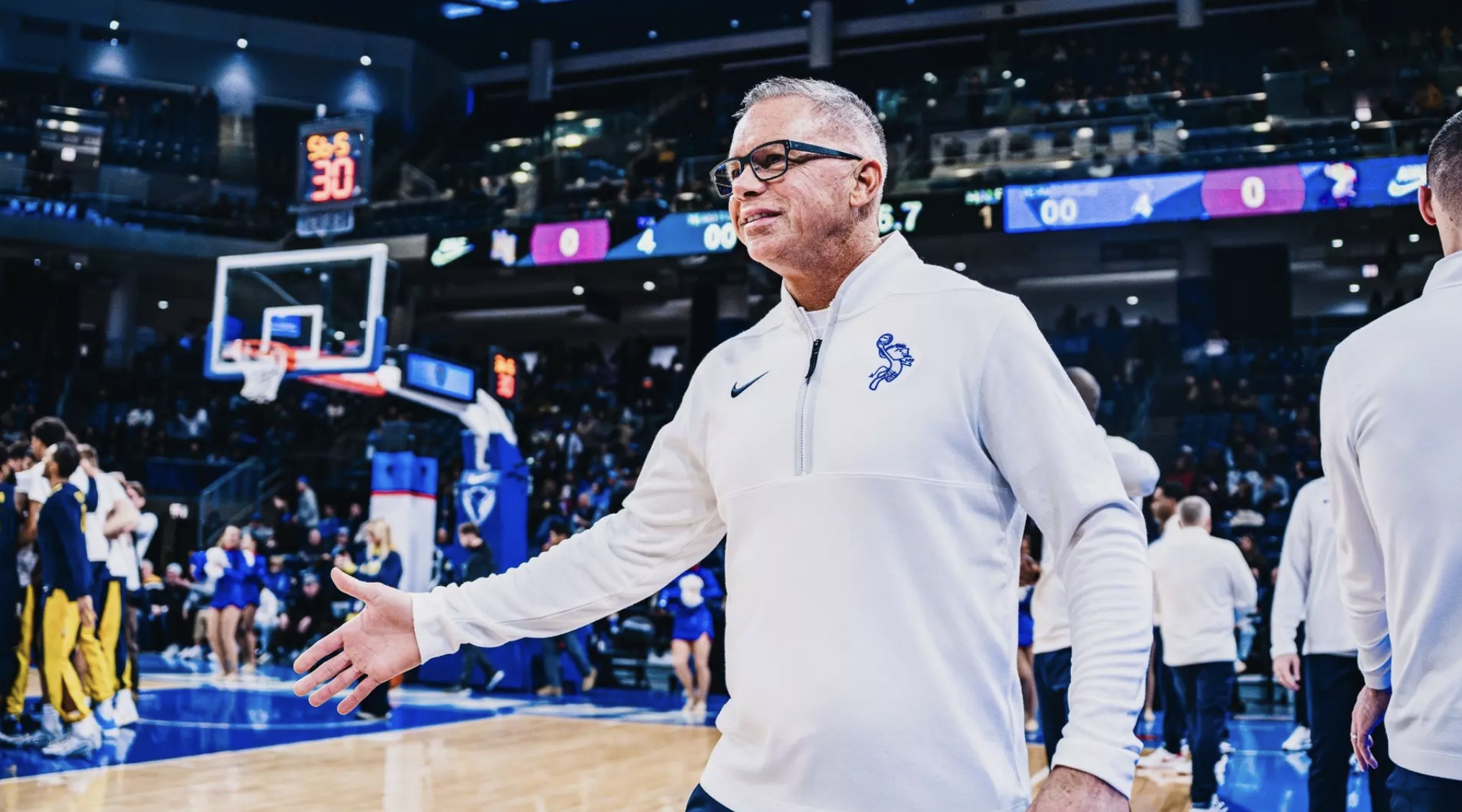
After finishing No. 6 in the Big East with what industry sources believe to be a bottom-of-the-league player compensation budget, DePaul’s coaching staff saw a significant increase in their budget entering 2026-27. Holtmann clarifies that DePaul will never have the biggest budget in the league and may never have an upper-echelon one, but it has enough to be competitive. As he looked at the league’s funding a year ago, there was a clear bottom tier that DePaul was likely in. Now, Holtmann believes every team in the conference has a good enough roster to finish top 100 in every major metric.
“We’ve been able to hopefully shrink the gap between the bottom and the middle across the board,” Holtmann said. “But, what we have to do–most importantly at DePaul–is use our resources that we’re given wisely and be smart with our evaluations, maximize those evaluations and be excellent with our retention.”
Holtmann’s assistants admit that they still have to be meticulous in their evaluations and can’t miss often because of the resources at the top of the Big East, but they believe they’ve found their formula. When they recruit a player, they look for positional size–which they believe buys them some room for error–basketball IQ, skill, toughness, and players that have a burning desire to make DePaul a winner.
DePaul’s staff had to overcome the program’s past while recruiting early in Holtmann’s tenure, but they estimate that their perception has improved. They’ve also noticed they can get into recruiting conversations they couldn’t have at the start of Holtmann’s tenure, thanks to a mix of improved results and resources.
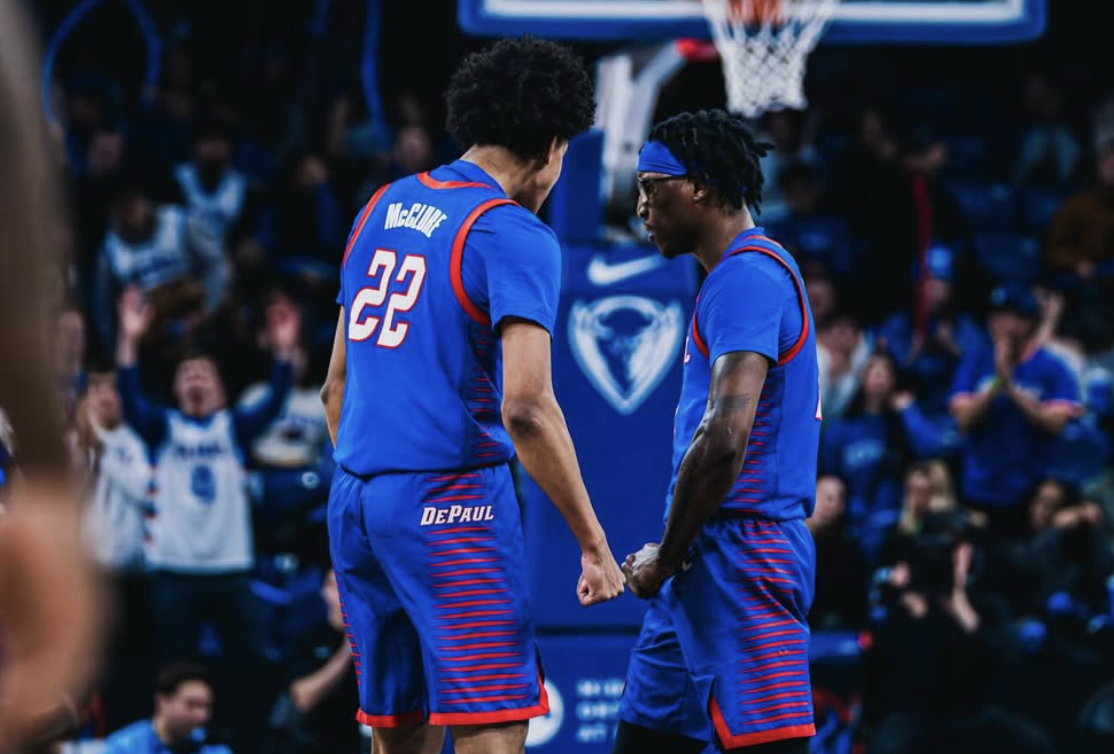
7-foot San Diego State transfer Magoon Gwath is the best example of a recruit that they can land these days that would’ve been difficult for Holtmann and company to land a few cycles ago. Gwath reportedly drew interest from Kentucky and several other Power Five programs, but chose DePaul. Holtmann added Gwath to a roster with returning double-figure scorer Layden Blocker, four-star Tulsa transfer Ade Popoola and a slew of three-star transfers.
Holtmann still wants to see more before declaring whether this is his best team at DePaul, but he lauds its size, versatility, some offensive pieces and a clear defensive identity–which Basket Under Review’s Will Warren believes could translate into it having a top-10 defense in the country. Whether it uses those traits to hit its next logical step or not, Holtmann will make sure it believes.
“It’s like ‘we can be just as good as these other teams; we don’t have to be like [old] DePaul,’” DePaul assistant Brandon Bailey said. “That wasn’t us, those teams in the past. With the portal now, every team is so different. It’s a new year, a completely new team. Last year has nothing to do with this group right now. They have to play with that chip on their shoulder to push this thing even further and leave a mark here.”
Parham still remembers it vividly. It was Mark Aguirre and DePaul vs Kelly Tripucka and Notre Dame on a high-value television network. It was DePaul playing a big opponent on WGN. It was the Blue Demons taking the floor on a Wednesday night after he’d raced to get his homework done so that he could watch. Parham–a Chicago kid who’s spent most of his basketball life in the Midwest–was mesmerized, and he wasn’t the only one.
He recalls that he and his friends would have done anything to become a DePaul basketball player one day. When he recruits players in his current role as a DePaul assistant coach, he remembers why. Anything you could possibly want to accomplish as a college basketball player, Parham says–besides winning a national championship–has already been accomplished at DePaul. He saw it with his own eyes.
DePaul’s glory days included a Final Four berth in 1979, six 25+ win seasons in seven years, a near-annual appearance in the NCAA Tournament and sold-out arenas. DePaul’s lean years were painful for Parham–and Bailey, who started school at DePaul a year after its last NCAA Tournament appearance–but the glimmer of hope still remains in his voice.
Parham will never forget what he saw. He hopes that one day, he’ll be able to see it again.
“DePaul was Chicago," Parham said. “Before Michael Jordan, the guys who played for the Bulls were second fiddle to DePaul athletics. I watched it. I know what it can be…Just being from Chicago, you have the belief that one day DePaul is gonna walk high again.”
When the DePaul job opened, Parham sensed that some in the industry viewed it as a dead-end job. But he took issue with that–enough that he told Holtmann honestly about its potential when he first talked to him about the job. Parham is a loyal soldier who’s given his career to getting this place back to glory, and Holtmann has given him a platform to keep chasing his dream.
Parham still believes wholeheartedly that there’s a place for DePaul in the city of Chicago’s heart, particularly if it wins. Even in the midst of the program’s 22-season NCAA Tournament drought, Holtmann and company are still regularly greeted in public by supporters.
As they enter Holtmann’s third year as DePaul’s head coach, they appear to believe that they’re closer than ever to making those supporters proud and snapping the Tournament drought. Parham has seen it all, but this…
This would be as meaningful as anything he’s seen since his childhood.
“The city is starving for it to come back,” Parham said. “I told coach Holtmann, if we get this thing back, man, you’re gonna have a statue of yourself in Lincoln Park.”
