

In our Champions Rewind series, we'll be looking at the seasons of and the offensive and defensive systems used by past National Champions.
This week, we're throwing it back to the 2006 Florida Gators, the first of two straight championships for Trill... I mean Billy Donovan and Florida.
Season Recap
After coming off the 2005 season, which featured a Billy Donovan-led Florida team losing in the first weekend of the tournament for the 5th straight year, the preseason analysis didn't have this young Florida team as a favorite to win the championship. The thought that Billy Donovan couldn't win in March wasn't necessarily widespread, since he did make the championship in 2000, but 5 straight 1st-weekend exits at least got some heads turning.
The 2004-05 season for Florida featured them going 24-8 overall, winning the SEC Tournament, but losing to Villanova in the 2nd round as a 4 seed. They were led by Anthony Roberson, David Lee, and Matt Walsh, who all went to the draft following the season.
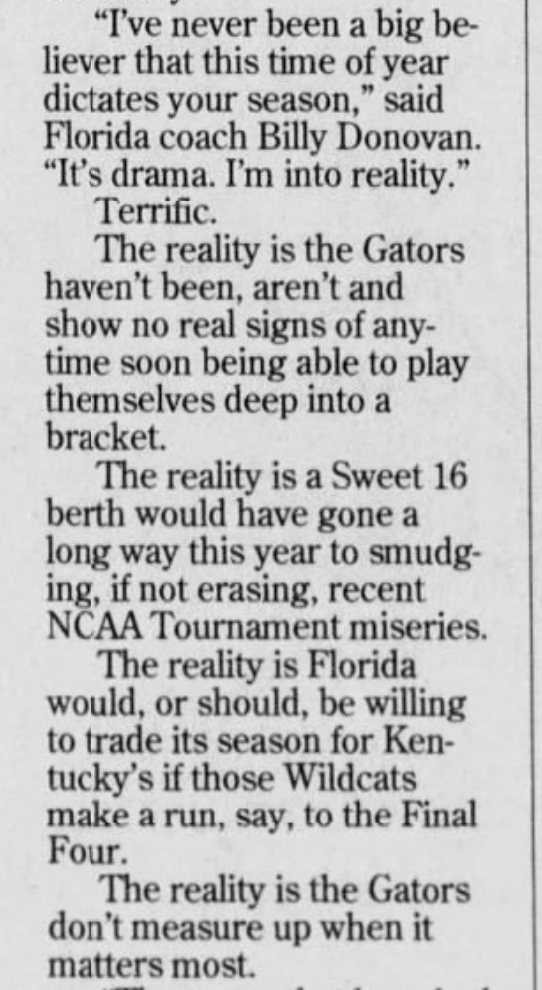
The excerpt above is from an article by Greg Stoda in the Palm Beach Post that details concerns about Donovan.
What was left was a young roster that relied heavily on 4 sophomores in Joakim Noah, Taurean Green, Corey Brewer, and Al Horford. Brewer and Hordford both contributed as freshmen the season before, but there were simply a lot of questions about this Florida team.
They ended up with a pretty consistent starting lineup that featured a ton of balance, and the Gators were comfortable running 8-9 deep.
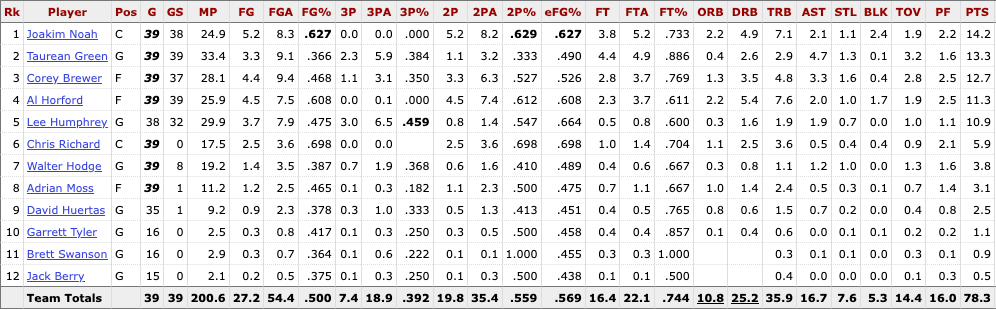
Starters
- Taurean Green - 6'0 - Sophomore - Point Guard
- Lee Humphrey - 6'2 - Junior - Shooting Guard
- Corey Brewer - 6'9 - Sophomore - Small Forward
- Al Horford - 6'10 - Sophomore - Power Forward
- Joakim Noah - 6'11 - Sophomore - Center
Bench
- Chris Richard - 6'9 - Junior - Center
- Walter Hodge - 6'0 - Freshman - Guard
- Adrian Moss - 6'9 - Senior - Forward
- David Huertas - 6'5 - Freshman - Guard
Although this roster featured 5 future NBA players, with 3 eventually having well-established careers, this team went unranked in the AP Poll to open the season, largely due to a lack of experience.
Florida ended up jumping quickly to start the season, though, as they beat Wake Forest and Syracuse in Madison Square Garden as part of the Coaches vs Cancer Classic. They beat in-state rival, Florida State, the following week to find themselves up to 11 in the AP Poll.
During their 5-0 start, Florida flashed the depth and balance they'd end up relying on. At least 3 starters scored 10+ points in all 5 games, and anyone could be "The Guy" on any given night.
That 5-0 start for the Gators turned into a 17-0 start that included wins against Providence, Miami, FL, Georgia, Mississippi State, and Auburn. Per KenPom, out of the 17 wins, only Florida State (#38) and Syracuse (#50) were top 50 teams that season, but winning 17 in a row still is nothing to scoff at. Florida sat at #2 in the AP Poll released on January 16th, only behind Duke, which had been #1 all season long.
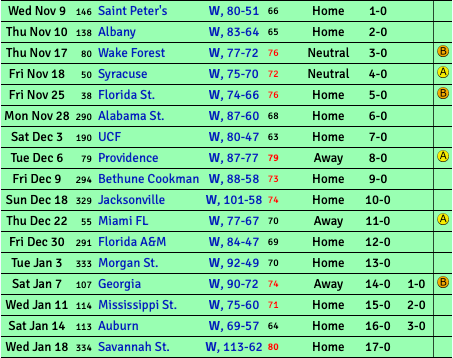
Next up was a pair of road games against Tennessee and South Carolina, two teams that finished in the top 20 of KenPom by the end of the season. Florida dropped both in tight contests, with Chris Lofton scoring 29 for Tennessee, and Florida had 17 turnovers as a team against South Carolina.
Florida responded by going 5-1 over their next 6, losing only at home to South Carolina.
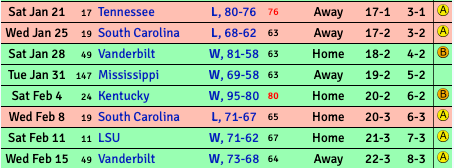
With only 5 games left in the season, Florida sat at 22-3 overall, ranked 10th in the AP poll. They had their worst stretch of the season, dropping 3 straight games at Arkansas, at home against Tennessee, and at Alabama. Only Alabama (#60) was ranked outside the KenPom top 20 out of those three. All were close contests, but Florida was only 3-6 in games decided by 6 points or less. This meant they dominated many of their opponents but struggled when opponents could keep it close.
Florida ended the regular season with double-digit wins against Georgia and at Kentucky.
Joakim Noah was named to the All-SEC first team after averaging 14.2 points, 7.2 rebounds, 2.1 assists, 1.1 steals, and 2.4 blocks per game. Taurean Green was named to the All-SEC second team, and Corey Brewer won Defensive Player of the Year.
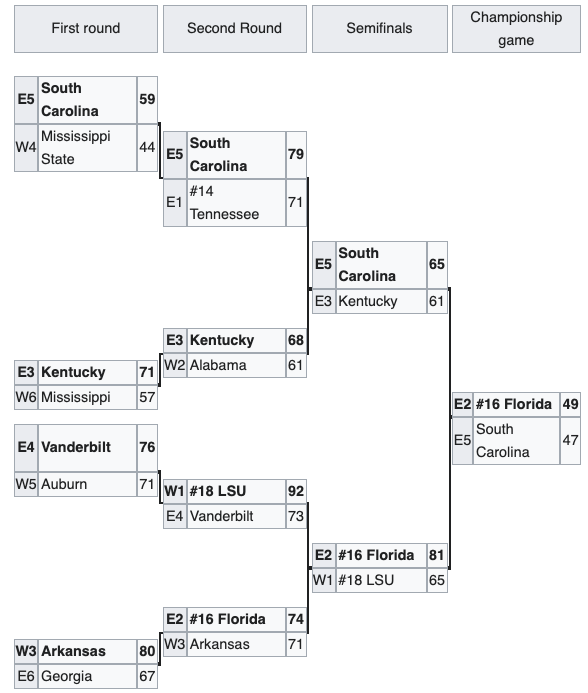
Florida was the 2 seed in the East region of the SEC tournament, and they had their first matchup of the tourney against Arkansas. Arkansas had beaten Florida just a month earlier, but Florida was able to get a 74-71 win behind shooting 10/15 from three as a team.
In the semis, they faced off against an LSU team led by Glen Davis and Tyrus Thomas. Florida had won by 9 in their lone matchup of the season, and they did it again, this time by dominating the interior as they shot 25/39 from two. This set them up for a championship matchup against South Carolina, a team they had lost to twice that season.
The SEC championship game was a slow grind as there were only 56 possessions for each team, the lowest for Florida all season, and only 1 of 2 games all year that fell below 62 possessions. South Carolina really struggled to score the ball, shooting just 36.4% from two and 22.2% from three. However, they had 14 offensive rebounds, and Florida had 18 turnovers, which mitigated some of the poor shooting. Florida went 15/31 from two, 5/10 from three, and 4/4 from the free throw line. Neither team cracked 50 points in this one, as Florida won 49-47 behind 16 points from Corey Brewer. Both Brewer and Taurean Green were named to the SEC All-Conference Tournament team.
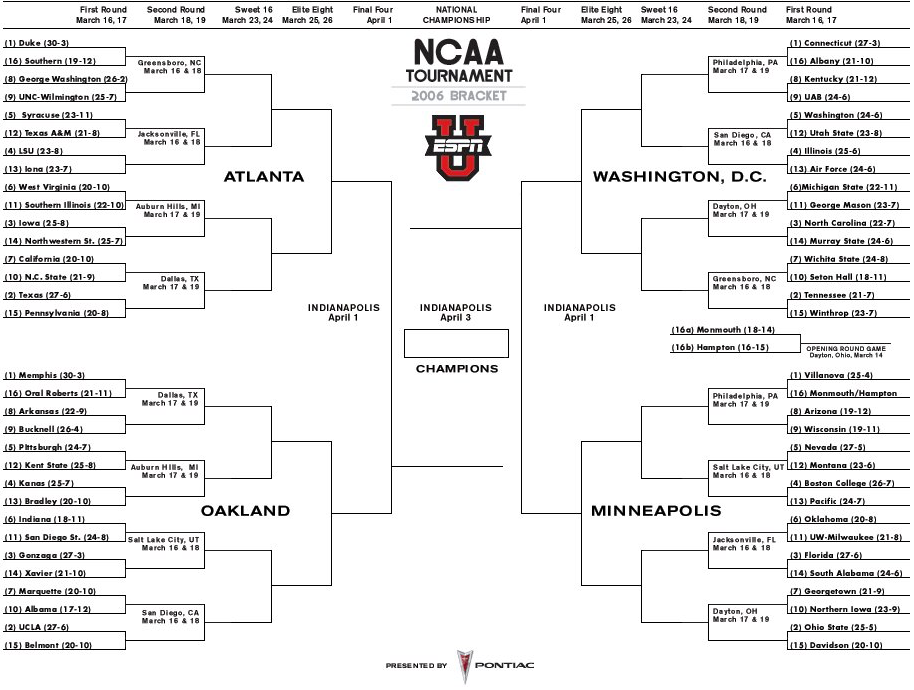
After a very good SEC regular season and winning the SEC Tournament, Florida found themselves as the 3 seed in the Midwest region of the bracket with 1 seed Villanova in their quadrant.
I want to bring back up the record in close games for Florida. During the regular season and conference tournament, Florida was:
- 5-6 in games decided by 6 or less
- 22-0 in games decided by more than 6 points
The first two games of the tournament fell into the "decided by more than 6 points" category as they beat South Alabama 76-50 and Milwaukee 82-60 after Milwaukee upset Oklahoma in the first round.
Four of the five starters had double digits against South Alabama. Lee Humphrey led the way with 20 points on 9 shots, Joakim Noah stuffed the stat sheet with 16 points, 8 rebounds, 7 assists, 5 blocks, and 3 steals, Corey Brewer had 10 points, 8 rebounds, 3 assists, and 2 steals, and Al Horford had 14 points and 13 rebounds.
It was more of the same against Milwaukee as all 5 starters scored at least 7 points. Corey Brewer was the leading scorer in this one with 23 points, while Noah and Horford added 17 and 13 points, respectively.
This set up a matchup with 7-seed Georgetown in the Sweet Sixteen as the Hoyas beat 2-seed Ohio State by 18.
Unlike the first two games of the tournament for Florida, the Gators got tested in this one and were down 30-28 at halftime. It was a back-and-forth game with the two teams tied at 49 with 3:23 left after a three-pointer from Darrel Owens for Georgetown. Georgetown was able to take a 53-52 lead with 1:49 left after an Ashanti Cook jumper. Neither team scored for the next 1:20 until Corey Brewer knocked down a jumper while getting fouled. After making the free throw, Florida led 55-53. Darrell Owens missed on a three-point attempt, and two free throws from Al Horford iced the game for the Gators, 57-53. Noah, Green, and Horford all had double-digit points, and the Gators kept on dancing, with a matchup against 1 seed Villanova in the Elite Eight.
With a trip to the Final Four on the line, Villanova and Florida battled for the first 7 minutes of the game before Florida started to stretch the lead. They led 27-16 with 10:04 left in the first half after a jumper from Lee Humphrey. A late charge from Villanova at the end of the half cut the Florida lead to just 5.
Florida controlled the second half, led by some early buckets from Corey Brewer. Villanova cut the lead to three points just once in the half after a Randy Foye basket with 11:36 left. Florida slowly pushed the lead out, though, leading 64-54 with 3:30 left and ultimately winning 75-62.
Joakim Noah was named Region MVP as he had 21 points, 15 rebounds, and 5 blocks in the Elite Eight win. Brewer, Horford, and Green all had double-digit points.
In the Final Four in Indianapolis, Florida faced the most surprising opponent of their tournament run, 11-seed George Mason.
George Mason was the Cinderella of the tournament, finding their way to the Final Four as an 11 seed. Unfortunately for them, their run ended against Florida as the Gators shot 12/25 from three as a team. Florida steadily built a double-digit lead in the second half behind a balanced effort once again. Lee Humphrey and Corey Brewer each had 19 points, Taurean Green added 15, Joakim Noah had 12 points, 8 rebounds, and 4 blocks, and Al Horford had 6 points, 13 rebounds, and 4 assists.
Florida faced off against UCLA in the championship game. As had been the case for a lot of Florida games that season, this one was never really that close. Florida took a 25-15 lead with 9:54 left in the first half, led 36-25 at halftime, and maintained a double-digit lead for the entirety of the second half as they won 73-57. Four Gators were in double figures as the depth of the starting five proved pivotal.
Joakim Noah was named the tournament's Most Outstanding Player, averaging 16.2 points, 9.5 rebounds, 3.2 assists, 4.8 blocks, and 1.3 steals per game. He totaled 29 blocks over 6 games, a record that stood until Jeff Withey recorded 31 in 2012.
Offense
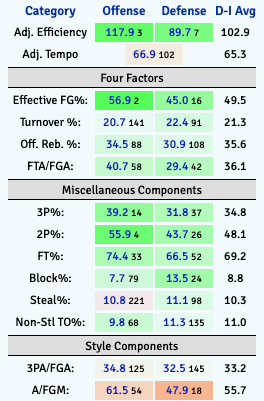
Florida ended up with the 3rd best offense in the country per KenPom that season, led by being #14 in 3P% and #4 in 2P%.
In an era of basketball when off-ball screening was the most commonly used offensive set, Billy Donovan was a bit ahead of his time in his use of pick-and-rolls. Sure, Florida had their floppy actions and pindowns to create looks for shooters, but they also utilized a lot of pick and roll spacing you'd see today in order to be able to play their double big lineup.
This team is well known for its balance among the starters, but Joakim Noah was still the catalyst for everything with his ability to drive, pass, and score at 7 feet tall. With most defenses wanting to play in a high hedge against pick and rolls, Florida used that to their advantage by getting Noah out in space.
1-3 Across - Noah drive
Florida starts in one of their base formations, 1-3 Across, which has a high ball screen with 3 players located along the baseline. This is a very common formation today.
Look at how much space is created for Noah against the high hedge. Even though Noah isn't a three-point threat at all, his ability to put the ball on the floor after catching makes him such a threat out of popping. So even though Florida played two non-shooting bigs, they still figured out how to create space for their guys to score.
1-3 Across - Noah drive and kick
In this clip above, the initial Noah screen got refused, and UCLA was able to contain the drive. However, Florida was still able to create that initial advantage, and as the ball is swung to Noah, he immediately starts driving to maintain it.
1-3 Across - Great Spacing
Even when Noah wasn't the screener, as in the clip above, 1-3 Across was still something Florida relied on. I really want to emphasize the spacing Florida had in the clip above. Despite having two non-shooting bigs on the floor, Florida still has ample spacing because of their willingness to play on the perimeter and set ball screens very high.
Part of why this was possible, though, is that Billy Donovan was comfortable with his shooters putting them up. Florida took 34.8% of their shots from three that season, ranking 125th in the country. So it wasn't as though they were bombing every chance they had, but the shooters who could shoot had green lights.
Lee Humphrey attempted 6.5 threes a game, Taurean Green was at 5.9, and Corey Brewer was at 3.1.
Transition Three
Even in transition, if the shooters had a look, they had the green light to let it fly, something that wasn't super common in 2006.
Horns Stagger Flex Punch
Another staple within Florida's system was their use of Horns sets. A horns set starts with the ball handler at the top, a player at each elbow (generally bigs), and a player in each corner (generally guards/wings). Florida had a lot of looks that they could go out of from this formation, but the one above seemed to be one of their staples.
The ball handler would go off one of the elbows, and while that was happening, the guard in the strong side corner would cut through the baseline, setting him up to come off a staggered pindown on the weakside. As this was happening, the weak side big would cut through to the block before setting a Flex screen across the paint. A flex screen is a cross-screen at the block. This sets up Punch, which is essentially a big player trying to seal or get a position in the post.
Horns Wedge Peja Punch
With two dominant bigs and a third scoring big off the bench, Florida was no stranger to throwing it in the post. Above was another Horns set that ends with a post touch. Florida sets a Wedge screen, a diagonal screen to get a big going to the block, before creating space for the post entry.
Also, Joakim Noah's passing out of the post was a cheat code.
All in all, Billy Donovan's system seemed a bit ahead of its time, and when combined with the roster he had, it makes a lot of sense that they were able to go back-to-back.
Defense
Similar to the offensive side of the ball, I'd also say that Donovan was a bit ahead of his time on the defensive side of the ball. The defense was largely built on limiting ball movement by not applying much help.
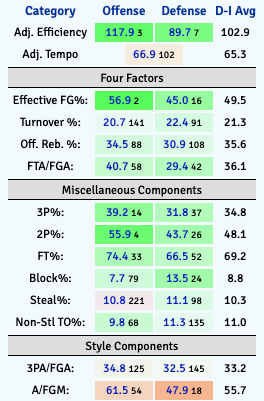
Florida limited assist opportunities, and they made it difficult for offenses to get consistent looks from the perimeter. Part of why they were able to do this was the elite interior defense the duo of Joakim Noah and Al Horford provided the Gators. For reference, Noah had a block percentage of 10%, meaning that while he was on the floor, he blocked one on his own. In every ten opponents' shots.
Not applying a ton of help
This was the first defensive possession of the game for Florida in the National Championship. Things I want to point out:
- The Florida guards applied very little off-ball help defensively
- Florida almost always had at least one of Horford or Noah in the paint
Even though this possession ended in a bucket for UCLA, it's evident how hard they had to work to get the look.
Helping off big
The only time Florida would really send any help would be from a big on the perimeter. As the ball gets to the left corner, Horford sags off his man to be able to show help on any drive or post-up. Everyone else, though, is staying attached to their man, essentially trying to turn it into a 1-on-1 game.
High hedges
This helping off the big could be applied to screening action to a degree as well. Florida largely wanted to run high hedge ball screens, and the big man was also tasked with showing any help for an off-ball screen. With Florida being able to always have one big man in the paint defensively, it made it easier for the other big man to help on the perimeter when needed.
In addition to not showing a ton of help, the other thing that stood out defensively was that Florida was very willing to mix it up.
Florida 2-3 zone
The clip above shows Florida going to a 2-3 zone here to mix it up. They didn't necessarily stay in zone for long periods of the game, but they could throw it in to disrupt the offense's flow. The same could be said for their press, as shown below.
Full court press
The clip that stood out maybe the most to me though was the one below.
Jump trap out of a timeout
It's a simple Jump Trap, where Florida looked to force a turnover once the ball crossed halfcourt. It in itself isn't the most groundbreaking idea, but this came directly out of a timeout. Nowadays, you'll see teams go zone or a trap out of a timeout to try to disrupt whatever play the opposing offense drew up. Billy Donovan was doing it in the championship in 2006.
All of the little things, both offensively and defensively, really showed how good a coach Billy Donovan is. And after watching the film and researching this team, it doesn't shock me at all that they ended up being champions.
