


Tony Skinn didn’t know exactly how he was going to do it as he was named the head coach at George Mason in 2023, but “one of the first initiatives” that he set out to accomplish was finding a way, any way to honor and “celebrate” Jim Larrañaga.
Larrañaga’s role as Miami’s head coach made matters difficult for Skinn in his first two seasons at the helm, but he knew as well as anyone that the former George Mason head coach–who coached him from 2003-2006–deserved a moment in the sun. Larrañaga took George Mason to four NCAA Tournaments in his 14 seasons at the helm as well as a Final Four appearance in 2006–which was the first by a mid-major since Larry Bird took Indiana State there in 1979. He finished his tenure with a 273-164 record before departing for Miami in 2011.
Skinn pursued the idea of bringing Larrañaga back to George Mason through an exhibition against his Miami team, but never got it over the finish line. In the months following Larrañaga’s retirement in December of 2024, Skinn’s program finally found the right moment for Larrañaga to return. George Mason will honor its former head coach as it faces off against Old Dominion and takes a moment to honor Larrañaga with a halftime program that will include hanging a banner in his honor.
Larrañaga was previously honored by the program in 2016 as he was given the university’s highest honorary award, the “Mason Medal.” Now he’ll get to soak it in “on equal footing, as adults” with his former players like Skinn and George Mason director of player development Lamar Butler.
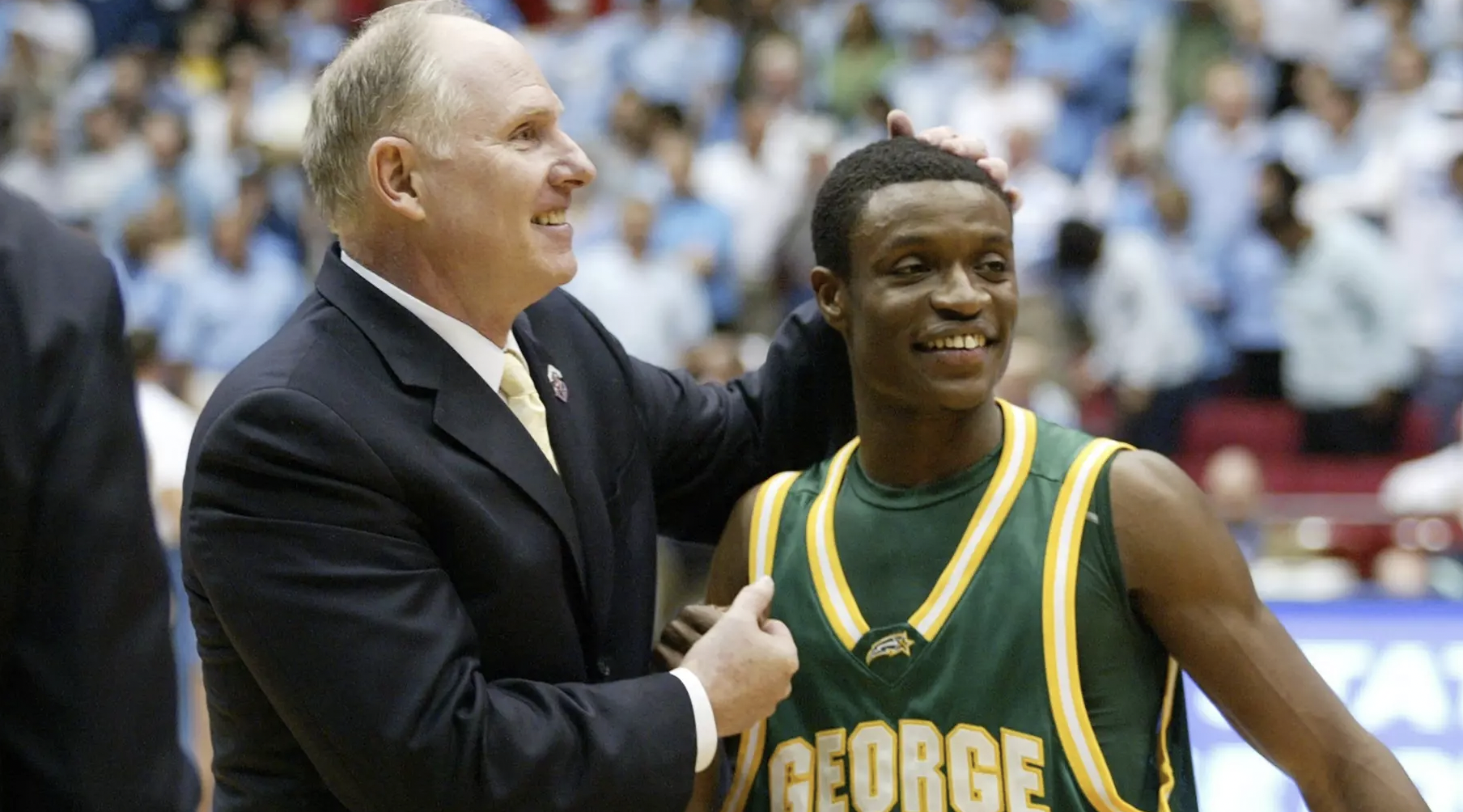
“Tony’s the catalyst for this event,” Larrañaga told Basket Under Review. “If it wasn’t for Tony, no other coach would’ve done that. No other coach would’ve thought about honoring me.”
Skinn says that as coaches and athletic administrations move on, the achievements of the past that still mean “the world to certain people” can get lost in translation and that “that’s kind of been the case” since Larrañaga left for Miami. The current George Mason coach can’t believe it’s been so long since his days as a player on Larrañaga’s Final Four team, but that he still believes that they combined to do something that “special that really no mid-major has ever done.”
The program’s Final Four and the subsequent publicity grew the school from a commuter school of 24,000 students to 40,000 person enrollment. The seat in which Skinn currently sits and Larrañaga held has also been occupied by current Tennessee coach Rick Barnes and Providence coach Kim English, but none of them can say they’ve done what Larrañaga did in it.
As a result, he’ll get to stand at midcourt and listen to an ovation directed at him on December 13.
“I think it’s something that’s long overdue,” Skinn said. “After two decades, being able to celebrate the man and the coach that put all that [the Final Four run] together, I think it's instrumental to our fans, the support system that we had because those people still live in that nostalgia.”
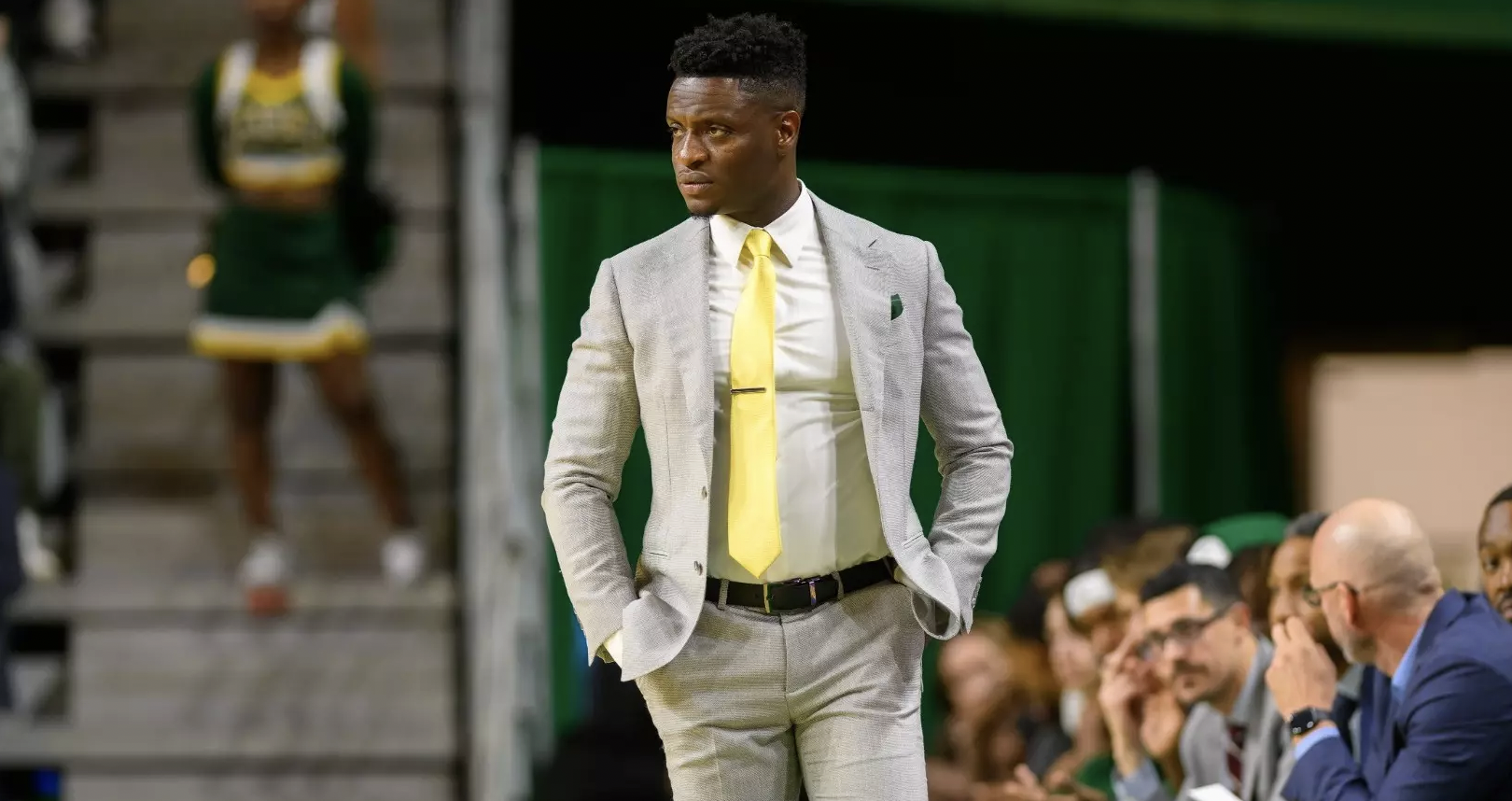
After a few pleasantries, Larrañaga opens a Thursday morning phone call with a message that he’s likely delivered thousands of times since 2006.
The former George Mason head coach–who spent 41 years at the helm of college basketball programs–says that Skinn “probably made the best decision any player I’ve ever coached made during the recruiting process.” The decision had to do with Skinn’s academics.
Skinn was a junior college player that Larrañaga only saw work out once. After the workout, the former George Mason coach was impressed with the then Blinn College guard and offered him a scholarship. Skinn nearly caught Larrañaga off guard as he then asked him if he would still want him if he were to redshirt for a season in junior college before coming to George Mason. The move was designed for Skinn to have the best chance at graduating from a Division-1 school.
“I thought that was amazing,” Larrañaga said. “Most kids, all they think about is the basketball. They don't worry about the degree. They kind of take that part for granted, but Tony was already thinking about his future. I was very, very impressed with that.”
Larrañaga recalls that Skinn always came across as mature despite his age throughout his playing days. The idea manifested itself in a few selfless moves that Skinn was okay making for the good of the team as well as his intentionality on taking care of his mom.
The former George Mason head coach didn’t think Skinn wanted to coach, though. Larrañaga knew his point guard wanted to play at the next level and did everything he could to facilitate that, but he likely never envisioned Skinn filling his shoes one day.
Once Larrañaga knew about Skinn’s desire to coach, he became a promoter of sorts for his former player. Skinn’s first college job—an assistant gig at Louisiana Tech—was as a member of Larrañaga’s former assistant Eric Konkol’s staff. The connection to the Larrañaga tree has been a jumping off point of sorts for the current George Mason head coach.
“He’s been a part of some of my coaching opportunities,” Skinn said. “We talk about family all the time, that's an extension of it and a big reason why I'm now here as the head coach at George Mason.”
Had Skinn made a different choice prior to the 2003-04 season and had opted for the path that didn’t include George Mason or Larrañaga, he wouldn’t have found the “family” that he raves about these days. Skinn says George Mason “essentially” raised him and that he would be top 10 if there was a metric that measured the college basketball coaches happiest with their situations.
Skinn is regarded as a coaching prospect with significant jump seat potential in Basket Under Review’s previous analysis. He’s a George Mason guy through and through, though. His rèsumè heavily reflects the jumping off points that Larrañaga assisted him in. Perhaps more importantly, his insistence on toughness and carrying a chip on his shoulder embody the ideals that this program has built itself on.
“I think as an alum he’s got a great perspective on the type of student athletes that will be successful here,” George Mason assistant Andy Fox said. “He can evaluate a player. He can evaluate talent, but he also evaluates who's a good fit for his culture and who's a good fit for the campus community and he's really really good at that. That’s not something that's super easy to do and not every head coach can do it.”
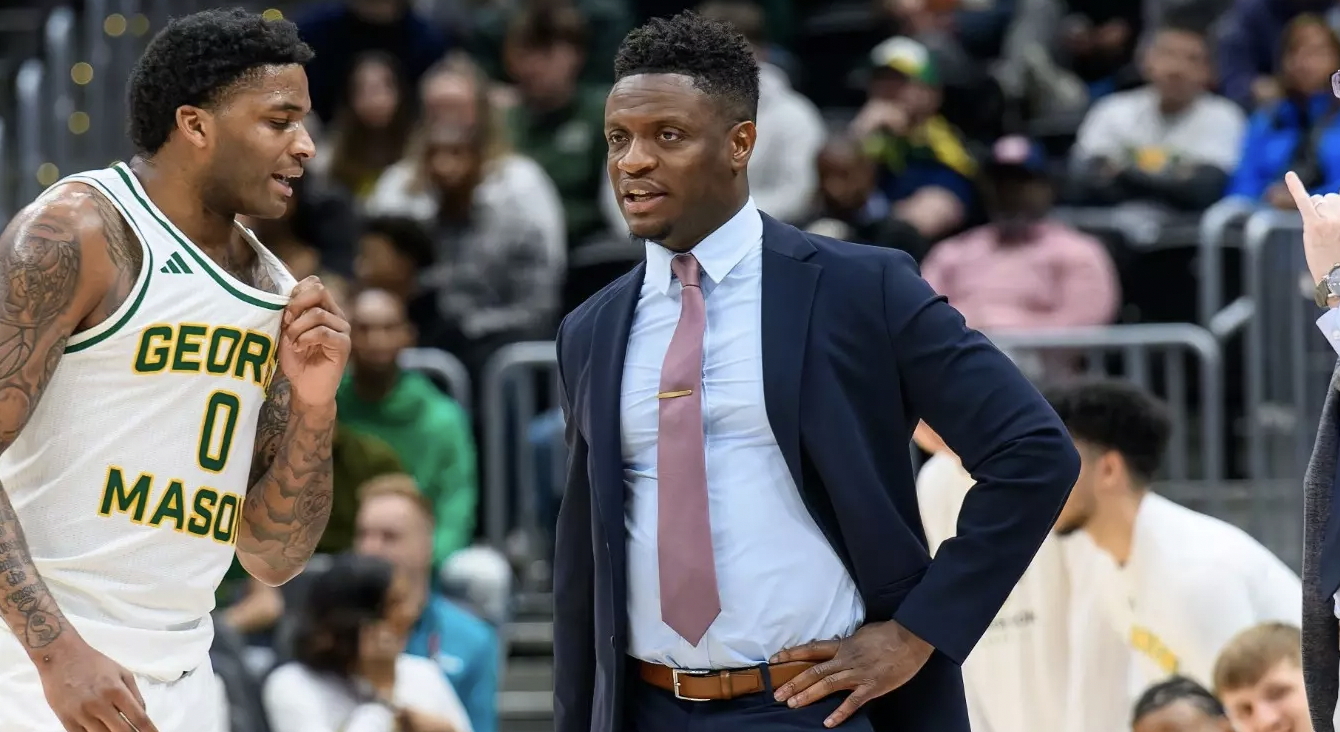
When former George Mason guard KD Johnson would run his mouth in practice, Skinn affectionately gave it back to him and often jumped into a segment to demonstrate that he still has it. Skinn says he “can’t dunk on anybody anymore,”--which is disputed by George Mason guard Kory Mincy, who says Skinn could never dunk on anyone in the first place–but that he can still “wiggle with the ball” and that shooting doesn’t leave good shooters.
Skinn supported his case by posting a semi-viral highlight reel to his Twitter account in which he demonstrated that his passing and ability to finish easy ones around the rim hasn’t left, either. The video was sarcastically captioned “High Level PG with 1 Year left (Juco Yr). Please Contact My Agent.”
Skinn is willing to poke fun at the current landscape of the sport, but he’s a former player and was tasked with lead recruiting duties for the “most part” prior to becoming a head coach. Those roles give Skinn the context to define his identity a certain way.
“I’m a players’ coach,” Skinn told Basket Under Review. “I got a chance to just build relationships with my players because of the equity and the time that I spent with them on the floor, like genuine relationships, and this was really at the start of like the portal, kind of in the middle of NIL and so sometimes that gets lost in it gets lost in translation in our business. But just staying authentic, continuing to be myself [is important].”
Skinn’s philosophies were formed by putting what he learned in a season on Chris Holtmann’s Ohio State staff, what he took from the Rick Pitino tree in his time under Kevin Willard at Seton Hall and Maryland as well as what he learned from Larrañaga into a “mixing bowl” of competitiveness.
The first stop of Skinn’s college coaching journey included him finding a “sounding” board in Konkol, his time with Willard influenced his defensive principles–particularly with his press and matchup zone–and his time with Holtmann taught him the value of a spending time in the BIG 10, where knowing the value of throwing the ball inside was essential.
Fox says the idea that Skinn is inexperienced just because he’s young isn’t entirely accurate because of the nature of the experiences he’s had to this point. The idea that someone wouldn’t understand what Skinn can bring to the table doesn’t appear to be foreign, though. The former junior college guard–who started his coaching career at the high school level–has had to earn everything. Here he is as the coach of a surging George Mason team, though.
“Tony is the ultimate been counted out, chip on his shoulder, ultra competitive, find a way kind of guy,” Fox told Basket Under Review. “One of his really, really strong traits is that he has an unbelievable gift to get those around him to dig deep into their toughness box. Whether it's a staff member like whether it's a player, he really gets them to max out their toughness, grit, competitiveness.”
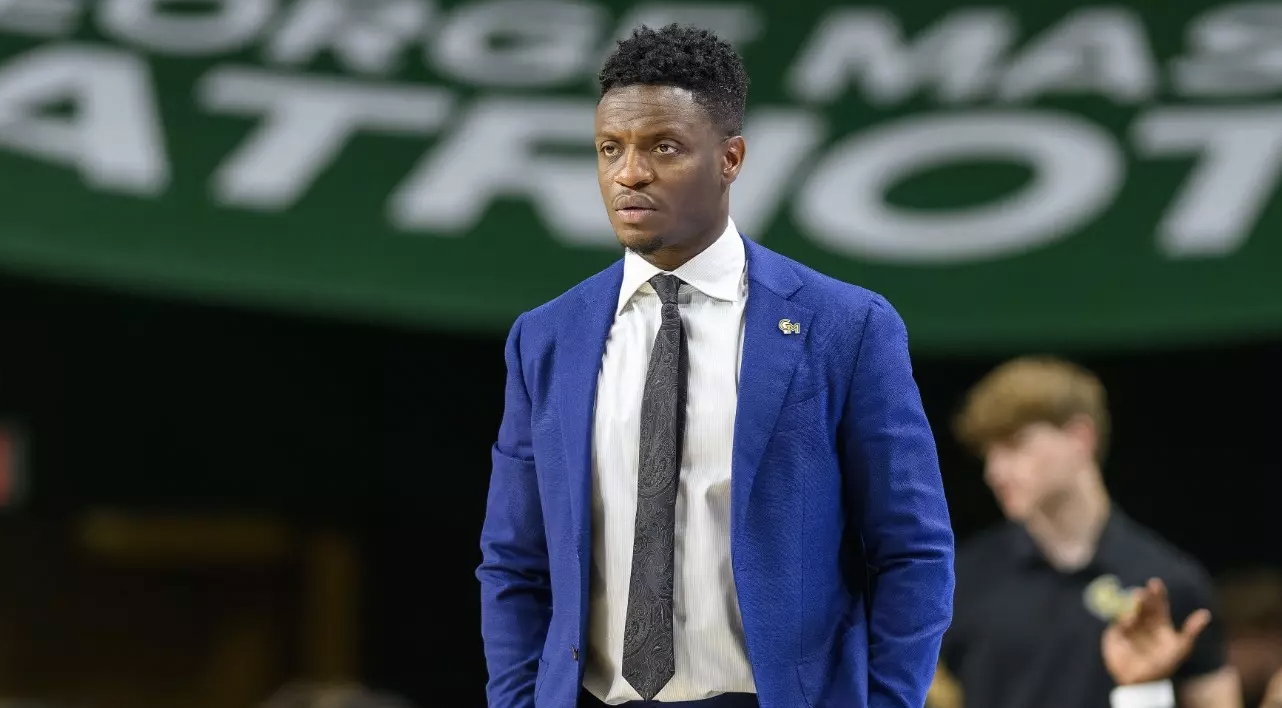
George Mason leading scorer Kory Mincy says his head coach is relatable and easy to talk to off the floor, but admits that he has a “tough, turnt up version” that isn’t immune to throwing his coat off at times when the emotion of the game overtakes him.
Larrañaga recalls that in Skinn’s playing days, he would do anything to win and accepted whatever role he had to take on to do so. It’s clear to Larrañaga when watching Skinn that his former point guard is more mature than he once was, but that the way he’s wired hasn’t changed all that much.
“He coaches like he played, just tough, hard nose,” Larrañaga said. “He gets players who are passionate, recruits players who are tough minded and will give you a shirt off their back to try to win and that was Tony. He put everything into the team first and winning and his teams reflect his personality. That's why they had such a great season last year. Why they're off to a phenomenal start this year.”
George Mason’s start included a nine-game winning streak to open the season, a MTE win and the blueprint Skinn has put together coming to fruition.
Skinn produced an Atlantic 10 regular season championship team last season and appears to have the good times rolling at George Mason again. His players don’t appear to believe that he’s done here.
“For sure,” George Mason wing Malik Presley—who has played for two SEC staffs and has been recruited by a multitude of other power-five coaches— said in regard to the idea that Skinn is a rising star in his industry. “As I got to learn a little bit more, I learned where he came from, his path and his journey, it’s only been up and I think he's gonna continue to go up because I feel like he's a great coach.”
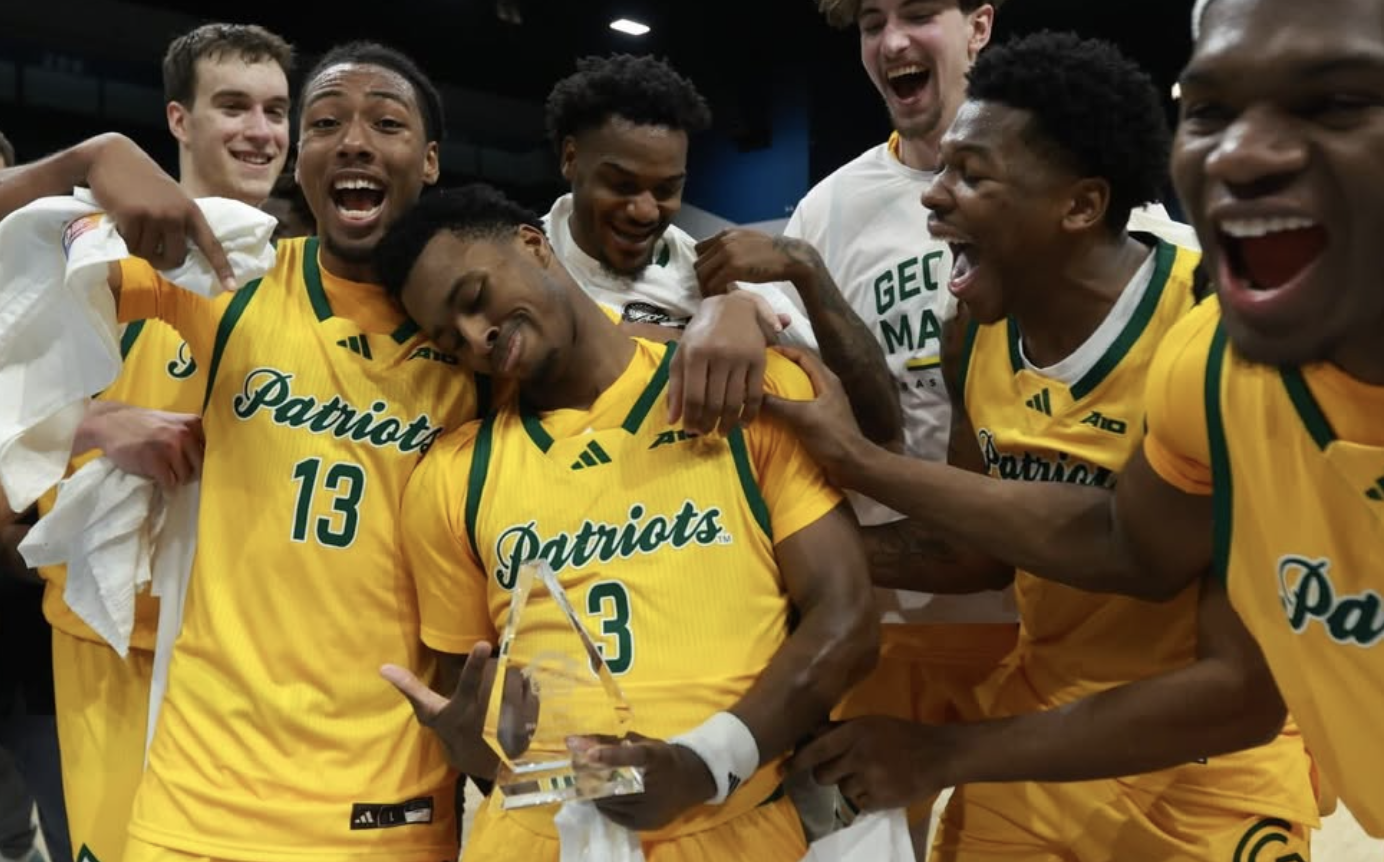
The secret to Skinn getting this thing rolling appears to be that there is no secret besides playing to an identity and practicing as if it’s a “war,” as he says.
Skinn’s practices having an intensity that drastic appears to be hyperbole in some ways, but it’s become a battle cry of sorts for his team as they’ve become a legitimate A10 contender.
“It’s a war zone,” Mincy told Basket Under Review. “What I think makes us better and why the games become so much easier is that practice is like that from start to finish. From the time we step out there to the time we finish, guys are tired and winded because of the work we’re putting in. When it’s game time and we have all those media [timeouts], and those breaks we feel refreshed and rejuvenated because of the way we practice every day.”
The concept of a war-like practice encapsulates and aligns with what this program has built itself on as Skinn has built his best teams to date. If you don’t want to defend, box out or play with the proper intensity, then you’ve found a sure-fire way to sit on the bench in Skinn’s program.
The concept paid dividends as George Mason finished 31st in the country in defensive efficiency, sixth in opponent effective field goal percentage, seventh in opponent two-point percentage and 33rd in opponent 3-point percentage. It’s as blue collar as it gets.
“I think the one thing that we've always been able to just kind of set in stone with who we are and how we teach is how hard we practice defensively,” Skinn said. “I give a lot of freedom offensively, but you're not getting that freedom if you don't guard.”
Skinn says he’s received multiple reviews throughout his career that players in his program say they’ve never played harder than when they practice with him. Perhaps the intensity on the practice floor is best encapsulated by a drill that Skinn has deemed “24 second perfect possession,” which can end up being an hour because his team doesn’t achieve the perfect possession.
The drill signifies what about Skinn’s style allows him to succeed the way he has as George Mason’s head man. He’s got the soft skills of a new-age, NIL era head coach mixed in with the hard-nosed, blue-collar philosophies of an old-school veteran like Larrañaga.
“Tony has shown that he's a great leader of young men,” Larrañaga—who commends Skinn for his ability to build a roster in a difficult era to do so—said. “He’s challenging his players to get George Mason back to the NCAA tournament and to, hopefully, make some big noise like his teams did.”
