


NASHVILLE—Casey Alexander changes his path nearly every day as he goes for a run, but the general vicinity of it hasn’t changed much over the past 20 years.
An Alexander run generally includes a Belmont basketball shirt being displayed along Nashville’s 12th Avenue, Leland Lane, the sidewalks surrounding Lipscomb University and Belmont Boulevard. The runs have been a fixture in his life since he began in this profession.
“I used to run a ton,” Alexander joked to Basket Under Review, “Now you can see, I run some.”
Perhaps on the surface, the piece of Alexander’s routine isn’t profound or meaningful in regard to anything other than Alexander’s physical health. They indicate something about Alexander’s journey and the meaning of this place, though.
As Alexander makes the road-side jog nearly daily, a bumping into with a friend, longtime community member or some sort of acquaintance appears to be nearly inevitable. Since Alexander started his cardio routine, he’s seen kids grow up and has seen the path he’s beaten down with his footsteps over the years evolve with the times.
The Belmont head coach went to high school just over 10 minutes down the road from Belmont’s campus at Brentwood Academy, compiled a 119-25 record as a Belmont player for its legendary head coach Rick Byrd. When Byrd had it rolling the best, Alexander was on the bench for 16 seasons as an assistant coach. Outside of a two-year stint as the head coach at Stetson, Alexander has planted his basketball roots nearly exclusively in Nashville.
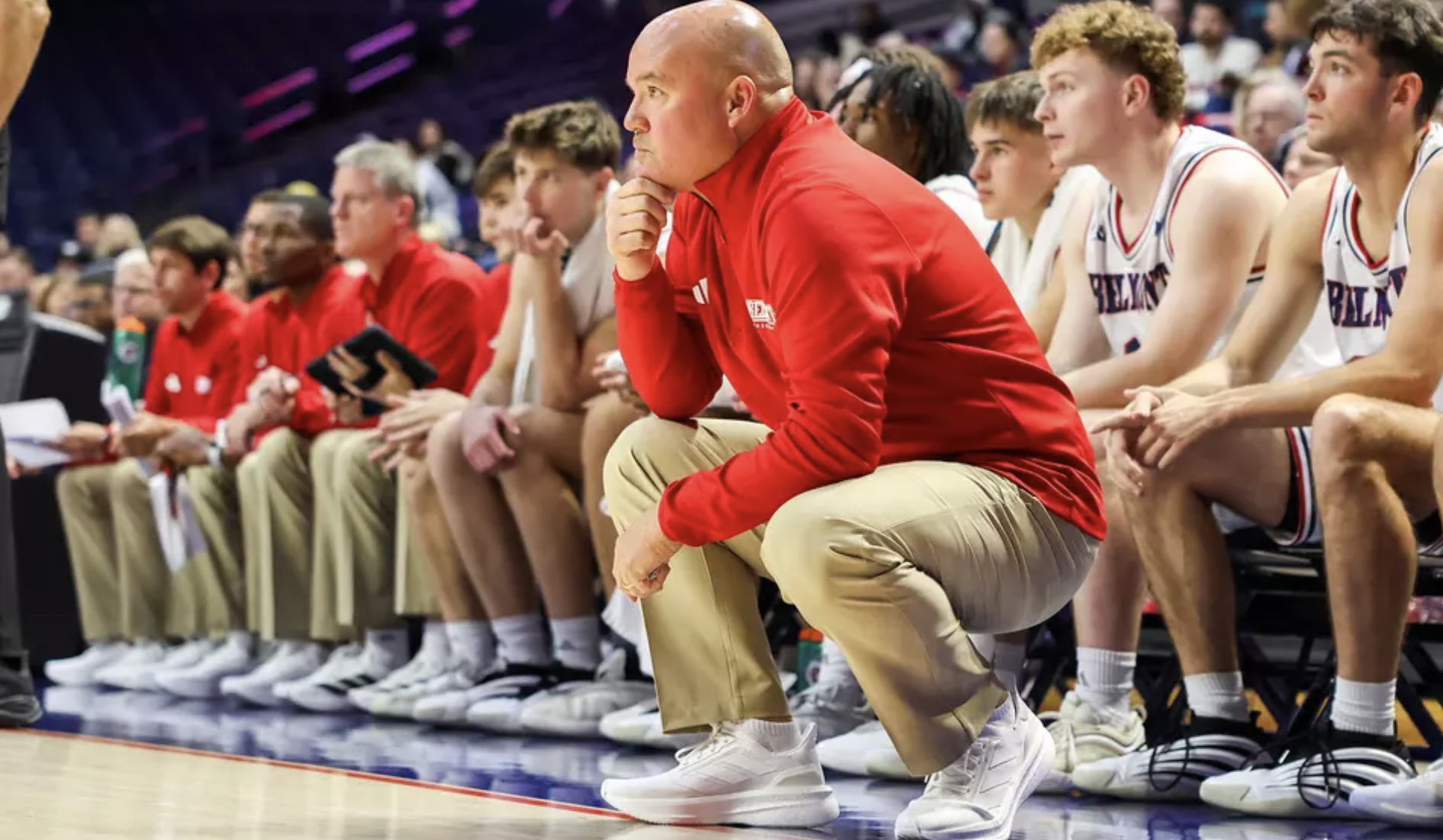
Belmont has seen itself emerge as a midmajor power, had to fight through the searing loss of stars to power-five programs and fought to keep its brand alive as it from Byrd to Alexander. All the while, Alexander has modeled a Belmont-like consistency as he rotates through the informal city trails of Nashville’s south side.
All sorts of basketball minds and talents have come and gone in this city, but Alexander has chosen to stay and has worked to retain prominence around his alma mater’s name. Alexander is as close to a fixture in a vibrant Nashville basketball community as there is. If anything, the longevity of his routine has subliminally inspired a run club of sorts within Belmont’s basketball community.
“[Alexander] runs all the time,” Belmont assistant Luke Smith told Basket Under Review, “I started running with JJ [Butler], our assistant on staff. I hate it so much, but he gets me out there.”
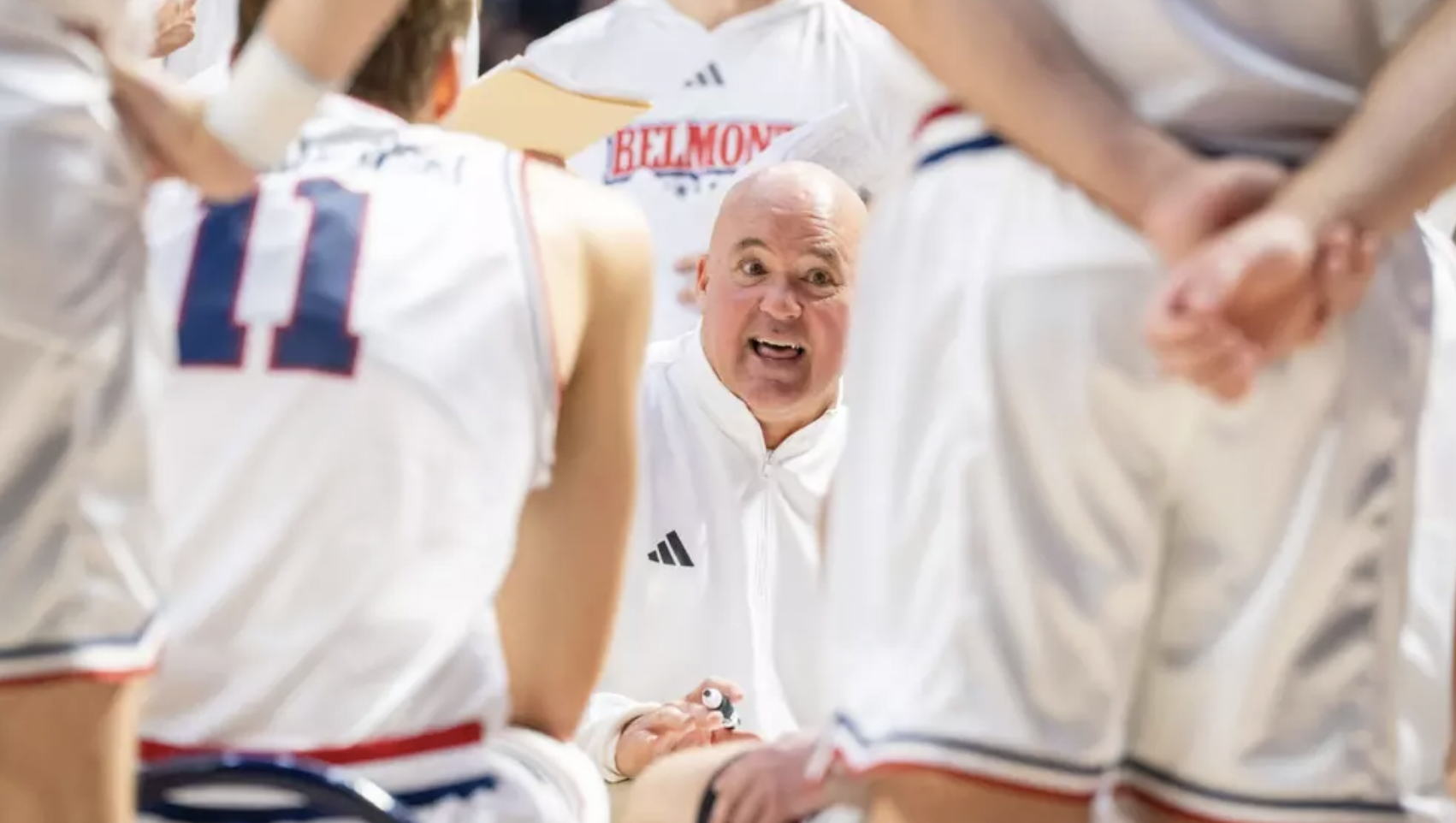
Between runs, Alexander’s program has developed another admirable routine; winning.
Belmont is off to a 16-3 start–with wins over Bradley, Charleston and crosstown rival Lipscomb–is ranked an MVC-high No. 65 in KenPom and is 6-2 in league play with both of its losses coming by one point.
Alexander has built a 20-game winning machine since re-arriving at Belmont in 2019 as its head coach and capped out at 26 wins in his first and second seasons, but his 2025-26 team is on track to challenge the program’s win record under Alexander. KenPom projects that Belmont will fall two wins short of that mark, but projects on an individual level that it will win all but two of its remaining MVC games–which are road clashes against Illinois State and Murray State. This Belmont team winning each of the games it’s projected to win in the regular season and winning one conference tournament game would give it the most wins in a season under Alexander.
The margin will be difficult for Belmont–as proven by five of its eight league games coming down to single digits. But, its mid-January stretch in which it took down Drake and Valparaiso by less than a possession in back-to-back games indicates that it knows how to win enough to take this thing to places that only the greatest Belmont teams have been.
“I’m not worried about our ability to win,” Alexander said. “But, at the same time, to be a championship-level team, to put together a great season, you’ve got to be able to win a high-percentage of these kinds of games.”
An MVC regular season title would be as meaningful as anything Belmont has accomplished in the seven-year Alexander era, but an Arch Madness title would be the ultimate testament to what Alexander has built.
This Belmont program is a model of consistency, but could break through with the second NCAA Tournament berth in the Alexander era. Belmont has the highest odds of anyone in the MVC to win the league title.
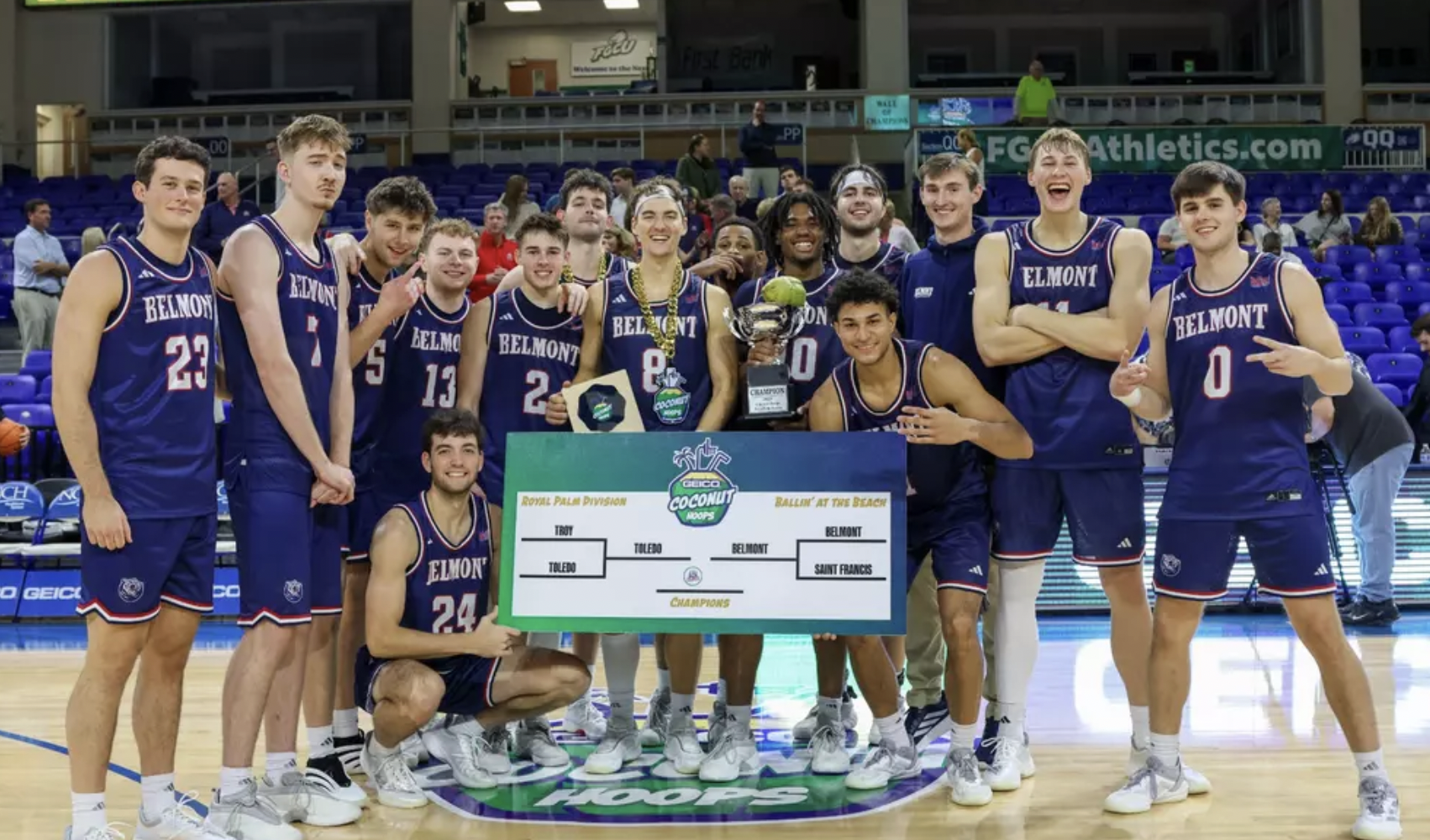
Whether any of the generally polite and understated leaders of this Belmont program would say it or not, they all knew that something like this was possible when they walked into the Crockett Center for Athletic Excellence and recognized most faces in the room.
Much has been made over the years of Belmont’s 2024 offseason in which its star point guard Ja’Kobi Gillespie departed for Tennessee, its star wing Cade Tyson left for North Carolina and its potential future-NBA big man Malik Dia jumped back to the power-five level and found a home at Ole Miss. The offseason indicated that things–particularly retention of standout pieces–may be difficult for Alexander’s program in the new age of college sports. This Belmont team proves that it’s still possible, though.
Alexander’s program returned all but one scholarship player from last season’s 22-win Belmont team. Belmont wing Tyler Lundblade says he received “backdoor” calls to his AAU coaches–presumably from power-five staffs–yet he opted to resist the urge to hit the door and opted to play another season at Belmont. Bruins’ big man Drew Scharnowski and versatile forward Sam Orme also had bodies of work that would’ve made them attractive on the open market, but opted to stay.
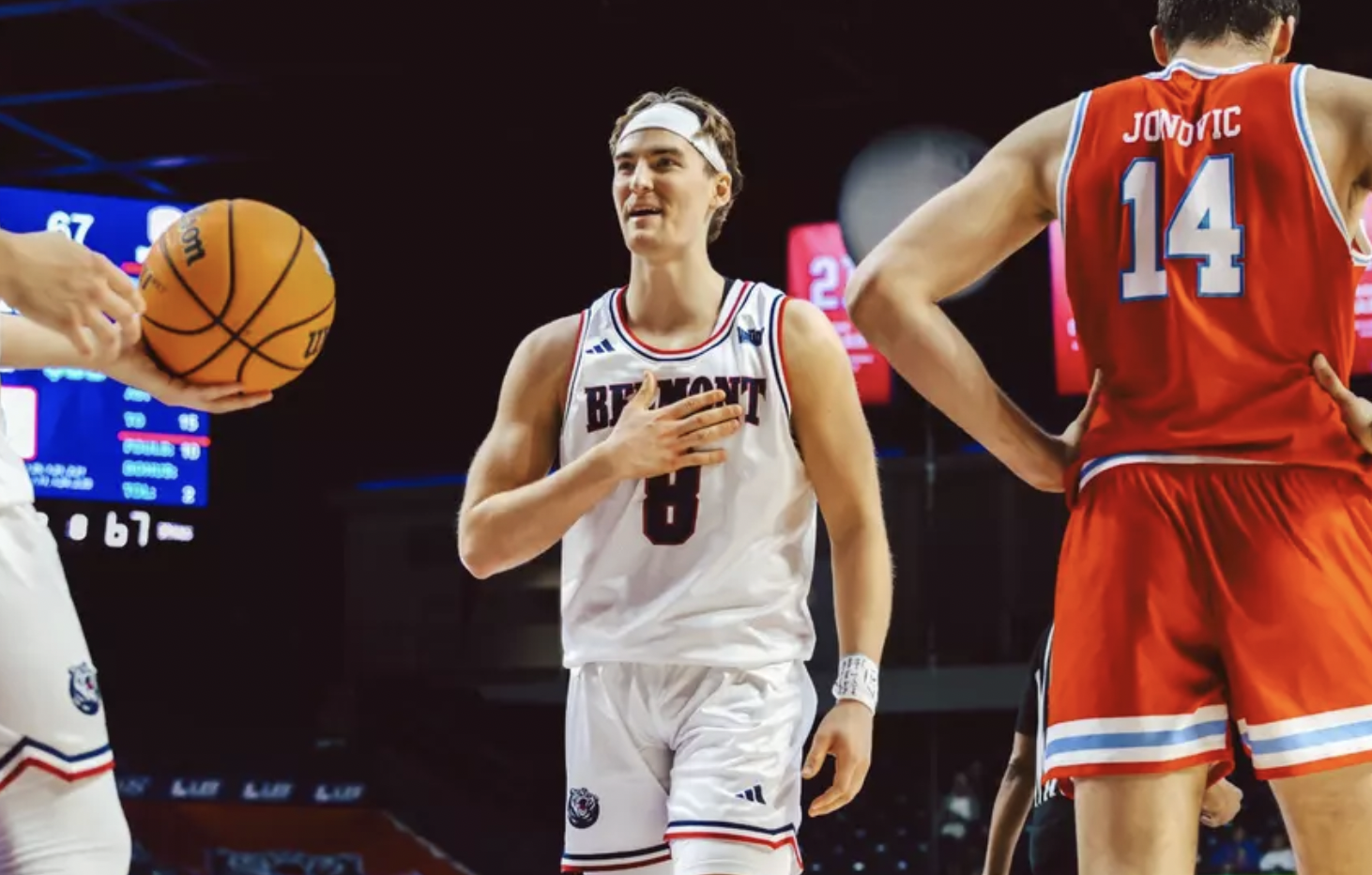
“There's a lot of reasons why you would want to be here,” Lundblade said. “The coaching staff, obviously, the way we play, and I think this group knew that, there had been a lot of turnover in our roster in years prior and the guys we lost this past year were all graduates and were out of eligibility. I think everyone knew ‘okay, I've got a real shot to play, because we lost a lot of starters.’ But also we knew that with the guys coming back, we could do something special.”
Lundblade put stock into Belmont taking a chance on him as a multiple-time power-five walk-on and opted to turn down a few potentially-lucrative deals that could’ve come as a result of him leading NCAA qualified shooters by shooting 48.1% from 3-point range.
In a more general sense, Smith believes some of the decision making boils down to “genuine, honest and real relationships” that the Belmont staff has with its players where the truth is told. Whatever the reason is, Belmont is No. 81 in minutes continuity and has a roster build that’s more retention-based than shows up on paper.
“There’s a different level of trust when we’ve played for a few years combined,” Orme told Basket Under Review. “Being able to get four or five, six players back in today's college basketball is huge, just having that carryover is definitely big for team chemistry and playing offense and defense efficiently.”
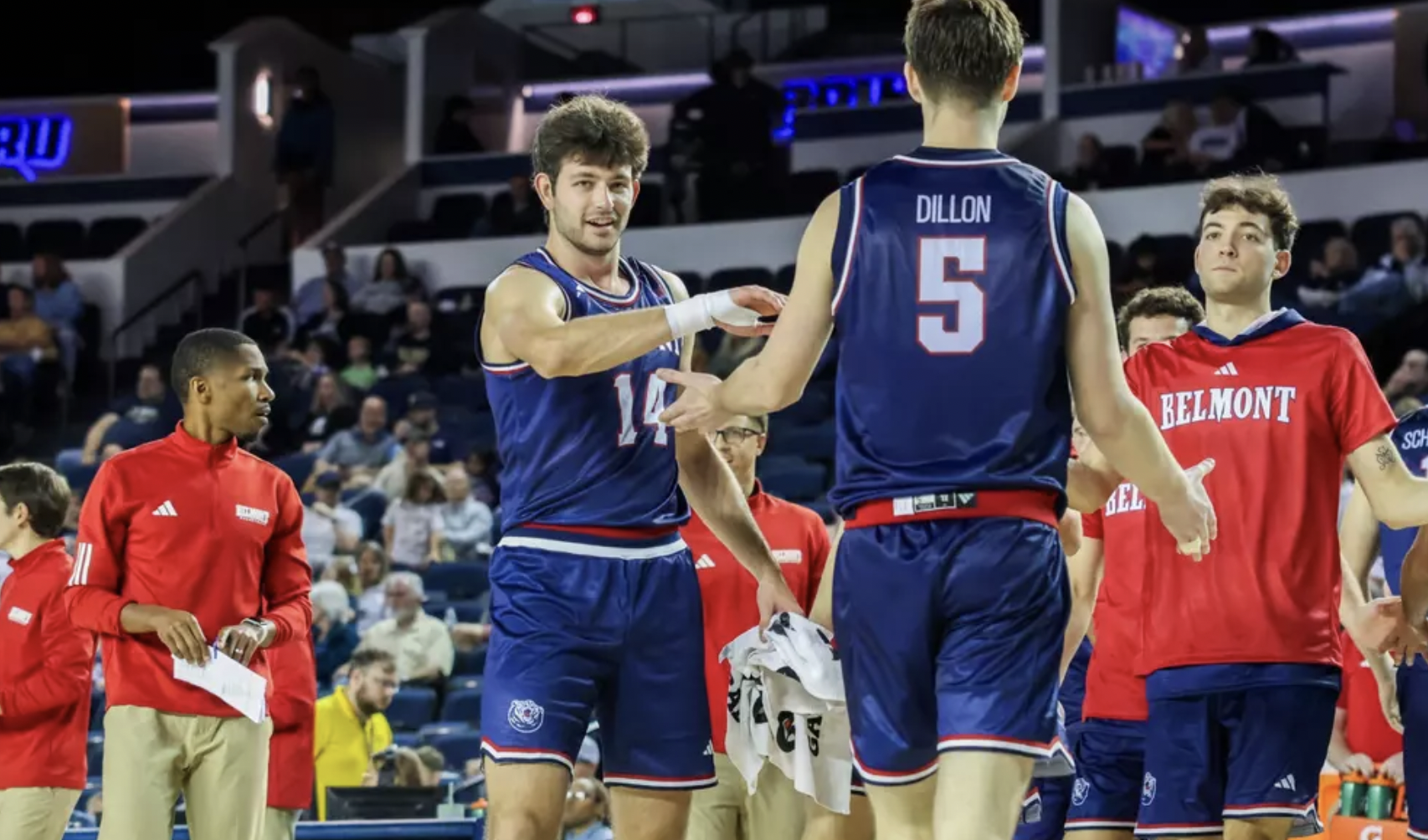
Belmont returns just two starters from its 2024-25 team–which went 13-7 in MVC play–but brings back five others that played significant minutes for it in important games a season ago. It’s also been bolstered by breakout seasons from redshirt freshmen Jabez Jenkins and Eoin Dillon–who waited their turn a season ago.
Continuity isn’t the end-all be all, but it’s likely played into the results of at least a few of the 16 wins that Belmont has racked up to begin Alexander’s seventh season.
“We're all best friends with each other,” Dillon said. “We all trust each other. We all love each other, just like brothers. It's a great connection with all of us.”
The prognosis on Belmont’s 2024-25 defense–which finished with the second-worst efficiency rating of any defense in Alexander’s tenure–developing into the highest-rated of his tenure isn’t all that simple, but the difference isn’t all that hard to see in Alexander’s transfer class.
At the very least, Belmont’s two new ballhandlers–Eastern Washington transfer Nic McClain and Samford, by way of Vanderbilt, transfer Isaiah West–make the beginning of each possession more difficult for opposing ballhandlers. The impact McClain makes on that end is noticeable enough that Alexander has consistently seen it while he’s been sidelined.
“That’s a great guard tandem on the defensive end,” Alexander said. “It’s a big reason why we had so much success early in the year and it’s a reason why we’ve flattened out here lately.”
Belmont’s defensive rise also has to be attributed to Lundblade improving significantly on that end since he arrived in Nashville last summer and Jenkins becoming a legitimate All-MVC Defensive Team candidate.
Perhaps each of those players taking year-over-year leaps has to do with West and McClain’s additions. It certainly has to do with the way Belmont has become a more friendly place for players like that to step in and be themselves on the defensive end.
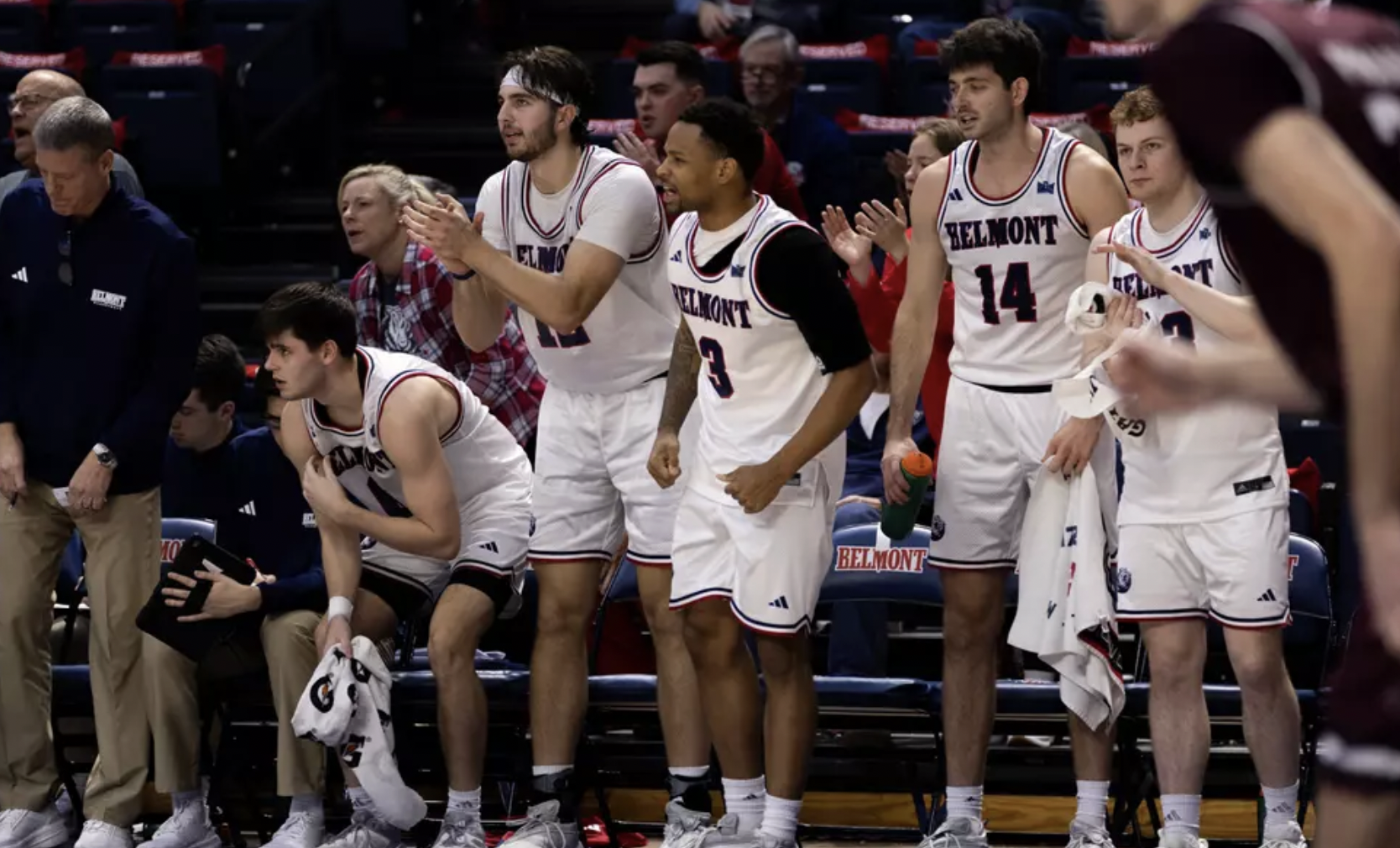
Alexander says his staff has “simplified some things” on the defensive end and has allowed for more compact decision making. The emphasis of Alexander’s change on the defensive end is to make players who “aren’t the focal point” beat his team. The result has been more concise thinking and “a little bit” simpler coverage of certain actions.
“I'd say last year, especially for the guards, there was a lot of kind of uncertainty about ball-screen defense and all that kind of stuff,” Orme said. “But, I'd say this year [Alexander’s] done a really good job of implementing and just having core principles for us on defense.”
One of Alexander’s main points of emphasis is often on display as Belmont gives less efficient 3-point shooters more room to work with by playing off of them–or going under ballscreens on them. Orme appeared to believe that the approach was more analytically-oriented than past approaches and that mixing up looks has also been an effective piece of Belmont’s improvement.
A program that has often been defined by its tendency to race to 90 or 100 rather than play in the 60s or 70s appears to have a new dimension. It already appears to have grinded out a few wins as a result of its newfound moxy on the defensive end. Belmont’s skill that gives it a chance at further longevity was prominently on display in its road win over UC Irvine, in which UC Irvine shot 32% from the field, and its 75-68 win over Lipscomb–in which the Bisons also shot 32% from the floor.
“We believe in what we’re doing, which is really important,” Smith said. “It’s some schematic stuff. But, honestly we have some better defenders, as well.”
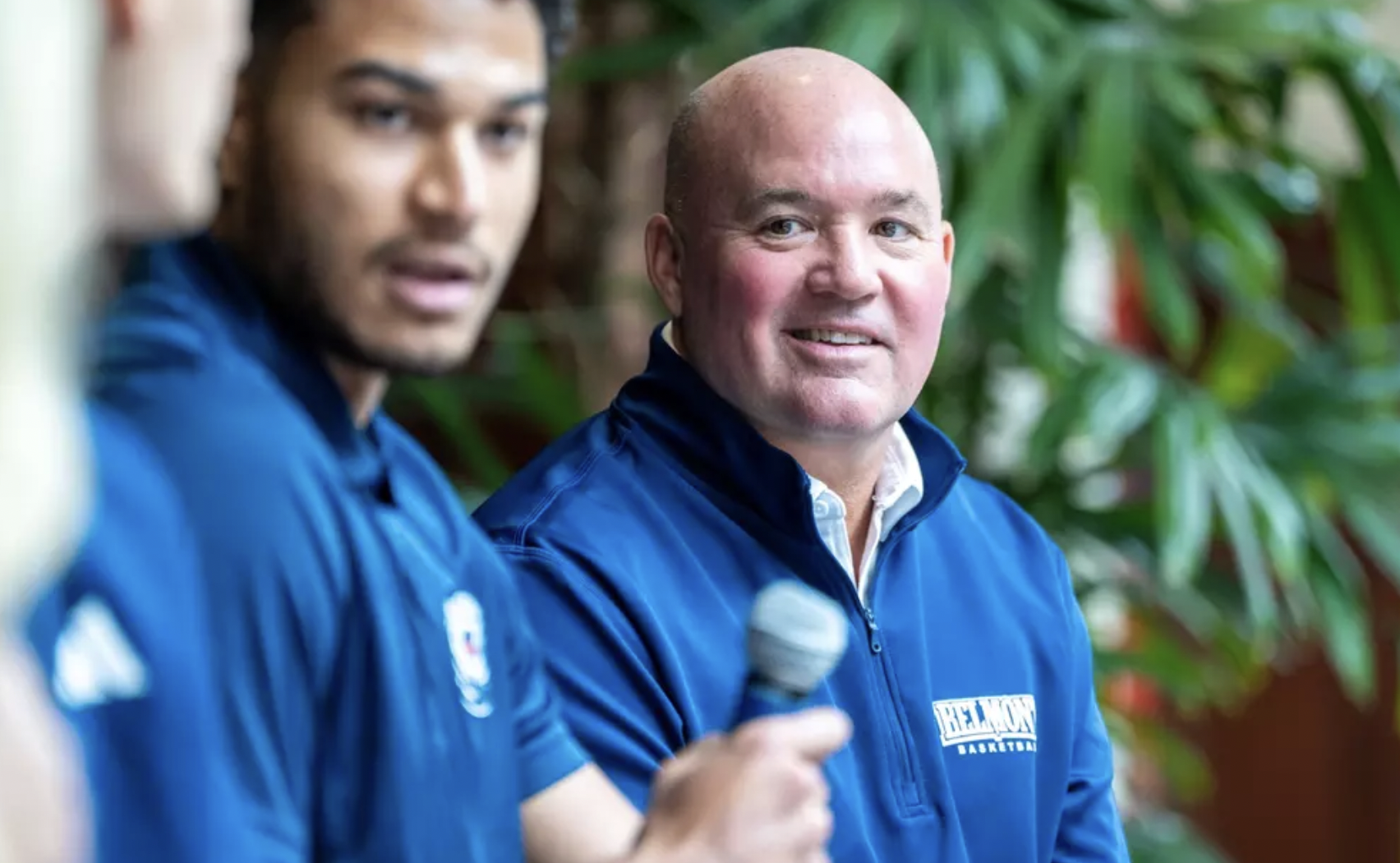
As well as anyone, Alexander and Smith understand everything about the perception of this Belmont program and the pieces of it that have allowed it to develop into the model of consistency at the midmajor level.
Alexander and Smith’s pursuit to revamp Belmont’s defense comes from a place of love for this program–which they both played for. Belmont staffer Kerron Johnson also played for the Bruins while associate head coach Brian Ayers is nearly a Belmont lifer–despite playing for Lipscomb– after spending 27 seasons on the Bruins’ staff.
The effect that the stability of this Belmont staff is having on this group of multi-year Belmont players appears to be tangible.
“We have a bunch of guys that care about Belmont and care about winning,” Smith said. “They made a commitment to Belmont and to stay and I think that they have pride in that. So it's just a room that understands a little bit more when they come in about what Belmont's about.”
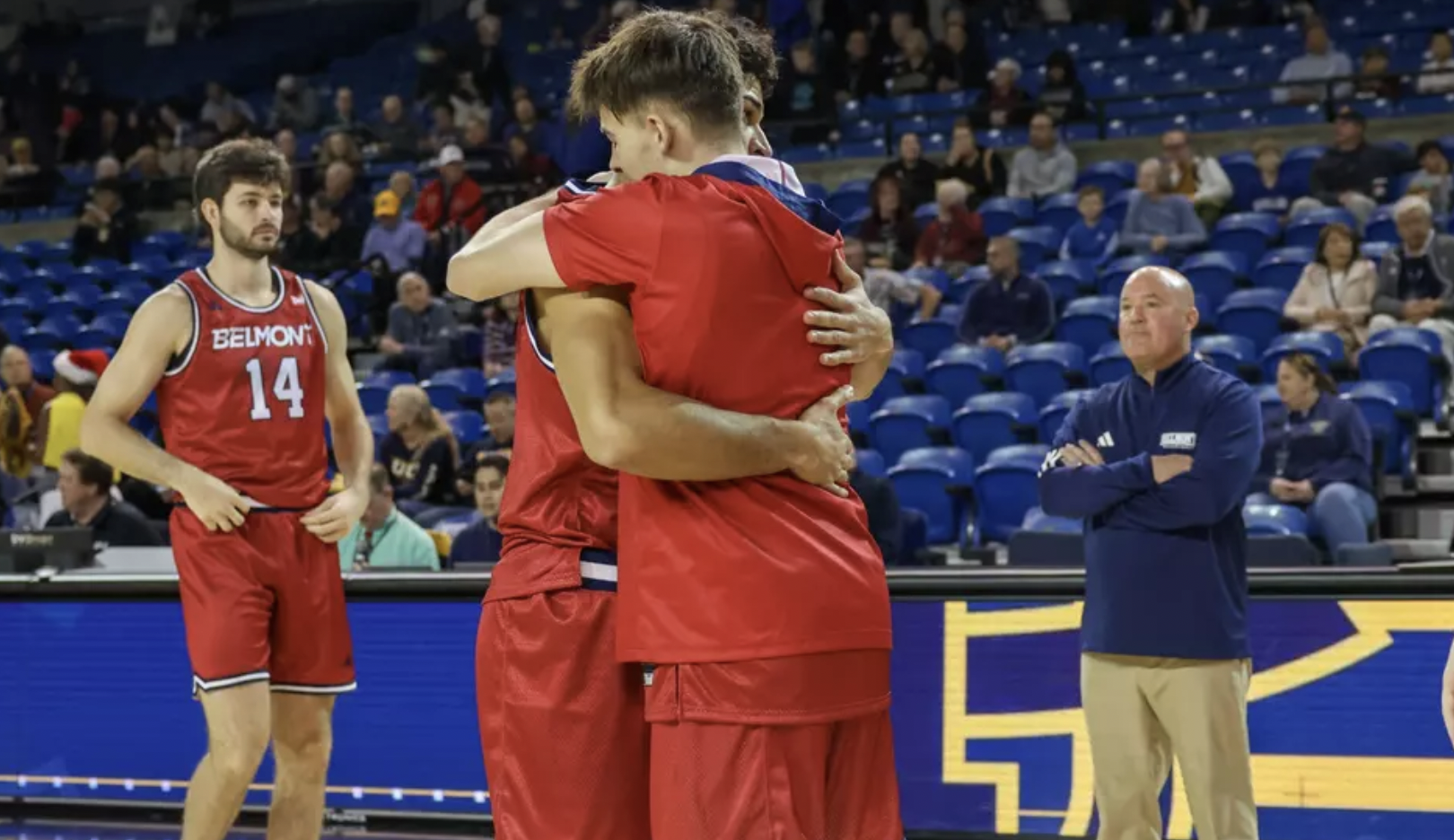
Orme says that he and his teammates know that “Belmont wins” and that they’re tasked with embodying that as they move day-by-day through a season with high expectations. Perhaps each member of this particular team doesn’t understand the magnitude of the success this program has had, but they understand that it means something.
They also understand that the great teams in this program’s past didn’t stop in January. Those teams made their own history when it mattered most. Time to see if this group can do the same.
“I think that’s the reason why we have the record that we do,” Alexander said of this group’s idea of what the Belmont program stands for. “But, we’ve got a long way to go. It’s a tough league. There’s going to be ups and downs. We’ve got to be as consistent as we can be.”
