

Last year, the day after a day in history, the Arkansas Razorbacks played their first game of the season. Grand statements after one (1) game of basketball are, of course, really stupid. And yet: I thought it timely to write something that ended up being surprisingly prescient. An excerpt:
This was after one (1) real game of basketball. I think the stats themselves would tell the story.
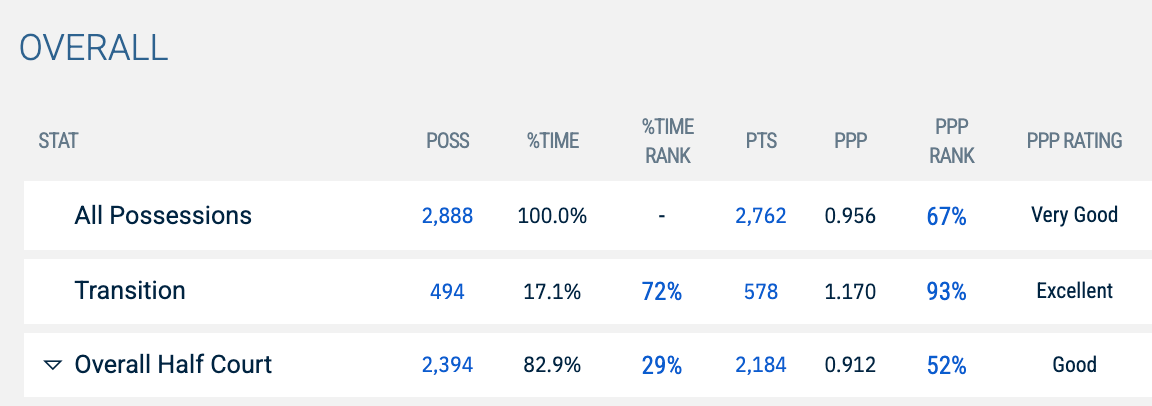
Because of a fundamental flaw in the Arkansas roster when John Calipari was constructing it - your starting PG and center could defend but couldn't shoot, the backup PG and center could shoot but couldn't defend - Arkansas's offense suffered all season long, finished 64th nationally despite having (at worst) top-20 talent, shot 32.7% from three, and had Calipari's worst offensive shot volume numbers ever, meaning there was no bailout coming if Arkansas couldn't hit shots or generate a ton of points off of defensive stops.
This is interesting for numerous reasons. For one, Mr. Calipari - Johnny - used to be the head coach at Kentucky. You may remember that 15-year stretch of time, but considering the average human in 2025 seems to have a memory that lasts about 37 minutes, maybe you do not. What his replacement did last year, especially in contrast to Cal, was pretty remarkable...as you'll recall if your brain has not melted via vertical video.
While a more talented (on paper) Arkansas team slopped it up to a mid-60s offensive finish, a Kentucky team made up of spare parts that was placed 43rd at KenPom in the preseason had a top-10 offense, shot 37.5% from three, and had four games all season where they finished below 1 PPP. Arkansas had four in the month of January alone. Kentucky's defense was as bad as Arkansas's offense, but they had the better best unit, and the defense could be excused when the system itself held opponents to the 10th-lowest rim attempt rate among P5s.
The future looked like it was reaching Lexington, and after a monster spend this offseason - reportedly $22M USD - it appeared Kentucky was ready to go from pretty good to elite.
You're reading this because, obviously, that hasn't happened. Kentucky is 5-3, with their best win over a Valpo team on track to finish 8th in the MVC. Their latest loss was at home to a UNC team that shot 45% from two, had three different scoreless streaks of 3+ minutes, and won anyway. Their next game is a neutral(ish) site affair against a top-5 Gonzaga team who's had nine full days to stew over getting smoked by Michigan. KenPom gives it a ~53% shot that, if you read this tomorrow and not Friday, December 5, it's a post about a 5-4 Kentucky team who has three of their next five games against Indiana, St. John's, and Alabama.
How have we gotten here from a team whose own fans saw this schedule and thought that a truly elite Kentucky team should go 10-3 at worst? Well, let's reintroduce our old friend.
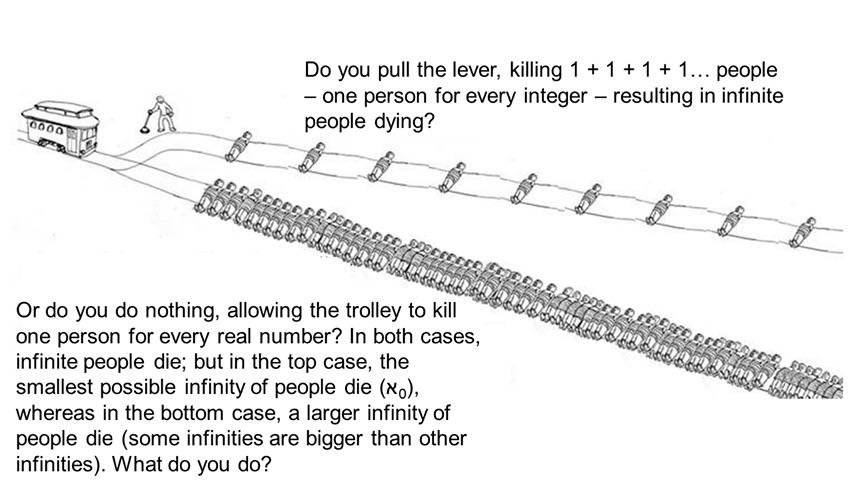
Let's talk trolleys, construction, and whether I've chosen too extreme a variation of my beloved philosophical question.
The debate of fit versus talent is going to go on for as long as you or I are live. Some coaches and staffs believe the former is more important than the latter; others believe the latter is more important than the former, and you need talent to make the fit look good. However: could you also need fit to make the talent look good?
Last year, I would argue that Arkansas was an example of talent > fit, while Kentucky was an example of fit > talent. There's more precise ways to do it, but think of it this way:
- For better or for worse, the AP Poll and KenPom's preseason ratings set a talent baseline to aim for. The AP Poll had Arkansas 16th and Kentucky 23rd; KenPom, Arkansas 25th and Kentucky 43rd.
- By Torvik's Talent Rating metric, Arkansas had the 7th-most talented roster in the sport last year. Kentucky: 62nd. (Debatable, obviously, considering it's largely based on high school ratings...but Talent has the highest correlation to wins of any metric out there.)
- Arkansas had the #1 class in terms of portal talent, per 247, to go with a top-3 recruiting class; Kentucky was 5th thanks to a 9-player class and 49th in recruiting.
Both teams made the Sweet Sixteen, but it was Kentucky who got a 3 seed while Arkansas needed to win five of their last seven to make the Tournament at all. Why? Because Kentucky's roster fit together and Arkansas's did not.
The first warning sign for 2025-26, I guess, was an obvious one: a coach defined by great shooting and mediocre defense in his career had a roster with, on paper, great defense and mediocre shooting. Whereas last year's five highest minutes-getters combined for 19.5 3PA a night and a 43% 3PT attempt rate, the 2025-26 roster's projected starting five would be at 11.7 and 35%. Even inserting Kam Williams into the starting lineup, for example, would only have Kentucky at 13.7 3PA (if replacing Denzel Aberdeen) or 15.6 (if replacing Mouhamed Dioubate). This roster would look much different.
No one seemed to care because of two things: not only did Kentucky bring in a top-5 transfer class again, they also put together the 7th-best recruiting class in the nation. As such, Kentucky was a shoo-in for several things: a top 10 AP preseason ranking, a popular preseason Final Four pick, and the second-most popular pick to win their conference behind the defending national champions. An exhibition win over Purdue simply lit the rails on fire, and an exhibition loss to Georgetown was excused away with "they were missing three players."
Just one problem: the shooting. In the two exhibition affairs, the 'Cats shot 9-29 and 7-30 from three. This is excused when you beat Purdue, but add in non-rim twos (3-10 against Purdue, 5-18 against Georgetown) and a problematic pattern was emerging. Even in a pair of throttlings of Nicholls and Valpo, Kentucky's combined 3PT efforts of 18-55 added up to, through four fake games, 34-114 (29.8%) from downtown.
Since then, it hasn't gotten much better. A 15-30 effort against an awful Tennessee Tech team calmed the waters, but it was followed by a 1-13 showing against North Carolina...which followed a 7-30 outing against Michigan State, and a 12-34 night against Louisville that was saved by a random three-in-a-row hot streak in the second half by Collin Chandler. (They missed seven of their final eight attempts.)
The more objective numbers back me up, or so I think. Last year, against Power Five competition, Kentucky's offense averaged (!) 38% from 3, 53% from 2, and 22.6 free throw attempts a night - all in the 86th-percentile or higher nationally. Through three games this year, these numbers sit at 25% from 3, 53% from 2, and 20 FTAs a night. Two of those are noticeable downgrades from a season ago despite playing more transition-heavy on average.
So: what's the culprit? A roster-wide push-and-pull that, even at full strength, doesn't seem likely to resolve itself in the manner most expected.
1) No threes by fours
Remember Andrew Carr? Sure you do. Andrew Carr was Kentucky's starting 4 last year, and while no one would be like "wow, Andrew Carr is the greatest starting 4 I've seen in my adult life," they would all be like "that guy's pretty good." For our purposes, he did two things of utmost importance for the 'Cats:
- Attempt two threes per game;
- Hit them at a 32% clip.
Neither of these numbers are that impressive, but it adds perimeter gravity in a meaningful way. Carr has to be respected, particularly because he was an excellent cutter and shot 32-73 (43.8%) on open, catch-and-shoot threes his final two years of college.
The backup 4 was Fairleigh Dickinson transfer Ansley Almonor, who took 76% of his shots from deep and hit them at a 42% clip. Whatever drag he presented on defensive efficiency, he made up for by simply making a lot of threes.
Kentucky's not at full strength at a few positions, but one where they've had relatively fine luck in terms of availability is the 4. These are their 2025-26 options.
- Kam Williams, the current starting 4 who entered 2025-26 having played a total of 17 possessions at the 4 last year for Tulane. Williams IS a career 37% deep shooter on high volume...but lineups with him at the 4 for UK have given up a 6.3% higher DREB% than Kentucky's average and a 3.5% higher 2PT.
- Mouhamed Dioubate, the preseason starting 4 battling an ankle injury. Dioubate is the best defender and interior scorer amongst the 4s. Also, Dioubate is a career 29% shooter from deep on roughly 0.6 attempts per game.
- Andrija Jelavic, a Croatian who shot 29% from 3 on around three attempts per game for KK Mega last year...and 30.8% from 3 the year before on 3.5 attempts per game. He's grading out as UK's second-worst defender.
What you'll see there is one plus shooter who is a serious drain on Kentucky's rebounding and interior defense, one highly efficient interior scorer and defender who can't shoot, and one okay shooter (with promise, I'll note) who isn't a good defender at the college level right now.
Kentucky worked last year because you could pair Carr or Almonor with Amari Williams, an unusual back-to-the-basket big who could serve as a fulcrum point for UK's offense without having to shoot. He wasn't much for quality rim protection, but at no point did he constrict UK's spacing simply by being on the court. For this to work, Williams either has to find something he hasn't found in protecting the boards or Dioubate has to be so overwhelmingly physical that UK plays a version of bully-ball Mark Pope has never coached before.
When Dioubate and any center have shared the floor together against UK's three quality opponents, the offerings have been unkind. UK has been outscored by 22 points in 73 possessions despite outshooting opponents 61%-49% from two. These lineups take 61% (!) of their shots as jumpers despite UK shooting 31% from 3 and 33% from the midrange. Why? Well, you tell me where the driving lanes would be here.
This is a thing you can get around with aforementioned bully-ball, and perhaps the return of Jayden Quaintance down the road can provide that. Even with that, nearly every workable version of the frontcourt has either two non-shooters, two bad-to-awful shooters, or one non-shooter and a shooter who is too small to play the 4.
There are other problems you may know about.
2) A point guard quandary
Last year's starting point guard was Lamont Butler, who, for better and for worse, wasn't much of a shooter. However! He was an excellent interior scorer, UK's best perimeter defender, and a pretty good passer. Whatever he struggled to find from the perimeter offensively, he made up for in a lot of other ways, including drawing 4.3 fouls per 40. That gave UK more rim gravity, which was possible because the rest of the floor was so well-spaced for Butler to drive in.
This year's major get out of the portal was Pittsburgh starting PG Jaland Lowe, who has suffered through a pair of injuries and has appeared in two games so far. He seems likely to come back soon, per Pope, so I'm happy to discuss him. Here were Butler's statistical comps last year for UK:

That's a list of players that held up very well on defense, were aggressive going downhill, perhaps weren't great shooters but not openly terrible (though Blakes was at 30.1% from deep, he still managed 41% on midrange jumpers), and pretty good two-way impact numbers (no one worse than a +1.5 DBPM). Not bad! Here are Jaland Lowe's statistical comps for last year at Pitt.

This is a different type of player. Whereas Butler could move without the ball in his hands and shared offensive operations with others, Lowe was the ball-handling guard in the Pitt offense. Only 19.9% of his offensive actions last year were off-ball, per Synergy. Butler, meanwhile, was at 42.4%. That's a very different structure to fit yourself into, especially when Lowe attempted 69 midrange jumpers last season (the entire UK roster: 156) and, worst of all, shot 27% on 152 3PT attempts.
Last year, our friend Isaac Trotter found a common theme amongst disappointing offenses: their point guard and center were either outright non-shooters or poor shooters. While Kentucky likely will not meet the metrics of Isaac's list by pure volume - Lowe did make 41 threes last year - the team stats for high-usage point guards who shoot 30% or worse from three aren't terribly encouraging. Lowe is certainly a better passer and playmaker for others than Butler, but Butler's archetype fit the Kentucky/Pope system much more fluidly.
The best offense on the books for players like Lowe is either 2023-24 Texas A&M, who finished 26th thanks to the #1 OREB% and #19 TO% on offense, or 2024-25 Oklahoma, whose starters at the 2-4 combined to shoot 41% from 3. If you think Kentucky can do either of those things, perhaps a path to a top-30 offense is still near. (The basic minimum to be a top-40 one despite this is to be top-100 in all three of TO%, OREB%, and either 2PT% or FT%.) But: I would imagine that after last year, Kentucky fans were hoping for more than a prayer at a top-25 offense.
3) A doubling up of skillsets
So: you have no point guard at the moment, and when he comes back, you will have to work around the fact he's not a good shooter. Fine! Teams have overcome this before and will again. You have to have every other skillset connect in a meaningful manner, though. For now, your two options at point guard are senior Denzel Aberdeen or freshman Jasper Johnson.
This is a bad thing, because both of them are currently the same player. Let me explain.
- Over the last three years, 45% of Aberdeen's attempts have come off the dribble rather than as a catch-and-shoot. This is bad, because Aberdeen has a career 28% hit rate on dribble jumpers...and 37.5% on catch-and-shoots. One of those is a legitimate plus shot. The other is not.
- The average NCAA point guard, per Synergy, takes about 49% of their jumpers off the dribble.
- The other point guard, Johnson, is new. But across a limited college sample and an extensive high school one, he sits at 34.5% on dribble jumpers and 35% on catch-and-shoots. The problem, if it exists: 44% of his shots have come off the dribble, too.
In the past, both have been used as off-ball 2-guards with the ability to drive, shoot, and pass to some extent. You could call them each a secondary ball handler. Right now, UK is using both as primary ball handlers, which is feeding into Aberdeen's worst shot-taking instincts:
While Johnson is averaging 9 minutes a game against these P5 opponents because he's not Ready For It. 19 of these 27 minutes have been at point, where UK has seen their Assist Rate drop by 10%, eFG% drop by 9%, and midrange rate climb by 5%. It appears Pope doesn't trust him, as Johnson has seen just 11 possessions of action in the final 10 minutes of each of these games (8 in the MSU blowout).
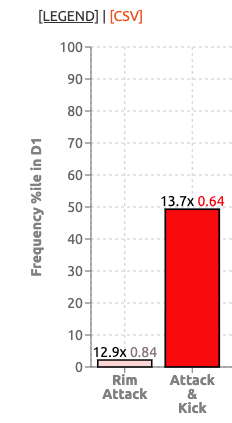
An argument could be made to play the two together, and Pope has tried it more over the last four games (average of 11.5 possessions per game versus 8.2 in the first four), but these have seen similar ball movement issues and a serious lack of downhill attacks. Look at the usage rate for rim attacks with both on:
And look at last year's average lineup:
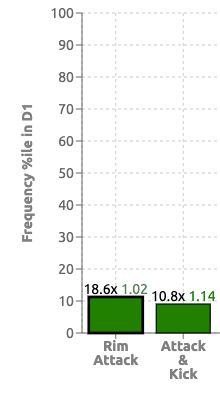
Simply put: with Butler (46% of all career shots attempted at the rim) and Otega Oweh (who is back, and we'll get to him) (57.8%) last year, Kentucky didn't need to kick out for threes as much as you might think. Those two, simply put, could get downhill. Johnson (rim attempt rate of 32.3%) and Aberdeen (33.8%) don't, at least not nearly as effectively.
4) No second shooter
Collin Chandler has had an amazing start to his sophomore year: 20-43 (47%) from 3, a start in all eight of Kentucky's games, and the lone UK player to at least look fine in all three of the 'Cats games against good competition. This isn't that nuts of a thing, as in Chandler's final year of high school (2021-22 prior to a Mormon mission), he shot 41% from deep on around six attempts a game. He probably won't shoot 47% forever, but we all thought the same thing about Reed Sheppard. Sometimes it sustains.
In one aspect, this is the same as Kentucky having Koby Brea last year, who shot 44% from three on...well, six attempts a game. Any time he was left open, opponents held their breath and prayed. Every single Brea three-point attempt was a good one, much like how every Chandler three-point attempt is a good one now. Here's the difference:
- 2024-25 Kentucky: three players with a 38% or better hit rate from three, excluding Brea
- 2025-26 Kentucky: one player with a 38% or better hit rate from three, excluding Chandler
Okay, well, it's early. Maybe that'll change! Or maybe it won't.
- 2024-25 Kentucky, as a roster: collective 37.4% career 3PT%
- 2025-26 Kentucky, as a roster: collective 32.8% career 3PT%
Considering Kentucky's actual 3PT% last year was 37.5% - pretty close! - this is very concerning for a wide number of reasons. For one, the drop from 37.4% to 32.8% would be going from 25th to 223rd nationally, based on 2024-25 full season numbers. For two, you can see the physical difference in spacing.
Last year, at least three members of the super-shooter collective of Brea, Almonor, Jaxson Robinson, and Butler (we'll count it) were on the court together for 607 possessions. On those possessions, Kentucky shot 43% from 3, posted an opponent-adjusted 132.1 points per 100 possessions, and overcame a dropoff in defensive performance by simply being ten full points per 100 better offensively. A lineup of Butler, Robinson, and Almonor arguably won a game against Mississippi State single-handedly. Look at the spacing offered here:
Almonor being a 4 that's very good at shooting creates a real problem for Mississippi State's Cameron Matthews, normally one of the best defenders in the SEC. He can either sag off to shut down a driving lane, which opens up a three for Almonor...or he can overplay Almonor, which opens up cutting lanes for UK's guards and wings.
Now, try this year. Obviously, we haven't seen an optimal lineup yet this year, but UK's three best shooters on the roster are Collin Chandler, Kam Williams, and Trent Noah. Noah barely plays, so for a higher sample size, you can sub in Denzel Aberdeen. The Butler, Robinson, Almonor, and Brea quartet had a combined career 3PT% of 37.7%, but more importantly, they averaged 16.7 three-point attempts as a collective per game.
Chandler, Williams, Noah, and Aberdeen do combine to hit just over 36% of their threes. The problem: it's at a career rate of 9.8 three-point attempts per game. If you prefer per-100 rates, last year's four-pack of shooters averaged 10.5 3PAs per 100 in their individual career's. This year's four-pack: 8.4. The problem is that they only play together 25% of the time, and when Aberdeen - the lone shot creator out of this group - is off the court, it simply doesn't look good.
Scary to say this, but this may be as good as it's going to get. There's no magic bullet on the Kentucky roster to save a lack of perimeter gravity and a downward trend in shooting, unless Jelavic turns into a mix of Carr and Almonor on his own. Even with leaving room for that, it won't fix that Lowe is not only a poor shooter, he's Kentucky's worst perimeter defender on the roster.
And finally,
5) The trolley problem
Kentucky is injured. They've been injured since the team was constructed. Fans knew this. Jayden Quaintance, as it stands, is probably not going to play center for the Wildcats until SEC play. Jaland Lowe seems close to being back, but he may nurse a shoulder injury for most of the year. Mouhamed Dioubate is reportedly two weeks through a 4-6 week injury, which would deplete Kentucky of their preseason starting frontcourt until January at minimum.
As such, a lot of media members and wonks (hi) have assigned Kentucky a grade of Incomplete. We won't really know who or what the Wildcats are until they're healthy, so we may have to wait until mid-January to make a real statement. I see and hear that argument, and I'm tempted to get it myself. But.
Even at full health, this $22M roster (again, REPORTEDLY) is heavily flawed in its construction. It does not match the system the coach who built it runs, or at least not the system I'm used to watching from him. It doesn't make a ton of sense defensively, either, but at least there they'll have a fantastic rim-protector and (if healthy) a tremendous defender to round out the frontcourt. You can work with offensive problems if your defense rocks. Signed, someone who attended the University of Tennessee and has been to 100+ Tennessee basketball games.
This is about the offense, because for the five years prior to Mark Pope getting the job, Kentucky fans offered numerous concerns about Kentucky's offensive structure. In John Calipari's final year, he changed it, turned it into something much more modern, and proceeded to put together the best offense he'd had since his national title season in terms of pure efficiency. He has not continued this at Arkansas, but Pope took those principles and ran with them in Year One, offering Kentucky fans a much more exciting product than they were used to.
Let's give UK the benefit of the doubt, even though I have my doubts, and say that for the final month or two of the season, they're at full strength. That means everyone on this list from Jim Root's preseason roster sheet:
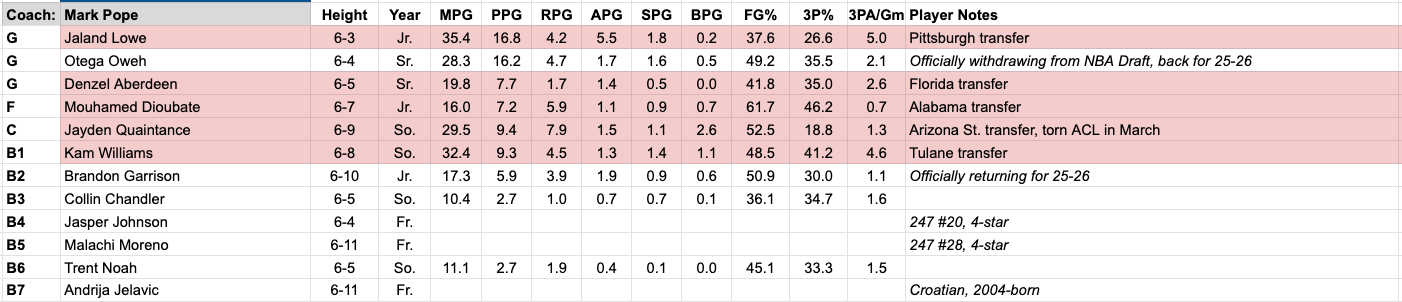
Is available to play.
I mentioned earlier that I wondered if my preferred version of the Trolley Problem may be too extreme, particularly for younger viewers.
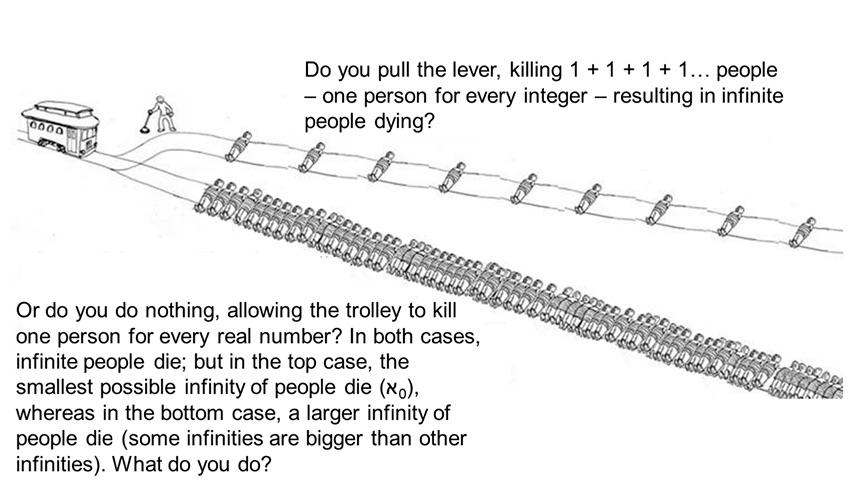
There is one main problem: Almost every team has several trolley problems at any one time. Maybe you have the above; maybe you have this one. Who knows.
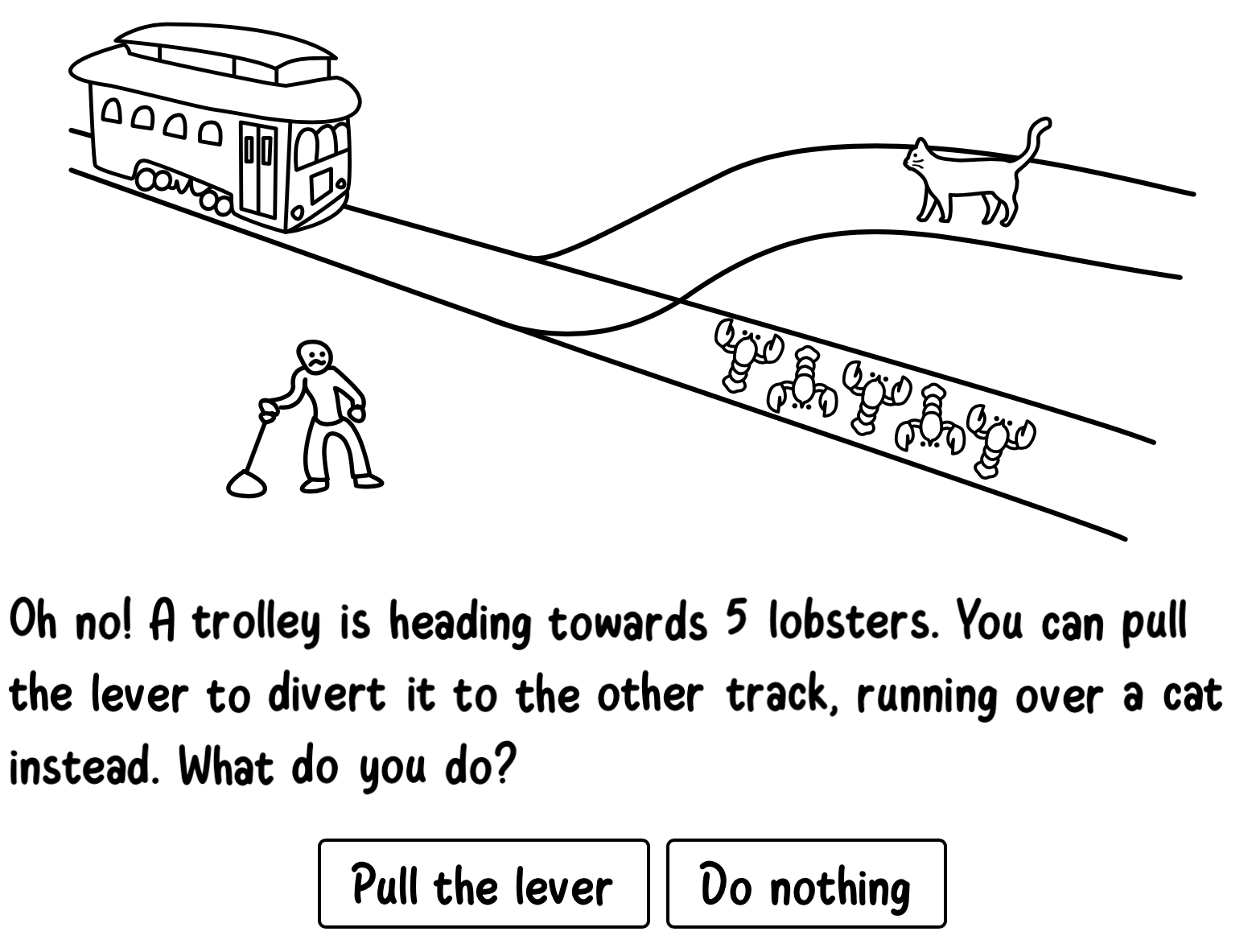
No roster is perfect, although I would argue Duke got pretty close at times last year. We are very unlikely to have an undefeated team at any point in the near future, and even then, said undefeated team probably has to get lucky a few times to stay undefeated. It's a hard sport, and everyone has to make sacrifices and trade-offs. Last year's Kentucky trade-off was great shooting and offensive spacing at the expense of problematic rim protection and below-average offensive rebounding.
Every team in America, every single one, is going to have a deficiency. The goal is to construct your roster so that A) your deficiencies are mild at best; B) your best features are emphasized so greatly that it more than covers up for your deficiencies; C) the roster doesn't become a deficiency itself because of ill-fitting talent. I believe Kentucky may be staring down a season of C, because they have several trolley problems that appear unsolvable to me. These aren't in order of importance, because they're all equally important.
- You can't play Kentucky's three best defenders - Oweh, Dioubate, and Quaintance - together. At least not very long, anyway. Collectively, these three players average just under four 3PAs a night. Even paired with your two best shooting options in Chandler and Aberdeen (or Williams), this gives you no offensive initiator. It's a lineup that rebounds very well and creates a ton of defensive havoc, but the offensive tradeoff is so severe that it doesn't seem workable to me unless Oweh starts taking way more threes. I don't think many seem to want that.
- You can't play Kentucky's three best all-around offensive pieces - Chandler, Lowe, and Aberdeen - together, unless you're willing to play a small or thin 4. Lowe is a point guard. Chandler has exclusively played at the 2 this year and has no possessions at the 3. Aberdeen has played at the 3 before and is better off-ball, but we covered the issue of playing Kam Williams at the 4 too long earlier. Plus, this would bench Oweh, who remains at worst a top-two most important player for UK. You're not playing Aberdeen at the 4. Are you playing the 6'4", 220 Oweh at PF? I doubt it. If Jelavic becomes Andrew Carr, then this can be solved, but I would argue all you've created is a worse version of your 2024-25 best lineup.
- You can't play Kentucky's best overall lineup at EvanMiya together, even when healthy. Said lineup is Lowe, Chandler, Oweh, Dioubate, and Quaintance. Dioubate and Quaintance are both bad shooters. Lowe is a career 29.7% deep shooter, and even in his one good shooting season in college, he shot nearly 5% better in spot-ups than off the dribble. Oweh attempts two threes a game. Are you going to ask Collin Chandler to attempt 12 threes a night to make up for all of that?
- Your best offensive lineup at EvanMiya (Lowe, Chandler, Aberdeen, Dioubate, Garrison) benches two of your three best defenders.
- Your best defensive lineup (Oweh, Williams, Dioubate, Quaintance, Moreno) can't exist because it's too tall.
- Your best realistic defensive lineup (Aberdeen, Oweh, Williams, Dioubate, Quaintance) has no point guard or lead initiator. All three of these are taken together.
So: what do you do?
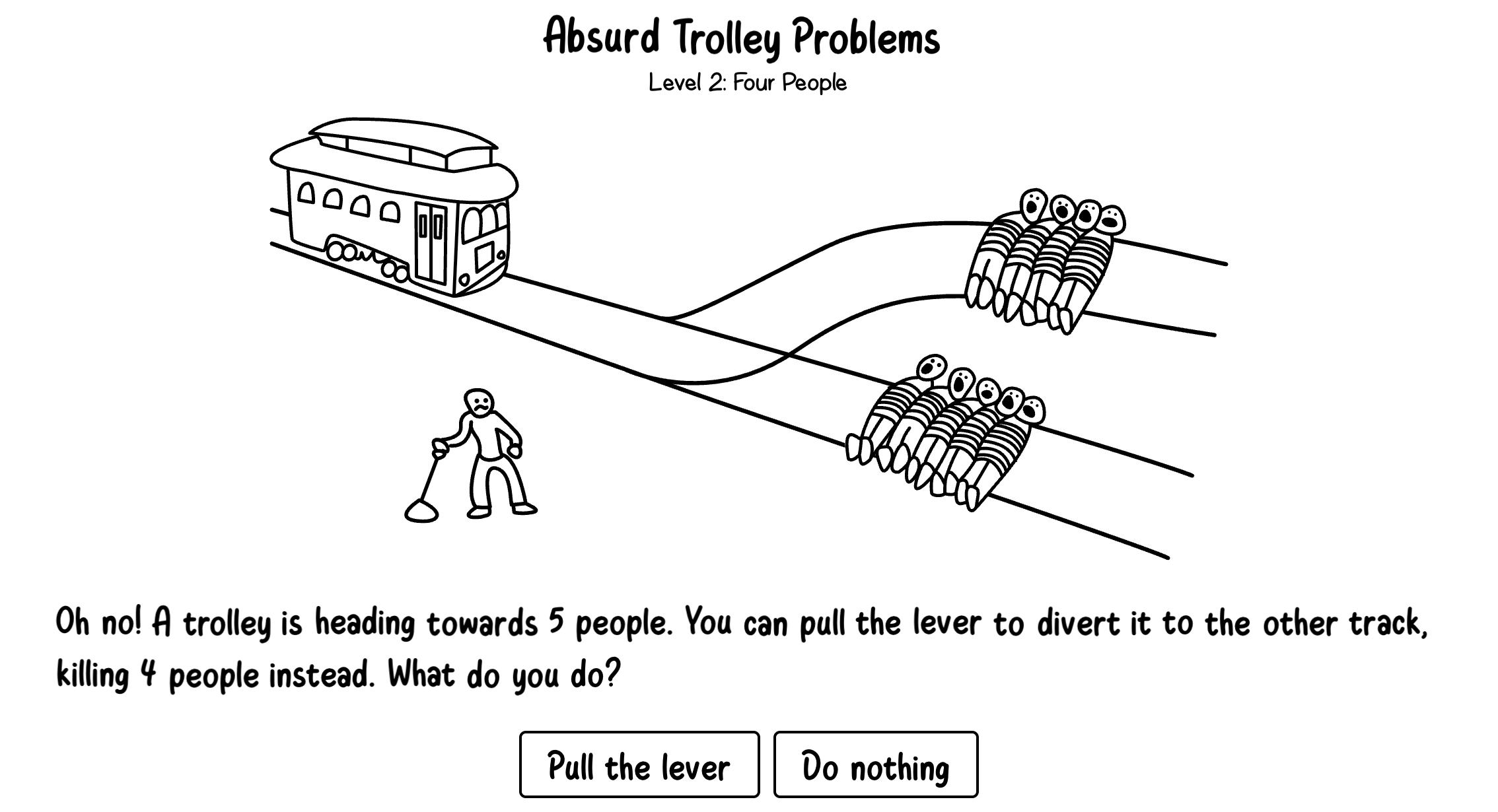
I think that Mark Pope is a very, very smart coach. He's probably smarter than me. He has to be, because he makes millions and I do not. And yet: smart people make flawed decisions all the time.
What the true cost of this roster is or isn't is not that meaningful. What we have here is a roster that is less than the sum of its parts, because its best parts do not fit together and the most optimal lineups possible can't be the best lineups. It's talent over fit in a stunning rebuke of what worked so well for Kentucky last year.
Is there a path back? Well, of course. For one, the Arkansas team used as the main example last year was essentially one made free throw away from an Elite Eight bid. This is a wildly talented roster, even if it doesn't fit together. I still see serious defensive potential, even if the offensive fit is likely to be permanently a clunky one.
And yes, this team does get a grade of Incomplete in some areas. The problem for me, I guess, is that if you were paying attention, you could have given this project an Incomplete grade months ago. Sometimes, the pieces simply don't fit.
...
......
But they're probably going to beat Gonzaga tonight because I wrote this. Congrats, Kentucky fans!
