


Acaden Lewis looks back at the event as simple, but he recalls that it felt different than anything he’d done before. Lewis and his family members had always volunteered at soup kitchens, but they decided that the 2024 Thanksgiving season—when Lewis was a high schooler—would be different. They were going to conduct their own event, not one that they were merely volunteering at.
A family friend who owns a Halal food restaurant called Bites had supplied food free of charge to Lewis, his mom, his dad and his uncle to give out that night. So, they walked the streets of northeast Washington, D.C., passing it out to homeless people in the area.
Lewis—Miami’s starting point guard, who averages 10.9 points per game and is referred to as a "basketball savant" by Miami coach Jai Lucas—helped plan the night and was instrumental in bringing it to fruition. All these years later, he still remembers how he felt at the end of that night and how he could tell the event impacted the
“It was the first time I really saw the impact,” Lewis told Basket Under Review, “And what it could be.”
That night was the first time Lewis’ non-profit charity, Bucket Blessings, was more than an idea. Bucket Blessings has since conducted over 10 events and has served over 500 children—as well as adults.
The charity’s website outlines that it specializes in community building, youth empowerment and giving back through basketball training. Lewis is named as the charity's founder, and the website shows Lewis participating in all three aspects of the charity’s vision. Its mission statement declares that it empowers communities and inspires hope.
That November night, Lewis realized that doing so with some level of consistency was possible.
“I thought that was a great stepping stone,” Lewis said. “Since then, we really haven’t looked back. We’ve continued to do the same things, grow our platform, and keep helping people out. That first one just showed us the possibilities.”
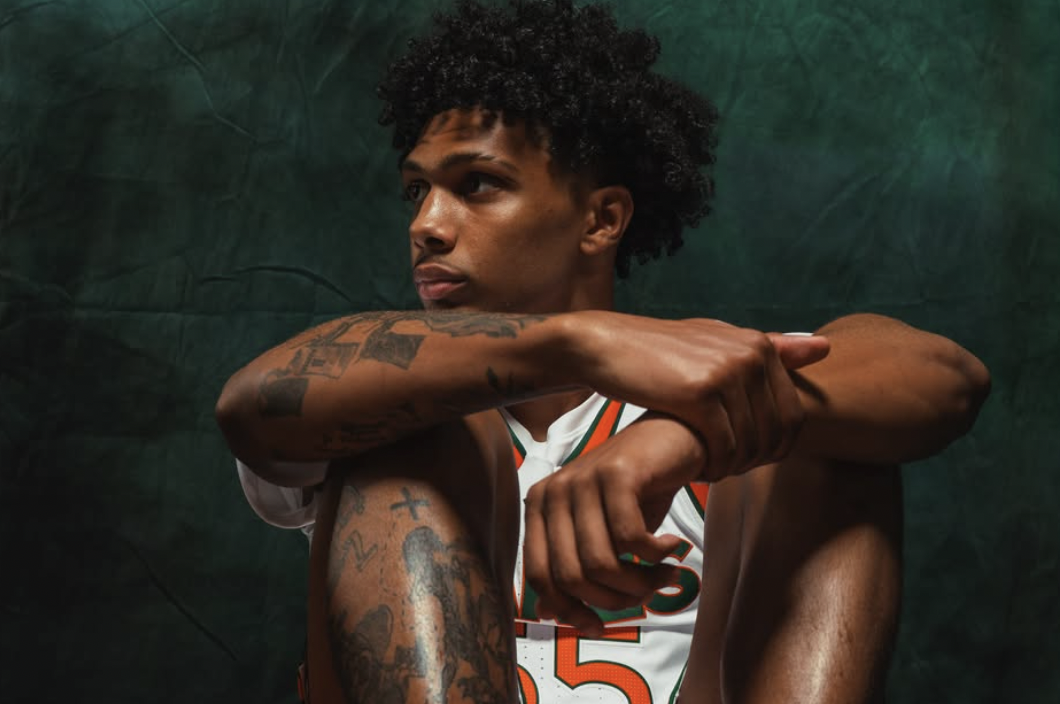
LEWIS WAS STARTING to pick up notoriety as a result of the combination of the awards he was winning, coverage he was garnering and the volume of high-major offers that were set to come his way. But Lewis’ parents, Nateya Pompeo and Jarrett Lewis, knew how those things change people. They weren’t going to let them.
They were intent on making sure that he was thankful for everything he’d gotten. They wanted to make sure he stayed humble. They wanted him to appreciate his life and how fortunate he was.
Lewis’ rise was about to accelerate significantly, and they could tell. So they threw around ideas for how they could keep instilling important values in his life. They landed on launching Bucket Blessings.
“We were talking about it and were like, ‘We want to make sure that if things really take off for him, that he is centered on community and giving back and staying humble,” Nateya said. “That’s where it started, wanting to give him that foundation before the journey really took off.”
Pompeo and Jarrett thought they could do that while also giving back to the large population in their Washington, D.C., community who had it harder than they did.
So, they started the charity while Lewis was in high school and partnered with organizations, pouring their own money into it to get it off the ground while he had no income. They felt that was an example to Lewis, showing him what it should look like once he made his own money. It appears as if he’s taken their guidance to heart.
Lewis, his parents and his uncle TJ Pompeo have since coordinated Thanksgiving food distribution—which has been Lewis’ favorite event—and have conducted basketball clinics for kids. Those clinics have featured Lewis working out with his trainers and coaches, as well as speeches from those coaches—who said success was possible for them, even without an abundance of resources. All the kids love when basketball is tied into the events, Nateya estimates.
The events that stick out in Nateya’s mind the most are the trips to the Ronald McDonald House—which provides low-cost or free lodging, meals, and support near hospitals for families whose children are receiving medical treatment far from home. One was particularly fulfilling for her because it involved her friends, Lewis and his friends and Jarrett and his friends all cooking for the children in the house. But they think they may have topped their Ronald McDonald House events recently when they went to the Liberty City Elementary School in Miami. They surprised the kids with an ice cream truck, played basketball with them, held a Q&A with Lewis and his teammates, and met the school’s pressing need for toiletries—necessitated by the children having to clean up there.
That day embodied the vision for Bucket Blessing.
“The goal of the charity is to empower families that don’t really have as much economic status as they would like,” Lewis said. “Once we realized we had the opportunity because I had some NIL money and we had some things to fund it, we thought it’d be a great idea to give back.”
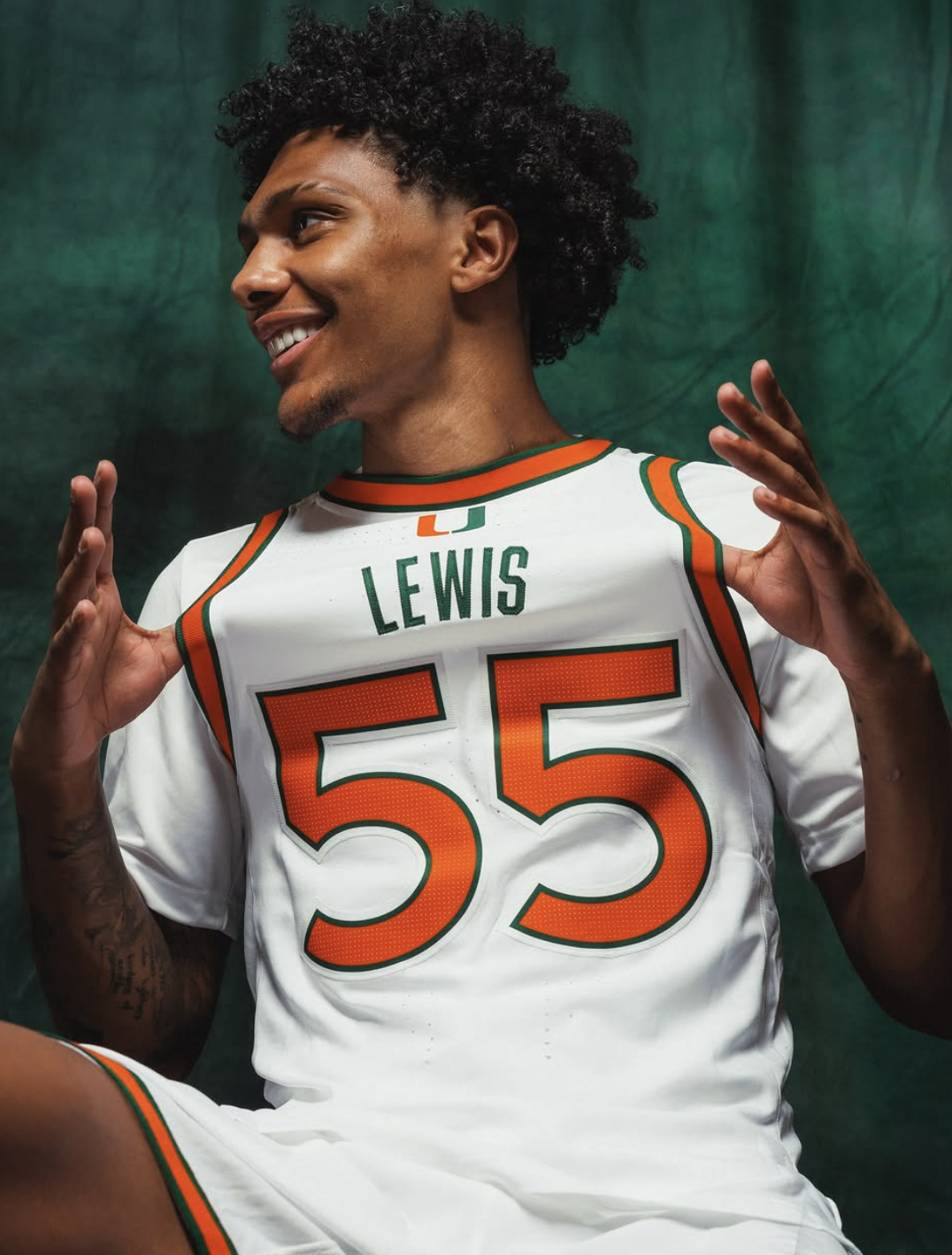
IT’S 6:00 A.M. on this June morning and Lewis is pounding the ball on the hardwood of the Rock Creek gym. Lewis knows this gym well, at least well enough to know that it doesn’t have heat in the winter or a strong air conditioning system in the summer.
The circumstance is no longer jarring for Lewis.
He’s played games on church-floor carpets. He’s run the show in a gym without bleachers because of the cost. Some gyms didn’t have enough basketballs for everyone to play, and they required Lewis’ family to donate equipment. He worked out in D.C. He worked out in Baltimore. The difference between those courts and the double-decker, lavish ones he played in with his high school was night and day.
“I’ve been in all types of gyms,” Lewis said, “Whether they be nice, have a lot going on, AC, a lot of beautiful things around it and I’ve also been in some pretty trenchy ones. I think even that experience shows how the DMV and the D.C. area can be.”
Lewis’ experience in every type of gym that his surroundings had to offer was a microcosm of his upbringing. It was also by design.
 Joey Dwyer

Nateya and Jarrett consider themselves fortunate to have been financially stable, but they didn’t want him to grow up in a bubble. Jarrett was raised in Detroit and lived in the inner city in some of the city’s worst times, while Nateya grew up in New York, where she developed a toughness and an awareness of people from all walks of life. Both families experienced financial struggles.
Lewis’ parents talked about their backgrounds and decided that they didn’t want him to forget what was going on around him. As a result, they didn’t send him to private school until high school and encouraged him to have balance.
“We knew it would help develop him to understand how different daily life is for a kid his age in one person’s shoes vs. another person’s,” Nateya said. “He still embodies so much of both of the worlds that he walks in.”
Nateya clarifies. Lewis was in both environments nearly daily. He had friends in each. He consistently juggled both lifestyles and let each of them mold him. “He been in the heart of it the majority of his life,” Lewis’ longtime trainer Chris Howard said.
When Lewis’ parents watch him speak these days, they feel affirmed that they couldn’t have made a better decision about the environments they chose for him. Lewis developed grit and fire from being in environments where not much was given. He also developed an appreciation for the significance of being in safe, well-resourced environments.
“I got to see how people live within their means and also saw and got to experience within the schools a different side of life where people had more money, could afford more and live a certain lifestyle,” Lewis said. “I really got to see that everyone can live life differently and still enjoy their life and that it’s okay to ask for help.”
Lewis reflects that being around kids and families who didn’t have much made him realize his problems weren’t as big as he thought. It was easy for him to wish he had more, but he realized there were plenty of families who wished they had the bare minimum and would quickly trade their situations for his. Lewis had two parents, a house to live in, food on his plate and enough clothes.
He realized through his upbringing that not everyone has that.
Lewis tends to agree with his parents that where he was raised was advantageous in his development as a person, so much so that he will bring his future kids to his home community one day–and isn’t ruling out raising them there. He still wears D.C. on his sleeve–literally, with the U.S. Capitol building and a tribute to Trinidad, his father’s home area.
“Acaden definitely embodies the DMV,” Howard–who declares that Lewis was raised right by Jarrett and Nateya–said. “He has that hunger and that mindset.”
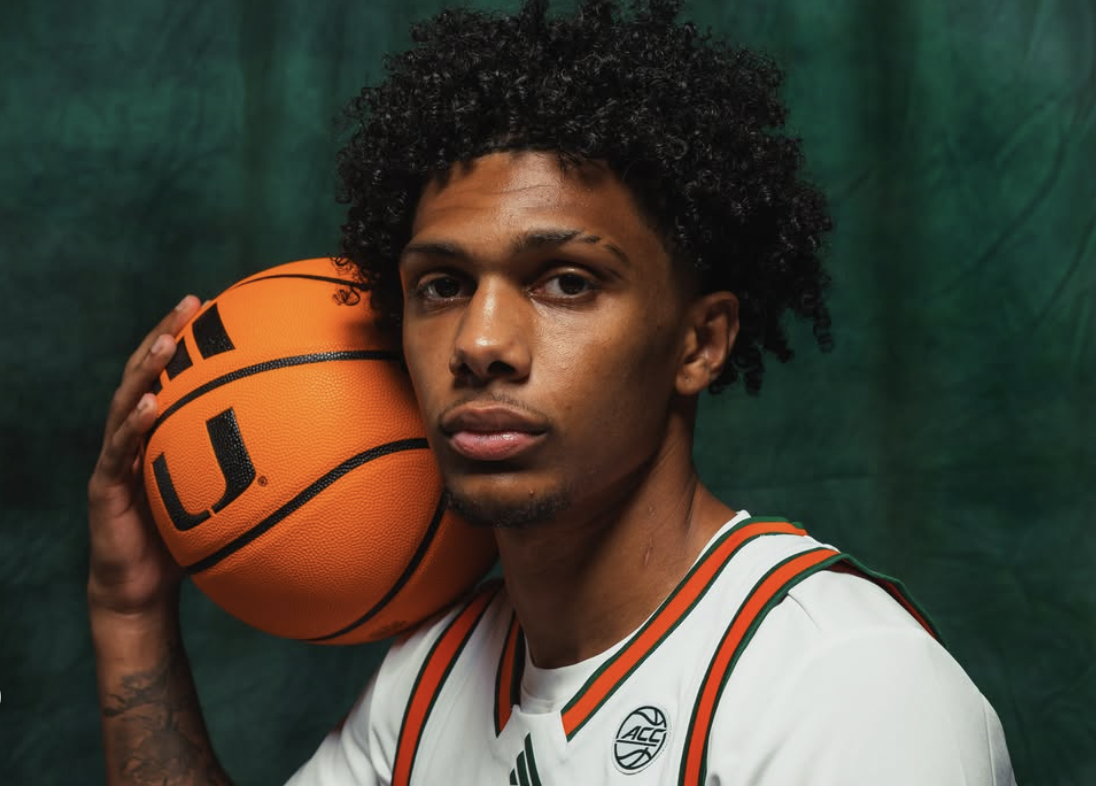
LEWIS LEFT HIS HIGH-TOP CHAIR, fist-bumped Miami wing Shelton Henderson and walked across the stage towards the podium at ACC Media Days. Before he could greet the crowd of reporters on hand, the moderator prompted him with a question.
The moderator brought up that Lewis had started Bucket Blessings in 2024 and wanted Lewis to share more with the room before moving on to basketball questions–which there were plenty of, considering Lewis’ offseason transfer from Villanova to Miami. Lewis explained that he saw both good and bad in the area where he grew up, which prompted him and his parents to start the charity. He then went down the list of events that the charity has conducted.
A reporter then followed up and asked why Lewis has chosen to be involved the way he has.
His answer? Why not.
“He is just really unbelievable for a kid that age to understand how much this means to others. “Just him showing up, shaking hands, talking with the kids,” Nateya said. “I watch it with my own two eyes and I get a little teary-eyed about it because they are so excited to be around him. You can’t put a price tag on that.”
Lewis believes it’s an entirely different feeling to directly help someone than it is to impact them through his play. He considers giving back his way of returning the favor for the positive infrastructure he was surrounded by growing up.
Those close to Lewis believe he means what he says.
By all accounts, Lewis never tells his family that he can’t fit an event or is too busy to plan one. They say he’s always willing to help, and that he’s made it a clear priority to do things that mean something to others. They think that says something about him. He believes that’s his duty.
“You’re not as inconvenienced as you think,” Lewis said. “You have two hours of your day to go help out whether you won or lost the game, or you have somewhere to go the next day. You have two hours to help out someone that’s in a way worse situation than you.”
