


Travis Steele’s team had just ripped off its 15th-consecutive win as he took the unofficial stage in the locker room at Millett Hall and referenced one of his patented metaphors.
The picture that Steele showed his team to get his point across appeared to be simple, but he wanted everyone in the room to digest its meaning for a second.
“What do you see,” he asked the team after a moment.
“I see a guy texting and driving,” Miami forward Antwone Woolfork replied.
“Well,” Steele said, “Is that safe?”
“No,” Woolfork said.
“Why?” Steele replied.
“Because he’s distracted,” Woolfork said.
The answer was "exactly right” to Steele. If the proverbial driver had been looking out of the front windshield, he would’ve been safely operating his vehicle. He wasn’t, though. As Steele’s players operate the ride of their undefeated season, he’s urging them to avoid being like that figurative driver.
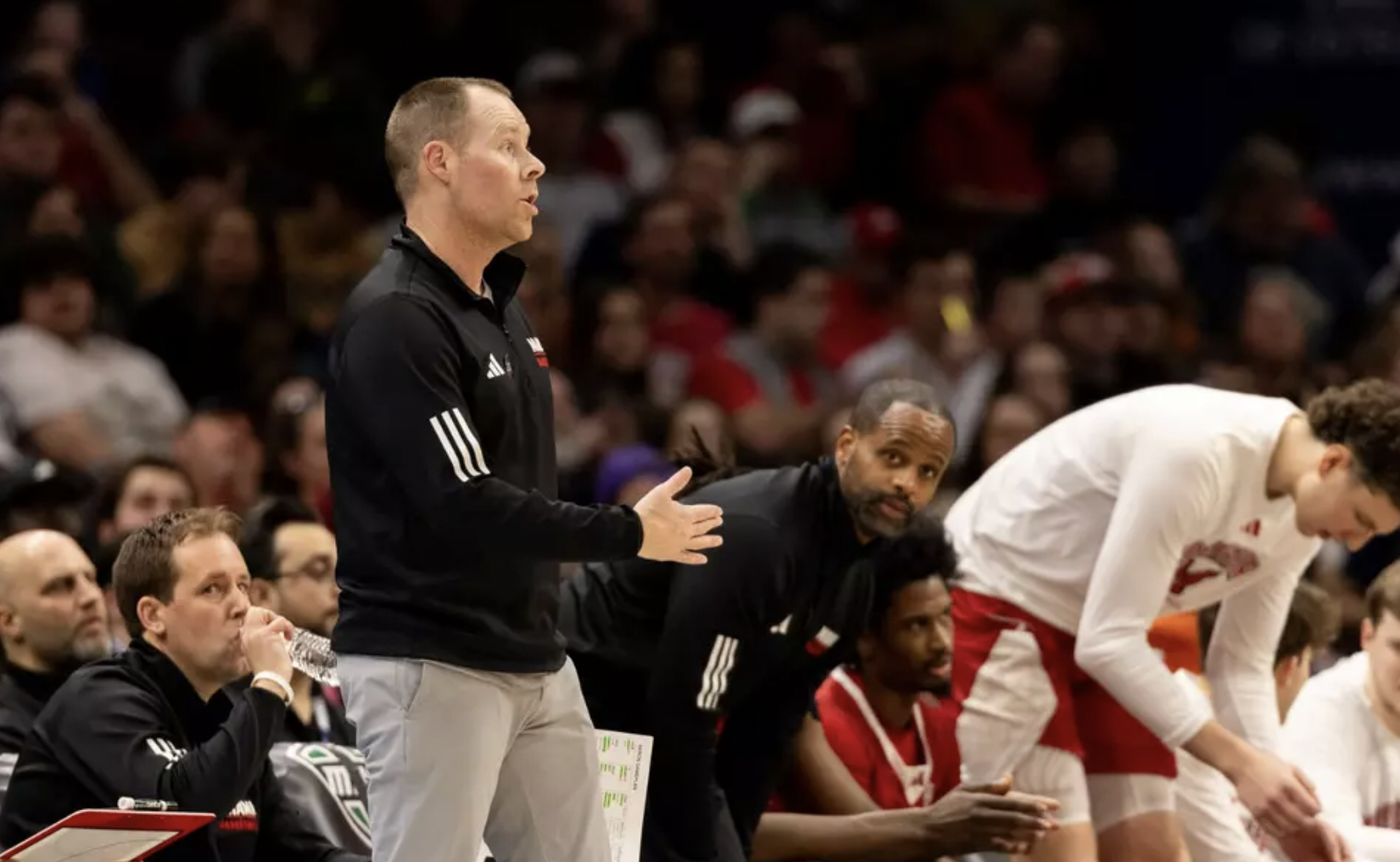
“All the games we’ve won at this point in the season are in the rear view mirror,” Steele told the team. “There’s a reason why the rearview mirrors are so small. We don’t want to keep looking in the past and pay attention to what we’ve already done and accomplished. We gotta look in the front windshield, which is enormous, to see what’s out in front of us because there’s a lot of obstacles.”
As Steele’s program navigates life with a 20-0 record and one of college basketball’s final records that includes a zero in the loss column, its rearview mirrors have to look pretty appealing these days. The road that this Miami University team has taken to this point includes 20 wins, an influx of national attention, a SportsCenter segment, an AP Top 25 ranking and a label as one of college basketball’s best stories.
This Miami Ohio team is one of just six mid-majors to reach the 20-0 mark since 1990 and has put together the best start in school–and conference–history.
“This year, the car has gotten used in our next-day film a lot,” Byers told Basket Under Review. “That means we’re winning, so I’ll take it.”
Steele has been around long enough to know that this ride is meant to last longer than 20 games, though. The first two and a half months of the 2025-26 season have brought more notoriety to this program than it’s had since Wally Sczerbiak starred for it from 1995-to-1999, but Steele is drilling the idea that this group hasn’t played its most important games yet into its head.
Anything short of a one-loss season will require Steele’s team to win the MAC Tournament in Cleveland in order to secure an NCAA Tournament berth. In all likelihood, whether this magical college basketball story ends magically is yet to be seen. Until then, Steele will continue to let the metaphors rip and push his team to a place of embodying them.
“That’s coach Steele, man,” Miami University assistant Jonathan Holmes said. “You have to stick to the process and I think that's something that our guys hear from us every day; ‘It’s a process. It's a process. It’s a process’ I think that allows you to really find consistency.”
The Miami University coach says he’s “big into the pictures and metaphors and deeper meanings.” As a result, his players have become used to Steele-isms.
Steele says his most consistent phrases are “create our separation with preparation,” “the hunted vs. the hunter”—a phrase that emphasizes how he wants his team to be the aggressor—“we want to be a contender, not a pretender,” “water always finds its level” and “I see better than I hear.” All of which Steele says are things that his players hear on a “day-to-day” basis, and he could likely keep going with phrases.
Miami guard Peter Suder says the car mirror metaphor is the one that he’s heard the most over the years. Brant Byers says the most consistent phrases he’s heard from Steele are ”water finds its level” and “victory favors the aggressor,” which Steele and his staff appear to direct to Byers often.
As Miami’s players battle the temptation to get too high on themselves or to tighten up as a result of its record, Steele is preaching the idea that this unfamiliar spotlight hasn’t changed all that much for this group. The Miami head coach says this group has practiced 68 times and has yet to have a bad one. More than he preaches about process or pressure, he notes how much fun this group is having.
“Our guys aren’t distracted,” Steele told Basket Under Review. “I think they deal in joy every day, every step of the journey, all the way back to last June when we got together for the first time as a team just enjoying each other. They’re enjoying this ride, it’s a special group of young men.”
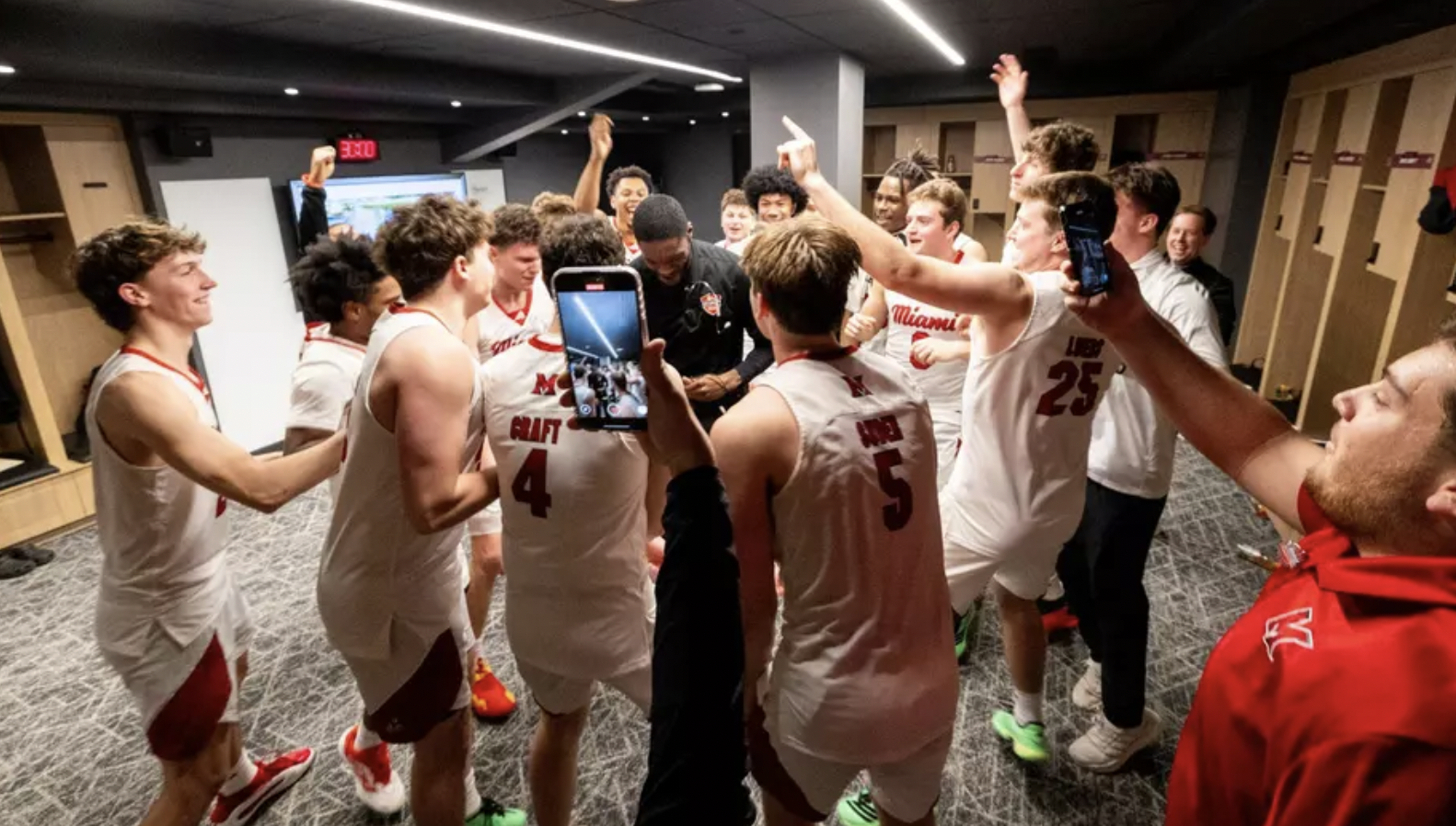
The last time a Steele-led group possessed the spotlight in the way this one does, his Xavier team was 17-7 and had just knocked off No. 24 UConn. That season finished with Xavier dropping eight of its final 10 games and missing out on the NCAA Tournament, though. By the time that team had finished its NIT championship run, Steele was let go and was searching for what was next.
Steele’s mention of Xavier starts with him acknowledging the need to take ownership of “not reaching the standards” of that prestigious program–which had made the NCAA Tournament in 16 of the last 18 seasons prior to Steele’s tenure–as its head coach. The former Musketeers' head coach says his teams were always “one or two games off” and that his teams never had a bad year, but that they never broke through despite being painfully close.
Less than a month after Steele’s exit from the Xavier program, he became Miami University’s head coach. Steele told Miami athletic director David Sayler that it would probably take until year three of his tenure until he saw significant growth, but he lived up to his promise last season ago as his team won 25 games and lost a heartbreaker in the MAC Championship game.
With the benefit of hindsight, Steele says he benefitted from his experience as Xavier’s head coach. That experience threw the then-assistant into the fire and forced him to find out who he was as a head coach.
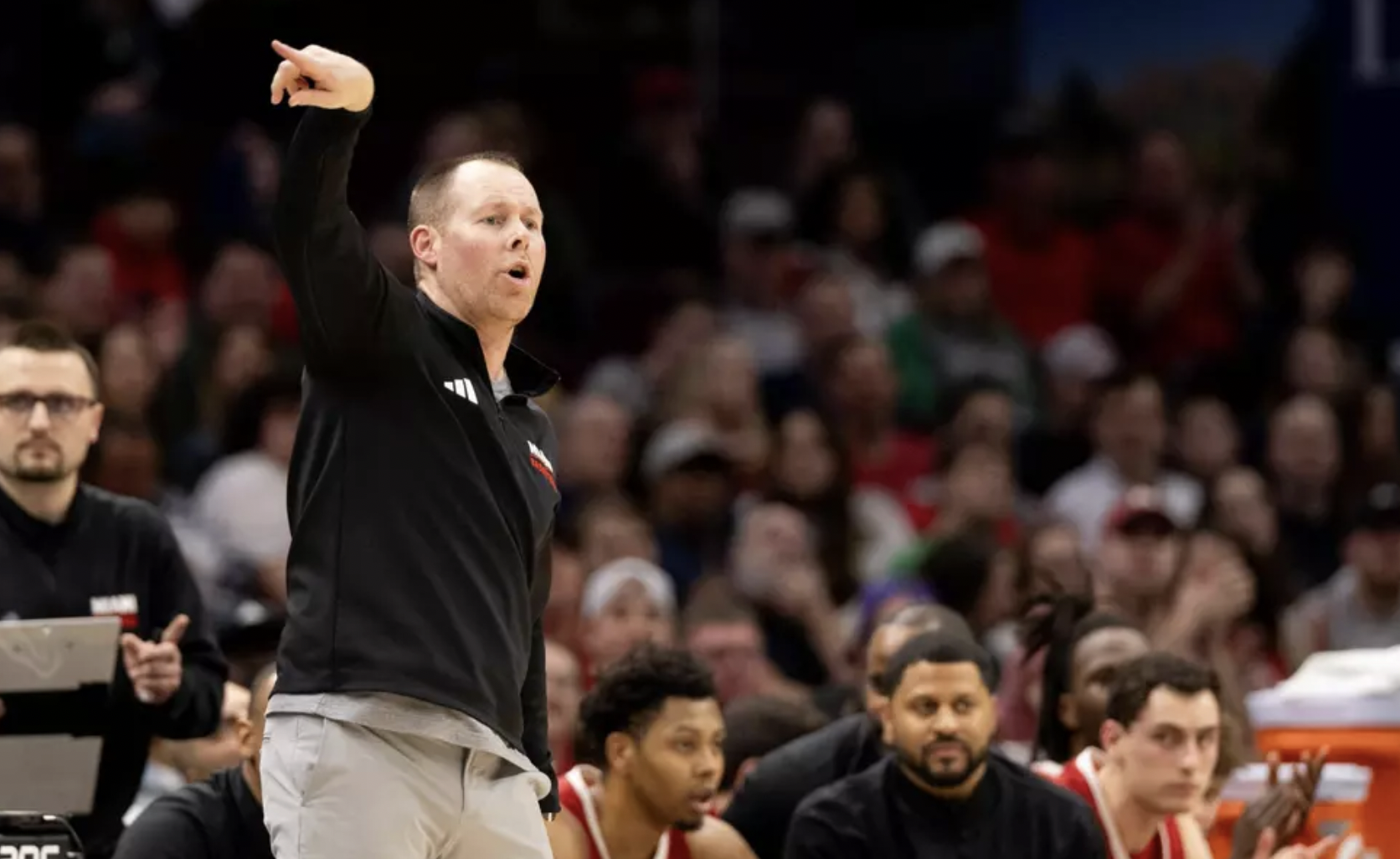
“Being at Xavier, I think it prepared me for this opportunity that much more,” Steele said. “I knew exactly what I wanted the program to look like, feel like, smell like–everything from A-to-Z, from offensive style of play, defensive style of play, culture. Everything.”
The searing pain of falling short and no longer being wanted was felt intently by Steele, but he says that in this build he’s building a house from scratch rather than touching up the previous house that existed at Xavier when he was promoted from within as its head coach.
Steele had to tear this thing down and endure a 12-20 year one in order to get it to this point, but he’s a better–and more successful–coach because of it. This program has reaped the benefits.
“He’s been very open about saying ‘hey, I’ve really grown and learned and I’m doing things differently,’” Holmes said. “I think he’s obviously taken a huge step here, being at Miami.”
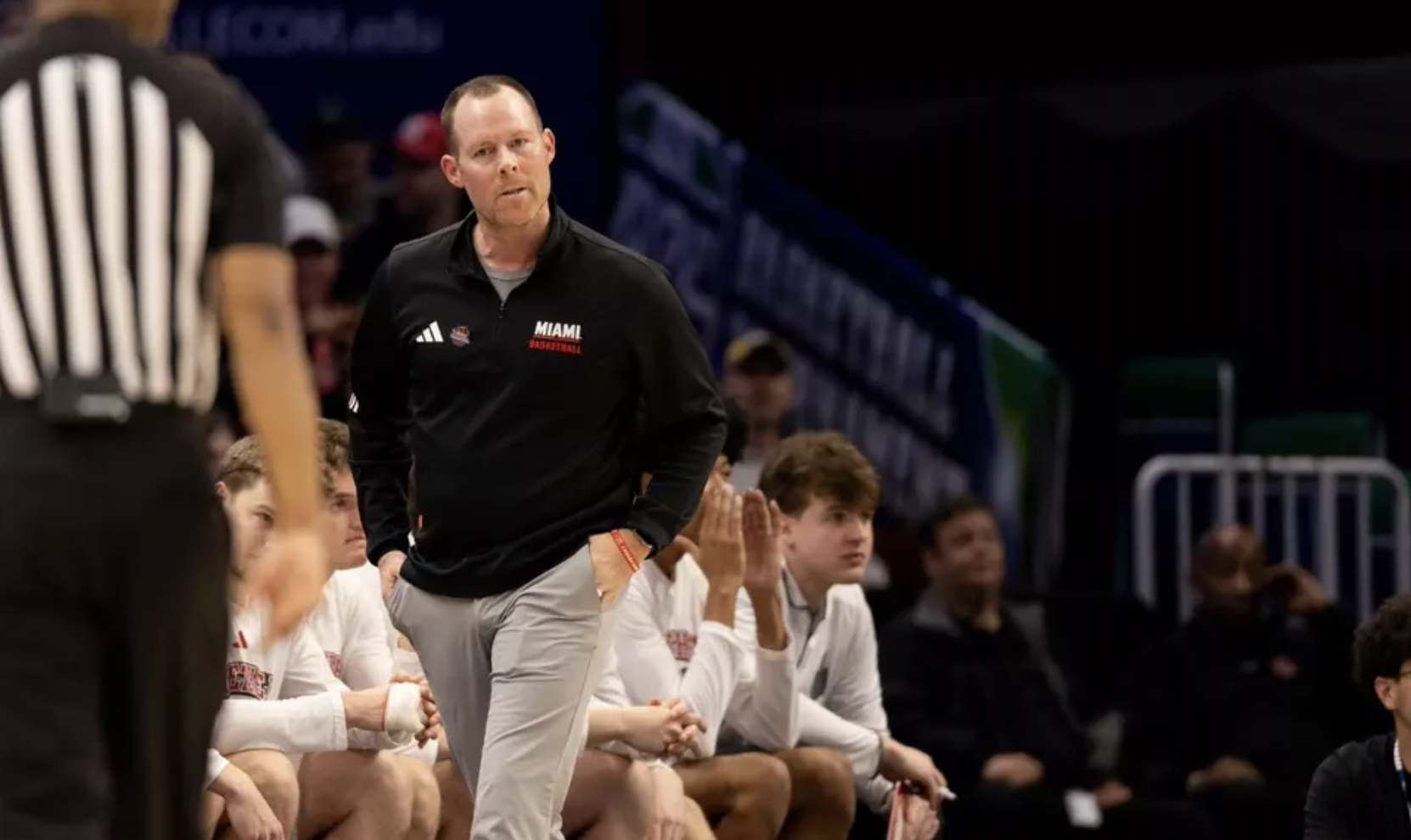
Among the changes that Steele committed himself to as he arrived in Oxford, Ohio, was how he was opting to approach offense.
The decision wasn’t all that difficult. Steele was opting for a fast, versatile conceptual offense that promoted freedom and high-volume 3-point shooting–which he believes is the “great equalizer” in college basketball. The Miami Ohio head coach says he “never” ran this offense at Xavier, but he made the conscious decision to play this way and recruit with the style in mind.
Steele says he’s been inspired by Furman coach Bob Richey’s system, was “obsessed” with Samford coach Lennie Acuff’s offense when he scouted Acuff’s Lipscomb team in 2019, has studied Minnesota coach Niko Medved and Saint Louis’ coach Josh Schertz’ schemes. The RedHawks’ head coach also considers European systems to be ahead of the curve and has gravitated towards European teams—which he says are generally ahead on offense—Real Madrid and Fenerbahçe.
When Steele makes up his list of the coaches that have been most inspiring to him offensively, he makes sure to note that “some of the best coaches in the country are at this level, D-II, low major.” Now that Steele is a mid-major coach himself, he opted to blend what he had studied in order to play the way he “always wanted to play” and didn’t at Xavier.
“You think about mid-major basketball, it's like you gotta be good in March,” Steele said. “You gotta win three games in three days in Cleveland and in order to do that you have to be really hard to prepare for on that third time seeing an opponent. I think if you just rely on sets, I think those are much more easily scouted than the way that we play, which is more concepts and I give our guys just a framework of how to play. I just let them play. I want them to play with a free mind and so I think it prepares us for March even better.”
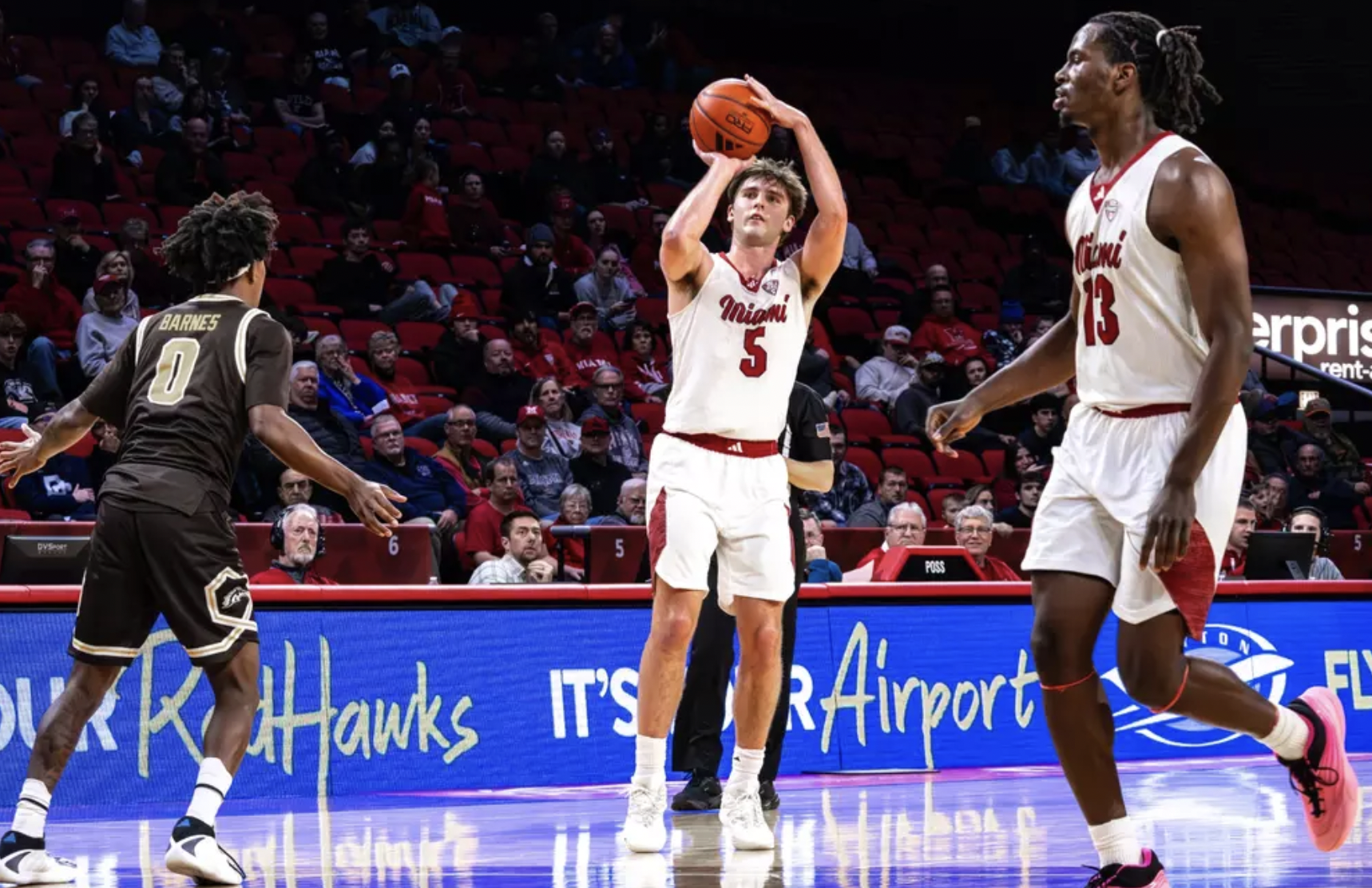
Whether this is the system that can get a Steele-led team to the big dance for the first time or not remains to be seen, but every indicator says that it can be done. This Miami Ohio team is No. 1 in the country in effective field goal percentage, No. 4 in two-point percentage, No. 15 in 3-point percentage and are No. 52 in the country in two-point distance.
Steele’s team has scored 100 points or more in six games, has scored over 85 points 14 times and hasn’t scored under 75 points in any game this season. What this group has done is enough for Steele’s favorite offensive minds to notice.
“I have been watching them on Synergy for the last week and I am super impressed,” Acuff told Basket Under Review. They do a great job of playing out of concepts while giving their guys freedom within the structure. Scoring at this time of year is hard and they are so connected they make it look easy. They play the game the way it is supposed to be played–as a team. Travis Steele is a ball coach.”
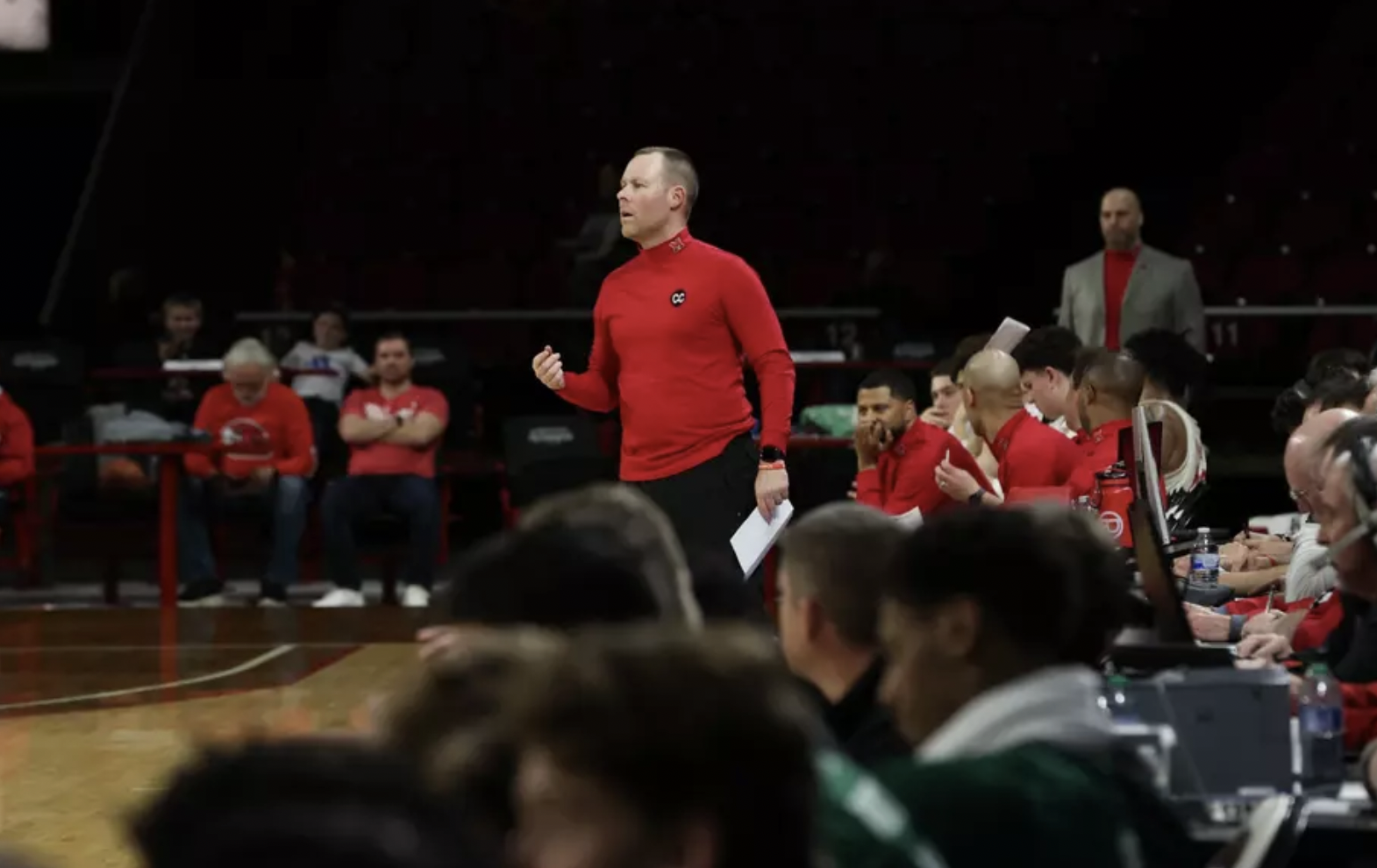
Holmes—who has been with Steele for every season he’s led this program and has been a piece of pushing this build forward—says that Steele’s offense has become more and more conceptual over the years. “There’s freedom in variance," he says.
This roster, in particular, lends itself to the style of play that Steele and Holmes have envisioned since Steele got the job four seasons ago. Perhaps they had to work around parameters in the past, but they feel as if this group can put five guys on the floor at a time who can all pass, dribble and shoot. They believe the improved skill sets that their players possess as well as the variance in which they can play with makes them a difficult cover.
“It makes it harder to scout. Teams that just run 1 million set plays, it’s kinda like sometimes you can know what's coming you know possession after possession. I think for us there's so much freedom in variety and what we do,” Holmes said. “At the end of the day, you can’t take everything away.”
If Miami’s offensive numbers are any indication, Holmes is right. This group has seven players who have scored 20 points or more in a game, eight who have scored 18 or more, six who average double figures and seven who average nine or more a night. In terms of raw points per game, the RedHawks are 12th in the country.
Steele’s group has also developed a knack for timely offense. If it hadn’t, it wouldn’t have found a way to keep its undefeated record alive with three overtime wins–two of which have come in the last three games. When those moments come, this group doesn’t deviate all that much from its normal philosophy. That’s what got it here.
“He just lets us play,” Suder–who has become a star in his own right and averages 14.1 points per game–told Basket Under Review. “It just ultimately makes us play better when your head coach is telling you to just go out there and have fun.”
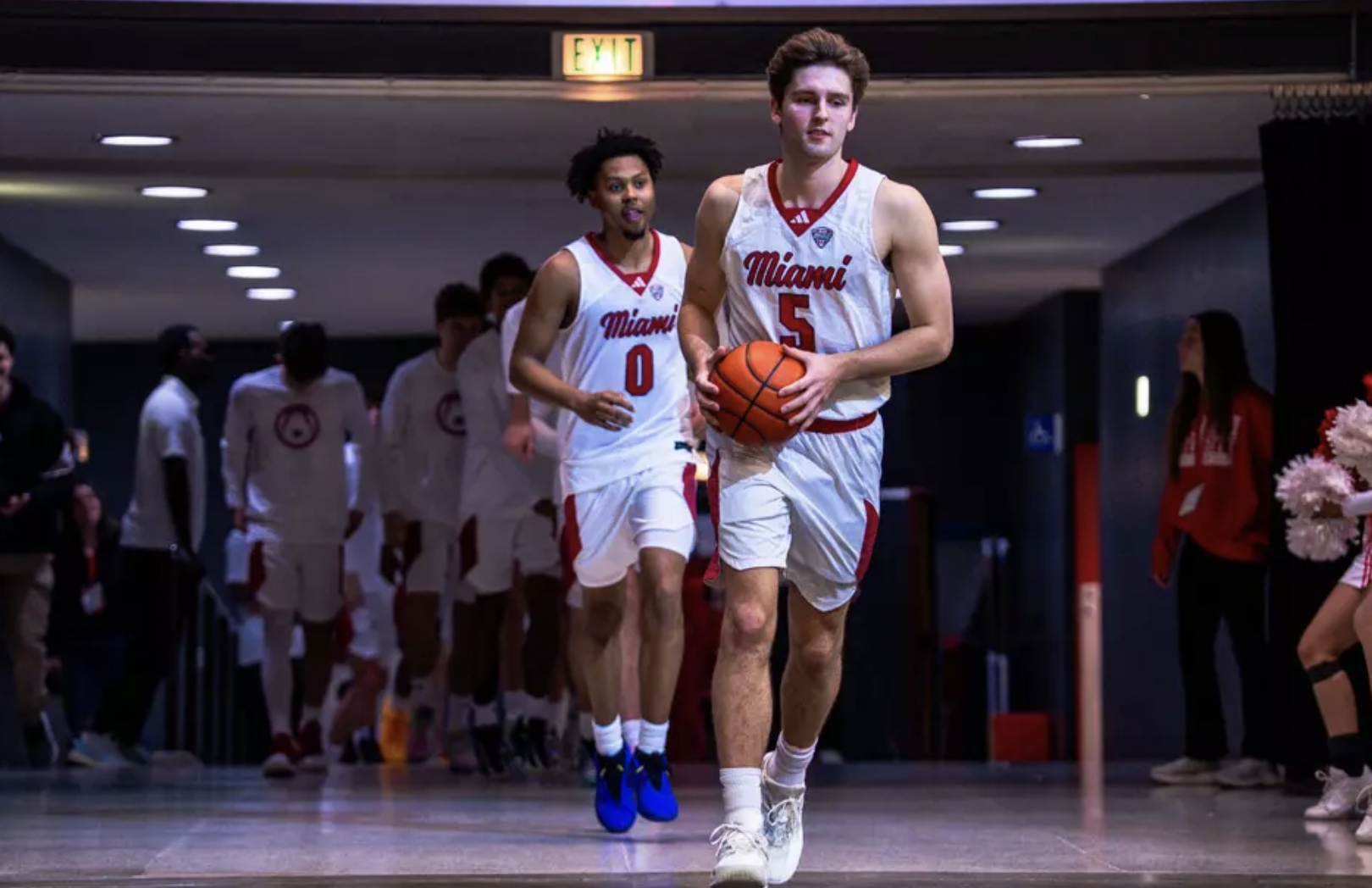
With the NCAA Tournament and a MAC championship in reach, Steele’s team ran to the huddle with 35 seconds to go and listened as Steele directed them as to what to do. Miami was up by as much as 18 throughout the afternoon and seemingly deserved to win. The ensuing possession was supposed to allow fate to play out for Steele’s team.
Then, Miami guard Evan Ipsaro–who averaged 13.9 points per game on this season’s team before going down with an injury–missed a runner with eight seconds to go before Akron big man Amani Lyles grabbed the rebound and threw an outlet pass to veteran guard Nate Johnson. Johnson eurostepped and laid it in to win the game. Akron–behind its head coach John Groce, who is Steele’s half brother–ripped the title and an NCAA Tournament berth away from Steele’s team.
“That game was tough to lose,” Byers said, “And that was probably the worst possible way we could’ve done it.”
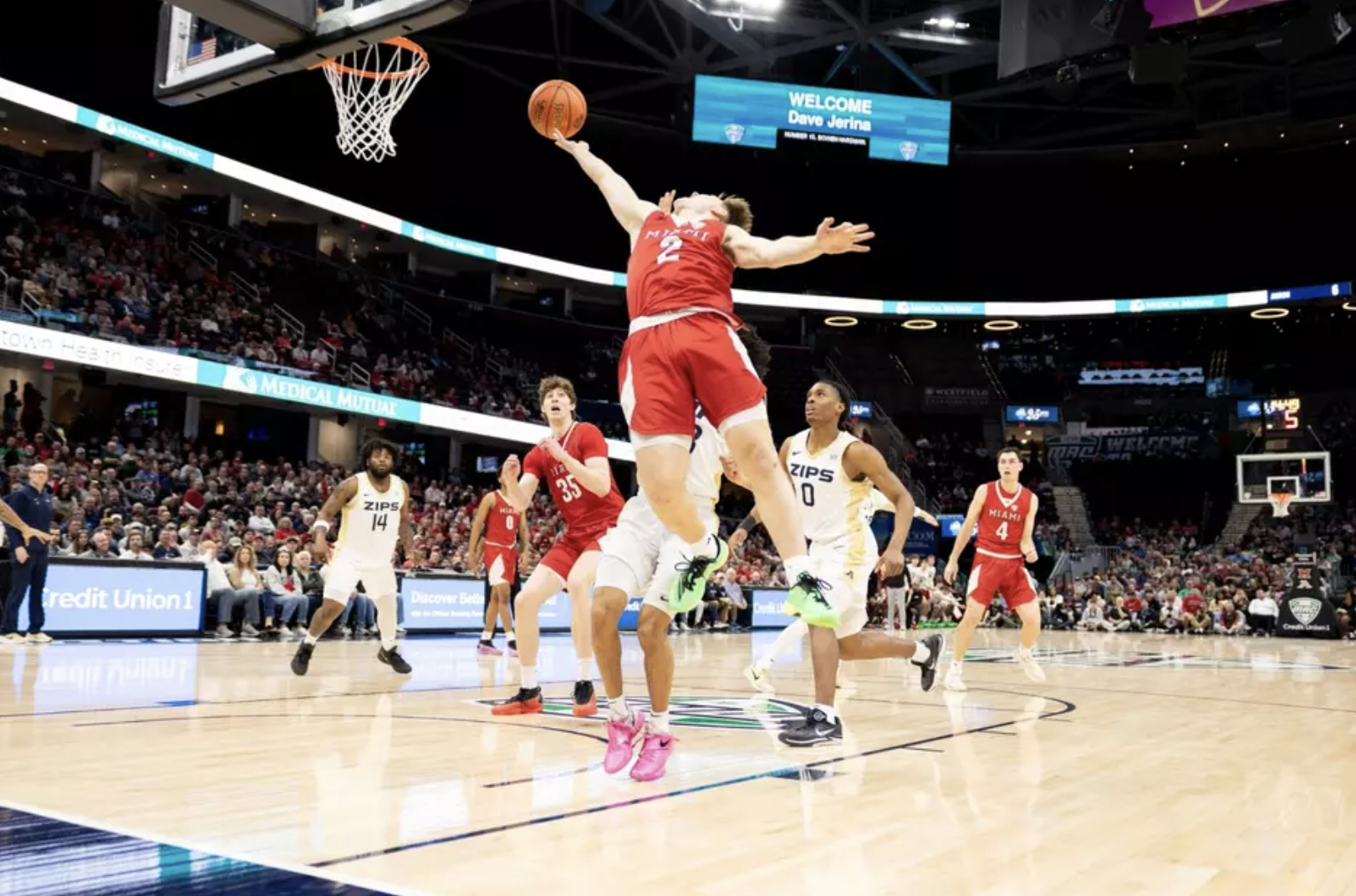
Last season’s Miami team won 25 games and showed all the signs of being an NCAA Tournament team, yet it ended like some of Steele’s close calls at Xavier; a bucket short.
Holmes admits that many of Miami’s players likely felt as if they had “unfinished business” as a result of that game and the final result of an otherwise successful season–which didn’t include any postseason games after the MAC Championship Game.
The RedHawks’ staff was reminded of the harsh landscape of mid-major basketball as they lost 7-foot-1 big man Reece Potter to Kentucky, standout guard Kam Craft to Georgia Tech and a starter in Mehki Cooper, but they were given an example of the longevity of what they built by the way they were able to retain the rest of their roster.
Miami’s standout retention began when Suder chose to make his decision to return days after going for 24 points in the MAC Championship game. Holmes estimates that Suder–who says he was at a “stagnant point” in his career when he committed to Miami and was initially sold by Steele as the RedHawks’ head coach outlined his weaknesses and a way to improve them–taking that step symbolized to his teammates that the grass isn’t always greener elsewhere.
“Miami’s a tough place to leave,” Suder said. “After the Mac tournament last year it took me a day or two. I talked to my family and I knew I just wanted to come back and I think that that really showed that it can happen at a mid-major.”
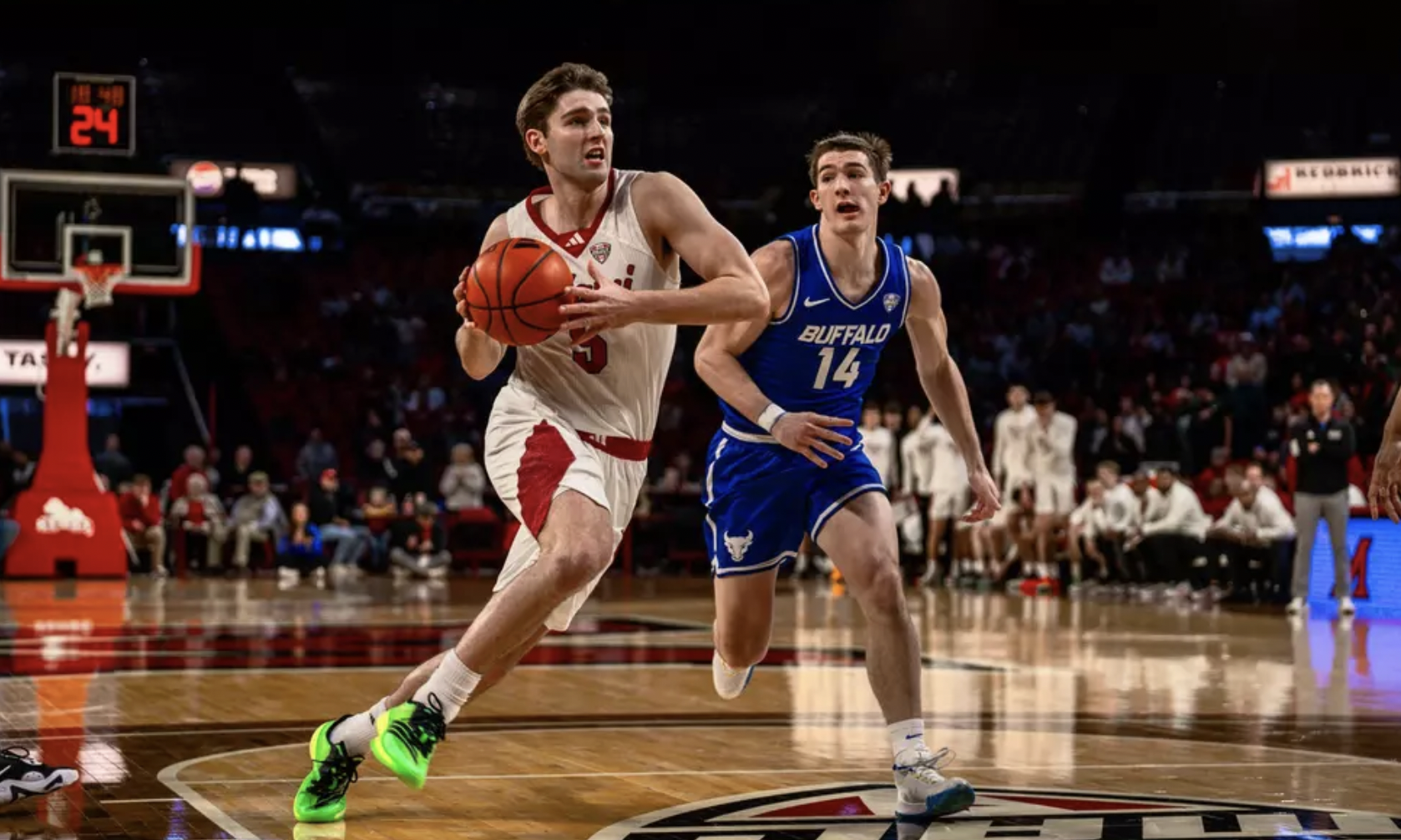
With Suder’s return, Holmes says that the RedHawks have a player that has a unique ability to “max out” every possession and that “nobody plays harder” than. They also got a true point guard that elevates everyone else on their roster and is nationally ranked in assist rate, offensive rating, effective field goal percentage, true shooting percentage, two-point percentage as well as 3-point percentage.
Suder could be considered the centerpiece of Steele’s roster–which includes nine returners and is No. 4 in the country in minutes continuity. If it’s not, it’s Byers—who is the team’s leading scorer after an offseason dedicated to putting the ball on the ground more effectively and has taken a “big jump,” as Holmes says.
At the very least, Woolfork, junior guard Eian Elmer, sophomore guard Luke Skalijac, Bradley transfer Almar Atlason and Byers have benefitted from Suder picking up the ball handling slack after Ipsaro’s injury.
Ipsaro–who played 27.9 minutes per game prior to having to sit–went down on Dec. 20 against Ball State. Perhaps the biggest indicator of the sustainability of what Steele and company have built is its nearly seamless response to losing the veteran guard.
Perhaps that wouldn’t have been the case if Steele’s program had built this primarily through the like seemingly everyone else, but it didn’t. Steele and company took the long, hard way here, but have built this on having familiar faces at the first day of summer practices—which Byers says allowed it to avoid covering certain basic things in summer practices. Holmes says he sees the fruits of Steele and his staff’s labor in the idea that nine players from the team were at a Miami women’s basketball game together without being prompted by the staff.
The act itself is small, but it’s an indicator that Steele’s intention to recruit to character and the culture that he’s worked tirelessly at building. Steele’s culture, he says, is built on “dudes that love and life for competition,” “guys that are invested in each other’s success” and can be there through each other’s failures. Steele's third and perhaps signature core value is the idea that he wants his team to “embody undeniable confidence.”
A look at Steele’s early teams in this gig was a look at patience and commitment to the vision that something like this would ultimately happen. Now, it’s happening and this program is a legitimate MAC Championship contender.
“We’ve kind of zig’d whatever everybody else zag’d,” Steele said. “The culture piece, we use that as kind of our north star for who we bring in and I don't deviate from it. I don't care how tall the guy is, I’m not gonna get blinded by talent.”
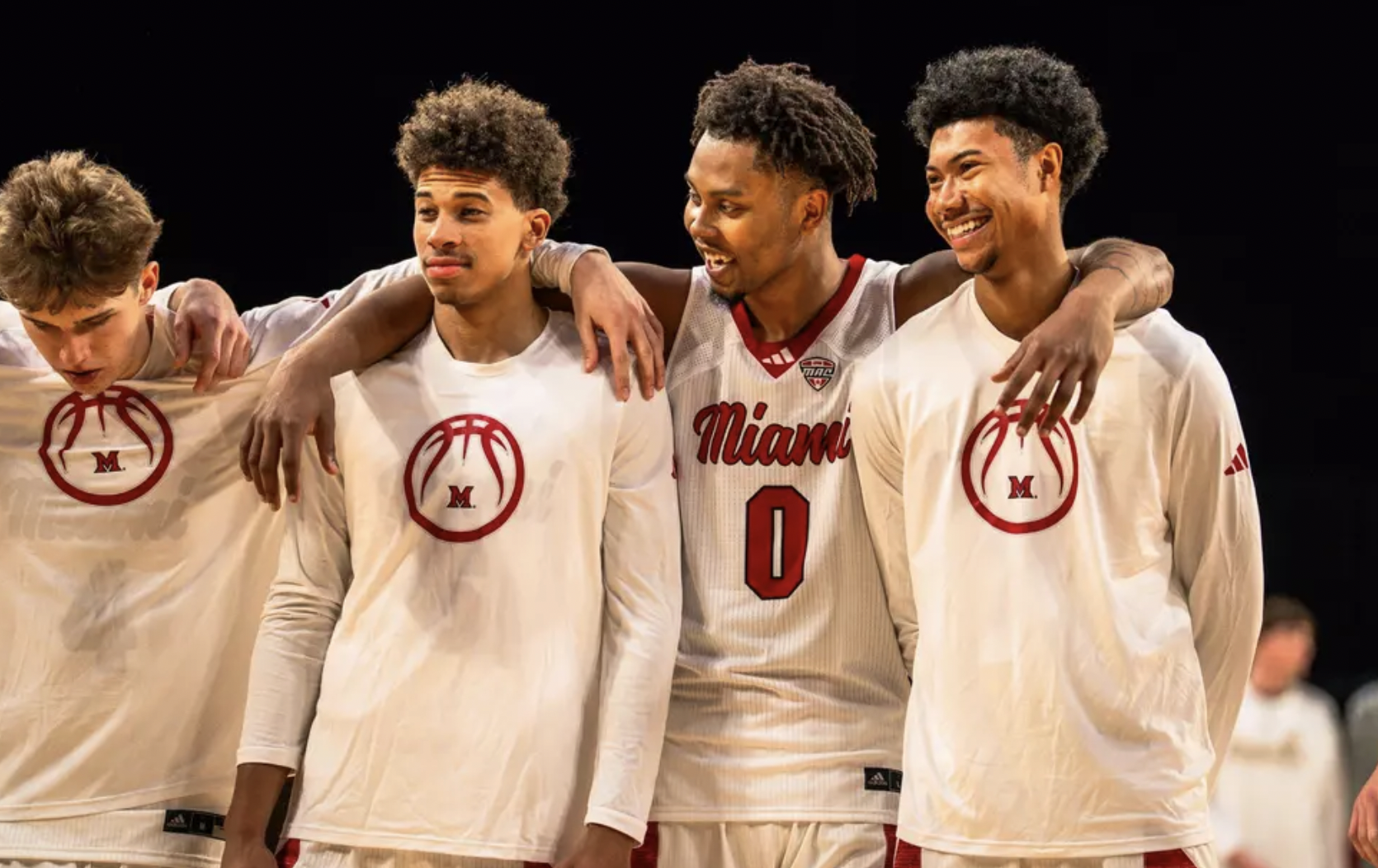
“College hoops, three unbeaten remain. One needs a little more respect. This is an analytics era, and Miami, Ohio, leads D1 in 3-point percentage, yet it took a 19-0 start to finally crack the top 25 this week. First time with a number next to Miami's name since Wally Szczerbiak was on campus. Also, this Ohio modifier, the Miami University was founded more than a century before that spinoff on South Beach.”
Those fateful 72 words should be remembered forever in this program’s history, at least the sentiment of them will be. The statement was the lede to SportsCenter’s five-minute segment on the RedHawks in which a four-man crew ran through their highlights, discussed the mentality they would need in order to alleviate the pressure that a 20-0 run presents.
Since the Jan. 20 airing of the segment, this program’s national spotlight has blown up. Thursday night, Steele’s face was all over sports bars and households across the country as he was featured as a guest on SportsCenter. Steele also added to his national legend by revealing on a Barstool Sports’ show that he’s worn the same Skyline Chili shirt for every step of this run.
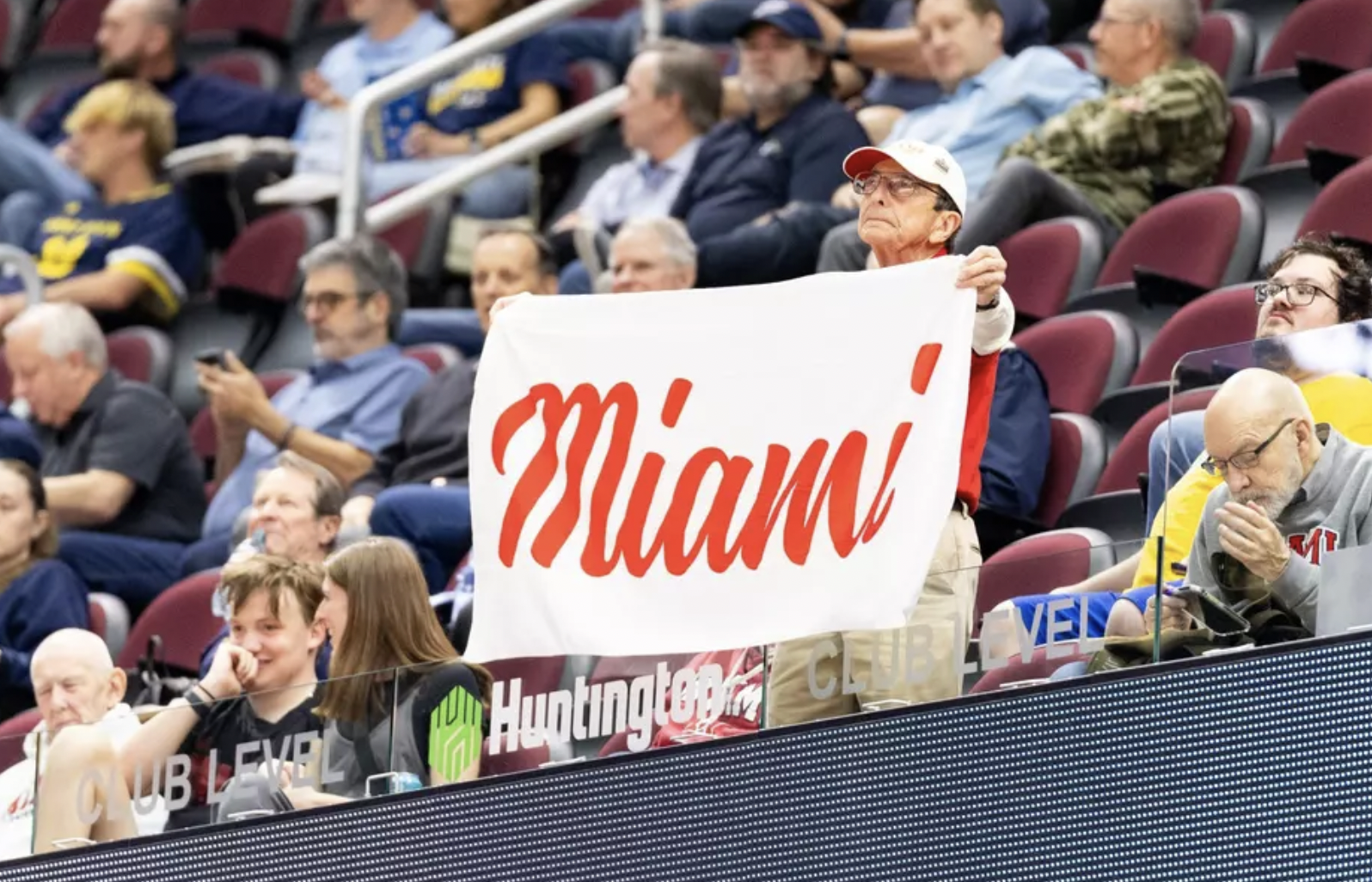
This isn’t normal for this program. This isn’t normal for any mid major, or really any college basketball program. Miami is college basketball’s greatest darling these days, and it’s embracing it.
“We knew we had a good team, but if I said this was our expectation I’d be lying for sure,” Byers said. “We put the work in, so to see those types of results comments is obviously good.”
Perhaps the most endearing thing about this Miami program is that they’ve embraced this run and the general absurdity of it. They’ve done the interviews. They’ve laughed at the out of left field storylines that surround them. That’s how you transition from elite to one of America’s most popular mid-majors.
It wouldn’t be a Steele team if it didn’t always have the car metaphor in the back of its head, though. Who knows how this all ends for Steele’s program, but if he’s got anything to say about it then his team will never be caught staring into the rear-view mirror.
