


The Big 12 continues to bounce back from a down season with a group of top teams that are earning plenty of buzz as tournament favorites and a pack of teams in the middle that are turning heads.
The conference boasts six teams in the top 20 of the NET Rankings, with three of them ranking in the top 10. Four Big 12 teams are in the top 10 of the AP Poll. Let’s take a further look at three storylines that will no doubt continue to bolster the accolades for the conference.
Texas Tech is rounding into shape
Texas Tech was a popular Final Four and national title dark horse pick entering the season after Grant McCasland’s team made it to the Elite Eight, losing to eventual champion Florida and returned Preseason All-American and Big 12 Player of the Year JT Toppin.
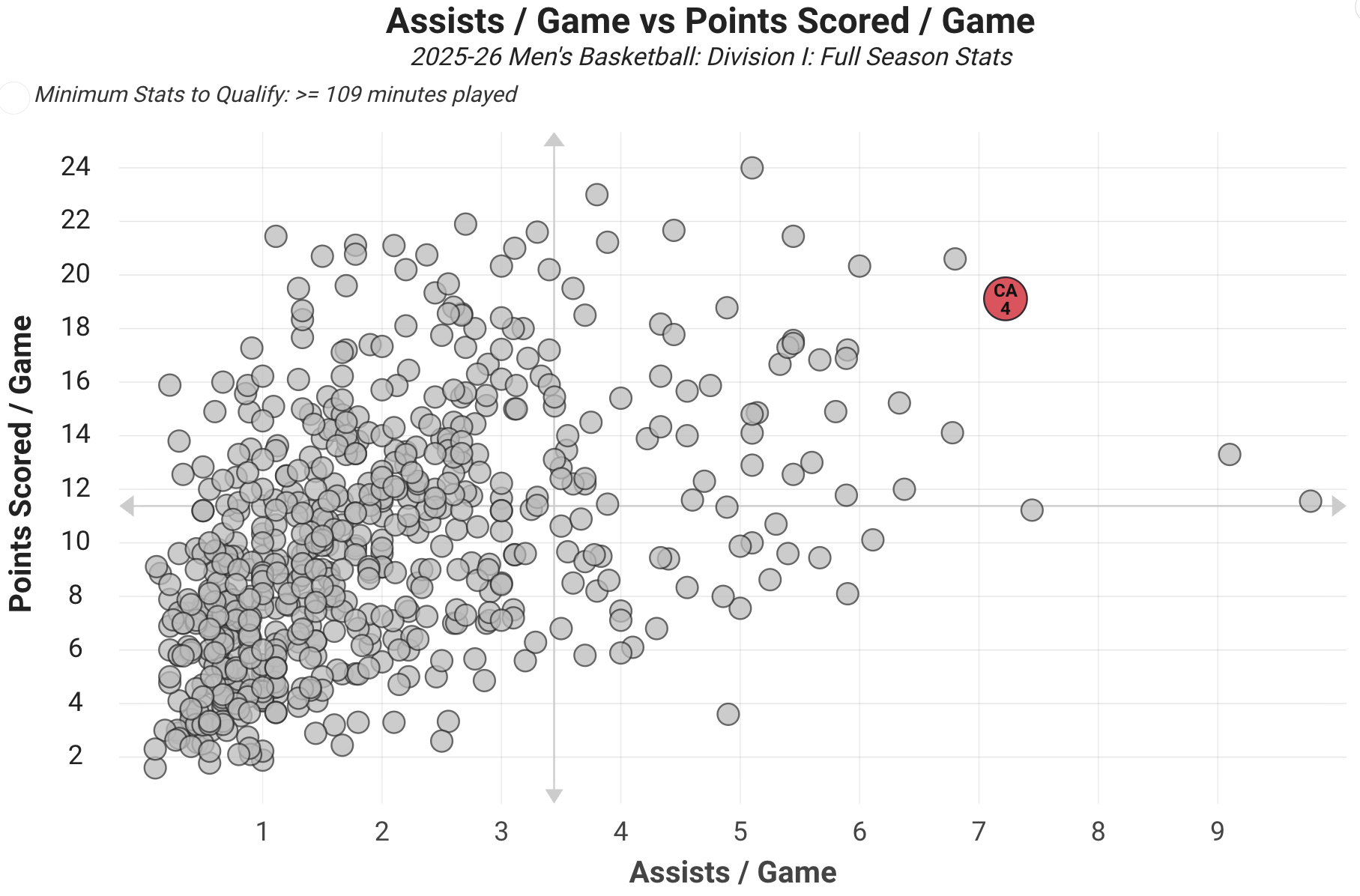
There were some things that would need to go right for the Red Raiders to meet and exceed that second weekend team. They’d need to find a replacement frontcourt piece for Darrion Williams, who left for NC State in the portal and guard Christian Anderson would have to become a consistent weapon in the backcourt both as a scorer and initiator.To say that the sophomore Anderson has become a consistent weapon is putting it mildly. The 6-foot-3 guard is averaging 19.1 points, 7.2 assists and 3.3 rebounds and 2 steals per game. He’s improved his effective field goal percentage while increasing his usage from 16% to 23% this season. He has also masterfully developed into a high-caliber point guard, boasting the 33rd-best assist rate in college basketball, according to KenPom.
Toppin has also impressively maintained his efficiency as his role has grown even further this season. He’s averaging 20.8 points and 11.5 rebounds, two of the highest figures in each category in the nation. The forward leads the nation in points in the paint (16.5), with a margin between him and the second-highest average as large as second and twelfth.
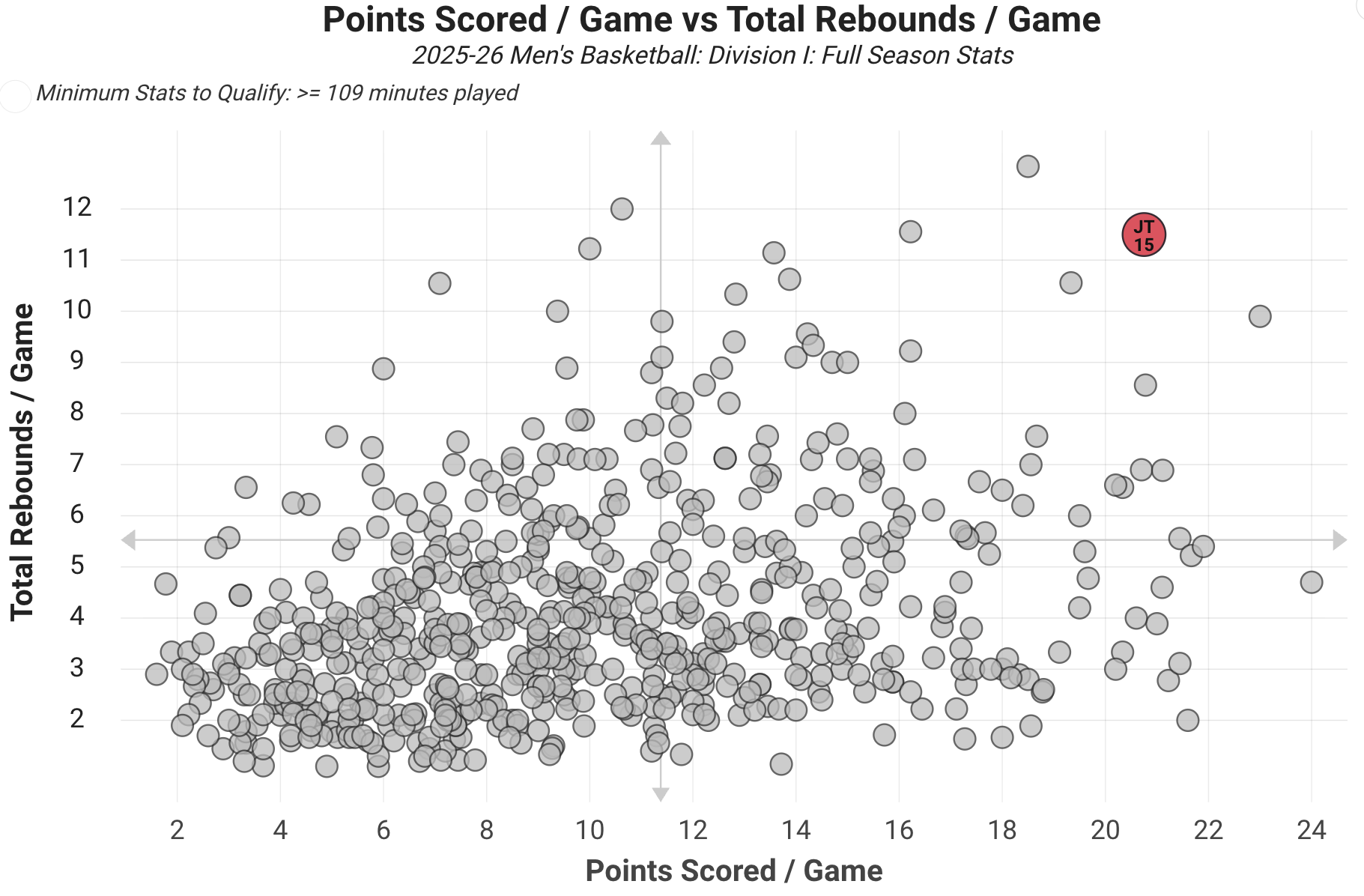
Toppin and Anderson account for nearly half of the team’s points per game, which makes the room for off nights significantly small against quality opponents. And with this high dependency on the two, it remains to be seen if they’ve properly replaced the impact of Williams from last season.
McCasland brought in three transfer bigs to try and increase his odds for an impact big, but the process hasn’t been seamless. VCU transfer forward Luke Bamgboye started the season on the injury report and missed the first three games of the season. And due to injury, Villanova transfer Josiah Moseley has only been dressed in a Red Raiders uniform for his AI transfer announcement he made back in April.
Former Washington State Cougar LeJuan Watts struggled to find his footing to start out the season, averaging 10.3 points and 5.8 rebounds per game through Thanksgiving. But in Watts’ last two games, he appears to have put some things together, averaging 17 points and 7 rebounds against Wyoming and LSU.
If Watts can be a dependable offensive piece to lessen the burden on Toppin, the Red Raiders will reach another level offensively, making them one of the more complete teams in the country. Their defense has improved from last season and has room to improve once Bamgboye and Moseley become fully integrated in the rotation.
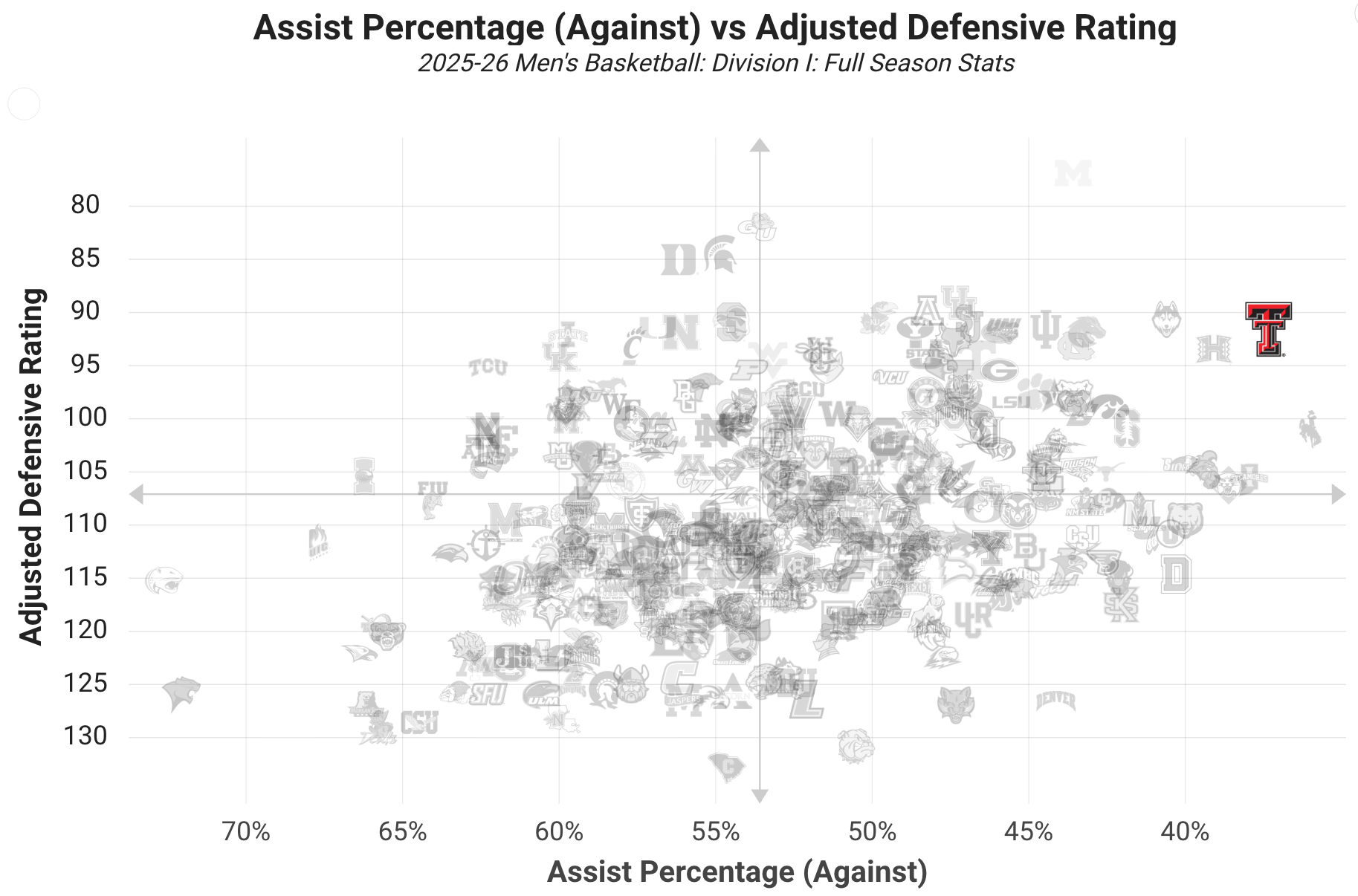
But as it stands, the Red Raiders provide elite perimeter defense, holding opponents to just 29% shooting on the twenty-third fewest attempts per game in the nation. Their considerable size throughout their rotation makes them great at switching and closing off passing lanes, limiting opponent assists to just 37.3% of total made field goals.
Arizona’s frontcourt dominance
The Wildcats are first in the nation due to AP voters dropping Purdue after their loss to Iowa State last weekend. Tommy Lloyd’s team is 4-0 in Quad 1 and 2 opportunities and has shown consistently that they can outlast their opponents by owning the glass and scoring inside.
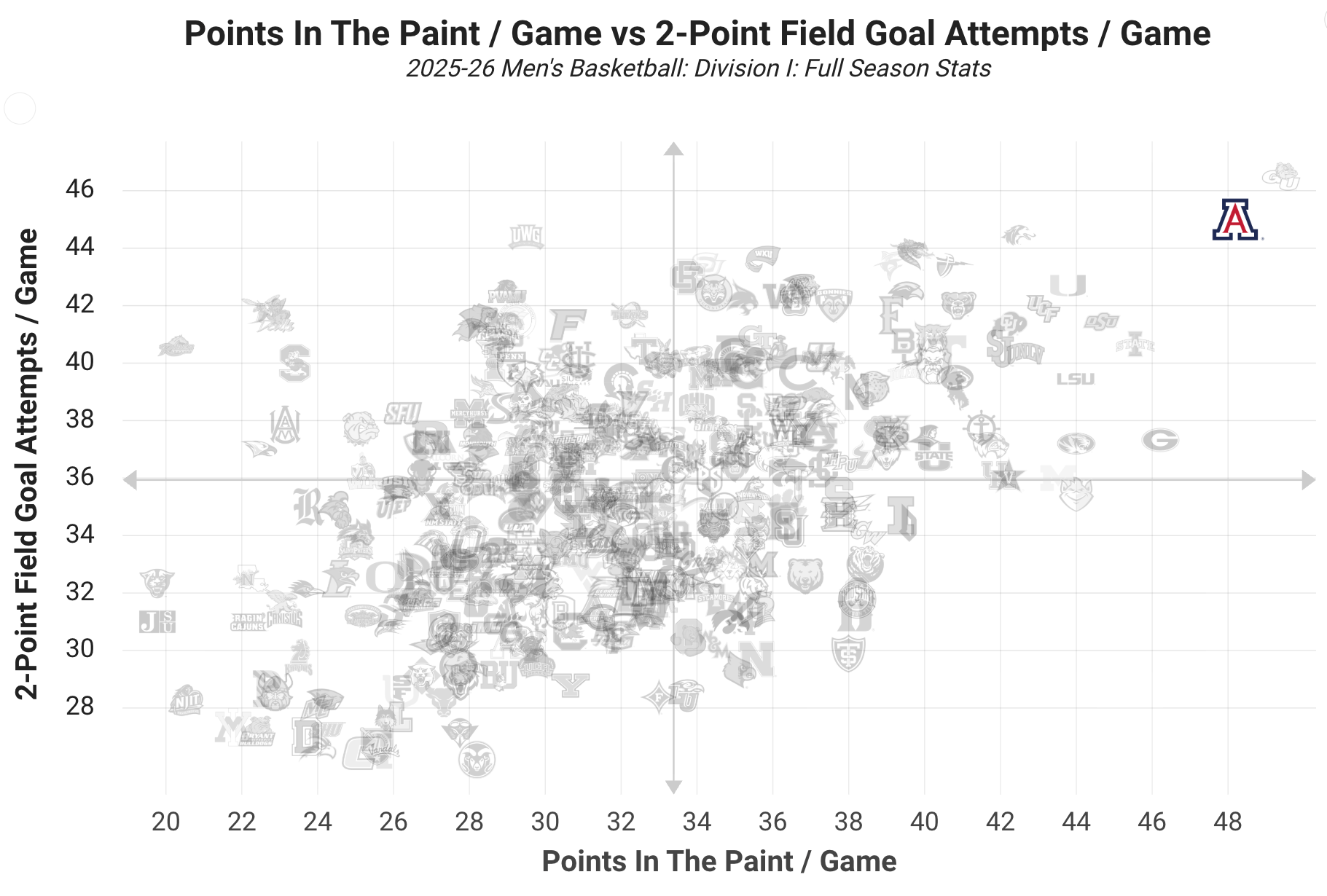
Arizona is in the 97th percentile in the country for attempt percentage coming at the rim. Their 48.3 points in the paint per game is second only to Gonzaga for the highest average in Division I and they rank 22nd in the country in effective field goal percentage. They’re also maximizing their looks with a high-tempo offense that has become the identity of Lloyd’s teams, averaging 16.6 fast break points per game. Impressive considering that the Wildcats have a rotation of 8 players who all average 16.8 to 27.6 minutes per game.
But Arizona doesn’t need to get out in transition to score. Their 48.6% field goal shooting in the halfcourt is in the 97th percentile of Division I. That effectiveness is leveraged further by the fact that the Wildcats rank 21st in the country in offensive rebounds per game, and have on of the highest putback attempt rates in the country.
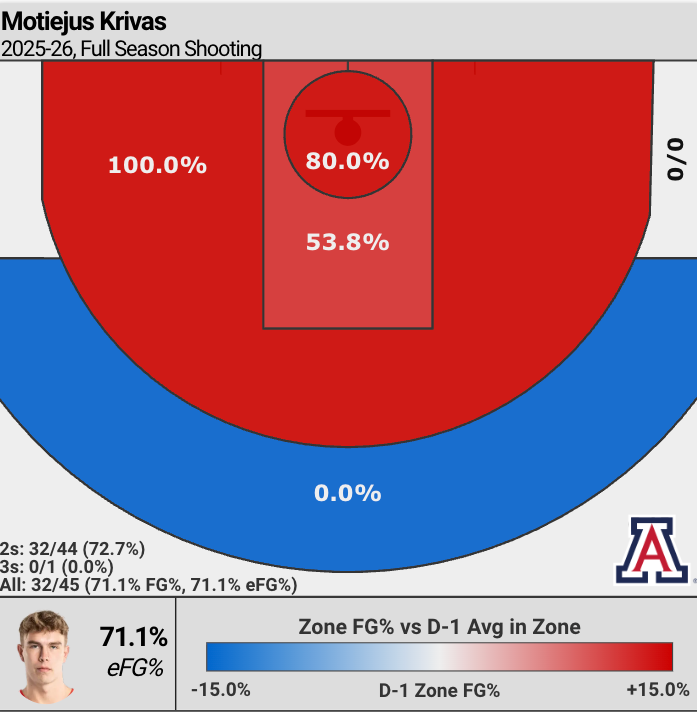
Freshman Koa Peat leads the way in terms of attempts and usage this season on the team and frontcourt, averaging 15.9 points on 10.9 field goal attempts, but it’s truly a platoon approach for the additional scoring from the bigs. Tobe Awaka, Motiejus Krivas and Ivan Kharchenkov average 6, 5 and 4 attempts from inside the arc per game, respectively. Krivas is shooting a blistering 72% inside the key and 80% at the rim.
And Arizona’s frontcourt has had plenty of litmus tests this season, with the most recent coming last Saturday against Auburn. The Tigers came into the McKale Memorial Center shooting 57.9% from two-point on the season and averaged 38.6 points in the paint. On Saturday, the Tigers shot just 39.5% from inside the arc and recorded only 24 to Arizona’s 60 paint points.
Arizona faces Alabama on Saturday. If they can weather the Crimson Tide’s three-point oriented offense and notch a fourth Quad 1 win in 9 games, it’s hard to argue they’re not in the driver’s seat for the #1 seed in the West headed into conference play.
Emanuel Sharp is making a big statement this season
It would be understandable if Houston’s Emanuel Sharp needed more time to shake off those closing moments in the national title game. The upperclassman guard committed back-to-back turnovers in the final 46 seconds of the championship, unable to get an attempt off in a game they lost by 2 points. It was a sequence that head coach Kelvin Sampson called “incomprehensible.”
YOUR NATIONAL CHAMPIONS: THE FLORIDA GATORS 🏆🐊#MarchMadness @GatorsMBK pic.twitter.com/XatLv5x2hm
— NCAA March Madness (@MarchMadnessMBB) April 8, 2025
Sharp wasn’t even the Robin to Houston’s Batman, LJ Cryer, last season. That was makeshift point guard Milos Uzan, who also returned to the Coogs’ roster for the 2025-26 season. Couple that with the additions of freshmen Kingston Flemings and Isaiah Harwell, minutes and role were not locked in for Sharp. If Flemings becomes the point guard, you could question if it would be Uzan or Sharp assuming the Cryer role.
Great day at the office 📈
— Big 12 Studios (@big12studios) December 7, 2025
Emanuel Sharp Highlights vs. Florida State 🎥#Big12MBB | @UHCougarMBK pic.twitter.com/AUVxBkcNby
But over the first 10 games of the season, it’s not just been Sharp playing the role Cryer had last season; it’s been Sharp exceeding Cryer’s production. The senior guard is averaging 18.1 points, 3.2 rebounds and 2.2 assists this season.

However, beyond comparing Sharp to Cryer’s output from just a season prior, there is an interesting suggestion of a similar player on Sharp’s KenPom player page: 2022-2023 Marcus Sasser. If Sharp can maintain that level of production with the expanded offensive firepower from Houston’s group of freshmen, we may have fonder memories of Sharp in the tournament.
Games to watch this weekend
- Texas Tech vs. Arkansas, Saturday, December 13th, 12 pm ET (ESPN2)
- Oklahoma vs. Oklahoma State, Saturday, December 13th, 1 pm ET (FOX)
- Kansas at NC State, Saturday, December 13th, 5:30 pm ET (ESPN)
- Arizona vs. Alabama, Saturday, December 13th, 9:30 pm ET (ESPN)
