


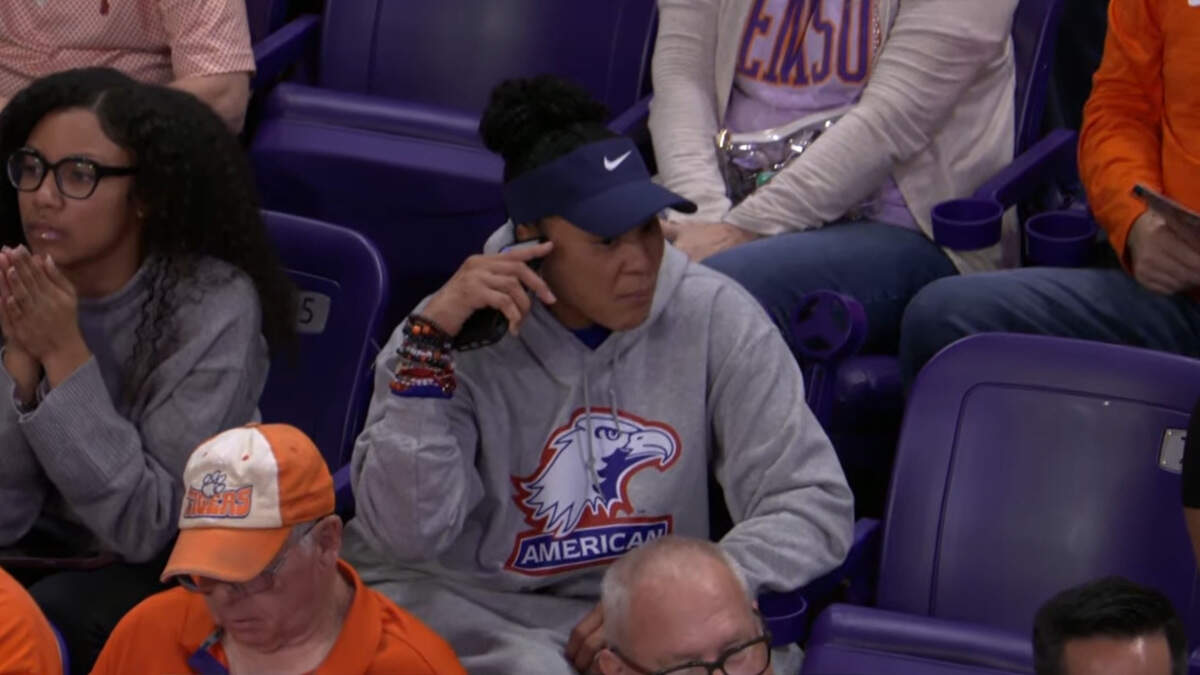
Madden Collins had a famous fan when his American Eagles played against Clemson during the first week of the season. Typically, Dawn Staley stands at the front of the away bench at Littlejohn Coliseum when she travels from Columbia to coach her Gamecocks in an in-state rivalry matchup with the Tigers.
On that Friday, though, she was simply ‘Nana’.
Their relationship goes back to the day Collins was born. His mother, Ari Moore, played for Staley at Temple, and she was present at Temple University Hospital, with her staff, on his birthday. Staley is Collins’ godmother. Collins’ father, Mardy, is also a Temple basketball legend, having played for Basketball Hall of Famer John Chaney. He went on to play in the NBA as well.
The two Hall of Famers shaped the parenting style Collins grew up with, as well as the basketball mind he’s developed. Now, he’s one of the top players in the Patriot League, a 6-foot-5 sophomore point guard looking to bring American to the NCAA Tournament for the second time under head coach Duane Simpkins.
“Once I knew I wanted to take basketball seriously (I started to ask my parents a lot of questions),” Collins told Basket Under Review. “They obviously know what it took to play at a high level and to get coached by two amazing Hall of Famers.”
While Staley has never been his coach, she has directly influenced Collins’ game. The Hall of Fame point guard consistently offers pointers on how to improve his craft.
“Any part of the game that helped me lead,” Collins said. “(is where Staley) has been the biggest help.” “The main thing with her is just using my voice to help lead and instruct people.”
Staley, of course, wasn’t just a great leader as a player, but has evolved into one of the greatest basketball coaches of all time, winning three National Championships, going to eight Final Fours. You don’t get there without fostering a winning culture. A winning culture that Collins grew up in.
Moore has been at Staley’s right hand for over a decade, serving as an overqualified Director of Basketball Operations for the Gamecocks. Through that, Collins has gotten the chance to see not just what basketball looks like at a high level, but what it takes to be part of winning, especially at South Carolina, where family is a big part of the way that Staley has built the program.
“This is a family atmosphere,” Moore told Basket Under Review. “How we parent our kids, we want them to have the same experience that we had. You’ve gotta be a good teammate, you’ve gotta invest in those relationships.”
That family atmosphere of the South Carolina basketball operation extended into practice time. Moore said that Collins would often come by practice, where Staley would show him a few drills to run while the Gamecocks practiced. He studied the games of South Carolina superstars, watching them intently as the program built toward national championship status.
“When you watch the women’s game at the level that (Madden and his younger brother Mason Collins) were,” Moore said. “They got to see (basketball) in some of the most pure, highest IQ forms. It’s very clean; it’s all about reads and how to do counters. I see a lot of Madden’s moves; I see them directly influenced by women.”
Despite who his parents are, Collins’ basketball fandom wasn’t pushed on him. Growing up, he naturally picked up his passion for the sport, Moore said. He loved Kobe Bryant, he loved DeMar DeRozan, and whenever Moore asked Collins to draw or list something, he’d draw a logo and list mascots.
Neither of his parents ever coached him growing up – although Mardy is currently coaching Mason. But there were plenty of coaching moments growing up.
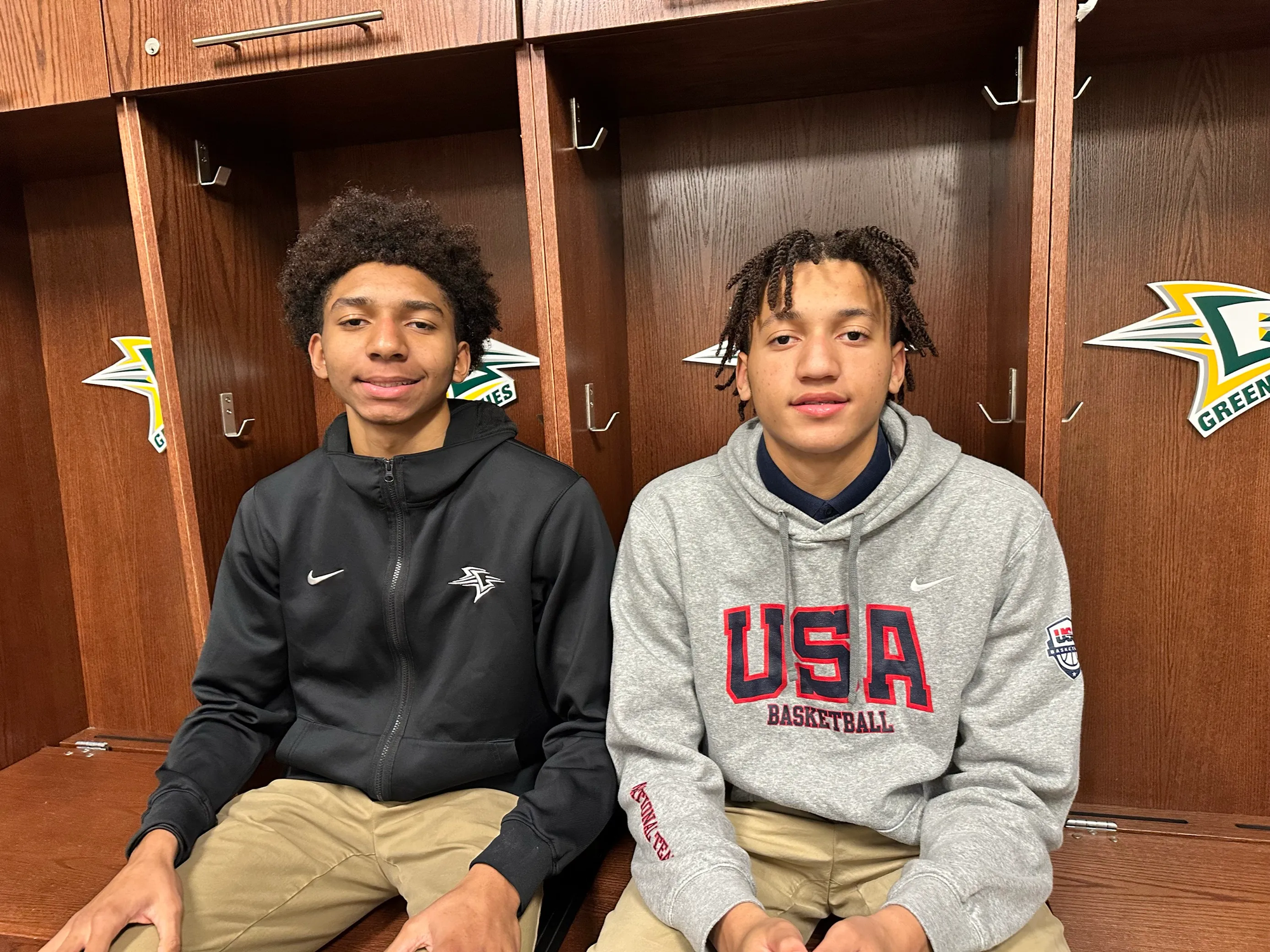
While the exposure to Staley came firsthand, Collins’ exposure to Chaney came through Mardy, as Collins never got the chance to speak with the Hall of Famer before he died in 2021. Mardy passed on his coach’s detail-oriented nature to his son.
“We would watch film for an hour,” Mardy Collins told Basket Under Review. “But we only got through the first three minutes of the game. So it was all about the details and the discipline of focusing on those details.”
As a parent, Mardy emphasized the importance of punctuality, following the rules, and attitude.
He would tell Collins the story of when Chaney benched him for the first ten minutes of a game because he didn’t wear his hat on the team bus.
“That lit a fire under my dad,” Collins said.
“You just can’t come into things thinking your skill set is going to be enough,” he said.
Both parents harped consistently on not getting too high or too low – helping Collins stay consistent from a young age. Despite his parents, though, Collins was not a highly recruited player coming out of the Christ School in Asheville, North Carolina.
It puzzled Moore.
“A lot of coaches didn’t think he was good enough to play college basketball,” she said. “And I would question that every chance I got, and I would tell them, I think y’all are crazy. I don’t think y’all have the best eye for talent. I know he can play college basketball.”
That’s certainly not the first time coaches have heard a pushy parent, and even though it came from someone as experienced in basketball as Moore, it didn’t move the needle.
When American associate head coach Nate Bollinger first watched Collins play, he didn’t know who his parents were. He saw a 6-foot-2 point guard with a high IQ, and the staff went to work recruiting him. Bollinger said Jackie Manuel was the lead recruiter for Collins, and his parents appreciated the way they recruited him.
“I think most people in general, when they come to Ari and me, they come correct,” Mardy said. “They come correct. I think that’s real helpful to block out any of the people that aren’t straightforward or people that are playing games.”
American didn’t play any games. His two offers were the Eagles and Boston University, and once he visited American, he knew that’s where he wanted to end up.
There was one more surprise up his sleeve.
Mardy is 6-foot-6. Moore is 5-foot-10. Collins was below 6-foot for much of his high school career, and was just 6-foot-2 when he committed to the Eagles. Less than a month into the season, Simpkins went to Moore with an observation.
“I think Madden’s getting taller,” the head coach said. Moore agreed.
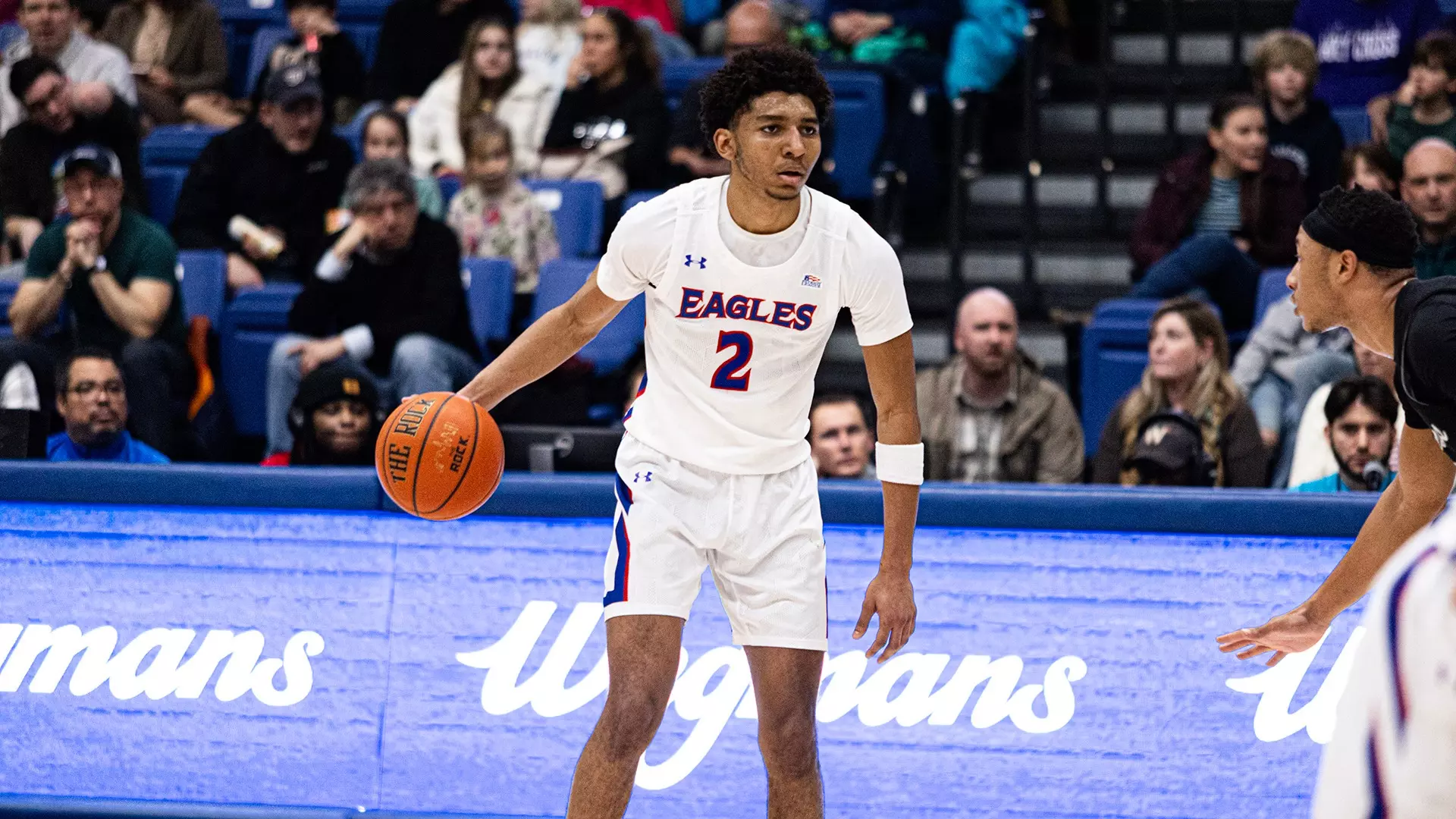
Collins is now listed at 6-foot-6, the same height as his father.
The growth spurt helped fuel a dynamic freshman season, where Collins scored 13.4 points off the bench for an American team that was up-and-down in Patriot League play. His coaches credit his mind with his early success.
“He’s a smart player,” Bollinger told Basket Under Review. “You can talk to him as a coach and show him one thing and he tries to do it. Especially with scouting reports. He came from such a strong basketball background. He was introduced to it at such a young age and at such a high level.”
Sometimes, though, the coaching staff would tell Collins something that contradicted what he’d learned growing up. Mardy sometimes had to explain to his son that there’s “more than one way to skin a cat.”
Meanwhile, the family has put their full trust in the American coaching staff.
“The best compliment I can give his parents is that they allow us to coach him,” Bollinger said. “They support us and what our message is.”
That trust was a big part of why there wasn’t much of a decision to make about returning to American. They value his education at a school like American – Collins is a business major with a Chinese minor – and they value the development that he gets as a basketball player there as well.
He needed to be a better leader. He needed to get stronger. He needed to work on his jump shot. He needed to learn how to be a starting point guard at the college level.
“There are things we know about our son that he needs to get better at,” Mardy said. “And we thought if he did jump in the portal, he wouldn’t be ready.”
He worked throughout the summer with the coaching staff and his trainer in Columbia, focusing on his pick-and-roll reads, outside shot, and frame. So far, that has paid off.
Collins has scored 20-plus points in all four American games this season. In his hometown of Philadelphia, he drained a buzzer-beater to defeat Drexel, capping off a 23-point performance on 9-for-10 from the field.
Against Clemson, when he dropped 23 points with Staley in attendance, it was just like it had always been.
“Even coming to his little league games when he was 7 and 8 (years old),” Moore said of Staley. “She’s always supported him.”
