


Non-conference play is winding down as we head into the new year, which means that these mid-major conference teams have just a handful of opportunities left to make their case to the selection committee in a few months.
For teams like Gonzaga, that means crossing their t’s and dotting their i’s for protected seeding and for Saint Mary’s, it could mean the difference between playing one of the best teams in the country in a second tournament game or getting one of the best of the rest that clog the teams ranked 13th or worse. But what are the stakes for the other high-level teams in the WCC and MWC?
Few bubbles to pop this season
After Saint Mary’s and Gonzaga, the path for the rest of these teams west of central time is as harrowing and grim as the roadways in Sorcerer. Mountain West teams currently have just one Quad 1 home game opportunity on their schedule, with Utah State holding onto a top-30 status in the NET.
As of December 16th, just five teams will count as Quad 1 road games, with Boise State, Wyoming, Colorado State and New Mexico joining the Aggies in the top-70 NET rankings. And winning on the road in the MWC isn’t easy. No team had fewer than three road losses last season.
Boise State jumped up to 37th thanks to a one-point win over Saint Mary’s last weekend and their early December win over Butler is aging relatively well. KenPom currently projects the Broncos going 2-3 in their remaining Quad 1 games, with all but Utah State on the road, with the margin of victory for all games falling within one possession. If you take KenPom’s projections, Boise State would finish with a 24-7 record, 4-6 in Quad 1 games and 6-1 in Quad 2 games. That’s a better resumé than last year’s San Diego State team. The lack of Quad 3 or 4 losses can also likely explain away their loss to a Division II team.
After Boise State, things become shaky, and the conference ultimately can’t afford multiple teams to secure a Quad 1 win for Utah State, as those victories risk being downgraded to Quad 2 achievements. What the league needs is a major upset from San Diego State on Saturday when they play Arizona. It’s a massive ask for an Aztecs team that hasn’t found a way to slow capable offenses down or rebound at a high clip.
For the WCC, the fun of a three-bid league appears to have died before conference play even started. Santa Clara is the closest to a bubble team that the WCC has to offer, but it appears that their back-to-back losses to New Mexico and Arizona State put the Broncos into a situation where they’ll need to take at least one from Gonzaga and Saint Mary’s–and maybe two–while avoiding any bad losses in conference play. San Francisco and Seattle look more than capable of giving a team at the level of Santa Clara some trouble, which makes one wonder if a loss to either would affect Santa Clara’s chances.
Saint Mary’s looks to fill in some cracks
All of this preliminary bubble talk also raises a tough question for Saint Mary’s fans after that aforementioned loss to Boise State: how much wiggle room do the Gaels have? They’re one of seven Quad 1 teams that have yet to record a Quad 1 win. Their best win was against Virginia Tech on short rest and missing one of their primary players due to an injury the night before.
This isn’t to suggest that, as is, Saint Mary’s is at risk of missing the tournament for the first time in five years or even being a bubble team. But it is a question that needs to be squared as we wait to learn more about Mikey Lewis’ availability after playing 9 minutes against Boise State on Sunday. Lewis suffered a foot injury prior to the last game and was clearly limited, going 0-for-4 from the field.
Lewis is the leading shot taker on the team, the primary perimeter scorer and leads the team in usage. He accounts for nearly a third of the team’s makes from deep and averaged 28.8 minutes per game before the Boise State game. He and Paulius Marauskus are the lead options by a large margin.
The answer for Lewis’ replacement is also a bit complicated. Liam Campbell seems to be the most logical “next man up,” but head coach Randy Bennett has always leaned heavily on upperclassmen to play impact minutes on tournament-caliber teams. Lewis played only 16 minutes per game last season as a freshman despite leading the team in perimeter shooting.
Sophomore transfer Tony Duckett has yet to find his footing at his new home, going from 12.6 minutes per game in his first five appearances this season to a combined 14 minutes played in his last four games. Freshman Rory Hawke has been a rotational piece throughout this early season, but he’s 1-for-8 from the perimeter.
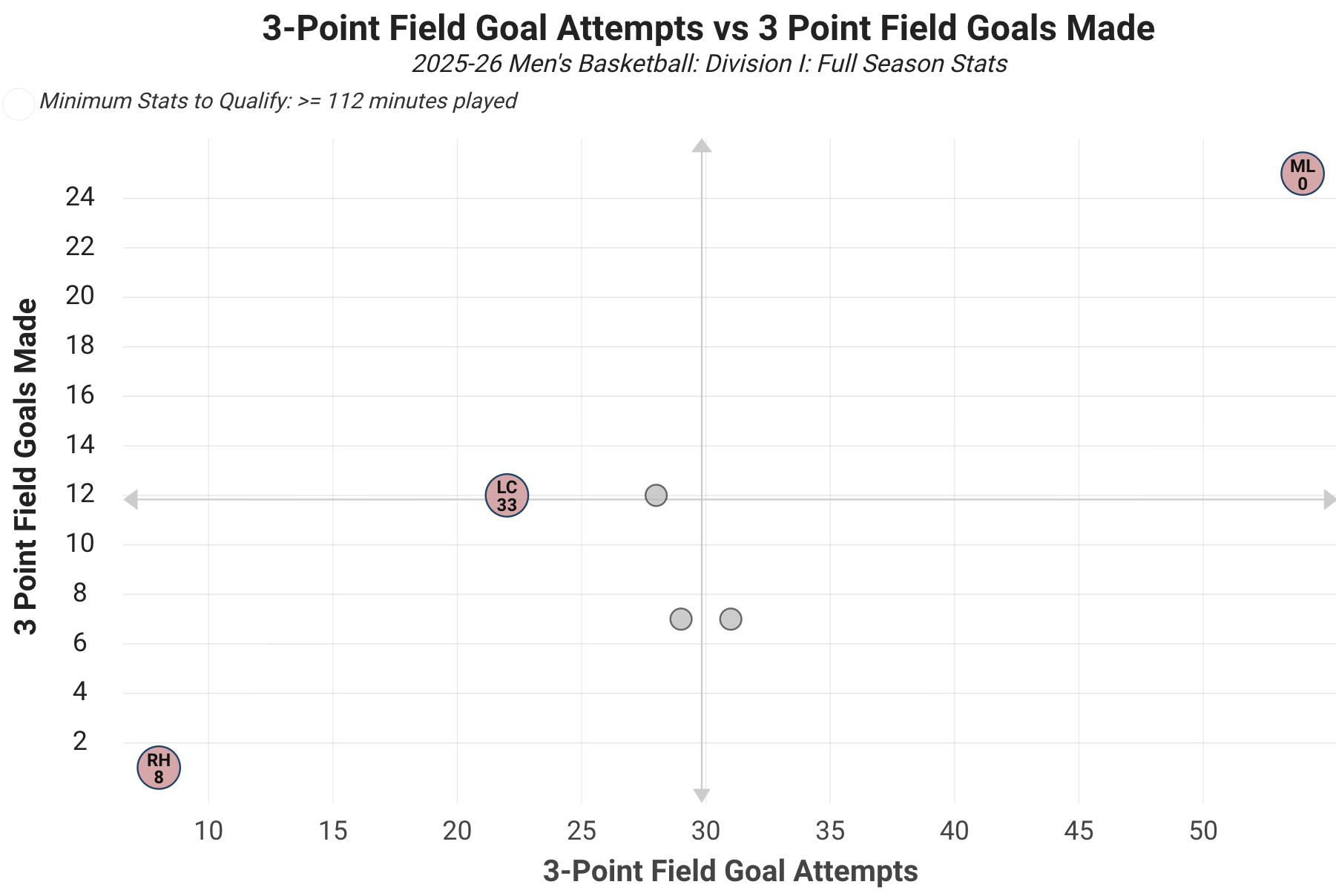
There could also be a considerable impact on the spacing of the offense without Lewis. The rest of the Gaels are shooting 33.8% from outside this season. The Gaels are also notably thin in the backcourt, with point guard Joshua Dent averaging 33 minutes per game and Lewis serving as a fill-in for the sophomore.
The team has not made an official statement on the extent of Lewis’ injury or availability moving forward. He may be able to play through it. They may elect to sit him until he’s as close to 100% as an injury in-season could allow.
The good news is that the Gaels currently don’t face a Quad 2 opponent until they go to San Francisco on January 13th.
Gonzaga’s front court keeps getting better
When we kicked off these West Coast Round-ups, one of the first topics I wrote about was how special this Gonzaga front court might be. Graham Ike and Braden Huff returning meant that Gonzaga brought back two of the three highest paint-points-per-40-minutes players in the nation. However, the tandem has evolved into the best scoring front court in the country, combining for 36 points per game this season.
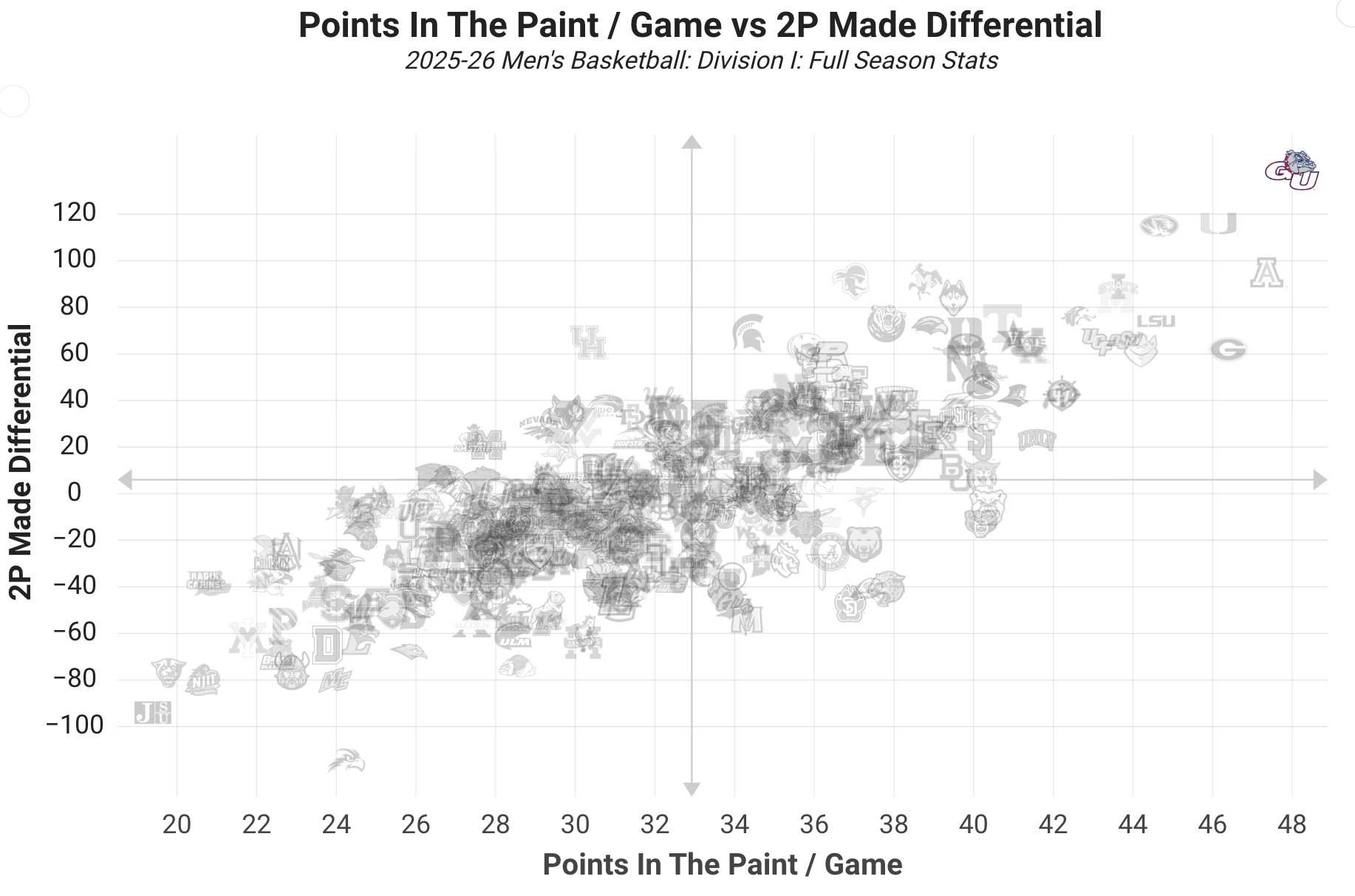
Ike has developed into the fulcrum of Gonzaga’s offense, tasked with initiating and creating for himself and others not too dissimilarly to how Drew Timme operated in a Bulldogs uniform. Ike is averaging the highest offensive rating in his collegiate career and being asked to manipulate defenses and exploit how aggressively they need to defend him. Through 11 games this season, he’s recorded four or more assists five times, something he’d done only twice in his four previous seasons in college.
The senior has also been able to stay on the floor this season. Ike’s 27.9 minutes per contest is his highest in a Zags uniform and his foul per 40 average has shrunk from 5.1 to 4.1. He’s averaging 22.3 points, 4.3 assists and 8.7 rebounds since going 0-for-5 in 16 minutes against Michigan.
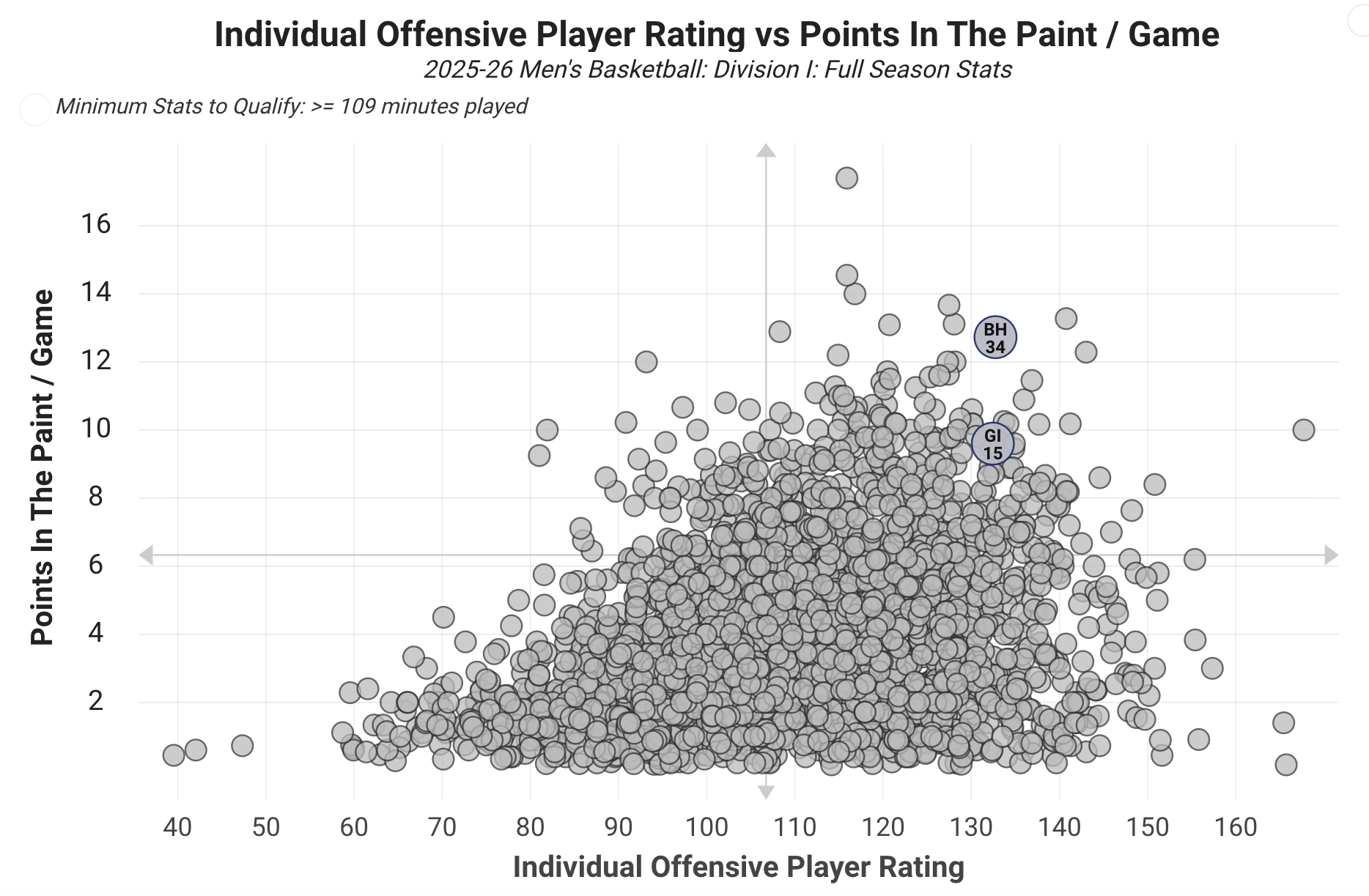
But as great of a development as Ike’s expanded game has been, it’s hard not to focus on just how otherworldly dominant Braden Huff has been this season. Huff is top 100 in both offensive rating and percentage of shots in college basketball while also having the 21st best effective field goal percentage (69.1%) and the 50th best 2-point percentage (72.3%).
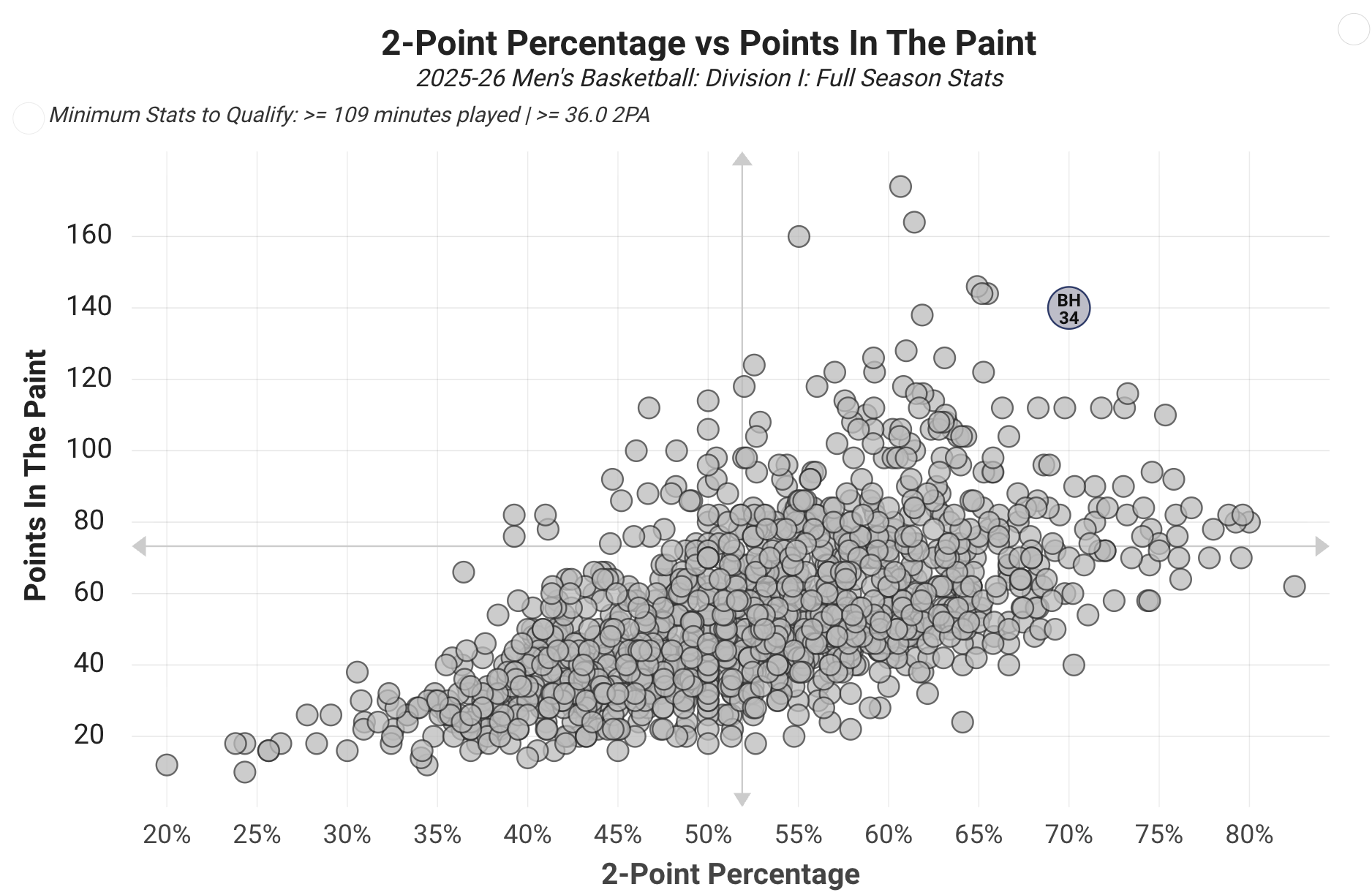
In last night’s win over Campbell, Huff made his first 12 shots, something that has only been done one other time in the last eight seasons in college basketball. It’s also the most consecutive made shots a Zag has made in Mark Few’s tenure. Huff is averaging 25.5 points on 75.8% shooting from the field in the month of December.
Getting consistent contributions from the guards and reliable perimeter shooting (Steele Venters and Adam Miller are shooting 53.8% from deep in the month of December), and we may have not even seen the best version of this offense yet.
Games to watch this weekend
- Seattle vs. Washington, Friday, December 19th, 8:30 pm PT/11:30 pm ET (ESPN 2)
- Colorado State at Utah State, Saturday, December 20th, 11 am PT/2 pm ET (CBS Sports Network)
- Arizona vs. San Diego State, Saturday, December 20th, 10 pm ET (ESPN2)
- Boise State at Nevada, Saturday, December 20th, 7 pm PT/10 pm ET (Mountain West Network)
- Gonzaga vs. Oregon, Sunday, December 21st, 3 pm PT/6 pm ET (Peacock)
