

There are two important things to know about the world at this moment. One: college basketball is missing its Cinderellas. The 2025 NCAA Tournament provided none, giving the Sweet Sixteen its first mid-majorless field in history and the first Sweet Sixteen without an 11 or lower seed since 2007. The most memorable moment provided by a mid-major was a crushing buzzer-beater loss. 2024 wasn't much better; you remember Oakland and Jack Gohlke, but the only double-digit seed to make a serious run was an ACC program that has rarely, if ever, dipped below a top-50 budget in the sport.
It's been three years now since Florida Atlantic and San Diego State stole the hearts of millions, making my Final Four ticket exceptionally cheap. There are several candidates this year to restore the magic that didn't require $5M+ in NIL to build their rosters. Saint Louis is tracking to be in the 6-8 seed range and will be most everyone's darkhorse Sweet Sixteen pick. Utah State is the best and most threatening team in a likely three-bid Mountain West. Even the WCC, which is normally just Gonzaga and Saint Mary's domain, is 68% likely (per Torvik) to offer up Santa Clara, a legitimate top-40 team gunning for their first bid in 30 years.
But I have a different view of Cinderella, which is perhaps the wrong one. To me, a true Cinderella is one lasting at the ball long after midnight should've struck, pushing back the forces of space and time. Layman's terms: they gotta be an 11 seed or worse and from a conference that's not in the Power Five to count. Here are my Cinderella Qualifiers.
- 11-13 seed: Sweet Sixteen or further.
- 14-15 seed: Round of 32 to consider, Sweet Sixteen to fully accept.
- 16 seed: Round of 32 gets you a full parade.
You can be too good to be a true Cinderella1. Saint Louis is better than that categorization, and I would argue the same for 2022-23 Florida Atlantic, though I will hear out an exception for just how dire of a job that was when Dusty May originally took it. (And that they made the Final Four.) That would make the last true Cinderella these guys:
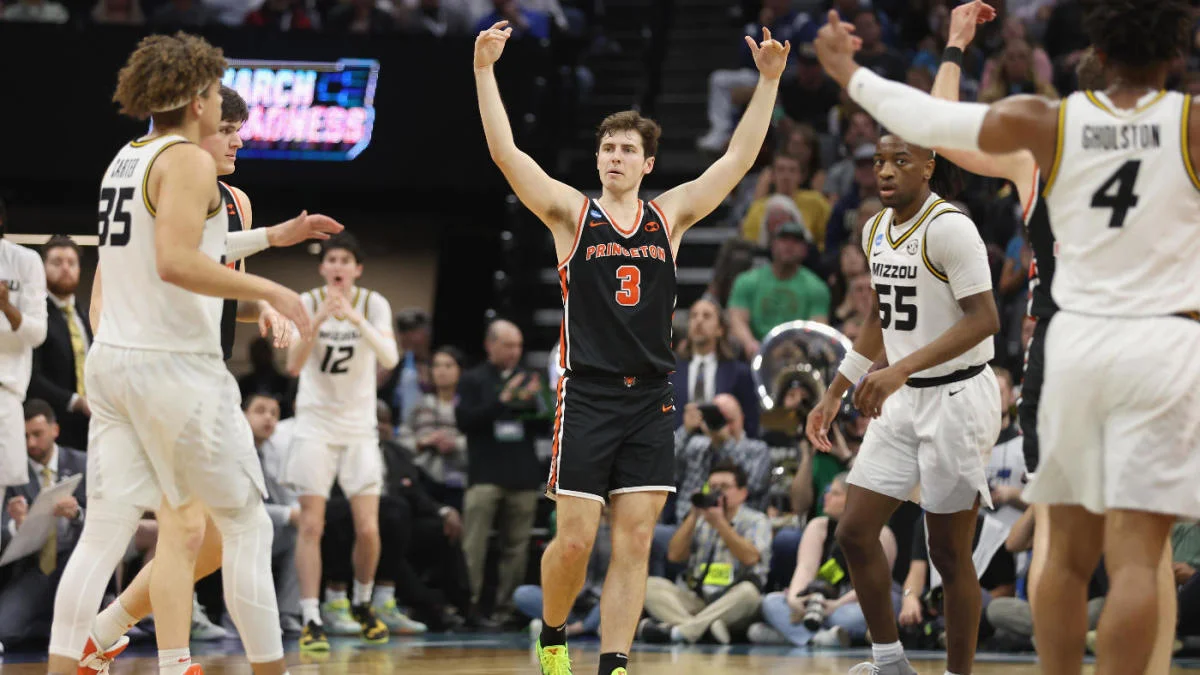
Of course, if you're someone who has a medical aversion to the work of the Ivy League, perhaps you did not enjoy this one as much. Maybe your most recent Cinderella can be Saint Peter's, which would be fine. Either way, the point is the point: it's been a little while.
The other important thing to know: everything old is new again. The biggest artist in the world, Taylor Swift, was the biggest artist in the world 14 years ago. The biggest movie of 2025 was based on a video game released in 2011. The Super Bowl of 2026 already happened in 2015. Miami football, last seen making a national impact in 2003, is back.
So: what if your 2025-26 NCAA Tournament's lead Cinderella candidate was a Cinderella candidate for all of 2014, 2015, and 2016? What if they've already experienced their program's first Round of 64 upset victories, and they both happened? What if everything old is new again, which could mean the return of the famed NCAA Tournament Cinderella?
America, here is your candidate. You may remember them.
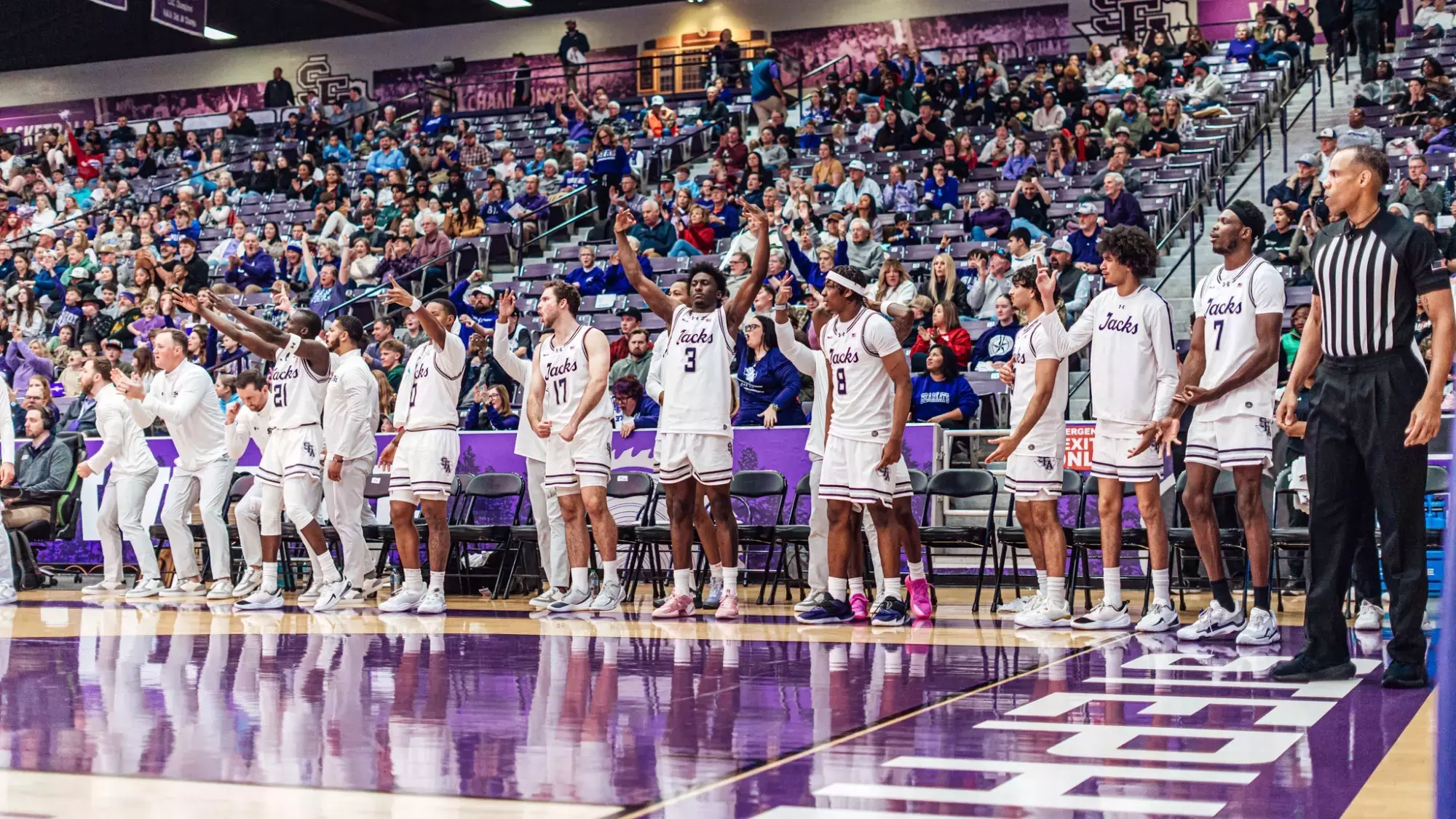
Let me explain.
The original version of Stephen F. Austin you will remember from 2014-2016 did not play like the version you will learn to love in 2026. That team pressed every possession after made baskets, forced 50 turnovers in their three Round of 64 games those years, and accumulated monstrous advantages on the offensive boards and on fast breaks. Their coach went from a no-name to the current coach of KenPom's #5 team within a few years. In retrospect, they were a pretty obvious Cinderella because they were a metrics darling. (This did not stop me from going 0-3 picking their Round of 64 affairs those three years.)
The 2025-26 edition of the Lumberjacks is much different. For one, they do not have the same formula to win. In a 12-team Southland, they're eighth-best in turnovers forced. They remain excellent at offensive rebounding, but the peak Lumberjacks of the mid-2010s were unstoppable at getting to the rim, and therefore, to the line. This group doesn't take many free throws and sits 214th in 2PT%. At 88th in KenPom's team rankings, they're lower than any of the Brad Underwood teams by a few spots.
This may sound like I am giving you reasons to not pick Stephen F. Austin. Let it be clear that this is not the case. What's old is new again; it's just that the new flavors are a little different and create a different taste than the old ones. The Jacks rank in the top 50 nationally in combined rebound/turnover margin (+113, or +4.9 per game), average 5.6 more shot equivalents (FGA + .475xFTA) than their opponents per 100 possessions, and are exceptionally good at avoiding droughts. Per CBB Analytics, the Jacks have given up just 14 8-0 runs all season, tied for the 18th-fewest in the nation and 9th-fewest among members of non-P5 leagues.
While the havoc rate is far down, this version of SFA can sit on an opponent differently than the teams a decade ago were able to. The Lumberjacks play at a pace of just 66 possessions a night, per KenPom, but most notable is how slow the average defensive possession (18.3 seconds) is. A decade ago, Underwood's SFA teams ranked 2nd, 4th, and 19th in opponent possession length; the press made every possession move quick, whether that was a good or bad thing.
This edition of SFA likes to play in the half-court and dictate the pace on their terms. As an example, I was particularly impressed by their performance against Southland title rival McNeese on Monday, where they held the Cowboys to 0.857 PPP (their second-worst output of the last three seasons) and forced McNeese to shoot 7-25 (31% 2PT, 22% 3PT) in the back half of the shot clock. Instead of a video clip of one play, I do find it educational to listen to the architect himself spell it out.
Stephen F. Austin is elite at making opposing offenses uncomfortable. HC Matt Braeuer sheds light on how some of these results come to fruition.
— Rocco Miller (@RoccoMiller8) February 3, 2026
And later Coach Braeuer talks about how a brand new team/staff with just two returning players have fast tracked to a 20-3 start. pic.twitter.com/pZkmkT557Z
Said architect is experiencing his own version of a Cinderella story. Matt Braeuer is a first-time head coach, formerly an assistant at Texas Tech. Braeuer played for a mid-2000s Cinderella (Wichita State), was an assistant for the 2020-21 North Texas team that defeated Purdue, and tagged along with Grant McCasland to Texas Tech, where he got to experience a truly crushing defeat only a man born to experience March magic could possibly feel.
Braeuer's bio is not that significant to the story, but his list of coaching mentors and supervisors is pretty telling: Gregg Marshall, Mark Turgeon, Jason Hooten, Grant McCasland. Those are four coaches (and don't laugh at the Turgeon inclusion, as his career consistently produced good defenses) with deep histories of strength on the defensive end. It makes good sense for Braeuer's first go at it in Division I to be a defense-first monster that shuts down good offenses and plays a physical, disciplined style that wins games.
However, I wonder if the offensive end may be more interesting to you, because basketball is technically about scoring more points than your opponent. I would describe the way SFA plays as angular, if that makes sense: lots of sudden cuts, jabs, moves, and quickness. Alternately, you could just watch Keon Thompson (17.8 PPG) operate in the half-court.
The SFA operation seems to be full of jittery guys who have either had too much or not enough coffee, but certainly not the right amount. I love watching Thompson, and I love watching his backcourt mate Lateef Patrick, Jr. (15 PPG), an enigmatic JUCO newbie that has yet to find a shot he does not like. Patrick runs extremely hot and cold, which means you are likely to tune into an SFA game and see him start out 0-7 before finishing by hitting 5 of his final 7.
I have these videos here simply so you have a visual of what I'm getting at. High-major teams offer athleticism, excellence, and talent, but they do not often play in an angular way. That opens up the pit for some old-fashioned Lumberjack mud wrestling, which is why we're talking now.
Here, 1,500+ words in, is the reveal. It is a near-certainty that on Selection Sunday, Stephen F. Austin will be no one's preferred Cinderella, unless someone is reading this article on air or they're me. For one, they will be slightly less than 50% to win their conference tournament in a one-bid league. Also, they're not even the best team in their league by KenPom. That would be the McNeese team they just beat, though I will note SFA is higher at Torvik and has played significantly better against Southland competition.
Mostly, it has more to do with everyone else. Despite my Cinderella Guidelines, the average person will select Saint Louis as the lead for this category, followed by Miami (OH) (if they win the MAC), the various Mountain West options, Yale, and maybe even Belmont, simply based on conference affiliation and name recognition. The Lumberjacks will be off the average viewer's radar, and it is entirely logical that the first thing someone thinks about won't even be the NCAA Tournament at all. It will be their defeat of Duke in November 2019, leading into an NCAA tournament that never happened.
But: I want to outline a few things for you. In the past, I have mentioned a gigantic sheet of NCAA Tournament stats I keep privately that I use to try and pinpoint certain over/underhyped teams. (It also helps pinpoint accurately rated teams. Sometimes, #1 is #1.) One of the easiest factors to track is John Gasaway's Shot Volume Index. 11+ seeds that have won at least one game, since 2002, offer an average SVI of +4.1. 11+ seeds that have lost: +2.5.
More importantly for you is the existence of the one-bid league winner that ranks in the top 100 at KenPom, has an SVI north of +5, and offers a top-100 defense. We usually get about four of these teams every March amongst the 11-14 seed lines; last year's were VCU, Drake, UC San Diego, and McNeese. As of now, we have a scant few options for 2026: Santa Clara, New Mexico, McNeese, South Florida...and one Stephen F. Austin.
This list is important for one specific reason: it's made up of winners. Since 2002, these 11-14 seeds had an expected record of 29-63 in the Round of 64. Their actual record is 37-55, or eight full wins above expectation, producing eight Sweet Sixteen teams. Remember 2011-12 Ohio? 2007-08 Western Kentucky? 2005-06 Bradley? All members of this list.
There is no guarantee, as mentioned, that Stephen F. Austin can come close to the Tournament. And yet: if they get there, you can watch history repeat itself while telling everyone you knew history was going to repeat itself, based on knowing just a little bit of history.

Whether Stephen F. Austin is or isn't your Cinderella in a few weeks is to be seen. They must first pass the Southland Test, which is what I call a conference tournament where the regular-season favorite only wins half the time. A coin flip may sound nice if you play in a wide-open league, but here, it will simply add anxiety to a tremendously enjoyable 20-3 (and counting!) regular season.
Even so, I like dreaming. I think you should, too. The meaning of another Round of 64 Stephen F. Austin win, even if it doesn't lead to True Cinderella Status (said Sweet Sixteen run), would give us the March magic we've been missing. What makes a Cinderella isn't an exact seed line, but the realization in the middle of a game that you're seeing the underdog with 10% of the budget of the favorite looks like the more comfortable team. This is accomplished by dragging the favorite into an uncomfortable place, which SFA has been pretty good at doing all year long.
My dream is that we see Stephen F. Austin in the same position they were in 12 years ago, when this whole thing began. That night, they were playing 5-seed VCU on TruTV, a channel everyone jokes about having to Google once a year. They were playing the Cinderella of the 2010s. The other teams playing in their timeslot (7 PM ET, Round of 64 Friday) were UNC and Wichita, a blue-blood and a program that had gone well beyond Cinderella status. Yet no one, not even fans of those teams, can likely recall much about their games that night. Most everyone tuned into the 2014 NCAA Tournament can remember the Lumberjacks. The same can be said about 2016, when SFA played a Friday night game in Brooklyn and stole the show from the rest of the field.
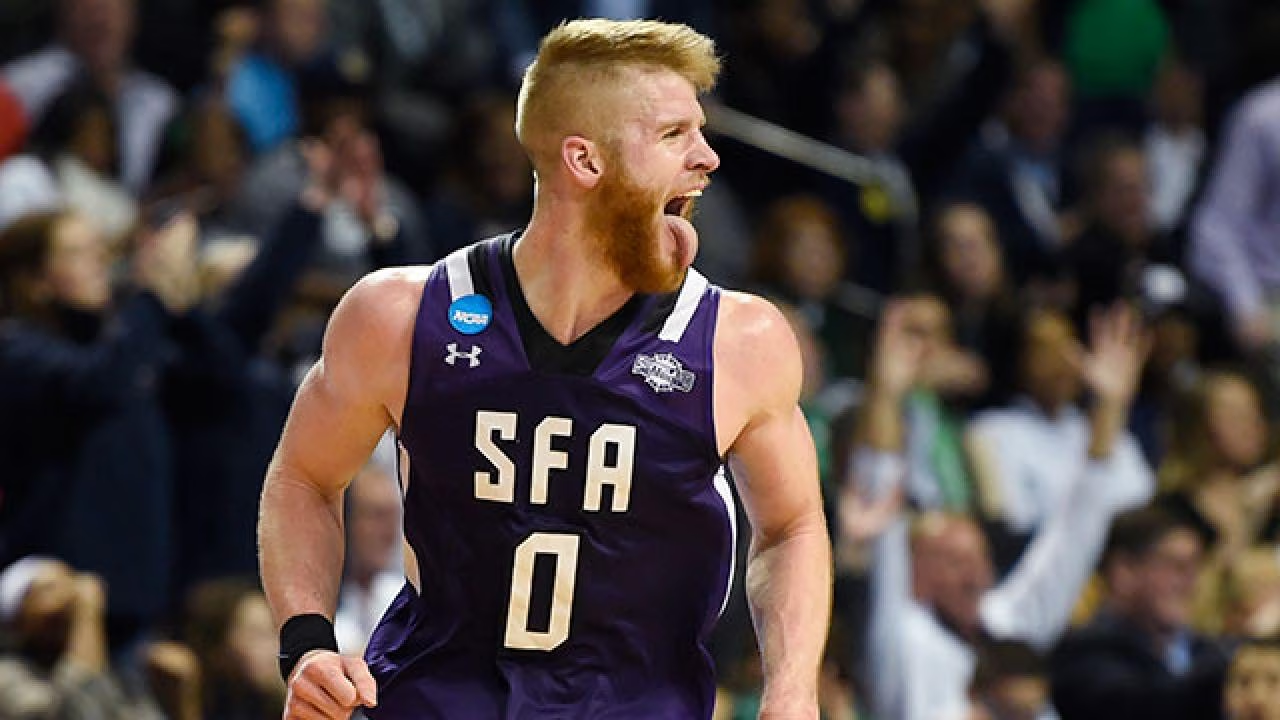
Maybe this is Stephen F. Austin's grand trick: they've been here all along. They may well continue to be here. Much like our current world, March has a way of circling back.
1 Here is my sliding scale for Cinderellas that are seeded higher than an 11: 8-10 seeds must make the Elite Eight. 6-7 seeds must make the Final Four, preferably via two upsets (a 4+ seed difference or larger) and at least one buzzer-beater. It is impossible to create a Cinderella from the 1-4 seed line. 5 seeds can only be included because of 2009-10 Butler, and I would argue that if you are a 5 seed, you are too good to be a Cinderella. At that level, you must at least equal Butler's accomplishment by making the title game to achieve true Cinderella status.
