


Ryan Pannone had just failed for the first time as a head coach and couldn’t help but think back to Europe. Pannone had left the international game after being hired by New Orleans Pelicans general manager Trajan Langdon as the Erie Bayhawks head coach in an effort to bring European-style basketball to the G-League, but throughout the season he couldn’t shake an idea shaped by his past.
Pannone–who now looks to keep Arkansas State rolling as its head coach–says he “fully recommends” coaching in Europe to others in his profession because of the way it forced him to see the game tactically, but he knows as well as anyone that it’s become notoriously brutal towards its coaches. The Arkansas State head coach says it’s the “worst job security you could possibly have as a coach,” that every game was like coaching an NCAA Tournament game and that some in Slovakia wanted him fired after losing two preseason games as the head coach of BC Prievidza because they thought he lost too much.
By the end of the 2019-2020 season, Pannone’s Bayhawks were 13-30 and had given him near certainty about his future.
“I'm definitely getting fired,” Pannone told Basket Under Review as he described and joked in hindsight about his thoughts at the time, “I suck.”
Turns out Pannone’s previous body of work—which included stints in China, Israel, Germany, high school and community college—was enough for Langdon to double down on his head coach with an improved roster. Pannone knew that if Langdon’s decision was going to be worthwhile he had to make changes, though.
Pannone’s experience as a high school head coach had allowed him to install his system through nearly year-round practice, in Europe he says he had 6-to-8 weeks to teach his complex offense. The G League provided just a week.
Two choices were laid out for Pannone at that point. He could run it back and hope that his team’s improved talent would naturally lead to better results. Or, he could acknowledge the fact that a chunk of his players—particularly younger ones—had a hard time grasping his system on a time crunch and that he had to change the way he taught it. Pannone chose the latter.
“I went into a deep dive of how does the human brain learn and retain information,” Pannone said, “and how can I better help code the brain and teach them if, then statements and how to learn and build complex decision-making because I was asking them to play a complex system.”
Pannone’s career was at a crossroads of sorts at that point. If he built his Bayhawks team into a winner, his stock could skyrocket. If not, his next steps likely would’ve been cloudier--although he surely would've landed on his feet.
Pannone’s deep dive eventually represented a positive turning point in his career as he led his Bayhawks team to an 11-4 finish in a shortened 2020-21 season. The season proved enough about Panone’s coaching acumen to management that they allowed him to lead the team into a relocation as it moved to Birmingham in an effort to get closer to the Pelicans.
A second season at the helm saw Pannone take the Birmingham Squadron to an 18-14 record before he was elevated to an assistant coach role with the New Orleans Pelicans assistant prior to the 2022-23 season.
Then, he got a call from Nate Oats.
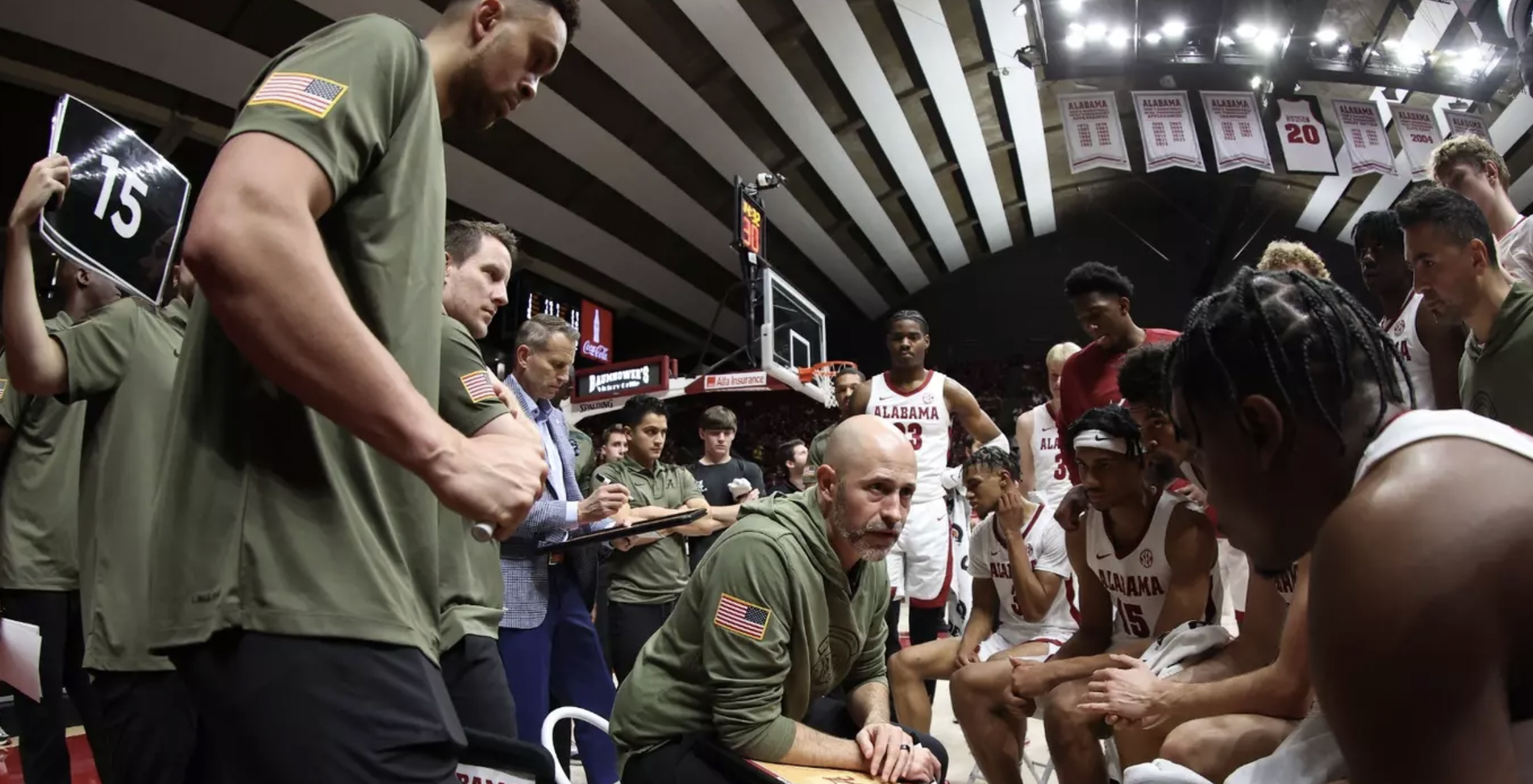
It had only been a year since Pannone had his NBA breakthrough, but Oats convinced the then-Pelicans assistant–who he’d gotten to know “through his work with the Pelicans’ organization”--to be his offensive coordinator. Oats and Pannone reached a Final Four–as well as an Elite Eight–and posted the nation’s highest scoring average per game in both of the seasons they spent together before it was all said and done. Their shared rèsumè was jarring enough to legitimize the idea that Pannone’s days in Tuscaloosa were numbered.
When the call came that ended Pannone’s time in Tuscaloosa, it allowed him to pursue seemingly the only genre of job that he had yet to take. Pannone had been an NBA assistant, a community college as well as a high school coach, had been in the NBA Summer League and had coached professional basketball in three different continents. He’d yet to have his own Division-I program, though.
Pannone knew as well as anyone that in order for him to have success, he had to have the right program call. Arkansas State appeared to present the properly-resourced job with winning expectations that Pannone kept his eye out for. As a result, his melting pot of a coaching brain roams the sidelines in Jonesboro, Arkansas, these days.
“He’s seen it all,” Arkansas State forward Jaxon Ellingsworth told Basket Under Review. "He just has a bunch of knowledge, and he shares it with you."
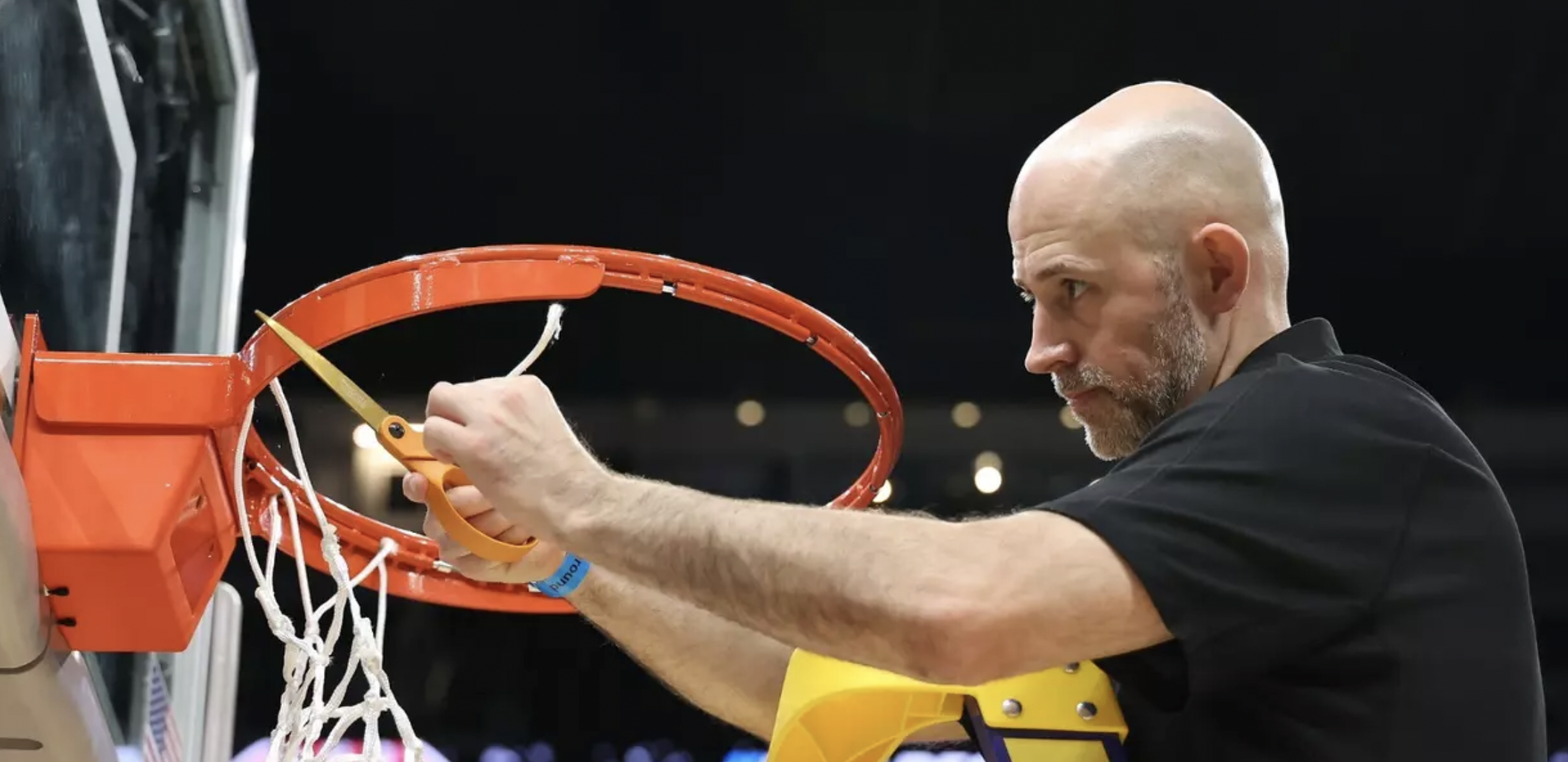
Pannone was grinding through each day as a full-time worker in the mortgage-lending business and coaching “never really” crossed his mind. The now-Arkansas State head coach got his foot in the door with the mortgage-lending job as a result of a relationship with a friend’s father who knew Pannone needed the money to be able to pay for tuition at the private high school he transferred to as a senior.
The career path inevitably appeared to align with Pannone’s job after he turned down offers to play “small college” basketball. Pannone always knew he’d love basketball regardless of his career path–and said that he “missed” it, but he thought that he’d end up as a business owner instead.
Then, he got a call. By the time Pannone hung up the phone, he was an assistant basketball coach at Oldsmar Christian School.
When Pannone stepped back into the gym, mortgage lending stood no chance. Pannone’s day job had his attention and made financial sense, but the gym and everything that happened within it had his heart.
“I became obsessed with it," Pannone said. “I tried to learn as much as I could about coaching. That obsession took over after two years and I knew this is what I had to try to find a way to do and make a living from.”
Pannone’s time as an assistant coach lasted just two seasons before he “quit” his mortgage-lending job and became the head coach at the school. On the side, Pannone dipped his toes into college basketball as a student manager at the University of South Florida. Those days were often long as Pannone drove an hour every day to his college gig, left there and drove another hour to Oldsmar Christian for after-school practices and drove 45 minutes home when it as all over. If there was ever a doubt as to whether Pannone was passionate enough about this, it ended that season.
The duality of roles for Pannone was the epitome of the college basketball grind. Coaching was “all” Pannone thought about those days. Nowadays Pannone–who appears to be largely regarded as a member of the industry that consistently opts for family time rather than nights out with industry members–has more to think about as a married man with three children, but the obsessed piece of him still exists.
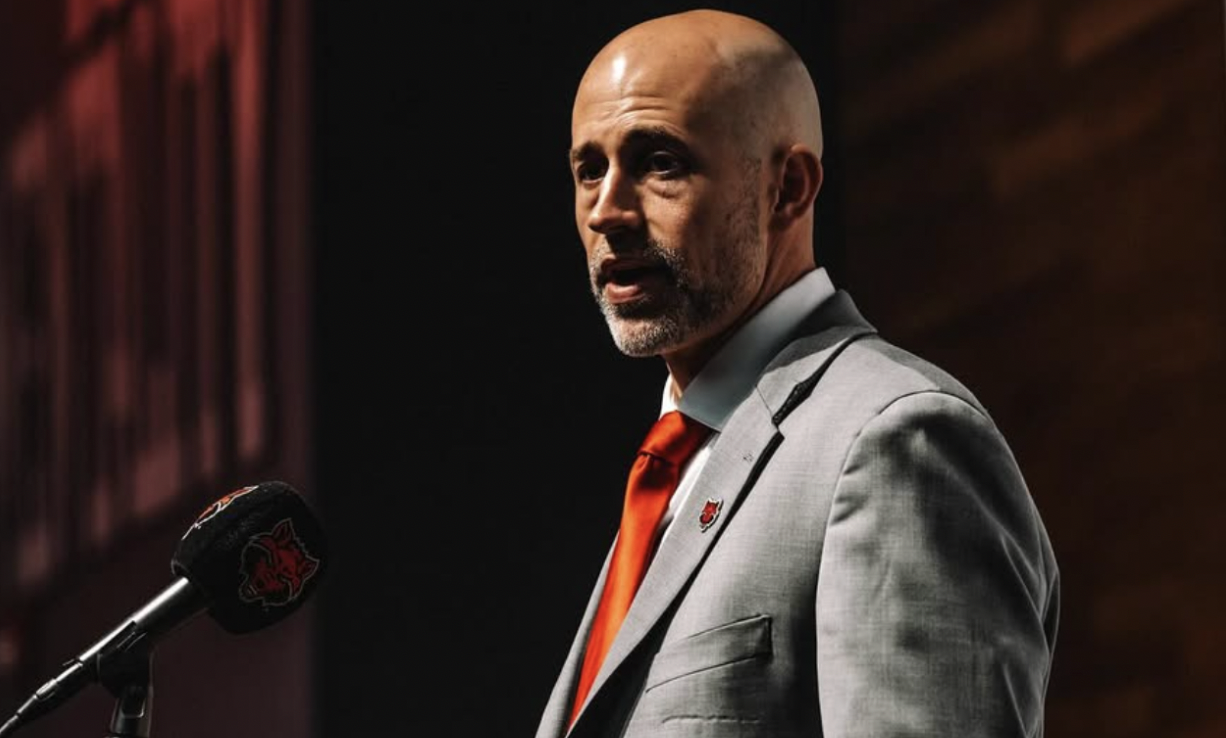
“Arkansas State is getting a tireless worker, a basketball junkie and someone who is incredibly competent in the X’s and O’s of basketball,” Michigan coach Dusty May said in a release when Pannone was hired at Arkansas State. “Ryan Pannone is an outstanding basketball mind and someone I have respected in our profession for a long time.”
Pannone’s bio on Arkansas State’s website includes recommendations from Oats, Iowa head coach Ben McCollum, New Orleans Pelicans general manager Bryson Graham, former NBA head coach Stan Van Gundy and Baylor head coach Scott Drew. That’s perhaps as much of a testament to his reputation as anything these days.
His players appear to be catching on to how Pannone’s experience can benefit them.
“I will see a play and a couple days later the play will be implemented into our practice or our team,” Arkansas State guard Chandler Jackson told Basket Under Review. “It’s like ‘dang, he be paying attention.’ He’s not just somebody that goes home and doesn’t watch basketball or just watches our film. He watches basketball. He watches everybody, college, NBA for sure and he’s always trying to learn.”
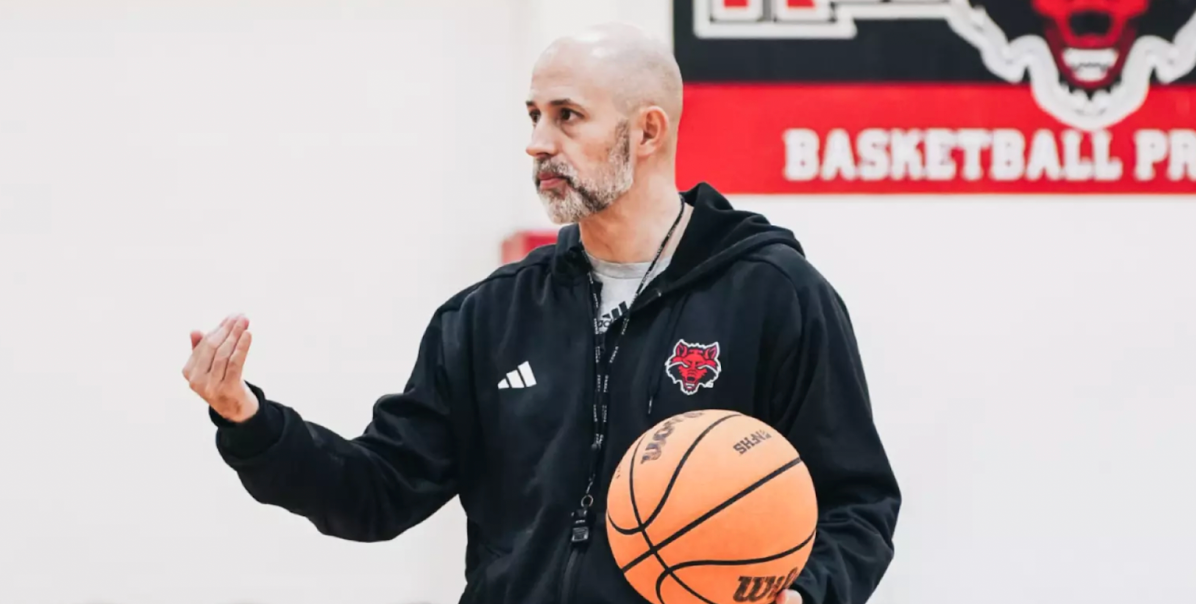
The ideas behind Pannone’s success at each stop aren't all that difficult to understand when it’s boiled down in simple terms. Pannone knows that sometimes other coaches are going to be more talented than he is. He knows that other teams’ players will sometimes be more talented than his, too.
He also knows that those things being true doesn’t solidify anything. Perhaps it means Pannone has to work a little harder to win or has to think outside the box, but it doesn’t mean he can’t find a way.
“I've always just been a big believer in ‘how do you create marginal gains?’” Pannone said. “You can be less talented and out work them, out sync them and have a chance to try to catch them. Over the course of my career I've always been incredibly passionate about having a growth mindset and studying the game.”
When Pannone was a “young coach” he would watch and study a clinic for 30 minutes-to-an hour each day in an effort to “consume” as much knowledge and information as possible. Later in Pannone’s career, analytics began to “take over” the NBA and the Sloan Sports Analytics Conference at MIT was born. He was hooked.
Pannone was intent enough on using analytics to his advantage that he started studying research papers despite saying he “can barely read, write and spell.” Ever since he was a kid, math has always been a “pretty good subject” for him, though. Pannone’s math background paired with his philosophy that copying what the “really smart people” are doing “will give you an edge over everyone else” pushed him further and further towards analytics.
The research included a look at the Dwight Howard effect in the NBA–which studied the effective field goal percentage of shots taken against every NBA big man in the paint as well as the number of shots turned down because of each big’s presence. It concluded that Howard had a greater defensive impact around the rim than anyone in the league. Pannone also dove into the “distance of defender theory”--which went through 10 years of shots taken in the NBA and found that for every one foot of separation from a defender, an offensive player’s 3-point percentage by “roughly” three percent.
Embracing the analytics revolution was always appealing to Pannone, but he wanted to make sure that he was doing this because he believed in it rather than just because “so and so” said that they were beneficial. As a result of his research, Pannone found that some myths existed within the basketball analytics space.
“Not all post ups are bad,” he says while going on to say that “not all mid-range shots are bad” and that “all 3s are not good” and that “all layups are not good right now.” To track what Pannone wants to, he says he and his staff use KenPom, Bart Torvik and HD Intelligence. Ellingsworth says Pannone measures “all types of things” like plus-minus, individual points per possession, points per shot, rebounding percentage, turnover percentage.
“Everything is tracked,” Ellingsworth said. “I’ve never seen a coach look at the game the way he does. He’s very smart, that’s one of the best things about him.”
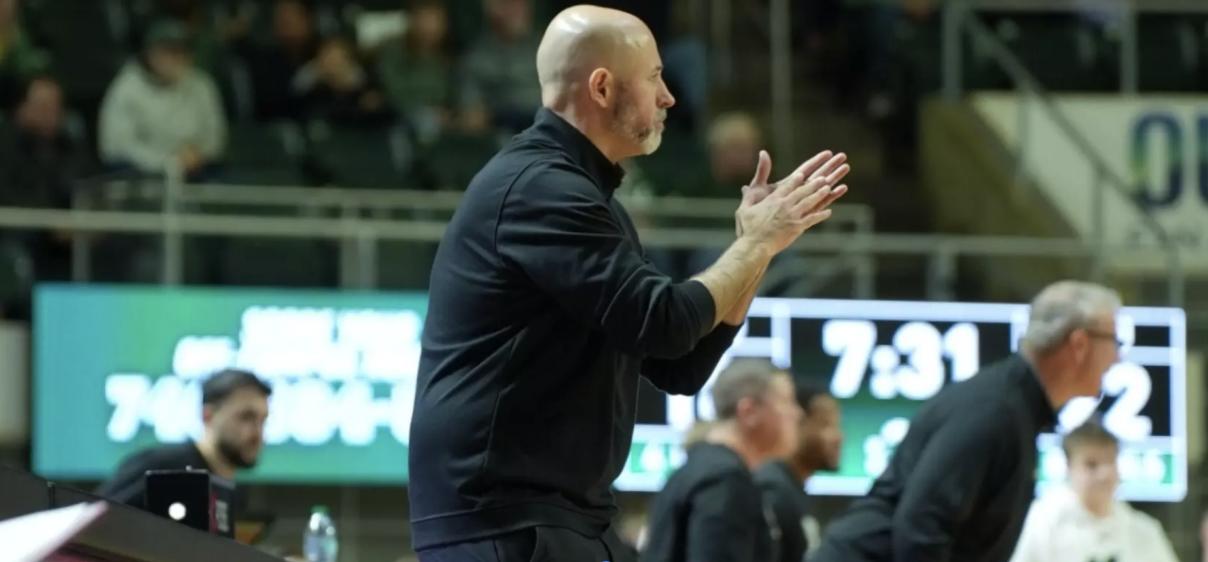
Ellingsworth is in his third college season and is a member of his third program after stops at East Carolina as well as UT Arlington. The 6-foot-9 forward says the way the Arkansas State staff approaches things is "completely different” than anywhere else he’s been. Jackson–who played three seasons at Florida State prior to transferring to Arkansas State–says his previous stop incorporated “a little bit” of analytics, but that Pannone involves it “times two.”
Former Alabama walk-on Max Scharnowski–who played for the Crimson Tide before and during Pannone’s tenure–is like most coaches in that he wants his teams to play fast, but that he provides practical examples of how to “get into simple flow offense” and have it be effective based off of orientation and logic. Scharnowski also says Pannone was often willing to change emphasis points based off of personnel and that he's implemented plays from games that few others likely watch.
The idea of an analytically-based system could invite the narrative that its premises could go over college player’s heads, but Ellingsworth says Pannone makes it easy to understand by “dumbing down” the information into packages that they can easily apply. Pannone pushes back on the “dumbing down” piece of the equation and clarifies that his players aren’t “too stupid” or “too dumb” to wrap their minds around analytics. Pannone knows his players are capable of understanding what he teaches as well as its purpose.
“I like it because if you’re trying to go to the next level, it shows what they look at,” Jackson said. “It’s good because you already get a head start.”
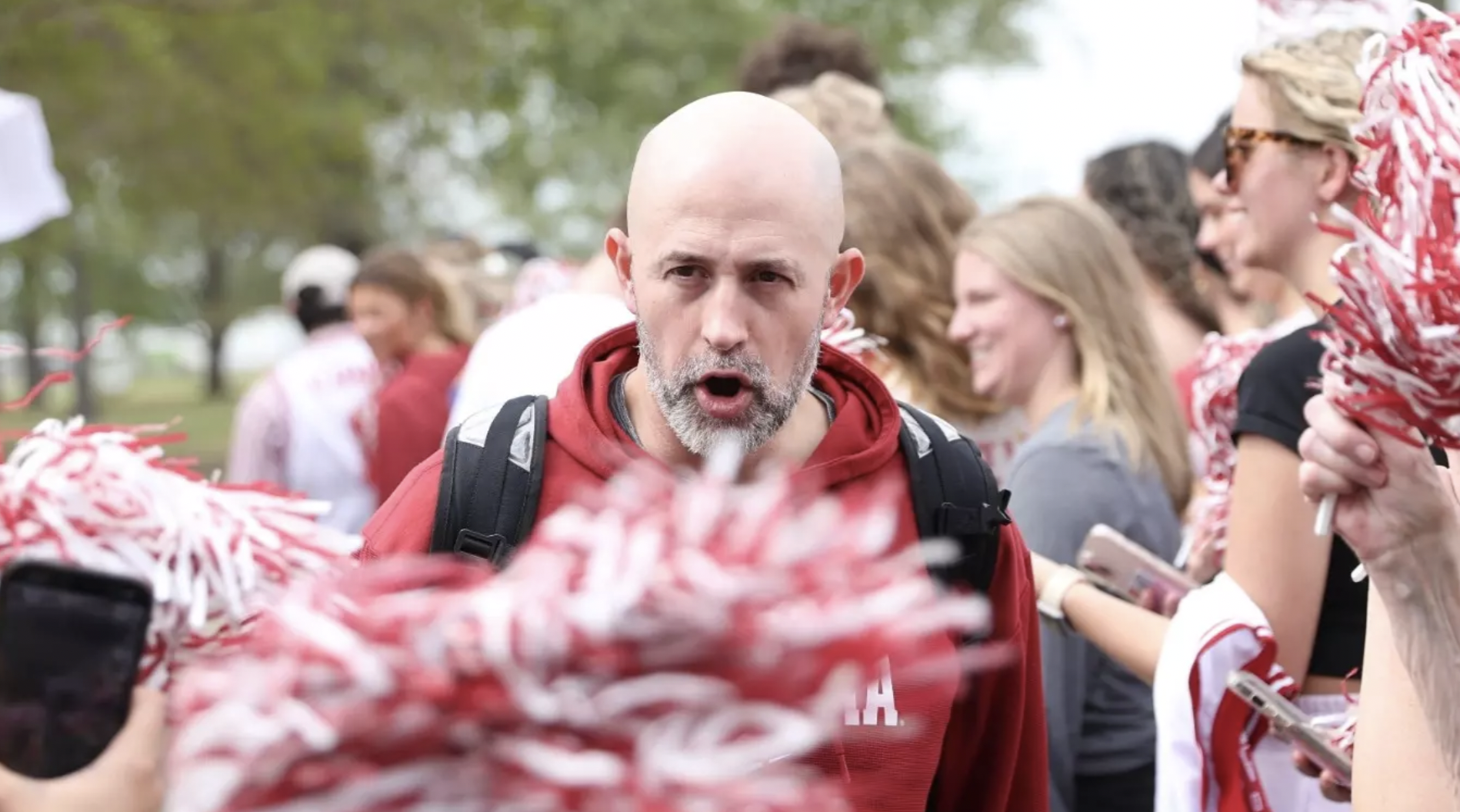
After spending a season as a graduate assistant at Columbia, Scharnowski’s brother Sam was off to the NBA Summer League to get his name out there with college coaches. As Scharnowski’s brother went around networking settings and spoke to coaches about his brother and connections to Alabama, a name kept popping up.
The name was Pannone, and Scharnowski says it came up in conversation an “eye opening” amount of times to his brother. Regardless of who it was Scharnowski’s brother was talking to, they had a story about how Pannone had taught them a play, went through clips with them or how he helped them in their pursuit of an opportunity.
“He has so many different relationships with people in the business,” Scharnowski told Basket Under Review. “He can call people and ask for advice, people call him and ask for advice. He knows everybody in basketball.”
Scharnowski says he believes the two biggest factors in Pannone’s rise have been his work ethic and his ability to form genuine connections. The former Alabama walk-on also says Pannone is the “most knowledgeable” coach he’s “ever been around.
The words appear to be jarring in some ways, but don’t appear to be far off from the consensus.
"Ryan Pannone is one of, if not the smartest, hardest working coaches I've ever had the pleasure to work with,” Graham–the New Orleans Pelicans general manager–said in a release. “He's got a devotion for players and a passion for the game, and it shows immensely through his creativity with X's and O's and player development. He's a leader and a competitor and an elite level head coach.”
Pannone’s leadership propelled Arkansas State to a 9-4 start–with wins over North Dakota State, Southern Miss, Ohio and Texas State–the 138th ranking in KenPom and a 2-0 start in SunBelt play. The Red Wolves have a clear identity as they’ve emphasized taking care of the ball, playing fast–which has resulted in the No. 12 tempo in the country–as well as a hard-nosed defense.
The 9-4 record in itself doesn't indicate much about Pannone individually as a result of Arkansas State's illustrious recent basketball history, but the signs appear to indicate that a consistently good program led by one of college basketball's best analytical minds resides in Jonesboro, Arkansas.
“Most definitely," Jackson said in regard to the idea that Pannone is a rising star in his profession. “Just give him a couple years and he’ll be good. Coach Pannone, he’s a good coach. You gotta start somewhere, so this is the beginning.”
