


As Pat Sellers picks up the phone and calls a transfer portal recruit, he feels as if it’s his duty to deliver a line of his that’s become a mainstay of his recruiting these days. It’s one that he’s had plenty of practice with in his five years as Central Connecticut’s head coach as a result of its current situation.
Sellers admits that his program doesn’t have “any” Name, Image and Likeness money “whatsoever” and offers “no” cost of attendance or “anything.” If a player has other options that provide what Sellers’ program can’t financially, it’s a difficult sell.
“I don’t want to waste your time and you don’t want to waste my time,” Sellers says he tells recruits at the beginning of each introductory call, “I’m telling you right now that we don’t have any NIL, but we like you as a player and think you can fit in here. If things don’t work out NIL wise in the next couple weeks, we’ll circle back with you and see where you are.”
Sellers says the only things his program can offer is good culture, good people and good basketball. It’s a pitch that still would’ve been difficult to sell without cost of attendance in the non-NIL era, but it’s become far more difficult as other programs around the country have used player compensation as a weapon to build their rosters.
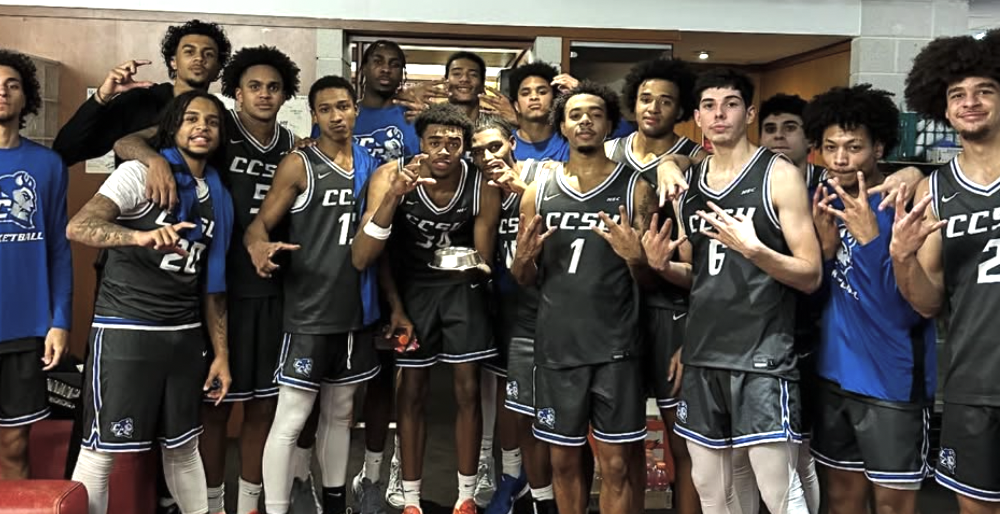
The Central Connecticut head coach and his staff don’t have the luxury that others have, yet their six games in 2025-26 include four wins, two of which were buy game wins over Boston College and Rutgers. The season prior they won 25 games, beat Saint Joseph’s and won the NEC regular season title for the second-consecutive season.
“I told our guys that’s what a championship program [looks like],” Rutgers coach Steve Pikiell said. “Central Connecticut is really good. I’m gonna compliment them. Pat’s done a great job there.”
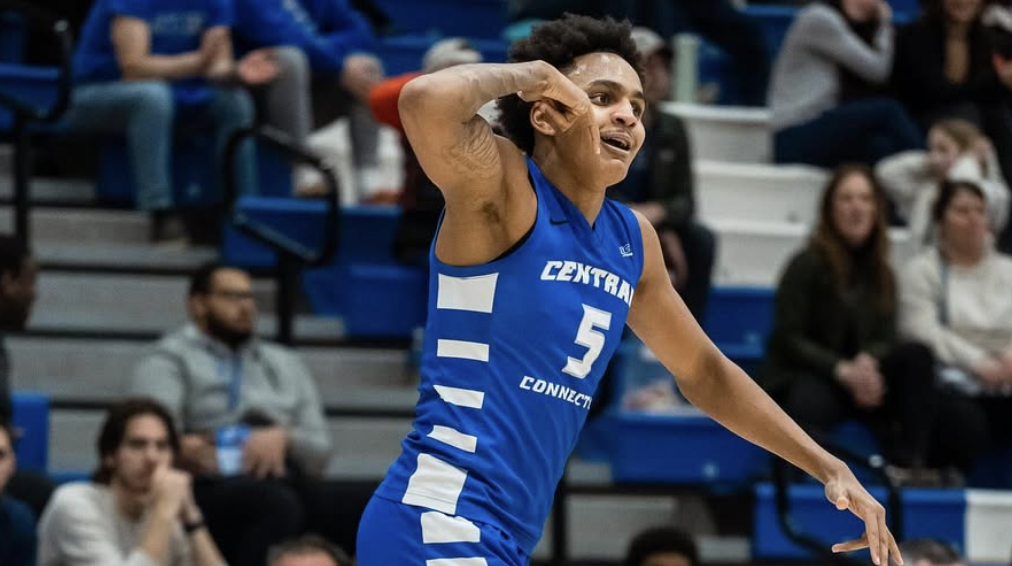
Central Connecticut guard Darin Smith Jr.--the Blue Devils’ leading scorer against Rutgers–tells Basket Under Review that this group wants to be in “those types of games” against power-five teams. The desire to compete on that stage doesn’t guarantee Sellers’ program anything, but it’s a far cry from the perception that it would back down because of the idea that it’s an underdog in those settings.
When Sellers’ team goes into a place like Jersey Mike’s Arena or Conte Forum, it knows that the roster down the sideline from its bench was likely constructed with multiple millions of dollars. That paired with the reality that the program’s history of losing every matchup with a power-five program since it took down Providence in 1999 could give those early-November games the feel of a mountain climb, but not for this group.
Instead, this group has generated “confidence going into those games,” as Blue Devils’ guard Jay Rodgers says. If Sellers has taught them anything, it’s that they can’t go into those games “scared” or with the disadvantages that could hold them back in mind. Perhaps the program’s ideology toward its NIL deficiency is most noticeable through its matchups with schools like Rutgers and Boston College–which clearly outpace it with their resources and funding, but couldn’t find an answer for what Sellers’ team threw at them.
In an era defined by coaches failing to adapt and using a changing landscape to explain away their struggles, Sellers and company have buckled up, grinded and intentionally pushed away any narrative that could be constructed as an excuse for below-standard performance.
“We’ve never had [NIL or cost of attendance] before, so it’s not like you’re having something taken away from you,” Central Connecticut assistant Ben Wood–who replies “I guess so” in regard to the premise that recruiting without resources is difficult–said. “We don’t dwell on things we’ve never had because we never had them so we just coach the kids we have.”
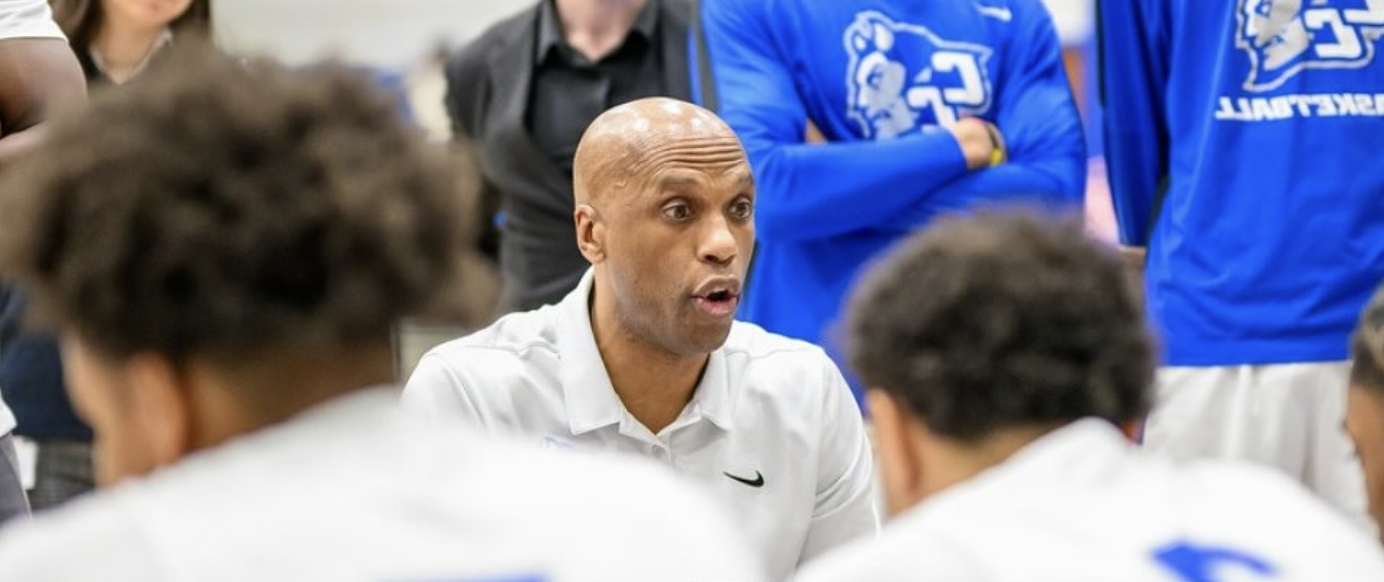
Five nights prior to Central Connecticut’s win over Boston College, Sellers walked into the locker room after a 71-49 loss to Quinnipiac and had a choice to make. Sellers could either rip into his players as a result of the final score, or he could try to encourage them.
Central Connecticut had just one double-figure scorer in that game, shot 28% from the field and shot just 17% from 3-point range. Yet, when Sellers thought back to the 40 minutes of play that he just watched, he remembered “a lot of good things happening.”
Perhaps it's naivety or delusion to some, but this is who Sellers is. He’s not a sugarcoater, but he’s relentlessly positive–sometimes to a fault–and wants that to come across through his program.
“I’m a glass half full guy,” Sellers told Basket Under Review. “Sometimes my assistants come up to me and say ‘man, you’ve gotta get on these guys.’ I need that because I’m always happy. I’m just a happy person”
When Sellers took over what others likely considered to be a dead-end job at this place in 2021–after a five-win 2020-21 season and a 4-27 finish in 2019-2020–he never viewed it as the college basketball wasteland that some others described it as. The now-Blue Devils’ head coach still remembers the program when he was an assistant coach on its staff and its teams were “really good” in the late 1990s and early 2000s.
Instead of waiting for a different gig to open after the 2019 season, Sellers took a bet on his alma mater, the school’s proximity to upper-tier prep high schools and his love for the place. Sellers–who was a piece of Jim Calhoun’s UConn staff from 2004-2010, was on UMass, Hofstra, Creighton as well as DePaul’s staff and spent a year coaching in China–brought his positive ideals as well as a melting pot of coaching styles from his previous stops to this place.
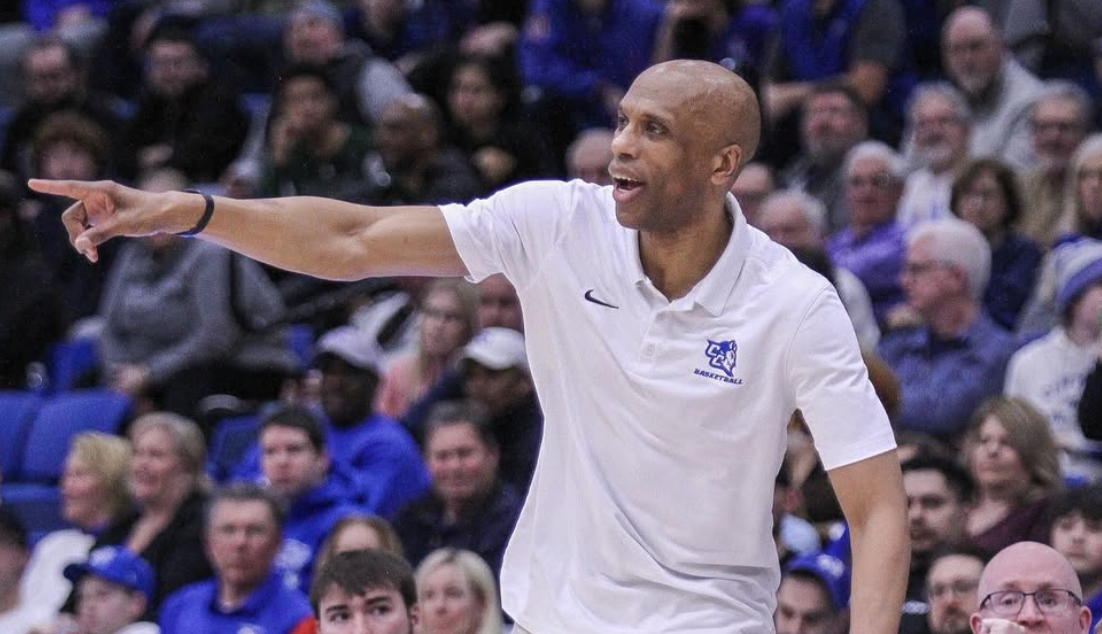
“He learned a lot throughout his years and he’s teaching us the way,” Smith said. “It’s important to get to learn things like that, he knows everything and he has stories to tell for days.”
Among Sellers’ most best stories is his recollection of playing for a pickup basketball team made up of the owner–who he describes as the “Mark Cuban of China”--of Shanxi Zhongyu–the team in which he coached in China–as well as the team’s assistant general manager and a few of the owner’s “buddies.” Sellers says that anytime the team would go on the road, its owner would challenge the other ownership group to a game and would bring sneakers, bags and uniforms for his team to wear.
Sellers’ experience ranges from that season in China, a professional playing career in Great Britain and a high school coaching gig in addition to his college experience. The Central Connecticut head coach has paid his dues to the game and attracts those like him.
“I’m a gym rat,” Sellers said. “I'm a huge NBA guy. I'll probably watch two NBA games at night so Jay [Rodgers] and I will text each other during games at night because he loves the NBA too and watches a lot of games so my point is we want guys who are gym rats.”
Wood says that if a player isn’t interested in “playing and working and developing” then they will often stand out easily. This program doesn’t work for players like that. It’s not built for players like that. Sellers is positive, but he loves this too much to compromise that.
For as long as he leads this place, Central Connecticut will take on the mentality of its coach. It will love basketball so much that it has to be intentional about bringing other, more important things up in conversation. It will be overtly positive, at times to a fault. It won’t back down from anyone, either.
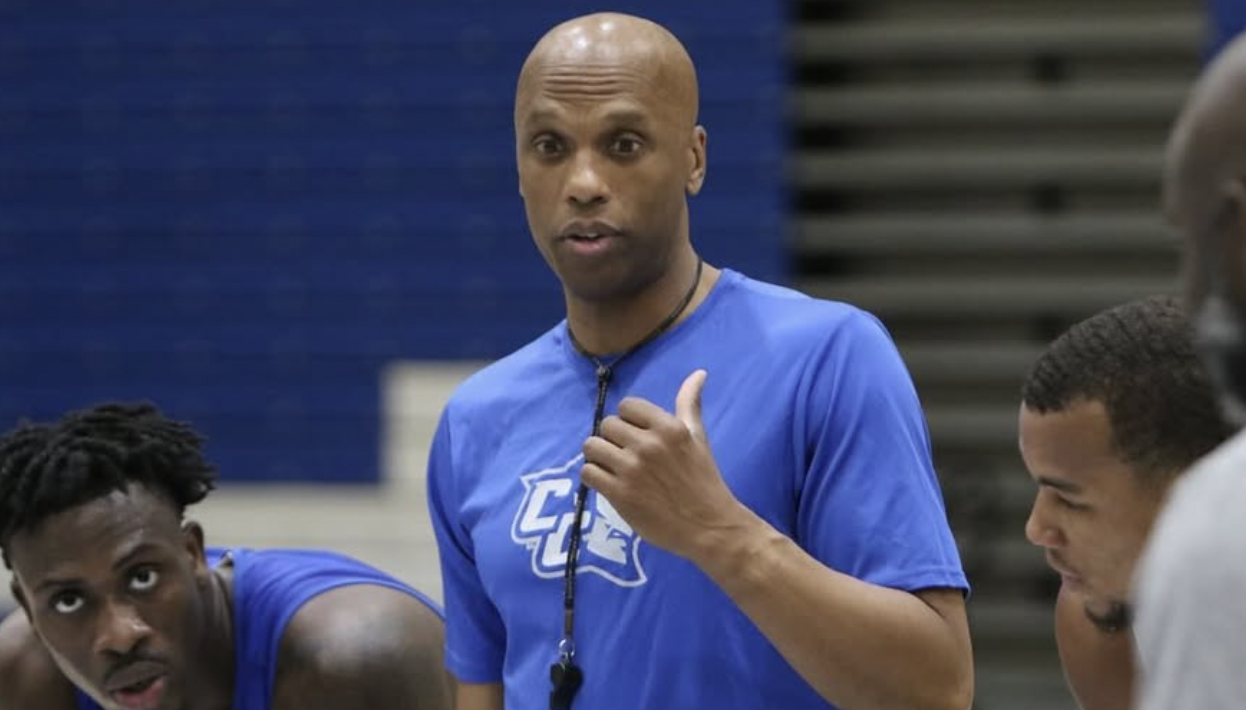
“Hard Hittin’” New Britain, Connecticut, is personified by its history as a hardware manufacturing hub and the collective grit of its population of over 73,000. Seldom does a school embrace precisely what the city it’s located in represents, but this one has made an intentional effort toward doing so.
Sellers and Wood didn’t coordinate it, but in separate phone conversations with Basket Under Review, they each bring up the city’s nickname as they characterize the program that they’ve worked together to build into a winner. In the same way Sellers’ players have taken on his personality, he’s channelled the city’s.
“It’s a blue-collar town,” Sellers–who says he’s spent time working for numerous “tough guys” throughout his career–said. “We kinda take what the town gives us as a group and we take it to heart. We want to take it to heart, we kind of take that blue collar, hard nosed work for everything mentality. That’s who we’ve become.”
Sellers’ program’s intent on embracing a blue-collar nature manifested itself in it finishing top 15 in defensive rebounding percentage, 41st in opponent effective field goal percentage, top 25 in 3-point defense, top 50 in block percentage and top two in opponent free throws per game.
Wood says that in a low-major league like Central Connecticut is in, it’s easier to stay in games consistently by rebounding and defending rather than racing teams to 100 points. The Central Connecticut assistant also says it’s easier to get into good offense as a result of good defense, but that the Blue Devils’ staff has worked to build a “well rounded” program rather than one that just grinds through games.
Sellers’ team demonstrated its principles of toughness and intensity on the defensive end as it held both Boston College and Rutgers to under 60 points. Boston College shot just 33% from the field and 21% from 3-point range and was out-rebounded against the Blue Devils while Rutgers shot 36% overall, 26% from 3-point range and was also out-rebounded by Sellers’ team. At the end of each night, Sellers rewarded one of his players with a dog bowl to highlight their mentality and production.
All of Central Connecticut’s program staples were on display. One in particular prompted all of them to be able to show, though.
“We really have confidence going into those games,” Rodgers told Basket Under Review. “You can’t go into those games being scared or anything like that, so we go in there thinking that we can win. For us, it’s just confidence.”
As Central Connecticut meets Seton Hall in the Prudential Center and looks to sweep its slate of power-five buy games, it won’t have the investment that Shaheen Holloway’s program does or a crowd backing. It may not have its best that day.
But it knows that if it falls, it won’t be due to timidity or incapability. This program wasn’t built that way.
“If you’ve got a super high IQ and you’ve got the mindset, when you go into a big-time arena against a big-time team it doesn’t affect you,” Sellers said. “It’s a mindset. These guys we’re playing against may have a two million, four million dollar payroll, whatsoever, and we’re gonna go cut them up, defend, rebound, move the ball and play a good brand of basketball then we’re gonna give ourselves a chance to win the game. We can show them that ‘hey, you might have all of this, but we love basketball, we play basketball the right way, we’ve got a tough, hard-nosed mindset that’s gonna carry us through.’”
