


NASHVILLE—-The fear of a bystander stopping, glaring and making assumptions has seemingly never been stronger than the potential of learning for Ethan Duncan. If it is, it doesn’t show as he moseys on the sidewalk next to Lipscomb’s student activities center searching for answers with a camera in his hand.
Duncan isn’t out there with a plan to approach anyone specifically, but he’s on a mission to broaden his horizons through any Lipscomb student he can find that’s willing to take a few minutes to provide their perspective on questions that stir in his mind. Duncan hopes that whatever he confronts the person sitting in front of him with forces them to wrestle with what he asks in the same way that he does.
“That action of actually seeing their brain churn and seeing their eyes light up when someone actually confronts them with a question they’ve never been asked before, that’s a beautiful moment,” Duncan told Basket Under Review. “We're all here for a short amount of time and we're all serving some type of God. I just would like others to think about whether whatever they're serving, whatever they're indulging is something that they really genuinely wish that they were spending more time on or less time on?”
Duncan’s camera may indicate a desire for a gotcha moment to the seemingly perturbed group of students that shut him down as he approaches them, but the idea that he’s angling to take advantage of someone for a moment of social media notoriety is as futile as the pursuit to shut down Duncan’s Division-I dreams has been. Still, Duncan experiences plenty of people turning him down–which he says “hurts.”
Rejection “is a part of it,” when you do something as bold as Duncan does, though. It still stings–particularly when Duncan sees someone who he believes can provide a “great story" and they don’t give him the time of day–yet the idea of the chase still contributes to the joy that Duncan ultimately receives from his thought-provoking activity. The Lipscomb guard realized long ago that when a person he encounters does share their thoughts, they often watch him and how he responds to what they say for validation. The idea has challenged him to become better in his role.
“I think that’s important because when somebody shares a piece of themselves to somebody and they don’t respond in a way that seems genuine, or that they seem intrigued, then they’re not willing to share the next time,” Duncan said. “So, maybe I can be a part of somebody breaking down that wall of becoming more vulnerable to share the rougher sides of their life and experiences.”
Duncan says he considers his activity to be similar to evangelism and that it’s his way to “make somebody feel the love of Christ and put on them the genuine nature, desire to hear someone.” For that to be the case, Duncan says his actions have to come from a place of love for the person on the other side of the camera lens rather than “a desire for good content or an artistic expression.”
In the same way that Duncan hopes he’s affecting those who he speaks with in interview settings, he’s strengthened his own faith as a result of the actions he takes. Duncan still recalls a series of interactions with a Lipscomb cafeteria worker that lost her mother less than a year ago and still shows up to work each day exuding a “brightness” and a “gentle kindness” for the students that she serves. Most Lipscomb students pass by the cafeteria worker and don’t seem to think much of her, but Duncan thought enough of her to include her in an Instagram teaser for “a series of conversations, moments and art” that he calls “Common Threads.”
Perhaps Duncan recognizing the cafeteria worker’s story says as much about him as it does her.
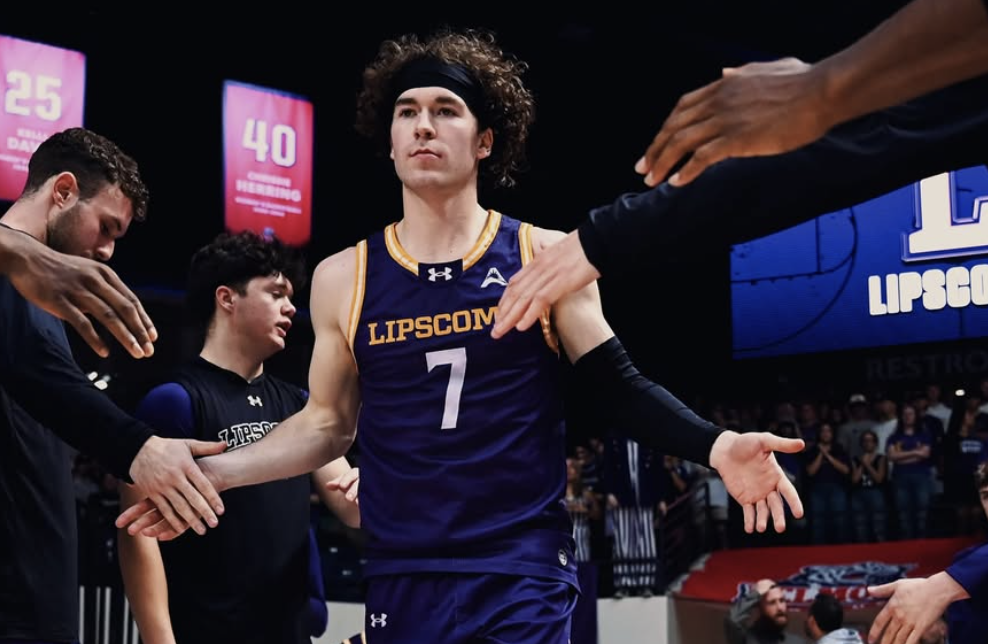
“He’s learned a lot and is just really wise beyond his years,” Lipscomb coach Kevin Carroll told Basket Under Review. “When he got here we had time to just sit down and talk one-on-one and I was just amazed how wise he is, how mature he is. He looks at life as someone who’s been through things, which he has.”
When Duncan wraps up his filming for the day, heads to class at Lipscomb’s Ezell Center and subsequently strolls over to Allen Arena for practice, he knows that not everything will make the cut when he sits down and completes his final product. He knows that he’s got to prioritize the answers that are thought out and articulated well enough to make him consider if he’s been going about this all wrong. Duncan knows a good story when he sees one, but the Lipscomb guard wants to make it clear that he values every answer whether it’s deep or not.
A Lipscomb assistant coach says Duncan’s line of questioning hit on what brings him joy and what pressures society places on him daily. Duncan says that not every interview has the same questions and that he wants the responses to be organic.
The questions are emblematic of who the Lubbock, Texas, native is. He admits that he struggles to engage in small talk–although his parents say he still has a unique ability to connect with people. Duncan says that as people “we’re fixated to address the things in life that we don’t care about” like the weather, discussing broadly “how we’re doing” and that those interactions lead to “transactional relationships” that don’t “really have much depth.” That’s not how he rolls.
Forget reciting the normal line about doing well or living the dream. A casual pass by interaction with Duncan could include a thought-provoking question about faith or a mention of something that resonated with the Lipscomb guard. When Duncan walks by someone, he tries to interact in a way that “makes them feel like they’re a little bit out of their shell.” Some people like to stay in that theoretical shell–which causes Duncan to “tiptoe” around–but he believes that most people are “excited” to share “a deeper side of themselves that they don’t always get to express.”
“Everyone has a uniqueness that is just begging to be pulled out through conversation,” Duncan said. “A lot of times, I think the way that we behave, the way that we dress, the way that we interact is just an example and kind of a foreshadowing of how we think and how our mind works.”
Duncan doesn’t do anything surface level these days. As the Lipscomb guard examines his own mind, he calls it “sentimental” and acknowledges that he’s “always thinking in a big, kind of existential” picture and that the thought of that is “kind of dramatic” when he hears himself say it.
The theory behind the depth of Duncan’s mindset doesn’t appear to be all that dramatic as he reflects on why he does what he does as he carries a camera with him. The idea of using his hobby to make as many people feel valued as possible doesn’t appeal to Duncan because he feels as if that takes the genuineness out of what he does. Instead, he hopes to do this naturally in a way that is beneficial to all and ends in him being known as an “individual who aspires to know others instead of an individual who desires for others to know him.”
Duncan’s ideal requires dropping the ego that Division-I basketball players are perceived as having, removing his shell entirely when he’s walking around Lipscomb’s campus and being unafraid of rejection. The side effects are easy to see, but Duncan doesn’t question his approach.
“A quick, courageous conversation that you can have can change your day, change your week,” Duncan said, “And it really can change your life in just five minutes.”
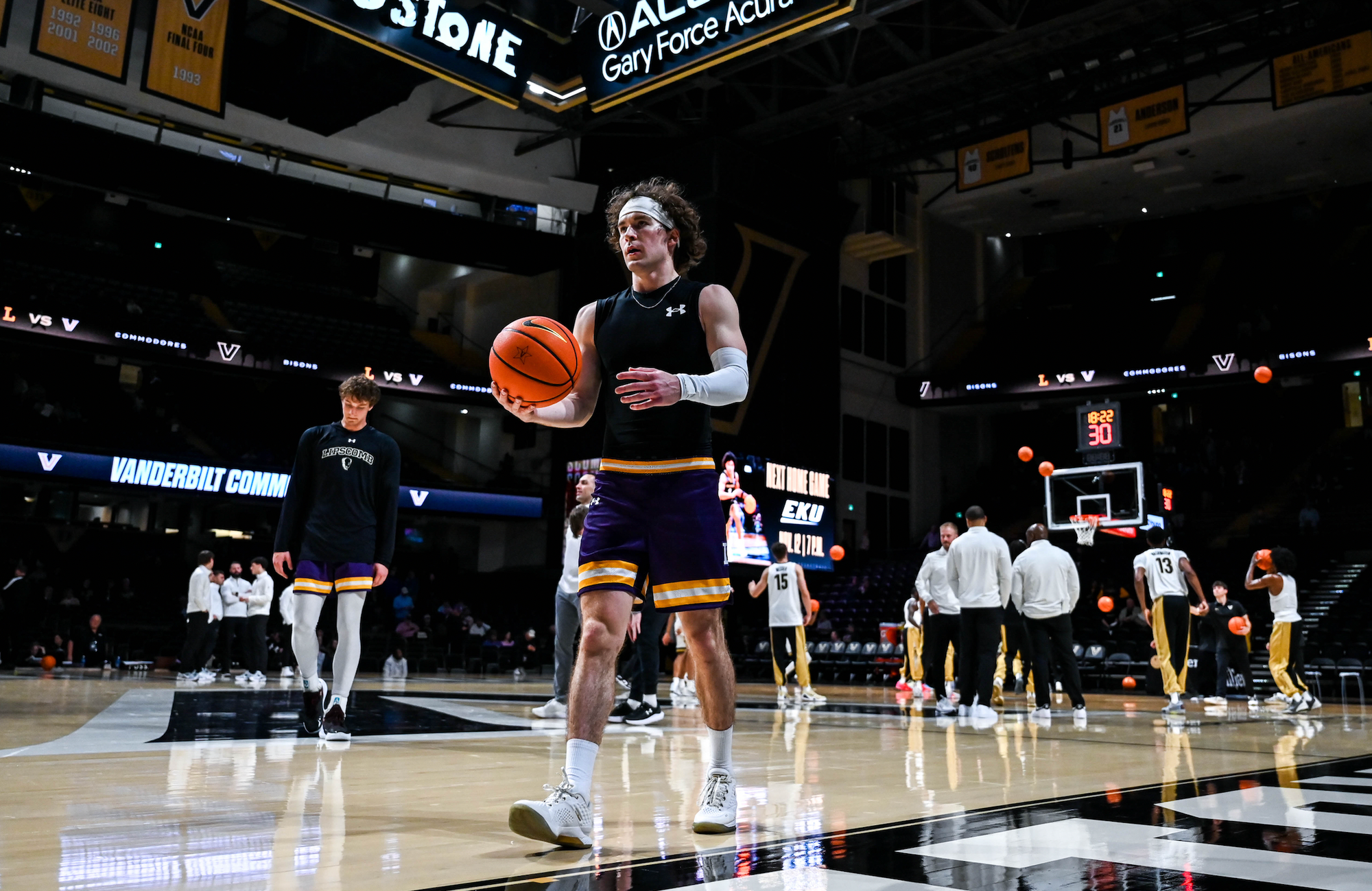
Duncan’s dad, Todd, remembers tucking Duncan in when the now-Lipscomb guard was “two or three” years old and receiving a question that he never expected to receive from his toddler.
“Did God invent himself?” Duncan asked him.
Duncan’s dad tried to give Duncan an answer based off of his Biblical knowledge, but admitted “that’s a great question” as he was seemingly taken aback by the depth of it. The questions were never “rebellious,” and were always centered around Duncan’s desire to know the why behind things that were important in life.
The question is reflective of what his dad says is Duncan’s “persistent, constant journey to be better” in life. Oftentimes, his questions would relate to theology. Other times, they’d press in on why people went about things the way they did. The questions always appeared to have some sort of unforeseen depth, though.
“If you ask profound questions, you get profound answers and if you ask simple questions, you get simple answers,” Duncan’s mom, Holly, said. “Ethan has always been someone who has asked profound questions and he also has profound answers. Even at a young age he demonstrated that.”
Duncan’s deep questioning in that moment as a three-year old is one of a few in which his parents could sense that something was spinning in his mind constantly.
His dad says he peeked through the window of his son’s church classroom one Sunday to find him sitting in the middle of the room taking it all in, thinking while everything else around him was chaotic. Duncan’s mom remembers her husband taking Duncan to the driving range when Duncan was four years old. The memory from that trip included Duncan “teaching and preaching” to the golf balls while standing on a turned-over bucket of them. “God cares about you,” he would tell each ball.
“It was so cool because he was so young,” Duncan’s mom said, “And he wanted to encourage other people, to let them know that they were cared about.”
The resounding thought of Duncan’s parents in that moment was “it’ll be so exciting to see all the Lord does in his life in different areas,” and that the possibilities wouldn’t be limited to basketball.
Duncan’s parents are profound thinkers in their own way and could tell that their son was different than most in the way he thought. Nowadays, he still sends poems to his parents and asks for their thoughts on deep matters. That’s who he is, and who he’s always been.
“He wants things to be meaningful and purposeful,” Duncan’s dad said. “That’s fun when you see your kids, and you’re their parent, but you’re having conversations that are deeper than ‘clean up your room. Did you wash the dishes?’ You see him growing up.”
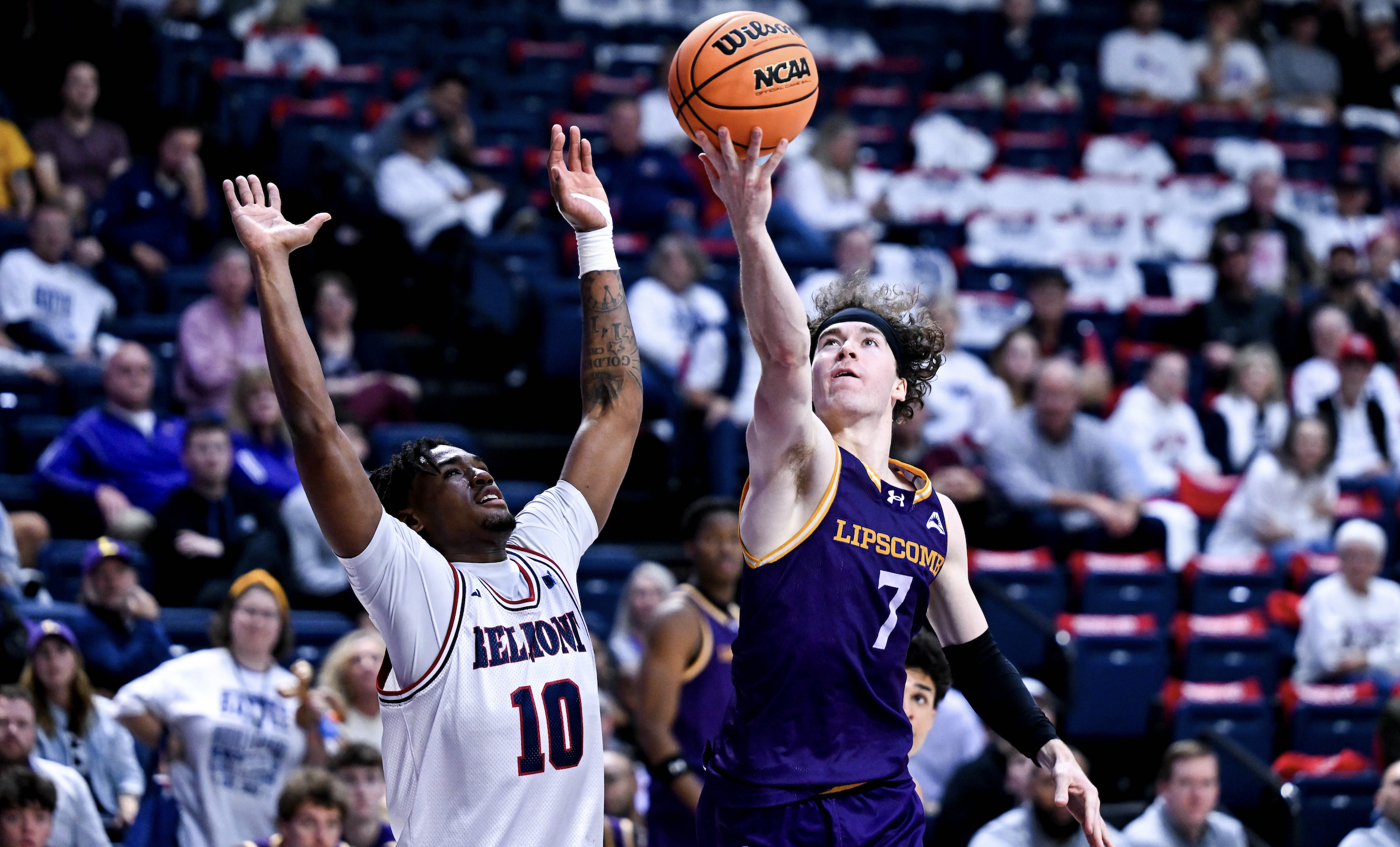
The relentless wonder and pursuit of a greater understanding doesn’t manifest itself in the ways it did while Duncan was a child, but it’s still clearly present in the Lipscomb guard’s life in even a surface-level look at him.
Perhaps Duncan gives it away as he sits in the third row of a classroom hanging onto every word a professor speaks while scribbling down notes in what he describes as a "pamphlet” that he can keep in his pocket if need be. When Duncan was a kid, he had an assortment of “little journals” that he’d write questions in. These days, he keeps the tradition going.
“My mind’s always churning, it’s always thinking and I can’t always process every thought I have,” Duncan said. “So, I like to write it down.”
Duncan says the notebook is often used to table thoughts on conversations that he’s having so that he can later refer to the contents of them and dissect them in his alone time. Once he can do that, he often has his “light bulb” moment and becomes “more mindful” of what he can take away.
Each of Duncan’s parents have always been intentional about making notes and have noticed the same in their son since he was a kid that wrote goals out often. Neither of them are surprised to see that the trend has continued as he hears mind-provoking pieces of conversation.
“He’s always trying to capture that,” Duncan’s mom told Basket Under Review. “He can come back to it and think more about it, or reference it or talk about it.”
The pamphlet can also be used for Duncan to memorize something so that he can later share it with someone else. Most around Lipscomb’s campus who know Duncan say they’ve seen the pamphlet before and aren’t all that surprised to know its purpose.
Duncan repeats the idea that each of those people have something to say that he can use to enhance his own thinking or wrestle with. The pamphlet itself is a microcosm of Duncan’s humble search for knowledge and purpose.
“I think a lot of experiences I have on campus aren’t ones that I want to experience just once,” Duncan said, “But ones that I want to jot down and remember and by the end of the night think about. It’s not all about basketball, it’s not all about school and there’s people that I come in contact with every day that are living their lives and they have something to offer me that can give me joy.”
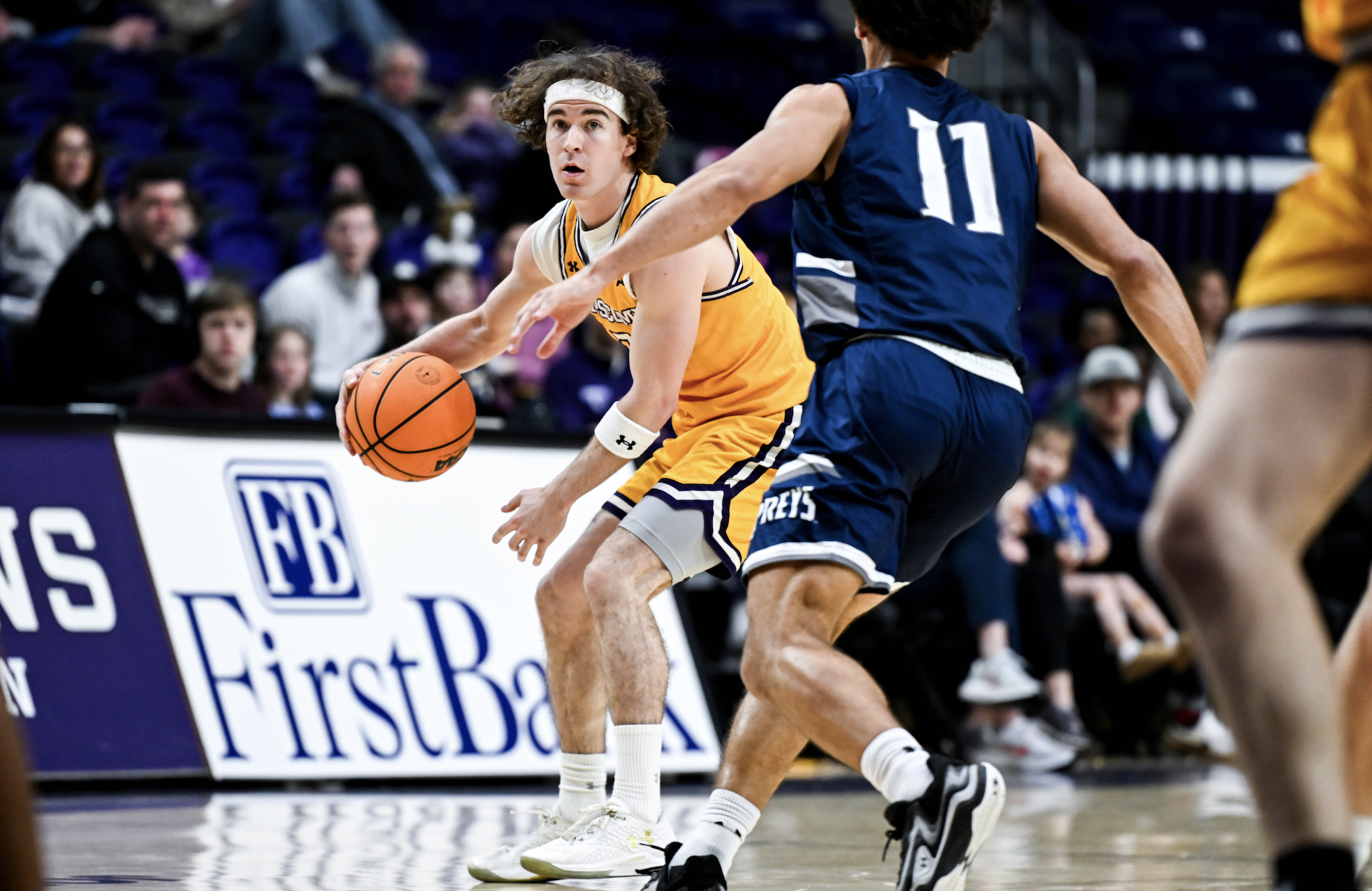
With his journal in hand, Duncan enters classroom 211 on the second floor of Lipscomb’s Ezell Center in the moments following 1:00 central time with a backwards hat and baggy basketball shorts. As Lipscomb professor Alan Griggs addresses the class by breaking the ice, Duncan works his way across the room with a plate made up from Allen Arena’s fueling station and bumps a few fists before sitting down all the way to the right in the third row of the classroom.
The class Duncan attended each Monday and Wednesday afternoon was deceivingly named Empathy in Media. The class, as Duncan would soon find out, didn’t have all that much to do with media. It had almost exclusively to do with life’s biggest questions and the potential for self improvement.
In some ways, it was the perfect class for Duncan and a microcosm of his mind. The idea that the class was led by grizzled Lipscomb professor Alan Griggs–who was in his last on-campus semester before retirement and appeared to be at the most reflective point of his career–also appeared to be fate.
“It is,” Duncan said of the idea that the class fit him nearly perfectly. “I think a lot of it has to do with just how important [Griggs] feels that everybody in his class is and how much he wants them to know that their mind is something that's profound and that they're deserving of exploring their own mind.”
The class’ assignments included papers that questioned where students received validation, where the church is in each of their individual lives, what’s holding them back from a more successful life, what their rules to live by are and what their vision of a good life is.
When the class went off script, it often had to do with those in it asking Duncan for marriage advice and picking his brain on what changed once he tied the knot. Duncan’s classmate Gabriel Espinosa still recalls a metaphor of Duncan’s regarding marriage.
“Once you reach one mountain there’s always another one to climb and that’s something that really sat with me,” Espinosa said. “He used the example of marriage that once you find the one now you have to climb the mountain to provide for her.”
The metaphor isn’t off brand as far as Espinosa–who sat next to Duncan in the class–is concerned.
Between Duncan’s intent listening and marriage testimonials, he often asked well-intentioned questions that made the people they were intended for think for a second before answering and often wanted to think through his answers to theirs by pausing and asking for a second.
The class’ final meeting came during Lipscomb’s mid-day game against Tennessee Tech, which caused Duncan to miss it. He wanted to leave it with something, though. As a result, he sent in a 763-word letter to the class to be read at its final meeting. The intent and contents of the letter appear to sum up the Lipscomb guard in a way.
“I could tell that his mind would search deep into every given situation, which is something I can relate to,” Espinosa told Basket Under Review. “He tends to analyze deeply which is such a blessing and a gift.”
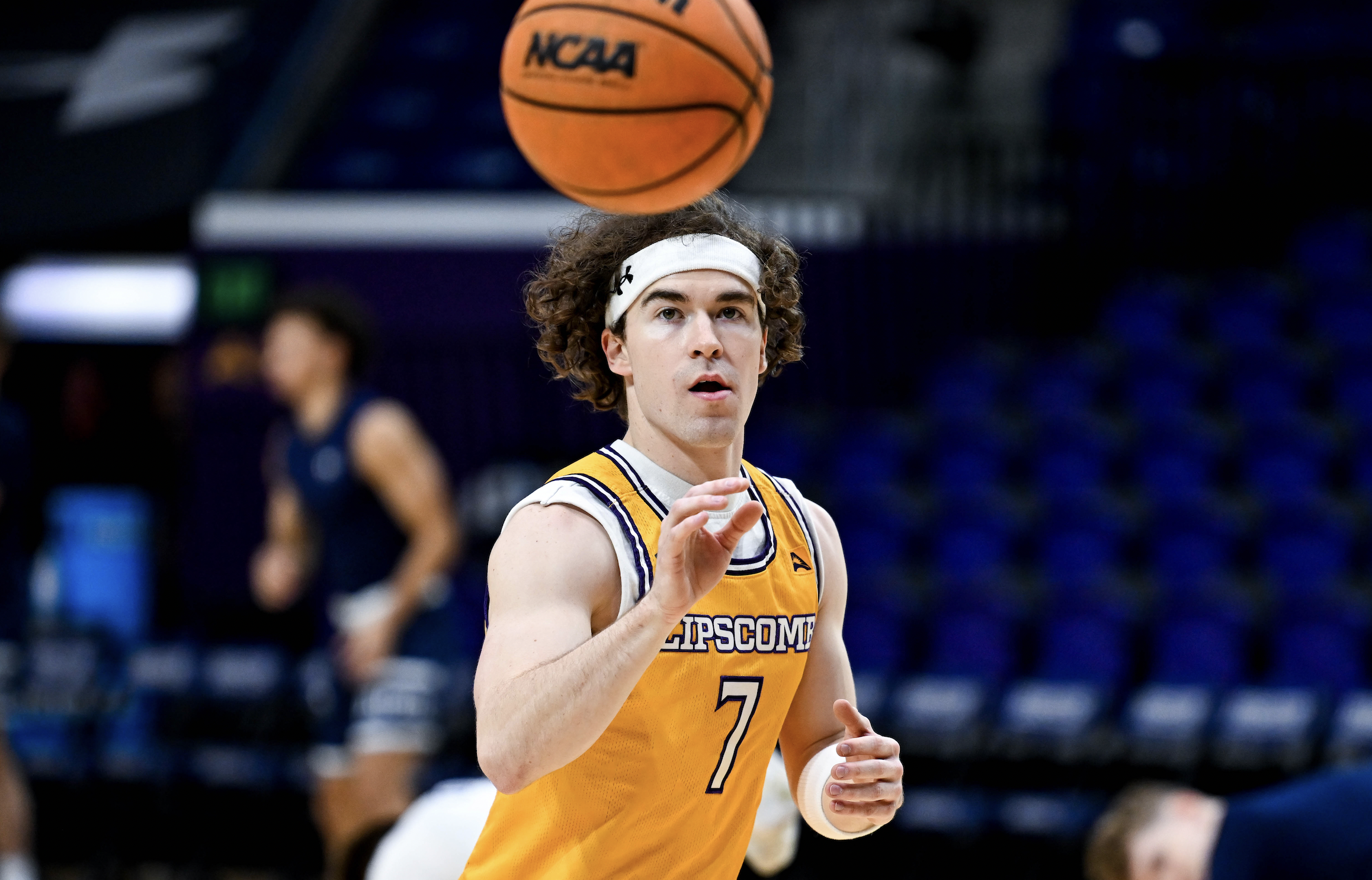
Lipscomb forward Cole Middleton was tired and gearing up to watch TV as Lipscomb boarded the bus after a 92-77 loss to Mercer when he got a text from Duncan.
“Bro, do you want to debate ChatGPT with me about how to prove God exists or why Jesus is Lord or Jesus Christ is king?” Duncan’s text said.
Middleton initially wasn't in the mood to make the trip to the front of the bus as a result of Lipscomb’s loss and the long stretch of travel that the team was in the midst of, but Middleton gave in and sat down by Duncan. Middleton and Duncan hadn’t been teammates for long at that point, but had already had multiple conversations about religion. This one Qwas perhaps the most notable to that point.
“Being at my third school, I’ve had a lot of different teammates and Ethan is the first one to be very up front about having conversation like that, which has been really cool,” Middleton told Basket Under Review. “I’ve had teammates that have been pastors and have worked in ministry, but it’s very cool to have that conversation with someone who wants to have that conversation. Not a lot of people are willing to be deep and be serious and have conversation like that.”
Middleton says that Duncan made the decision to put ChatGPT on hard mode as the two debated it and that the AI software was throwing “a lot” at each of them as they tried to defend their faith. Eventually they were joined by a few Lipscomb managers and had teammates popping in and out of the debate that addressed “questions that agnostics or atheists have in regard to Christianity.”
The conversation was termed by Middleton as “a good” one that allowed everyone involved to share their perspectives on faith and where they needed clarification. Middleton left it thinking what he’s thought about Duncan for a number of months.
It was fitting that Duncan—who Middleton says is “into” apoligetics—is the one who started the discussion. Middleton says Duncan is “definitely a really big thinker” and that he relates to Duncan’s mind in that it is “constantly running” and has the ability to think too deeply into things.
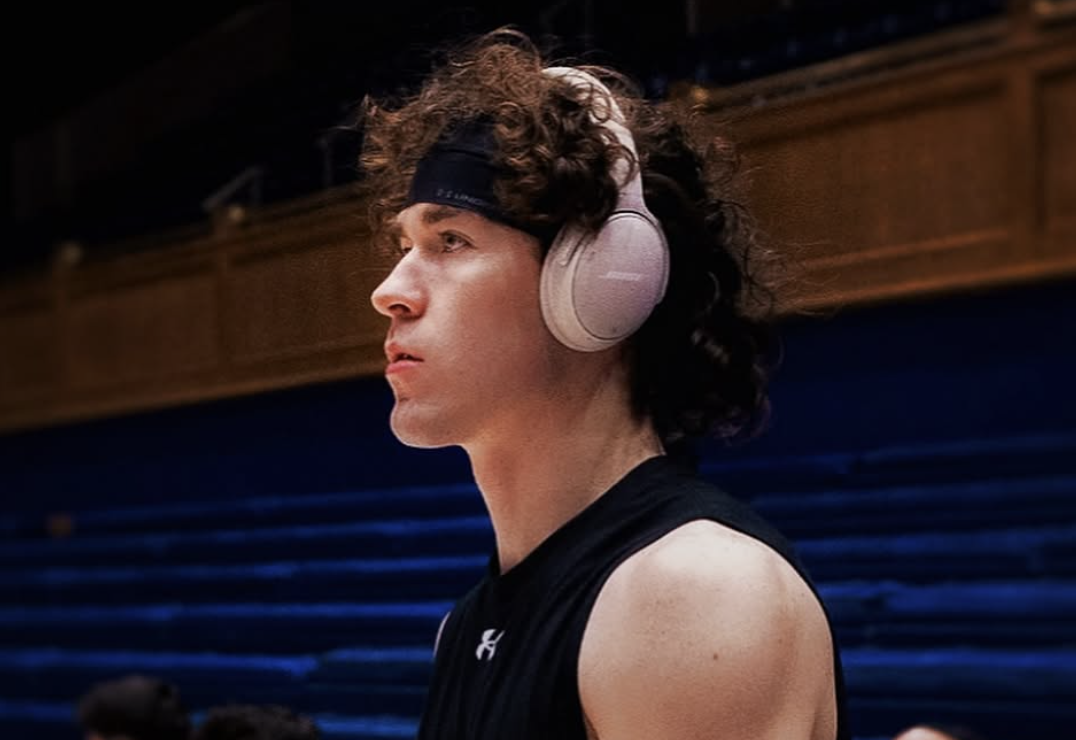
Middleton observed that he and Duncan were on the same wavelength early on as he realized that Duncan could get “very personal” with his questions quickly and that he was “very aware” of others’ emotions. That skill can be of use to Duncan as he moves forward beyond basketball.
“I think he would make a great apologist or street evangelist,” Middleton said. “He’s very good at fostering conversation and debating people on stuff.”
The way Duncan operates is bold and outside the box of conventional thinking, but Lipscomb has embraced him for his mind as well as his flashy style of play. However this all ends, Duncan will go down as one of Lipscomb’s most unique and interesting players.
He appears to have found a place in which he fits in, even if he’s confident enough in his personality to avoid conforming to norms.
“I can tell he's got some thoughts going around in his mind,” Lipscomb forward Grant Asman told Basket Under Review. “I can just tell that he's got some deep thoughts in there. I’ve still got to get some more of him. But I can tell he's got some stuff in there.”
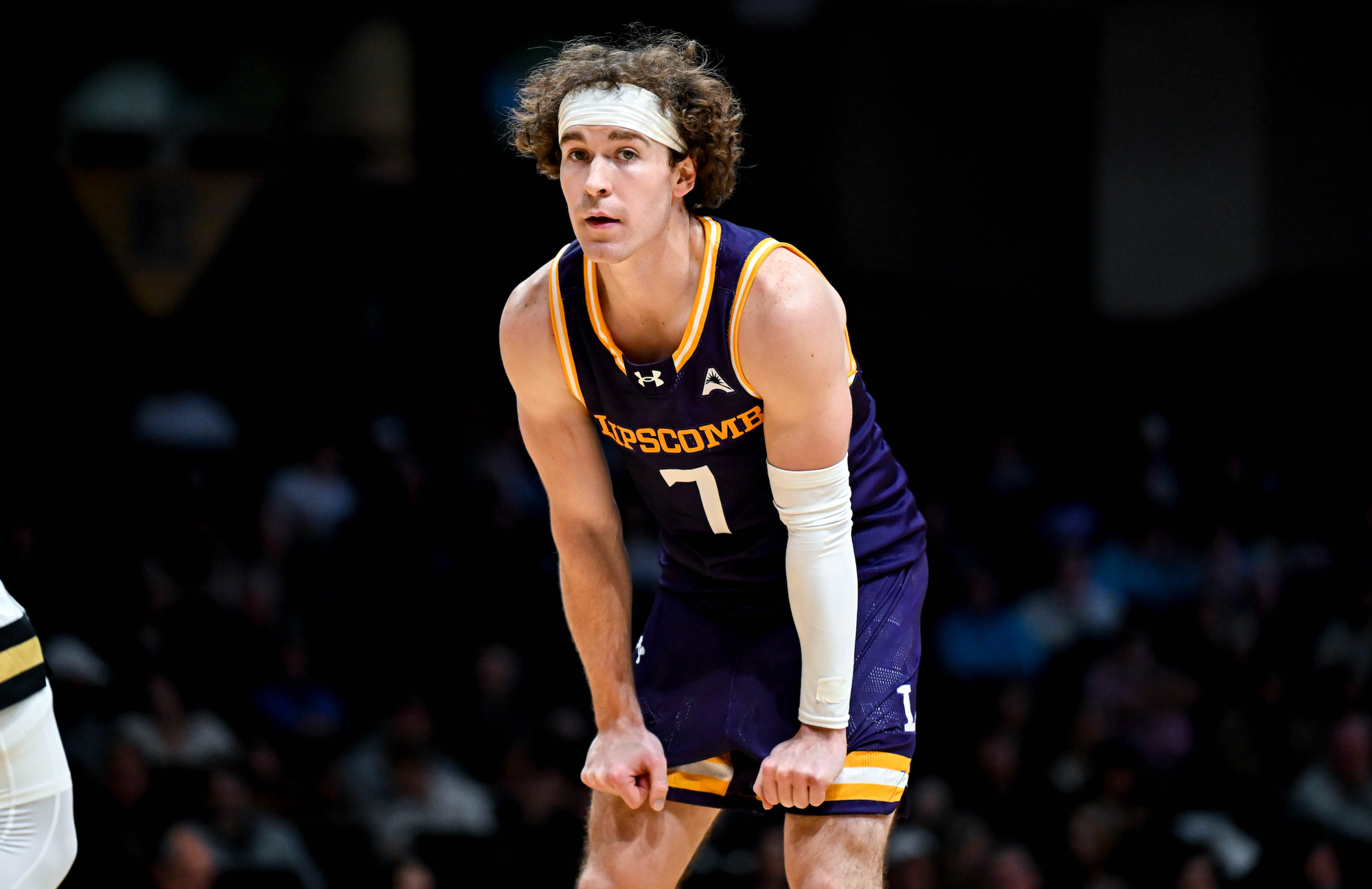
Carroll thought a check in with Duncan would be beneficial after Lipscomb’s early-season trip to Mercer and UNC Asheville. At that stage, the Bisons were beaten down by three-consecutive losses to open the season and Duncan’s individual status may have been more dire than his team’s.
The former Division-II All-American was averaging just 5.6 points per game on 6-for-25 shooting from the field and 0-for-11 from 3-point range. The numbers were underwhelming, but Duncan’s struggles were the rare case of a non-mental slump. Carroll appeared to know that after he received a response to his text.
“How you doing?” Carroll said he asked him.
“Listen,” Duncan texted back, “I’m very rooted in my faith. I’ll be fine.”
Duncan admits that at the time he “wasn’t delivering” on the floor like he thought he could and that it was a “fleshly temptation” to “fold to” the difficult circumstances that surrounded him. The Lipscomb guard says he’s allowed moments like those to “crush” him “completely” in the past, but not anymore.
The old Duncan was “thrown into the fire” as he joined Texas Tech as a college freshman and had a chance to “really be a light” to those around him. Duncan says he “rejected” the opportunity and “conformed” to his circumstances, though. As the veteran guard made a nearly spur of the moment decision to come to Lipscomb, he knew that he wasn’t going to do the same thing again.
Duncan’s knew that when he arrived in Nashville, he had to do something that would allow him “to give the testimony, when I get to Heaven, to the Lord saying that I wasn't embarrassed or unwilling to share my faith with somebody that that I came across on campus, or that I was a teammate to.”
The Lipscomb guard isn’t starting like he was at the beginning of the 2025-26 season and is shooting below 40% from the field, but that hasn’t defined his experience at Lipscomb. Duncan’s career has seen him take on what he describes as a “roller coaster” of identities, settings and an ever-evolving relationship with basketball. He chose this place to be his final stop because of how he’s evolved and what’s become more important to him over the years.
“Transactional,” Duncan said in regard to his relationship with basketball as it currently stands. “With how my life has developed with this sport, it's just predicated on success and improvement. I find myself in times of struggle with the sport not really enjoying it as much. I think for me, my relationship with it is predicated on how it's going and the direction it’s heading.”
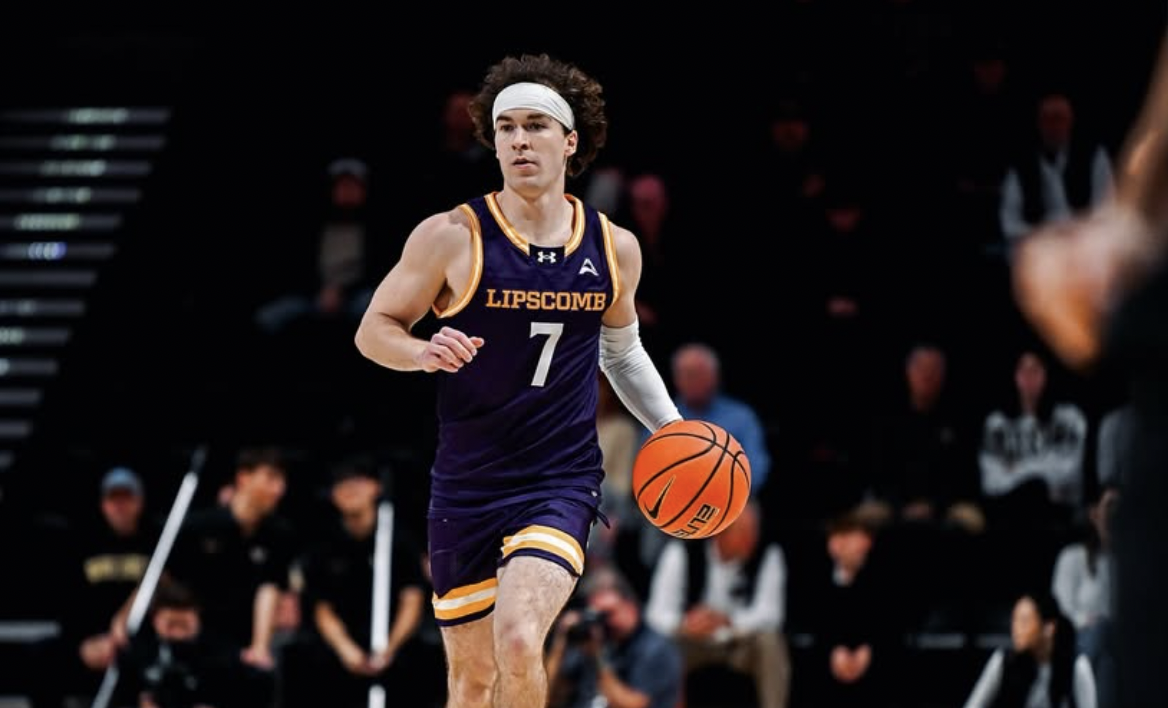
Duncan says that he “can’t say” that he “always loves” basketball, that he’s always excited to go to practice or that he always looks forward to working out. He says the challenge of the college basketball grind as well as the “like minded” people he does it alongside helps him “grow” in the consistency of his faith.
As he concludes a deeply thought out monologue in regard to his relationship with the sport that he’s worked most of his life at, Duncan clarifies that he doesn’t consider this to be an “unhealthy” relationship despite the difficulties of a life in basketball. Duncan says that he’s “replaced” basketball at the top of his priority list and has “rededicated” his life to “Christ, rather than development in a sport that can come and go and fleeting happiness.”
Like Duncan knows, his days as a college basketball player are numbered and will come to an end one day. Who knows how this all ends, but it’s sure to end in some profound way. Perhaps it will end with a deeply stewed upon letter.
“When the ball stops rolling, the last horn of my final game sounds,” Duncan said, “It's not like it won't be an emotional one, but it'll be something that I can look up and realize that I poured everything into it. Now I'll be able to release it and allow myself to lay it to rest.”
