

It usually takes an entire half if not longer for a basketball game's flow to reveal itself, but if you're lucky, you'll have it given to you very early. Iowa/Florida made it pretty clear how the game was going to go about five minutes in. Off of a pick-and-pop action, Alvaro Folgueiras of Iowa took one dribble, fired away, and nailed a three to tie the game at 11.
Normally, you are not going to learn much of anything about a game five minutes in, unless 1) a team is already running away and is obviously better; 2) someone important gets in severe foul trouble. This involved neither. Why is it important? Well: this possession, counting the non-shooting foul Folgueiras drew against Micah Handlogten preceding it, lasted 32 seconds. It was the first of seven Iowa possessions lasting 30+ seconds on Sunday night.
Alternately, maybe the story arrived on Iowa's first shot attempt of the night. This was a missed shot by Tavion Banks with five seconds on the shot clock. Ordinarily, given that Iowa did not get the offensive rebound, this would be of no note.
However: that possession was the first of 38 that lasted 20+ seconds for Iowa. Their opponent, Florida, had 14. Not in the first half; in the entire game.
Ben McCollum is no stranger to using the whole, and then some, of the shot clock. I wrote multiple pieces this past offseason about it! Fun fact. There was one about how their hilariously slow pace allowed a future Goldman Sachs employee (presumably) to play a near-infinite amount of minutes per game:
 Will Warren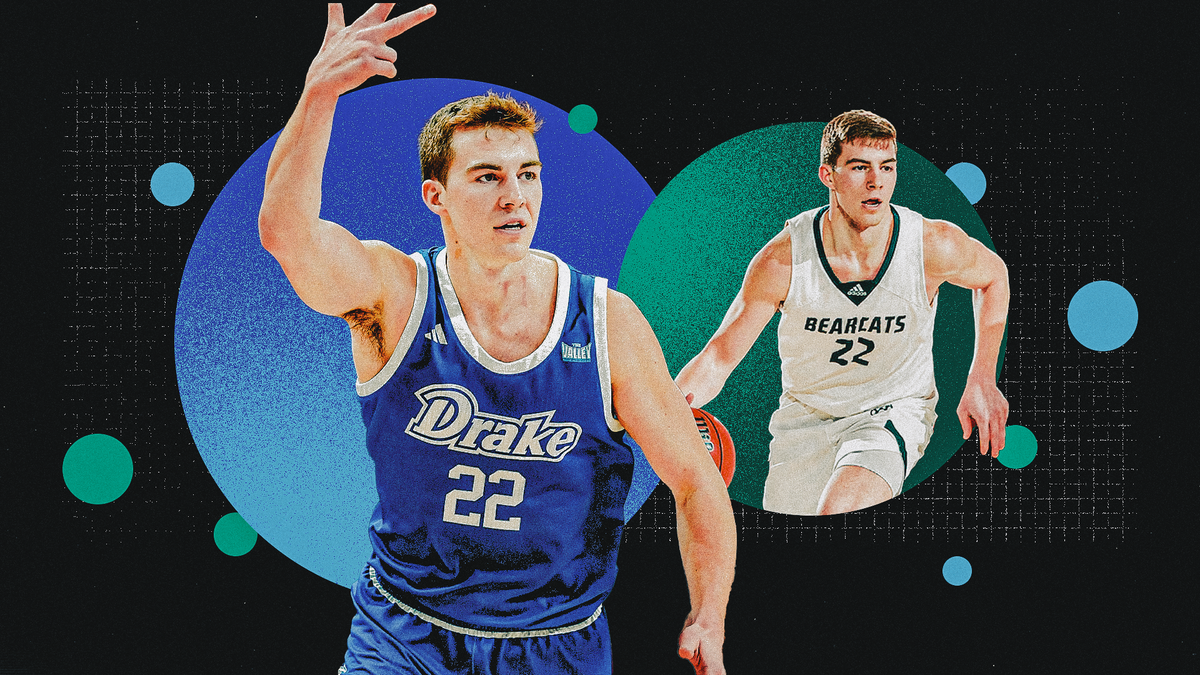
And this one about "corn math," which is how I would describe McCollum's teams turning the possession stat on its head and using principles learned from Pep Guardiola to bend a game to his will.
 Will Warren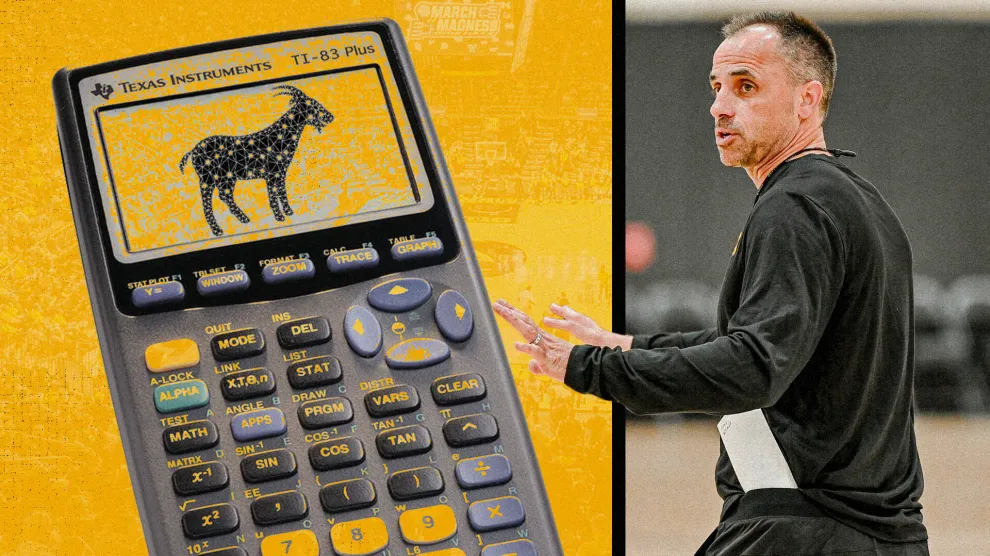
But rarely will you see both principles laid out so perfectly in one game than in Iowa/Florida. For one, per CBB Analytics, Iowa held the ball for 20.8 seconds per possession on average. That alone would be impressive for Monmouth, this year's median team in average offensive possession length, who CBBA credits with a season high of 19.4 seconds per possession. For Iowa, it was merely their seventh-longest average length of possession this year. Their median first shot attempt of a possession in this game game 21 seconds in.
At pretty much no point in the history of basketball have we used time of possession as a real stat. Everyone gets the same shot clock, and within reason there's no such things as 20-attempt drives in the sport of basketball. Tennessee may try and do that before the season ends, but it would be very hard to pull off. I can't immediately remember a two-minute basketball possession I've seen. I am much more likely to remember each team having five possessions each within a two-minute span.
Iowa, per CBB Analytics, held the ball for over 59% of the game. This works out to having the ball in their hands for seven more minutes than the Gators. Instead of letting Florida lean on them the way the Gators have leaned on so many this year, it was instead Iowa leaning on Florida and dictating the terms of agreement. These are the possession lengths, not counting the final game-winning basket by Folgueiras, of Iowa's final ten possessions, per Synergy:
- 19 seconds
- 42 seconds
- 26 seconds
- 21 seconds
- 31 seconds
- 26 seconds
- 28 seconds
- 22 seconds
- 13 seconds (!)
- 21 seconds
That works out to an average of 24.9 seconds per possession over roughly the final eight minutes of the game, a stretch in which Iowa outscored the Gators by three points. The strategy obviously works, and in a game where Florida only got genuinely good performances from about three guys, Iowa was able to turn the flow of the game into the only one that would allow them to escape with the upset of the 2026 NCAA Tournament.
Every second out there for Florida is another spent exerting energy on defense, attempting to contain an Iowa offense that moves when it wants to move:
Somehow, this probably wasn't Iowa's most absurd or impressive use of the clock of opening weekend. On Friday, Iowa managed to craft the McCollum Special: an average possession length of 25.1 SECONDS against Clemson in a 54-possession game, slowing the game down to a stunning crawl and pulling off the same 59% possession share. Again, we never think of basketball the way we would football (or European football) as a possession-based sport...and yet, watch how frustrated Clemson continues to get every time Iowa winds the clock down.
Per Synergy, Iowa managed to get down to the final four seconds of the shot clock 20 times against Clemson, which is my personal highest number I've seen on the site in eight-plus years of using it. That above video was from a 41-second possession, which I have clocked as their fourth-longest possession of the game. This would all be boring numbers junk to the average human, but to Ben McCollum it is the single slowest-paced offensive game I can find in his career, at least from CBB Analytics.
A lot of people seem to wonder if, and how, McCollum will move on once Bennett Stirtz graduates. It's a fair question, as we haven't seen this answered at the Division I level. However: I would advise the people with questions to go back and watch some videos of McCollum's program at Northwest Missouri State, long before Stirtz was a name anyone would know. Look at this beauty from 2020-21:
Here's a higher-quality version not recorded on our bedroom TV for those interested (cc @NWBearcatMBB, @SportsCenter). The team is Northwest Missouri, the coach is Ben McCollum (@CoachMcCollum), and the Bearcats are 158-8 in their last five seasons of play pic.twitter.com/NJFBMmn37d
— Will Warren (@statsbywill) March 26, 2021
Or from 2018-19, which, hey, featured a one-year star in Joey Witthus and the then-highest offensive efficiency I had seen at any level at 127.4 points per possession. That team was just as extremely P&R-based as Iowa was, but their spacing was incredible thanks to the use of dual point guards, Witthus, and a lineup where literally everyone could shoot.
Is this me saying McCollum is likely to repeat his work from the Northwest Missouri State days and go 38-0? Well, no. That would be impossible and very funny. But in all likelihood, given the investment and NIL funds available at Iowa, this is probably going to be his least-talented, most ill-fitting roster given two months to build it and only a few transfers who had played in the McCollum system before. If beating a 1 seed with several future pros on it is possible with this roster...well, imagine a couple years from now. Just don't be surprised if it's still pretty low and slow, as the pace of that 2018-19 team barely reached 63 possessions a night.
Iowa will move on to play Nebraska in the Sweet Sixteen in a rare third matchup of two rivals that doesn't involve the Big Ten Tournament. They split their regular season matchups at each team's home arena, and to settle the score they'll go to Houston. Fair enough.
In those two games, Iowa did something to Nebraska that no other Big Ten team has done in regulation all year: keep the ball in their own hands for 24+ minutes. The Hawkeyes do this to everyone, win or lose. They are always going to win the battle of possession.
Many will ask once more: is there any real correlation to winning the time of possession battle in college basketball? Well, no. I did run the numbers for this post, and there's zero correlation to good or bad. Different teams win in different ways. For Iowa, and for Ben McCollum, the way to win is by turning what we think we know about the game - score fast, defend slow - on its head. If it continues to work this well, I do wonder how many, if any, will copy.
Only a few teams all year have managed to win that battle with Iowa, and one of them (Illinois) could face Iowa in the Elite Eight. And yet: if McCollum stops time once more, would anyone really be surprised?
