


Jeremiah Johnson was as close to invincible as a high school sophomore can get. Kentucky, Kansas, his in-state flagship Oklahoma and just about every other power-five school was calling. The world was Johnson’s proverbial oyster, the script of his recruitment was as good as he could’ve drawn up and he appeared to inevitably be heading toward an NBA draft selection as a top-20 player in his high school class.
There was seemingly no stopping him.
Johnson was riding the high that came with a 34-point early-February performance and the glory that comes with high school basketball stardom when he says he accepted an invitation to run the show at a late-night pickup basketball game with his friends. The then-top 20 player had already finished a postgame workout with his dad, but opted to keep playing.
The act in itself wasn’t malicious, but it was one in which Johnson’s dad often prevented him from doing because of the status he had as a highly-rated recruit and all that came with it. As Johnson hopped in the car with a friend, it was the first time his dad–who admits that he was “very, very hands on and kind of micromanaged a lot” as it related to his son–allowed him to ride with someone else. The late-night outing seemed innocent enough, though, although the park in which the group agreed upon was one that Johnson had never been to.
These days the park is desolate and has been torn down completely as a result of what happened in the moments following Johnson popping the car door open and taking in the new scenery. But, for a few moments Johnson was granted the freedom that came with possessing the belief that everything he dreamed of would last past this night.
Alerting Johnson that it would take everything in him to become a go-to guy at Campbell would have thrown him for a loop in that moment. His trajectory appeared to have already transcended the mid-major level. It would’ve been easier to believe that Johnson was in the NBA in 2025-26 than in the CAA. The catalyst for his journey taking him to Buies Creek, North Carolina, was coming quickly, though.
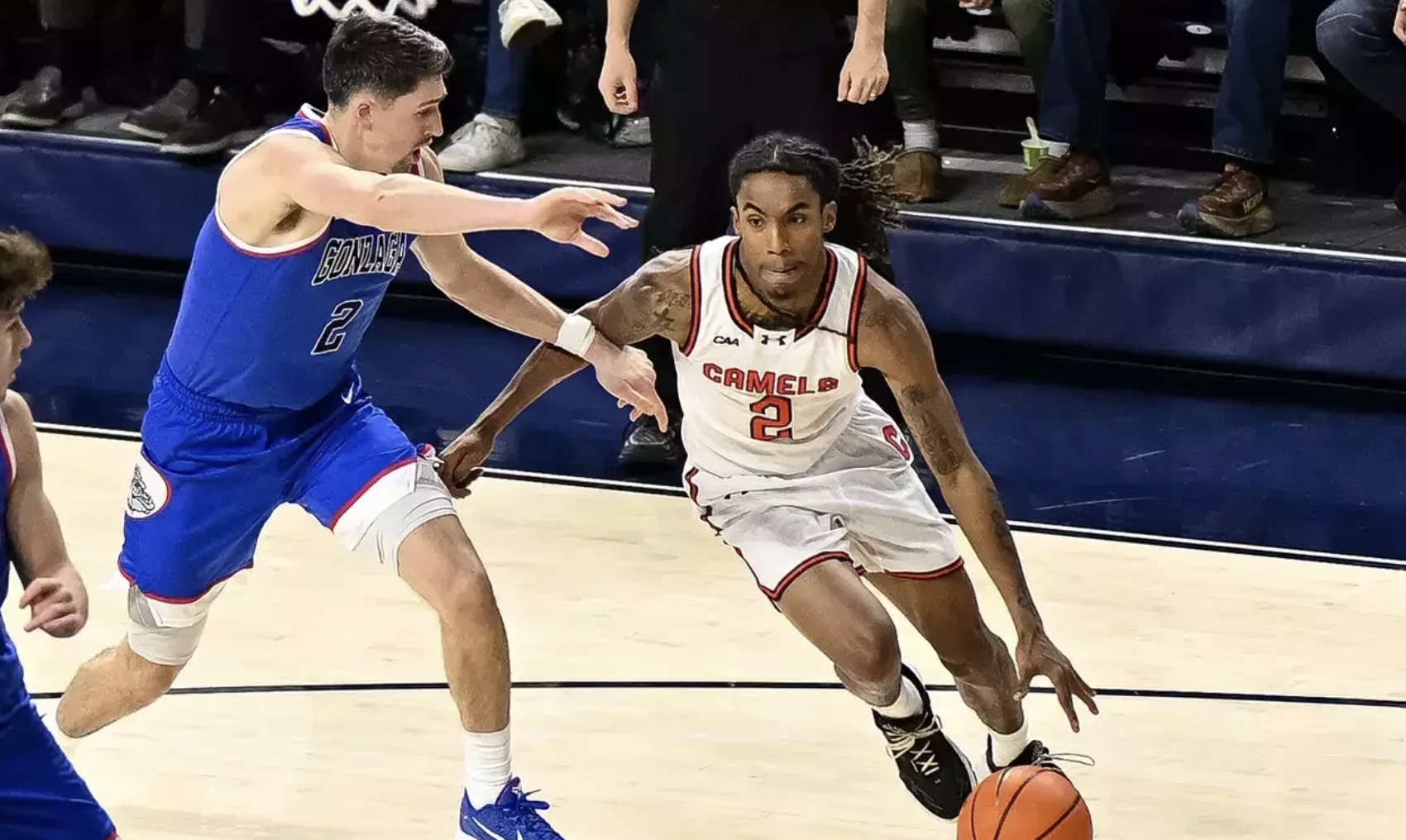
A fight–or ”commotion” as Johnson termed it–broke out down the street and brought everything Johnson knew about his future into question. Johnson says the fight had nothing to do with him or any of his friends, yet shots started flying and the bullets didn’t care about basketball futures or dealing in fairness.
Johnson was struck twice in the back by stray bullets, couldn’t feel the lower part of his body and was transported to the hospital by his friends.
“That was probably the scariest moment of my life,” Johnson told Basket Under Review. “I still couldn't feel my body. I couldn't walk. I couldn't move.”
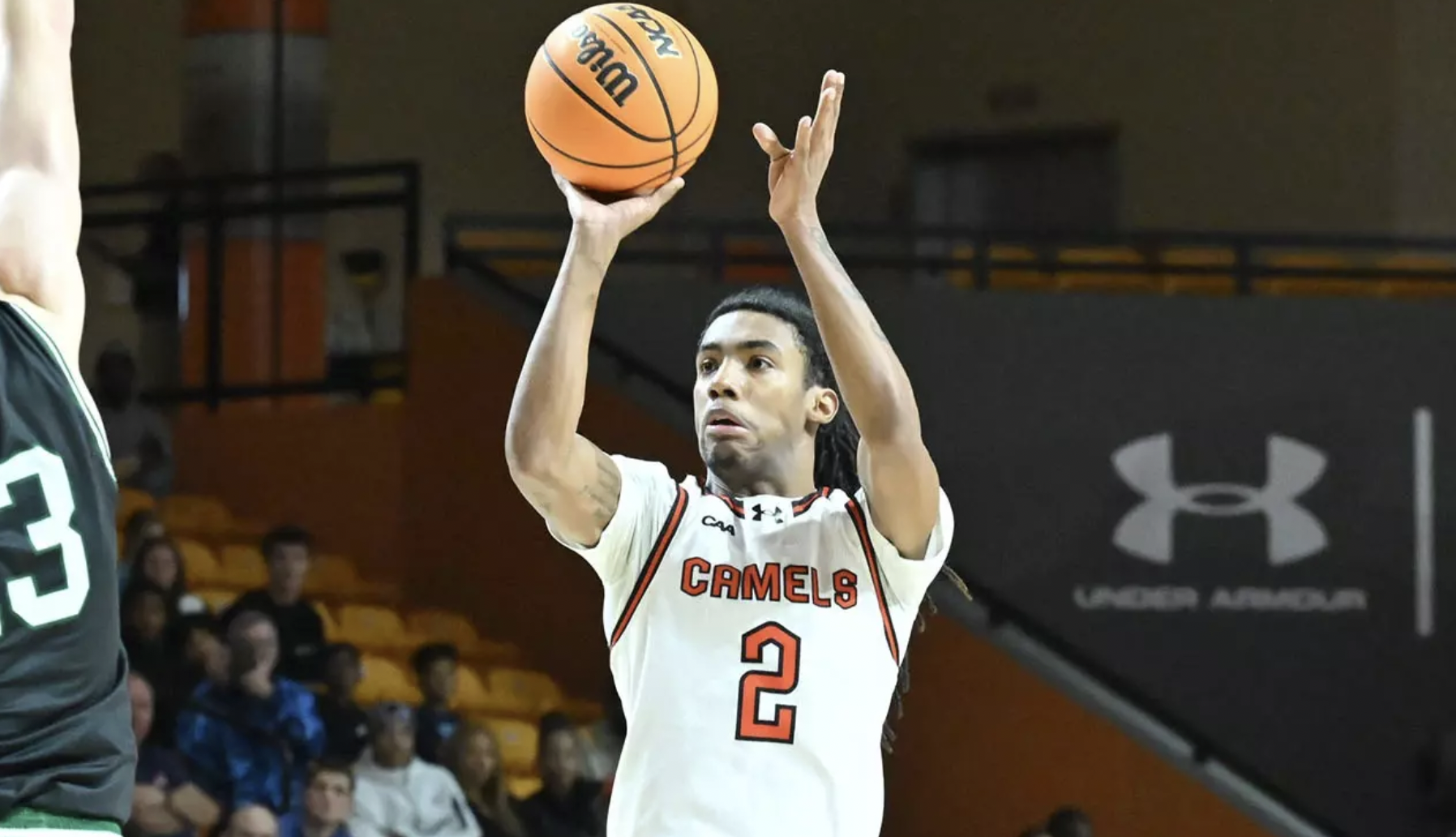
In the moments following Johnson being shot, his dad received a call that parents have nightmares about. For him, it was reality. All that Johnson’s dad, Jeremy, was told was that his son had been shot. He didn’t even know if Johnson was alive.
“I didn’t know what was going on,” Johnson’s dad said.
Johnson’s dad rushed over to the hospital after receiving the call, but to no avail. Johnson was already in surgery and the ensuing hunt for any sort of information was painstaking as a result. Johnson’s dad waited for hours wondering “is he okay? Was it serious? Is he going to make it?”
The thoughts–along with Johnson’s dad–were confined to the waiting room for nearly the entirety of the night. He couldn’t see his son and wasn’t told exactly where he was. Johnson’s dad wouldn’t sleep at all that night, or the next day. The thoughts were too rampant and intense for that.
“I was afraid,” Johnson’s dad told Basket Under Review. “I was upset because of where he had gotten himself to and I was asking questions like ‘why did this happen to a kid who hadn’t had no issues with nobody or nothing the entire time?’”
When Johnson woke up the next morning, the questions only appeared to amplify as he woke up unable to feel his legs or body. Johnson asked the doctors why that was the case and was told that he was paralyzed in that moment. The doctors promised that the paralyzation wouldn’t be a “forever thing,” but said that they estimated he wouldn’t be able to walk for four-to-five years.
If their diagnosis was correct, that would be the end of Johnson’s basketball career as he knew it. Five years from that point would be his junior year of college–when a serious return to the floor would have already passed him by. Everything that he thought he knew about himself was set to change.
“I was at the highest point of my life, I was getting the recognition I felt I deserved, I was getting all the looks that I wanted as a kid. At that moment, I'm talking to all the coaches and hearing from NBA scouts who were saying how my ceiling is and who I can be,” Johnson said, “One night, it all just almost going away and then almost being taken from me was probably the scariest part of my life.”
Johnson needed a series of miracles to break his way if he was ever going to find his way back onto the floor at that point, if everything was standard then he would have to find something else to make his life’s passion.
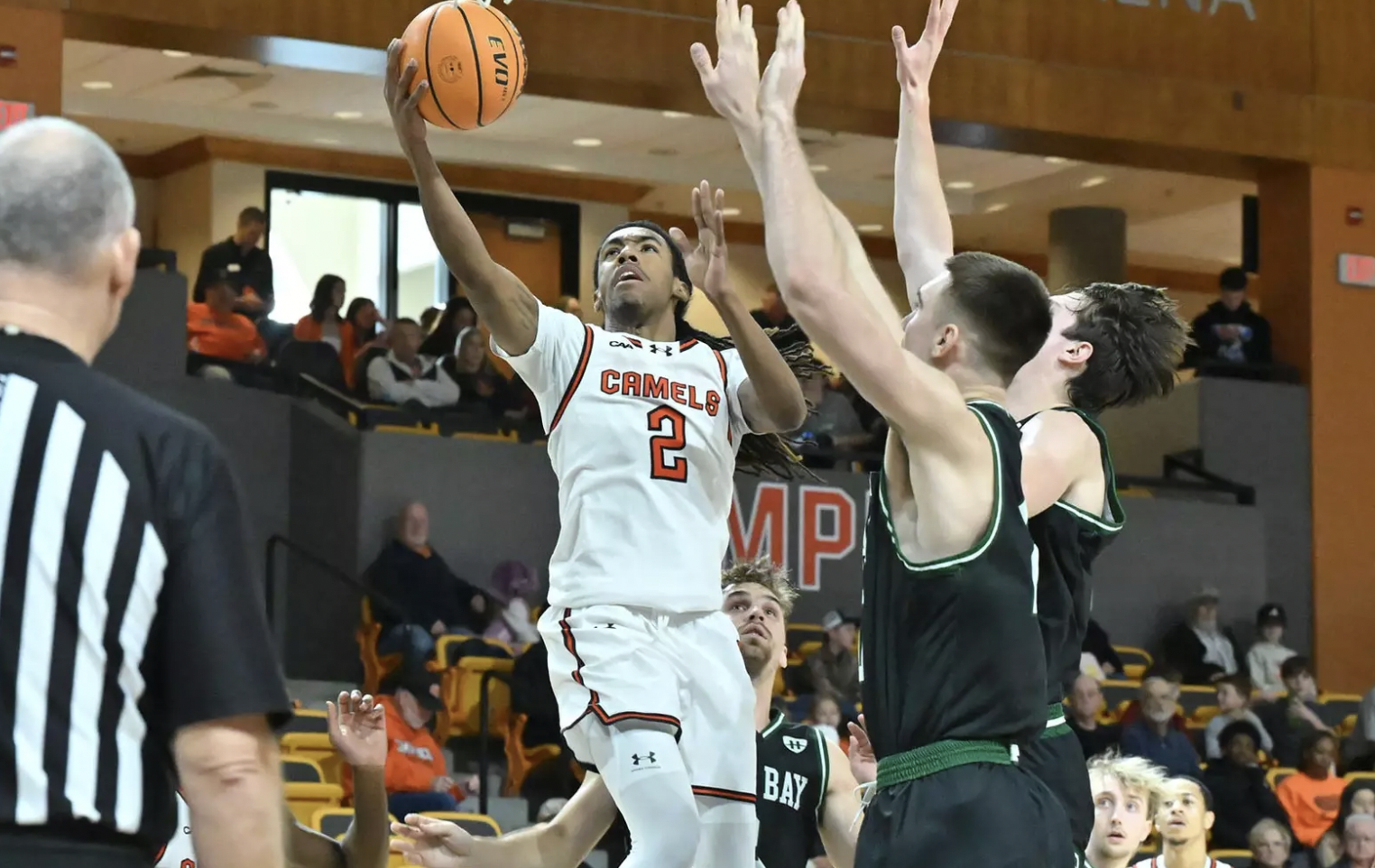
Johnson planted his feet and pushed them into the ground as he rose up and punched a dunk through the rim in Del City, Oklahoma. If someone hadn’t seen the highly-regarded guard in the last six months, they would have thought the dunk was made by an imposter or a long-lost brother of Johnson.
That was Johnson, though. Yes, really.
The first miracle of Johnson’s recovery was the nearly unbelievable timeline change in regard to his process. Johnson still couldn’t run or jog and had to bring a walker with him just about everywhere he went. But for one moment, Johnson was himself again as he rose up and pummeled the rim in an empty gym.
“I couldn't even explain how I was ever able to do that,” Johnson said, “That's really just God.”
Saying Johnson had turned the corner at that point would be disingenuous, though. As his dunk went through the nylon, another surgery–and all the setbacks that came with it–loomed over him. The surgery would provide a longer-term fix to Johnson’s injury, but it would effectively require him to “start life over.”
Johnson had broken his hip in the incident and had yet to be absolved from a few bullet fragments that were peskily hanging around. Once the fragments were removed, Johnson had to re-learn how to walk, run, jump, dribble, shoot and do anything physical again.
“That was a very painful process,” Johnson’s dad said. “seeing him at your house literally two days earlier being able to dunk and do all these things and walk and work out. That was something that we did daily. Going from that to a whole routine changing [was hard]. Now, he's laying in the bed trying to figure out if he's gonna be able to move and walk again.”
Johnson and his dad were marred by the uncertainty that surrounded him at that point, but each of them appeared to have a feeling that his basketball story didn’t end when the bullet went through his back side. Johnson’s recruitment trended in the way he had feared it would with pulled offers, but he wasn’t done yet.
Johnson says he learned that his mental toughness was greater than “99%” of people throughout that period because of the amount of people he’s seen give up on their basketball dreams in similar situations. He never gave up, though. He kept pushing.
Johnson’s dad filmed each day of his recovery as if to document his rise when everything was completed. Those tapes are prudent these days and are emblematic of the belief that guided Johnson to this point.
“We don't go off what a doctor says, we go off what God says,” Johnson’s dad said. “That’s how we always looked at it and his timeframe for him getting back. He always expected to be back a lot sooner than what was expected.”
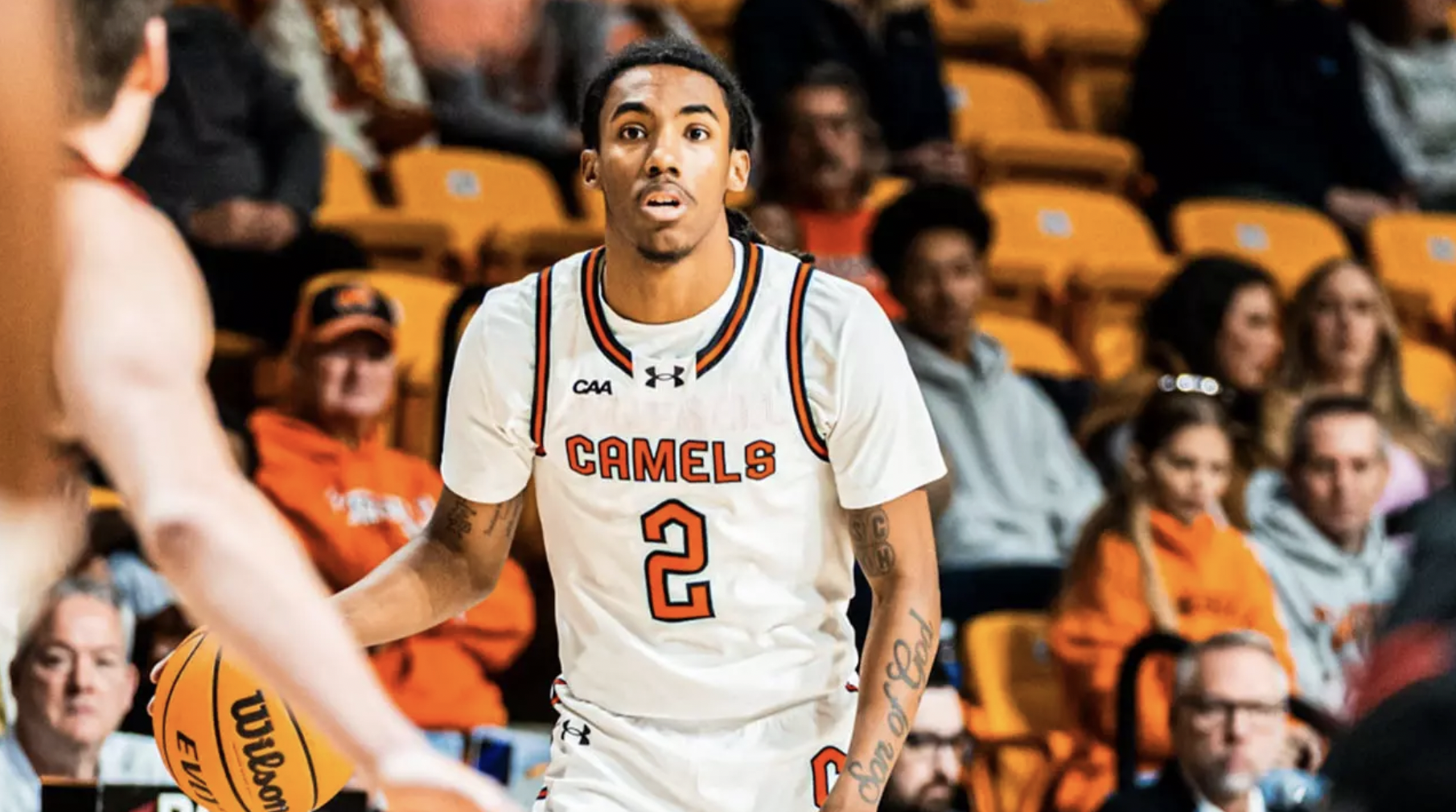
The version of Johnson that his dad had gotten to know over the years all of a sudden wasn’t the version of his son that he heard stories about. The stories that he heard weren’t ones that he believed to be true, either.
What Johnson’s dad heard in the aftermath of the incident painted his son as a troublemaker and may have cost him multiple college opportunities. Johnson understood that some had their reservations about Johnson’s ability to return to the floor, but he couldn’t understand why
“All these crazy narratives that came out about it that really wasn't true, I understood how that was gonna affect him,” Johnson’s dad said. “He didn't wanna be perceived as a bad kid and all this type of stuff because people were trying to say different things, which wasn't the case.”
As Johnson and his dad stayed quiet in an attempt to let the narrative pass them by, Johnson’s dad says he urged him to stay the course until the moment was right for him to speak and share the truth as to what happened.
Johnson’s Overtime Elite coach John Ortega says that although he dug into the situation and found that “really, he had nothing to do with the situation other than being there and being in the wrong place at the wrong time,” Johnson was still looked over at times because of the perception that surrounded him. Ortega is a one-time college basketball coach that says he knows the dynamic of an assistant coach sticking his neck out and “fighting for the story” of a player like Johnson to the rest of his staff.
After doing nearly a month worth of background research on Johnson before he first talked to him, Ortega decided that he was going to stick his neck out for him by adding him to the Overtime Elite Diamond Doves, where he’d eventually be named a team captain.
“People that have been around them haven't had a negative thing to say,” Ortega told Basket Under Review. “They were all like us, rooting for him to continue to make it.”
Ortega was solely focused on moving each of his new players into their respective rooms on report day, but had to take a second to address Johnson. The now-Campbell guard was the first player to report that day and had already begun to ask Ortega when he could get into the gym.
Eventually Johnson got his way and secured an individual workout with the team’s skills coach. A layer of uncertainty still preceded Johnson as he took the floor that day and worked his way from a life-altering moment, but most of the uncertainty had disappeared by the end of the session.
At least it had for one person.
Coach, this kid is f****** really good,” the skills coach told Ortega via a text.
Ortega was intrigued by the text, but he was hesitant to crown Johnson before the highly-touted point guard ever suited up for a game with a spotlight on him. Over time, though, Ortega became more and more confident in Johnson’s ability to move this thing forward.
The Overtime Elite Diamond Doves coach likely could’ve predicted Johnson’s 18.7 points, 4.2 assists, 4.9 rebounds and 1.5 steals per game once he consistently saw–or heard–his habits. Oftentimes, Ortega would hear the alarm to the team’s practice facility going off at 1:00 in the morning and would have to ask Johnson for a favor.
“Hey, can you go punch the alarm code in so the police don’t come in and arrest you while you’re shooting?” Ortega says he asked Johnson.
At a certain point, Ortega eventually surrendered the code to the alarm and allowed Johnson to come and go as he pleased each night. Johnson felt as if the freedom he was given had some responsibility to go along with it.
When the highly-touted guard was finished working out on nights before games, he’d take it upon himself to mop up the court. Oftentimes, Ortega says Johnson would run a zamboni on the court. He says he’s never had a player do that.
Johnson says he was still facing “mental battles” at that time and was still playing though some nerve damage in his legs, but he wasn’t willing to compromise his goal of making the most of this opportunity despite what he had to fight through to do it. Johnson knew what life was like without basketball and wasn’t going to take it for granted now that he had it back. Even the searing pain of loss couldn’t rip away Johnson’s passion.
“Overtime brought the joy back into it,” Johnson said. “Coach [Ortega] was just putting so much positiveness in me every day, just telling me that I was the same guy, the same kid that I was before the incident and not to worry about the negativeness, what could have been if that had never happened.”
Those around Johnson all take a second to clarify something. They don’t want it to get misconstrued. It looks as if every power-five opportunity was stripped from Johnson once the incident had reared its ugly head, but they say that’s not the reality.
Johnson says he still had offers to attend Florida, Texas Tech, Texas A&M, SMU, Oklahoma and Oklahoma State when he made his initial college decision. The then-three-star guard chose Green Bay, though.
Although the offers were still appealing, Johnson and his dad knew the dynamic had changed since he was a five-star recruit. They knew that if he opted to go to a power-five program, he’d likely have to sit and wait his turn. So, they opted for immediate playing time and an opportunity for Johnson to show what he could do at Green Bay.
The glitz and glamor of a top 20 rating had worn off and was essentially nullified at that point. Johnson was going to have to earn it in the Horizon League. Somewhere in an alternate reality where the bullets missed, the Oklahoma native could’ve been on Florida’s national title team or been close to home playing for Porter Moser at Oklahoma. Here he was, though.
Rather than thinking about what could’ve been or falling into the mental abyss that could come with his situation, Johnson appeared to have an attitude towards basketball that was encouraged at his previous stop.
“Use this as your therapy,” Ortega says he told him in the pair’s time with Overtime Elite.
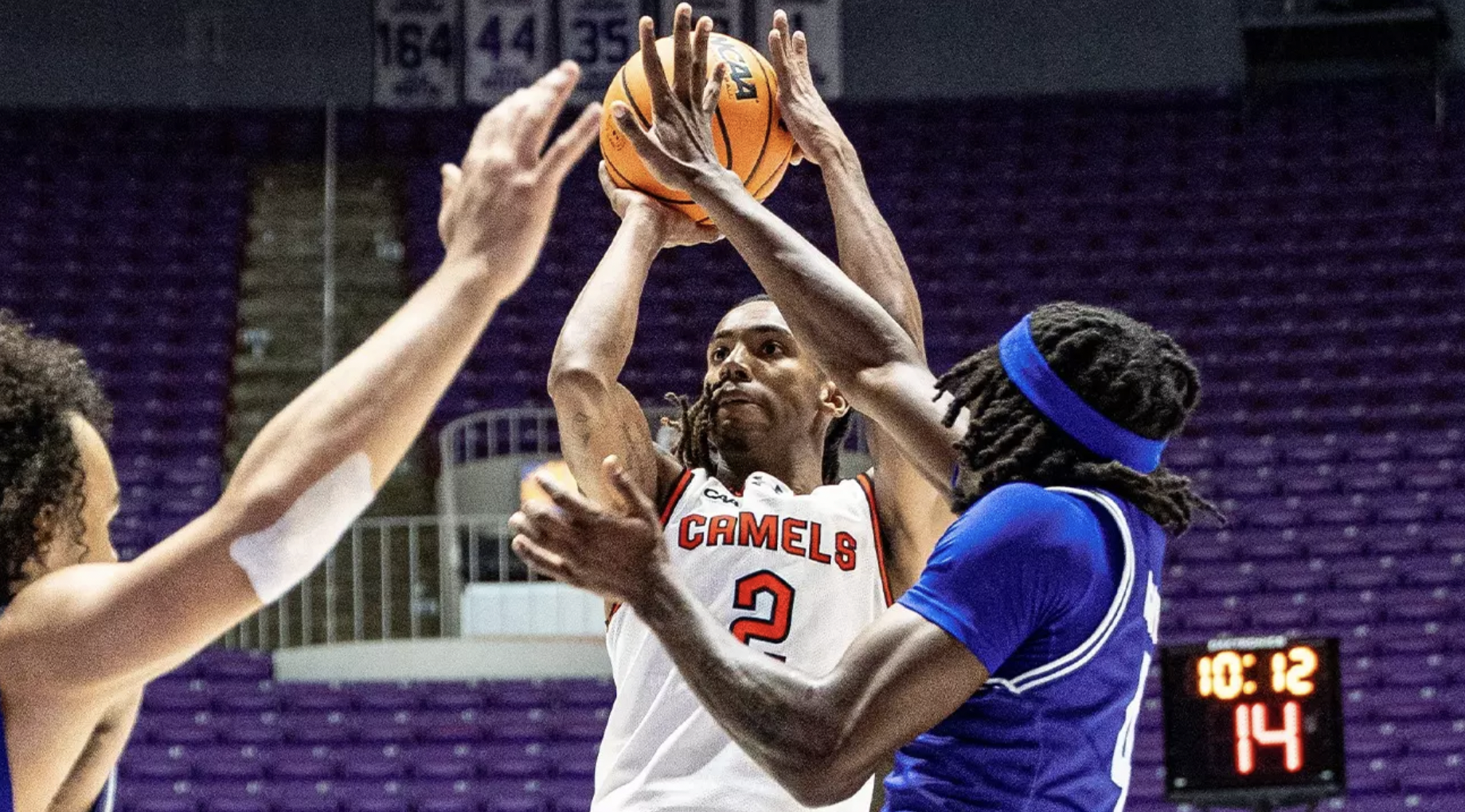
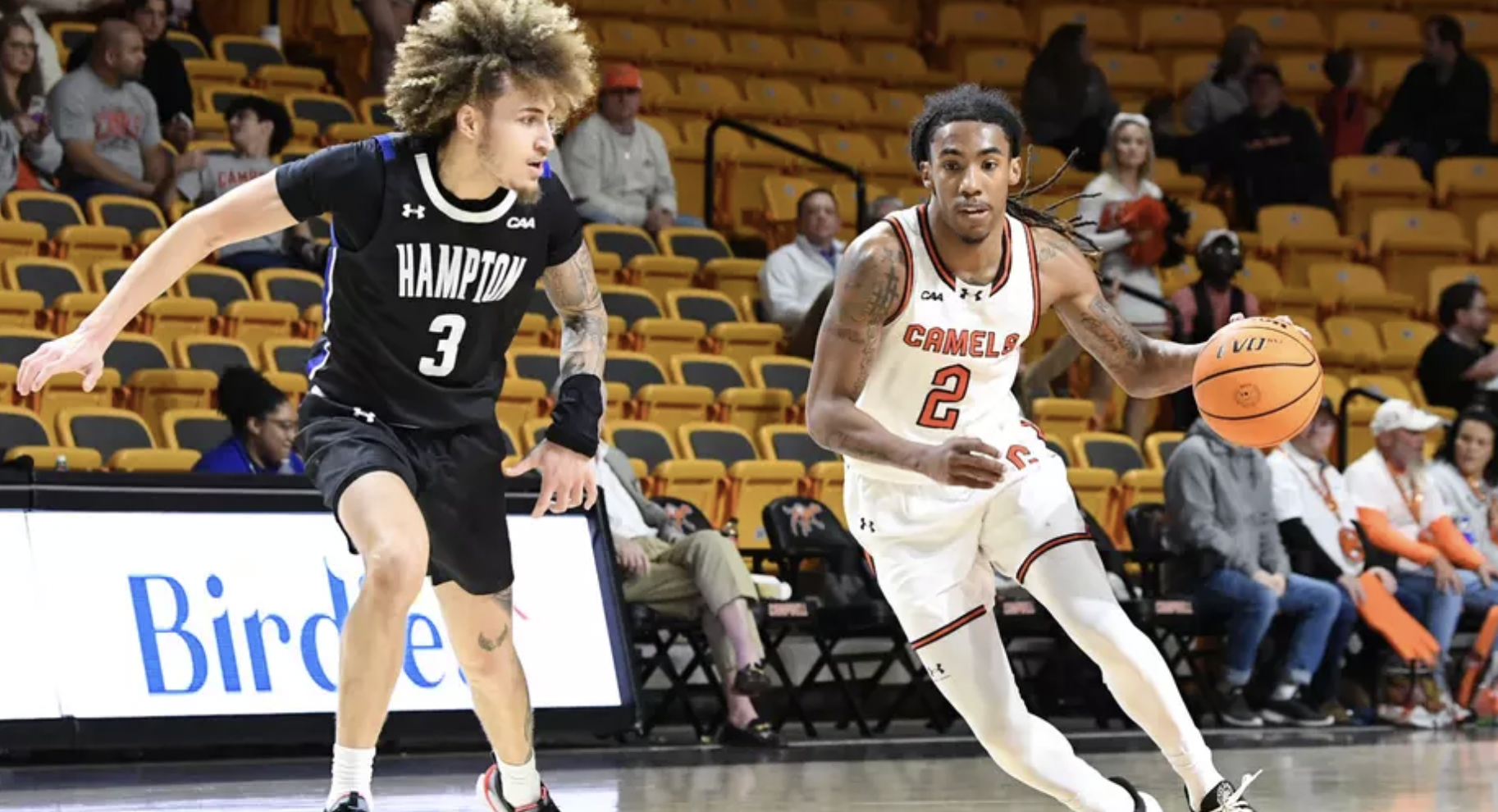
Johnson says that his 2025-26 season at Campbell–which follows a season at Green Bay in which he averaged 10.5 points per game–is the most enjoyable season he’s played in a “long time.” The situation appears to be right for Johnson–who says he’s got a coach in Campbell head man John Andrzejek that cares about him and a group that is equally as passionate about winning as he is. Johnson’s numbers–14.4 points per game, which have come in 12-consecutive games in which he’s scored in double figures–indicate that the situation has been one that he’s thrived in.
As Johnson looks back on everything he’s been through since he arrived at that eerie park, he says he feels as if he’s more equipped to handle all that the college basketball life entails. The now-Campbell guard says that when he has difficult days on the floor when he “doesn’t feel like” practicing, doing extra work, running or taking correction from a coach, he isn’t bothered like some others would be.
He also knows that the situation may seem cruel, but he doesn’t think of it that way.
“I feel like everything happened for a reason, because if that didn’t happen something worse probably could’ve happened,” Johnson said. “It probably was just a stepping stone to tell me to slow down in life and start making smarter decisions, just off, like, not being out that late 'cause you never know what could happen, even if it has nothing to do with you you could just be in a mix of certain things, just by being in the wrong place at the wrong time. I feel like that made me grow.”
